The Sound-Dampening Trend Transforming Living Rooms
Picture yourself settling into your favorite sofa with a cup of coffee, prepared to relax. The moment children begin chatting in the adjacent room or the television emits a low hum, the noise reverberates off the walls. Your living room appears stunning, yet it feels chaotic and far from peaceful. Homeowners everywhere recognize this issue and realize that effective acoustics may provide the key to a serene space.
When Design Meets Acoustics
This emerging trend redefines comfort by addressing sound alongside aesthetics. Traditional living rooms prioritize visual appeal, but hard surfaces like glass and tile generate echoes and tension. Open floor plans and lofty ceilings exacerbate the problem, turning a visually perfect room into an acoustically disruptive one.
Sound-dampening approaches reverse this dynamic through materials that capture rather than reflect noise. These elements create a unified haven, ideal for minimalist retreats or family gathering spots. Conversations become clearer, films more immersive, and moments of solitude truly restorative.
Why the Sound-Dampening Movement Is Growing
Contemporary acoustic options integrate effortlessly with decor, moving beyond utilitarian spaces like studios. Homeowners and designers adopt them for practical and aesthetic advantages:
- Health and focus. Persistent noise elevates cortisol levels and hinders concentration. Balanced acoustics foster calm and sharper mental acuity.
- Improved communication. Reduced reverberation allows voices to carry naturally, enhancing family interactions, virtual meetings, and social events.
- Enhanced aesthetics. Modern panels serve as artwork, ceiling features, or lighting accents, elevating design without compromise.
- Property value. Prospective buyers value serene interiors, positioning acoustic enhancements as a mark of refined living.
Understanding How Sound Behaves Indoors
Grasping indoor sound dynamics reveals why treatments succeed. Sound waves rebound from rigid surfaces such as walls, windows, and hardwood floors. In rooms dominated by these elements, waves persist, producing lingering echoes or reverb.
Absorptive materials interrupt this cycle by trapping waves and dissipating energy as minimal heat. Fabrics, specialized foams, and composite woods excel in this role. The objective remains equilibrium, where sound integrates warmly without excess.
Where to Start with Sound-Dampening
Assess your space by clapping in the room's center; prolonged resonance indicates reflection issues. Combine methods for optimal impact:
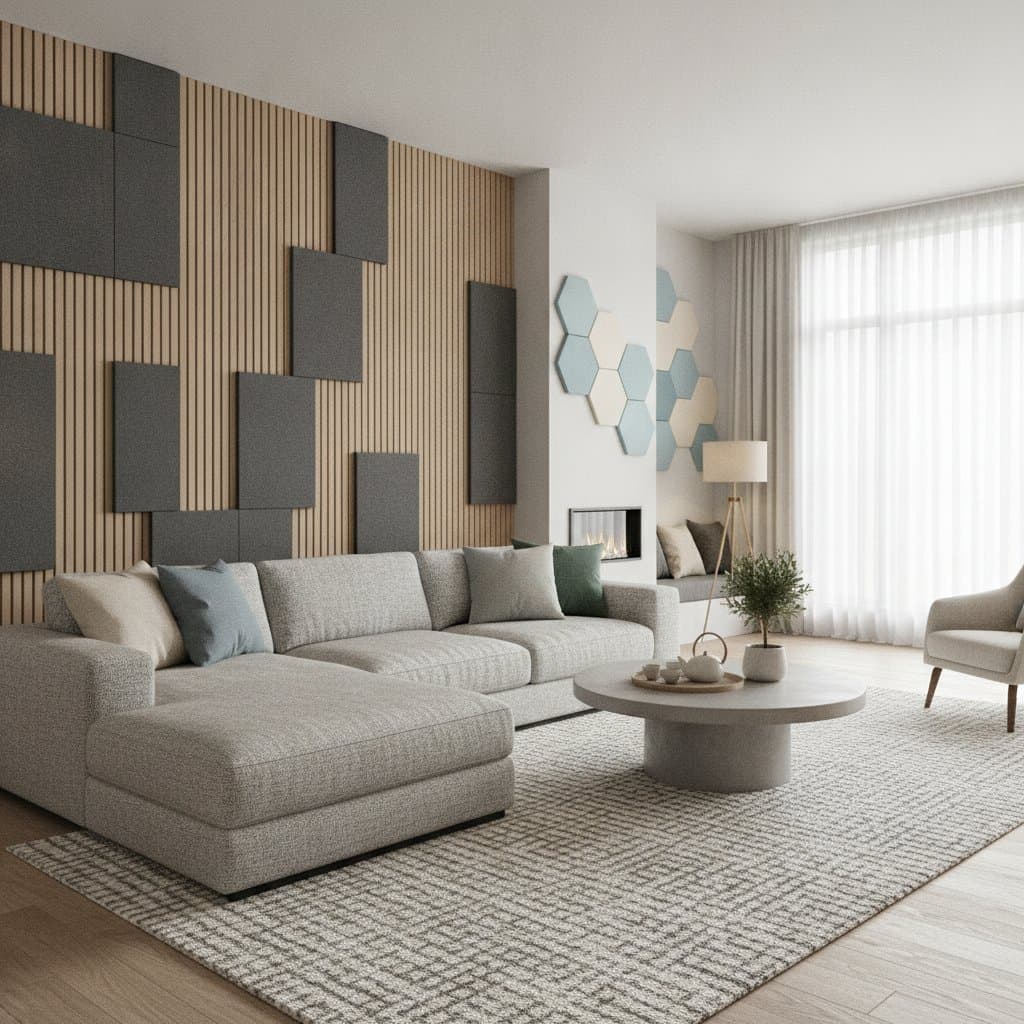
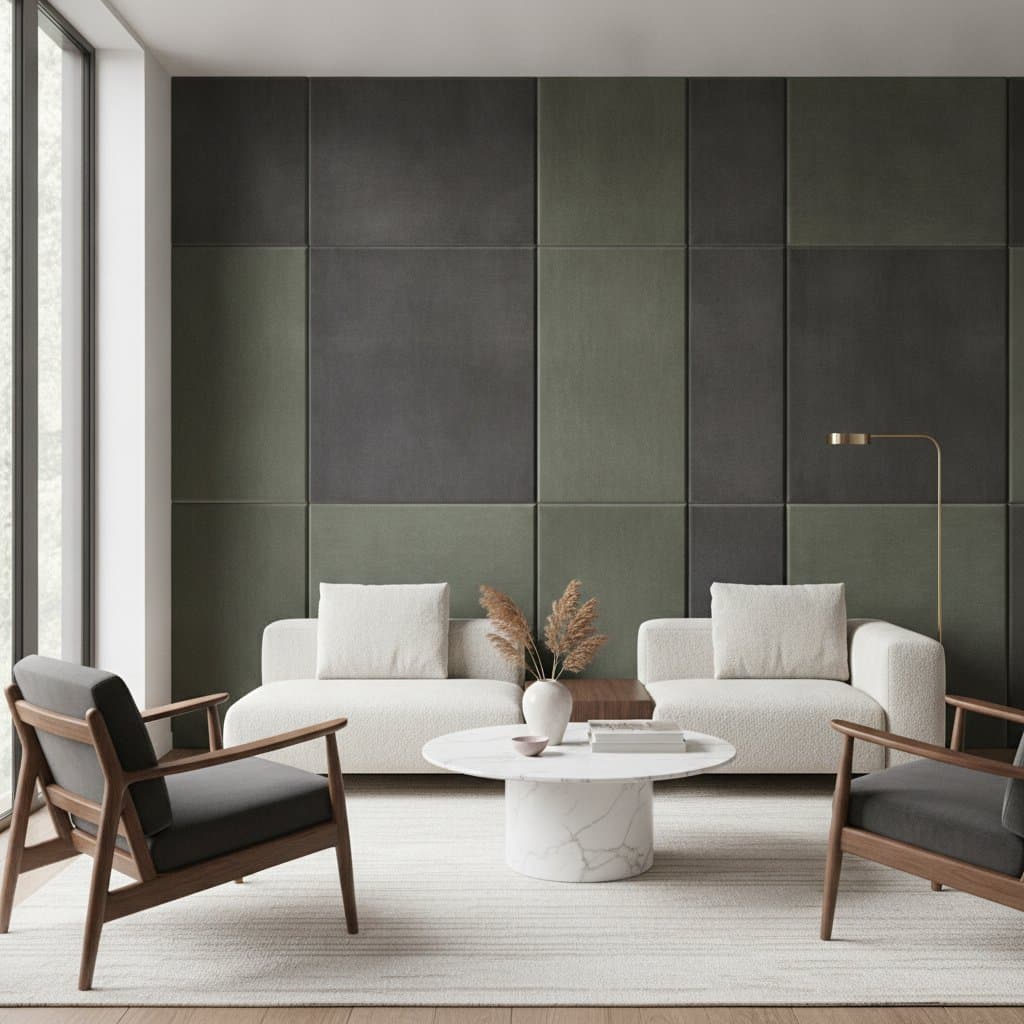
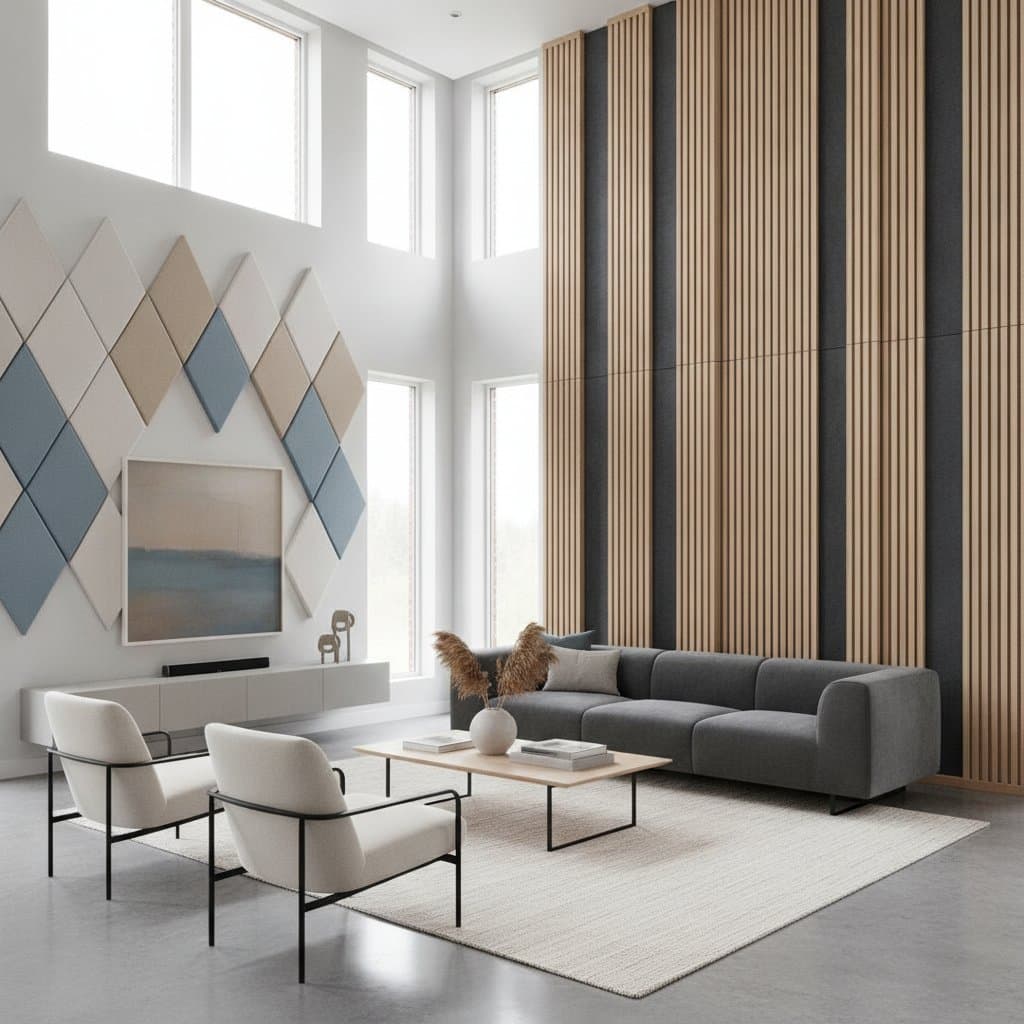
- Acoustic wall panels. Opt for fabric-covered, felt, or slatted wood varieties to curb echoes. Position them behind seating or near media setups for targeted absorption.
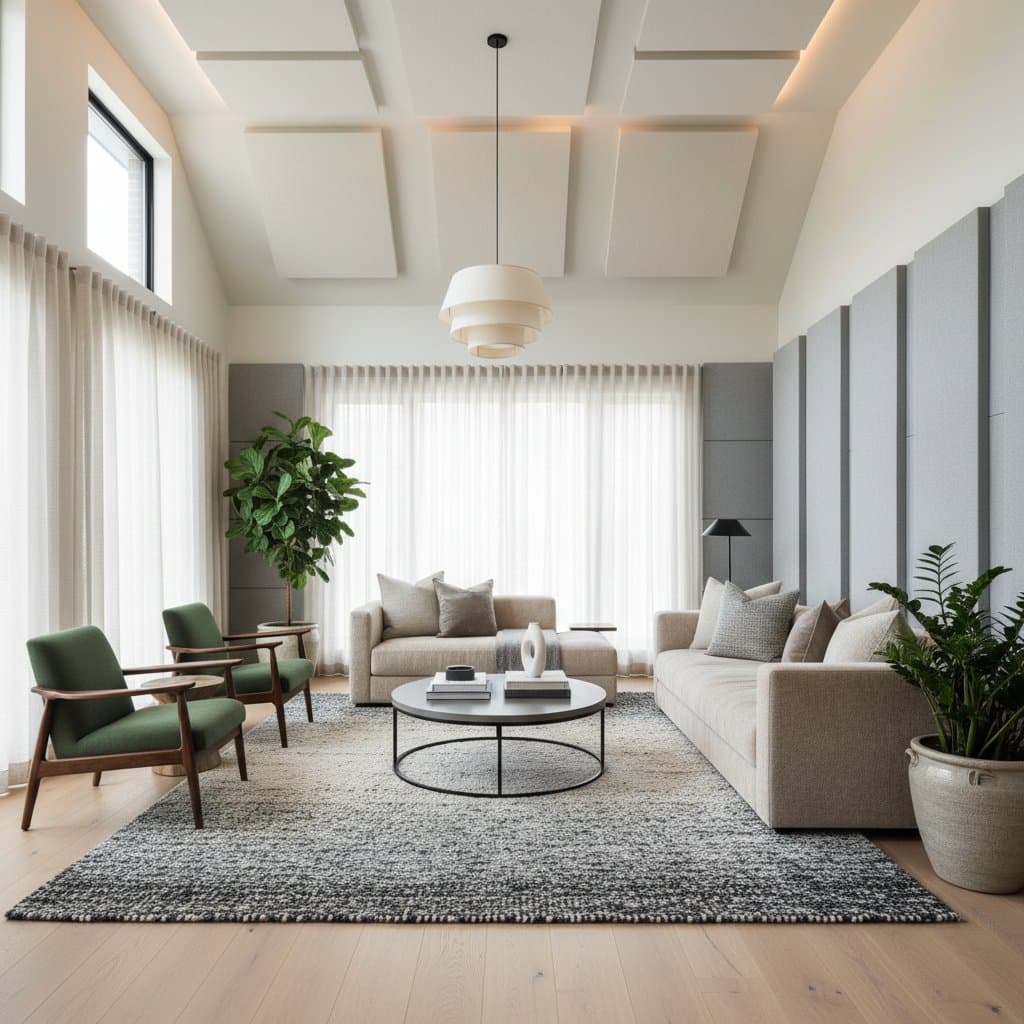
- Ceiling panels and baffles. Address upward reflections with suspended or integrated options that also enhance visual interest.
- Soft furnishings. Incorporate thick rugs, floor-to-ceiling curtains, and cushioned seating to naturally dampen sound. Multiple layers amplify effectiveness.
- Strategic layout. Reposition items to disrupt sound paths, such as angling sofas or placing shelves against bare walls.
- Acoustic art. Select customizable panels with printed designs to align with your theme while controlling noise.
Exploring Ceiling Design as a Sound Solution
Ceilings represent a vital yet overlooked area for acoustic intervention, especially in homes with expansive or sloped designs. Overhead panels introduce style alongside functionality, mitigating the amplification common in such architectures.
Consider these options:
- Wood slat ceilings with concealed absorptive layers for a warm, architectural touch.
- Fabric-wrapped tiles that coordinate with ambient lighting fixtures.
- Geometric baffles hung at staggered levels to add dimension and diffusion.
In regions with high humidity, prioritize durable, mold-resistant materials to maintain efficacy over years.
Cost and Budget Considerations
Expenses vary by material quality and project scale. Entry-level additions like enhanced textiles cost under $300. Wall panels range from basic foam at $20 per square foot to custom designs exceeding $100 per unit.
Ceiling installations demand professional oversight and may total $1,000 to $5,000 for average rooms. Focus on high-impact zones first, aligning choices with specific needs like optimized audio for entertainment or minimized distractions for work.
Professional Help and Permits
Minor updates rarely need approvals, but ceiling alterations or electrical integrations might require inspections. Consult local authorities to confirm regulations.
Engage acousticians or interior specialists for precise measurements and tailored recommendations. They evaluate reverberation, select climate-appropriate products, and ensure secure fitting. For connections, utilize vetted contractor platforms to match with qualified experts efficiently.
Integrating Sound-Dampening into Your Aesthetic
This trend excels in adaptability, allowing acoustic elements to enhance rather than detract from style:
- Modern minimalism pairs clean lines with neutral-toned felt absorbers.
- Mid-century warmth incorporates wooden accents and plush textiles.
- Industrial chic features metal grids over foam cores.
- Bohemian comfort layers macrame, rugs, and hanging fabrics.
View these as integral decor components. Balanced sound creates an enveloping atmosphere, elevating routine activities to refined experiences.
Maintenance and Longevity
These materials demand minimal care: wipe panels gently and launder textiles as directed. In moist climates, select antimicrobial variants and rust-proof hardware.
Certain options, such as wool-based felts, perform better over time as they densify naturally, boosting absorption without added effort.
Common Mistakes to Avoid
Even simple implementations can falter without care:
- Neglecting ceilings. Wall treatments alone leave vertical reflections unaddressed.
- Excess absorption. Overloading with soft elements deadens acoustics; aim for moderation.
- Inadequate material specs. Prioritize density ratings over mere size for superior results.
- Bypassing expertise. In spacious areas, professionals prevent uneven coverage.
The Emotional Side of Quiet
Acoustic balance extends beyond mechanics to influence well-being. Envision a room where sounds integrate softly, laughter resonates gently, and melodies envelop without strain. Such harmony accelerates relaxation, sharpens focus, and deepens interactions.
It functions like optimal illumination, amplifying all aspects of the space invisibly yet impactfully. Experiencing this shift makes returning to untreated environments challenging.
Implementing Acoustic Enhancements for Lasting Comfort
Start modestly with targeted additions, then refine based on results. These steps cultivate a living room attuned to your daily rhythms, from gatherings to quiet pursuits.
Effective sound management amplifies what truly enriches life, whether shared stories or ambient serenity.