Enhancing Living Room Acoustics Through Ceiling Design
A serene living room starts with ceiling treatments that manage sound effectively while enhancing the overall atmosphere. These solutions absorb excess noise, eliminate echoes, and promote clear conversations and balanced music playback. Modern ceiling designs combine these practical advantages with visual appeal, turning the overhead space into a refined element of the room.
The Importance of Acoustic Control
Open-plan homes with tall ceilings and hard surfaces often intensify sounds, creating echoes that interfere with relaxation. Acoustic ceilings address this issue by incorporating materials that trap and diffuse sound waves, resulting in a more comfortable and focused environment. Interior designer Laura Kim observes, "Clear conversations without reverberation make the space feel more intimate and welcoming." These changes improve everyday use and boost the home's market value.
Challenges with Standard Ceilings
Conventional drywall ceilings offer a clean look but provide little protection against noise transmission. Sounds from upper levels, like footsteps or television audio, pass through easily, and plumbing vibrations contribute to the problem. Elements such as hardwood floors and expansive windows worsen the situation by allowing sound to bounce unchecked.
Many homeowners treat floors and walls with rugs or thick curtains, but they neglect the ceiling, the largest surface area. During a Studio Niven project, clients described their loft's sound quality as similar to an empty hall and requested options that retained the high ceilings and modern aesthetic while adding quiet.
Key Design and Installation Elements
Effective acoustic ceiling installations depend on appropriate materials and methods to deliver strong results alongside attractive design.
- Absorptive Panels: Choose mineral fiber panels with a Noise Reduction Coefficient (NRC) of 0.75 or higher to handle mid- and high-frequency sounds well.
- Isolation Methods: Use resilient channels or soundproofing clips between joists and the ceiling to interrupt vibration transfer.
- Surface Finishes: Select fabric-wrapped panels in neutral tones or perforated wood with absorbent backing to add warmth and depth.
- Lighting Compatibility: Integrate linear LED fixtures or recessed adjustable lights into the ceiling structure for seamless lighting.
- Detailing Options: Apply concealed edges or minimal reveals to create a floating effect that suits contemporary spaces.
- Ongoing Care: Pick panels that support easy cleaning with a soft brush or allow for individual panel swaps to maintain appearance.
Versatile Acoustic Ceiling Styles
Wood Slat Systems
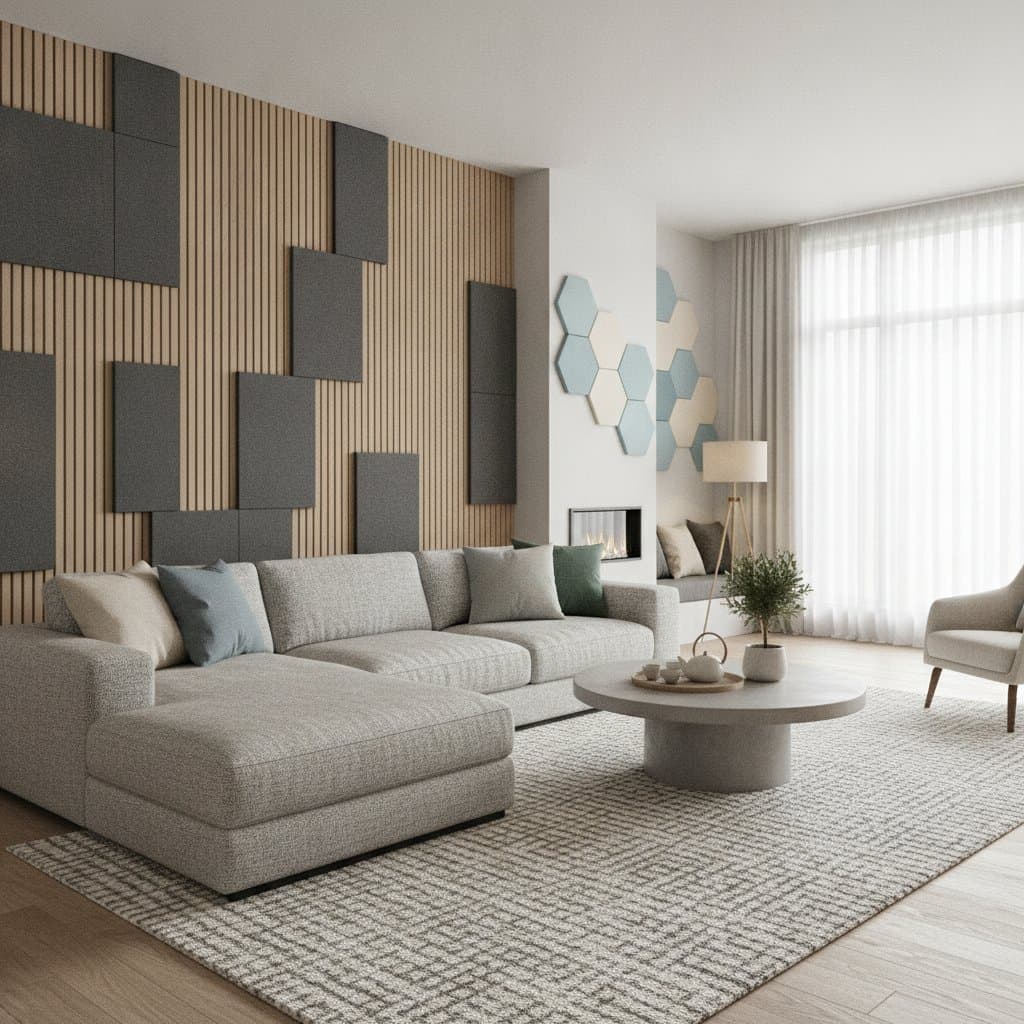
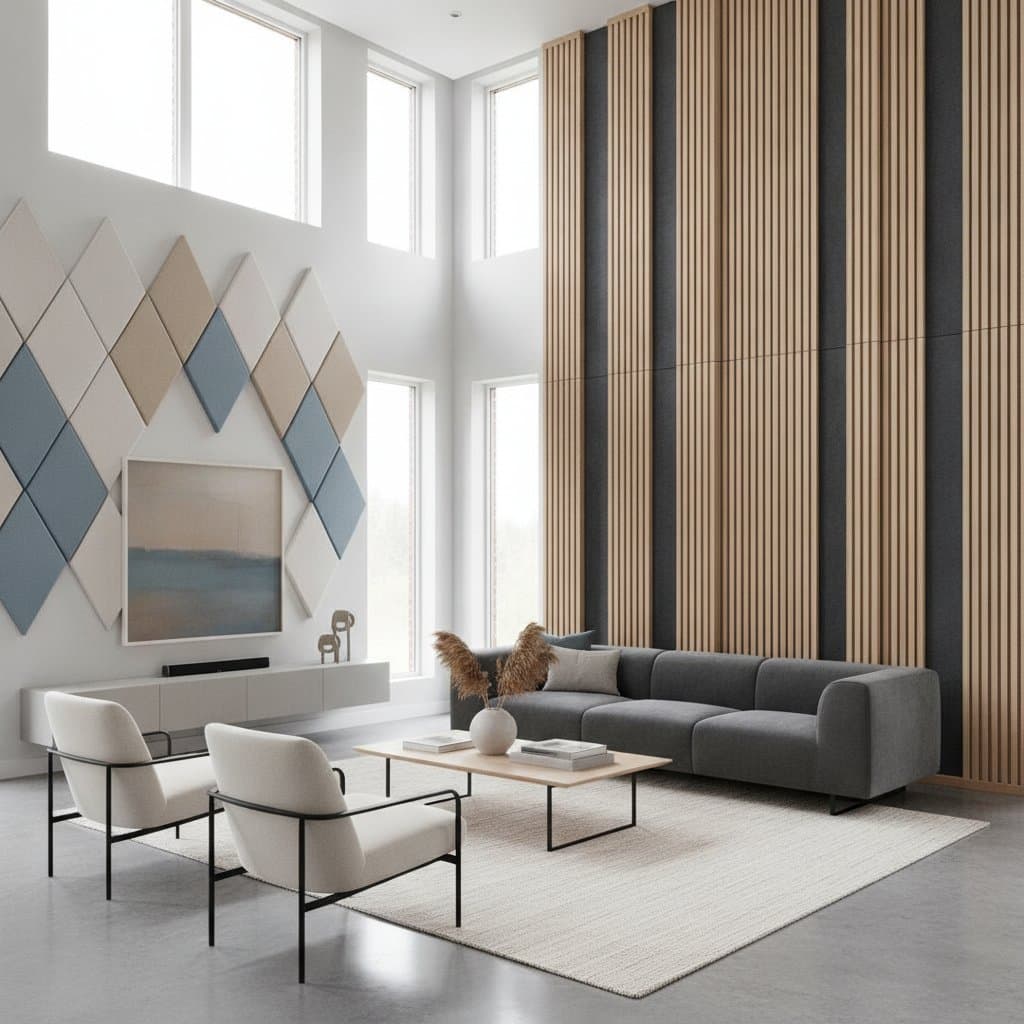
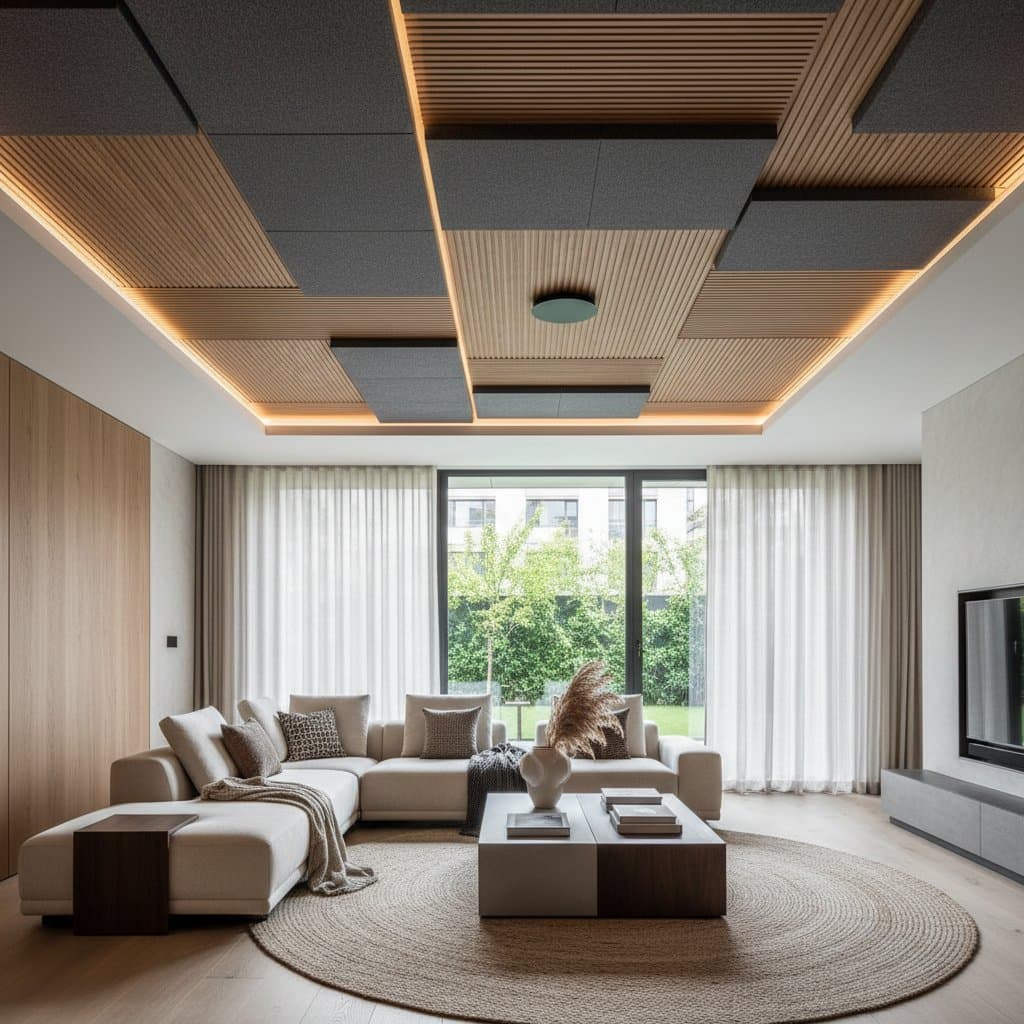
Wood slat ceilings consist of parallel strips, often in oak or walnut, placed over acoustic felt backing. Spaces of approximately one inch (2.5 centimeters) between slats allow sound to enter the absorber below, promoting thorough noise reduction. This style fits minimalist Scandinavian or mid-century modern rooms, pairing well with subtle wall shades like soft grays or bright whites.
Coffered Configurations
Coffered ceilings work well in traditional settings, featuring indented panels filled with acoustic tiles that address particular sound ranges. The added depth helps disperse sound waves, sharpening speech and cutting down on lingering echoes. A matte finish on these elements adds subtle dimension without dominating the room's proportions.
Suspended Fabric Clouds
For large or angled living rooms, lightweight fabric panels hung a short distance from the main ceiling serve as focused sound traps. Fabrics like linen or wool in colors that match furnishings offer precise absorption. These features preserve a sense of volume while controlling noise from above.
Layered Plaster Approaches
To achieve a smooth, understated look, install two layers of gypsum board over thick acoustic insulation, hiding the soundproofing completely. This creates a level, paintable surface that manages noise passage without changing the room's outline. The technique suits streamlined urban living areas that emphasize simplicity.
Integrating Practical Upgrades
Ceiling work grants access to concealed systems, allowing updates to wiring or the addition of discreet wall storage. Align these modifications with the acoustic installation to complete everything efficiently and prevent later interruptions. Experts recommend reviewing ductwork and electrical paths at the outset to match the selected ceiling design.
Balancing Benefits and Considerations
Acoustic ceilings improve daily comfort significantly, although certain setups lower the apparent ceiling height by several inches. Delicate materials such as fabrics require regular gentle cleaning to stay pristine, and upfront costs depend on the project's size and components. In the end, the advantages in functionality and home appeal justify the effort.
Realizing the Full Impact
Once installed, an acoustic ceiling allows living room functions to proceed with even sound distribution. Conversations sound precise, media reproduction reveals finer details, and routine noises fade appropriately. These thoughtful designs enrich the space quietly, encouraging relaxation and meaningful connections.