Sound-Absorbing Decor: Quiet Luxury for Modern Homes
Imagine entering your living room at the end of a demanding day. The door shuts, and the distant murmur of urban life diminishes. The room envelops you in softness, seclusion, and tranquility. This sensation captures the core of quiet luxury, a design approach that prioritizes serenity through thoughtful elements. Sound-absorbing decor extends beyond specialized environments like recording studios or office enclosures. It now enhances living rooms, bedrooms, and open kitchens, altering the sensory experience and functionality of contemporary residences.
The Hidden Noise Problem
Modern homes often harbor unnoticed acoustic challenges. Rigid materials such as tile floors, glass windows, and concrete walls reflect sound waves effectively. Open layouts, sparse furnishings, and polished surfaces amplify these effects, fostering echoes and persistent ambient noise. Even elegantly designed interiors can evoke fatigue when auditory clutter accumulates.
Sound-absorbing decor addresses this issue as more than a visual enhancement. It converts living spaces into refuges. Professionals working remotely, families navigating daily routines, or individuals seeking respite all benefit from diminished noise, which reshapes interactions within each area.
The Appeal of Quiet Luxury
Quiet luxury emphasizes elegance without ostentation. It favors tangible textures, gentle contours, and understated grace. The attraction rests in fostering environments that promote peace and individuality. Sound-absorbing decor aligns seamlessly with these principles. Options like velvet curtains, woolen carpets, cushioned wall treatments, and artistic acoustic panels deliver both visual appeal and acoustic efficacy. Each element fosters the subdued atmosphere essential to a restful dwelling.
How Sound-Absorbing Decor Works
Acoustic decor controls sound propagation at a fundamental level. Sound waves rebound from solid surfaces but penetrate and dissipate within porous, flexible materials. The objective involves achieving equilibrium rather than total quietude. This approach dampens reverberations while preserving the room's inherent vitality.
Effective materials include felt, cork, wool, and high-density foam, each excelling at energy absorption. Designers incorporate them innovatively, such as through wall panels that serve as artwork or pendant fixtures encased in sound-trapping fabrics. Furniture plays a role too. A generously padded sofa, layered cushions, or a substantial floor covering interrupts reflections and prevents widespread diffusion.
Smart Ways to Integrate Acoustic Elements
Incorporating acoustic features need not compromise design integrity. Contemporary selections offer extensive adaptability.
-
Acoustic Wall Panels
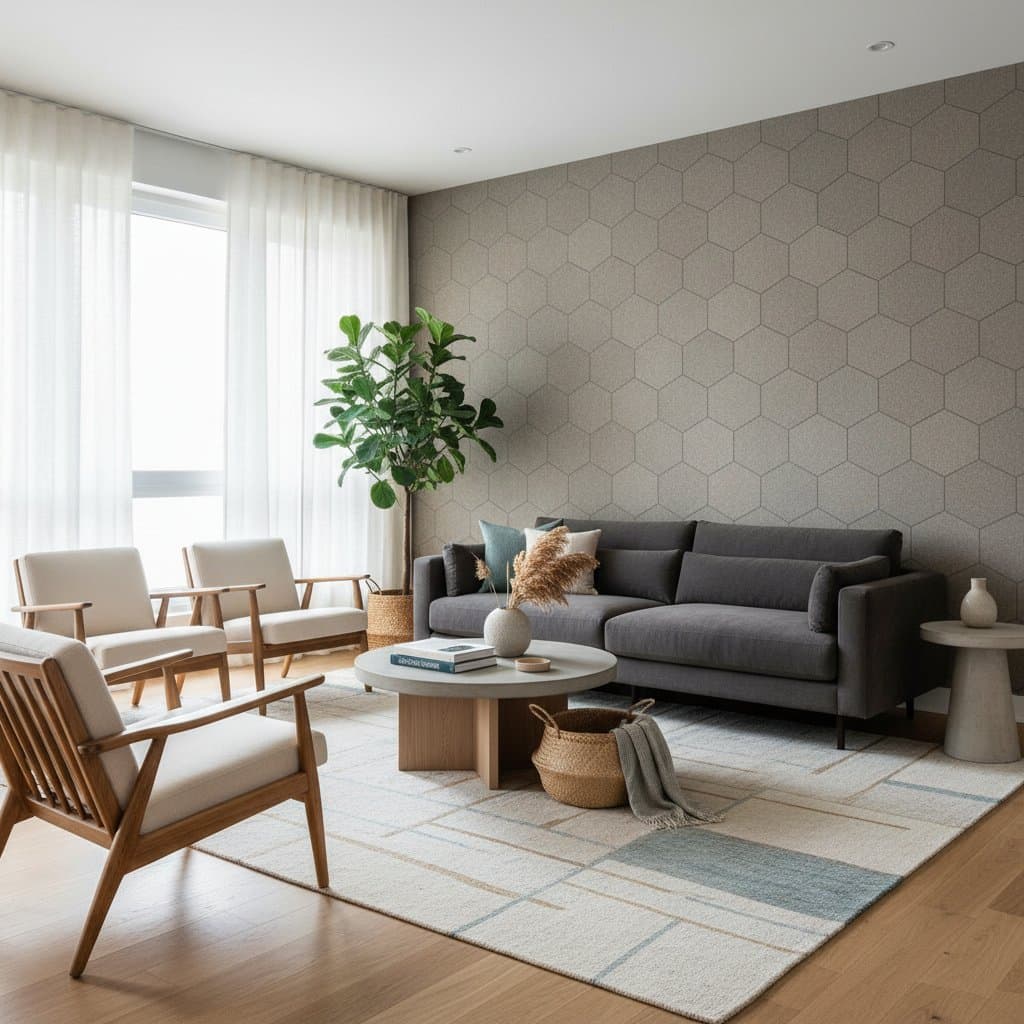
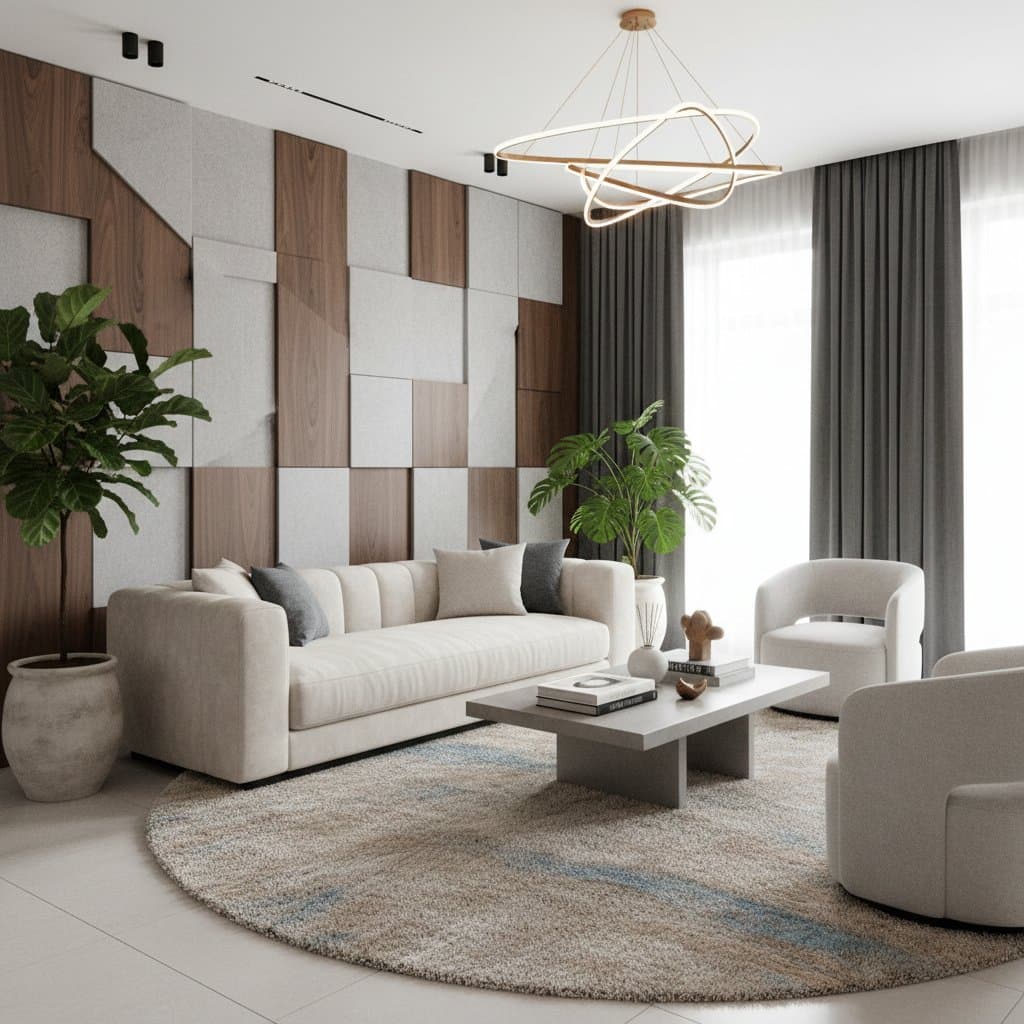
Available in diverse hues and finishes, these panels replicate natural wood grains or intricate weaves. Arrange them into symmetrical designs or designate one wall as a prominent feature. In communal areas or media rooms, they establish visual interest alongside enhanced audio definition. -
Textile Layers
Upholstered surfaces, window treatments, and floor coverings form the primary barrier against reverberation. Opt for substantial fabrics with multiple strata. A dense wool carpet provides underfoot insulation, while linen panels over expansive openings introduce softness and depth. -
Artistic Acoustic Tiles
Producers craft tiles resembling abstract sculptures. Grouped installations add dimension and curiosity while curbing reflections. These suit transitional spaces like corridors or eating areas, where exposed walls amplify sound. -
Acoustic Lighting
Overhead fixtures clad in absorbent materials like felt or cork capture ceiling-bound echoes. They also diffuse a warm, enveloping light that amplifies relaxation. -
Furniture Choices
Curved forms disperse sound more diffusely than angular alternatives. Fabric-covered seating and padded bed frames integrate well in private zones, such as rest areas or study corners.
Budget and Practical Considerations
Affordable entry points abound. Basic additions like window coverings or floor mats yield immediate improvements. Standard panels cost reasonably per unit area, whereas bespoke versions vary with material quality and customization. Homeowners typically blend accessible and tailored pieces for optimal results.
For extensive undertakings, engage an acoustics expert or design consultant. In fluid layouts, noise migrates across sections, so guidance identifies strategic placement without excess. Verify local regulations for fixed elements like embedded panels or hanging installations to ensure compliance.
Balancing Aesthetics and Performance
Successful acoustic integration relies on discretion. Select materials that harmonize with existing motifs while boosting usability. In streamlined settings, panels with precise edges and muted shades maintain cohesion. For varied interiors, combine elements like cork accents with wool details in harmonious palettes.
The Emotional Impact of a Quieter Home
Auditory environments influence emotions, concentration, and rest. Reduced noise instills stability. Dialogues gain clarity. Audio experiences deepen. Personal boundaries strengthen. Attuning to faint outdoor sounds or internal rhythms elevates the residence to a genuine haven.
Residents often report profound changes post-implementation. Enhanced acoustics promote sustained ease. The focus extends beyond technical control to cultivating holistic wellness.
Finding the Right Professionals
Uncertain starters may seek regional specialists in acoustic solutions. Utilize contractor-matching platforms to outline projects and receive proposals from qualified experts. These services verify expertise and offer assistance from material selection through secure setup, customizing approaches to spatial configurations, financial limits, and stylistic preferences. Such support ensures confidence throughout the process.
Implement Acoustic Enhancements for Lasting Calm
Sound-absorbing decor redefines luxury as subtle, sensory, and bespoke. Envision a peaceful sleeping quarters or a gathering space where voices resonate naturally. Targeted acoustic adjustments elevate ordinary areas to exceptional ones. Initiate with a single element, such as a floor mat or wall section, and observe tranquility expand. Progressive refinements align auditory harmony with visual splendor.