Curved Sofas Bring Softness to Modern Living Rooms
Imagine stepping into your living room after a busy day and finding a space that feels welcoming before you even sit down. A curved sofa can soften crisp architectural lines, encourage conversation, and give a modern room a more relaxed center. If your space feels a little too angular or formal, rounded furniture offers a practical way to transform its mood without redesigning every corner.
Why Rounded Shapes Feel So Inviting
Many modern living rooms rely on straight edges: rectangular coffee tables, square rugs, linear shelving, and sofas with sharp corners. These shapes can look clean and organized, but too many together may leave a room feeling stiff. A curved sofa introduces a gentle silhouette that breaks up those lines and creates a natural visual flow.
The appeal lies in the way a curve guides the eye. Instead of stopping at a hard corner, your gaze follows the sofa arc, making the arrangement feel softer and more connected. A rounded back or sculptural arm can also add a distinctive focal point, even when the fabric and color are understated.
It is not just about making a room look softer. It is about shaping how you use it. A curved sofa can invite people to turn toward one another, making conversation feel easier during a quiet evening or a gathering with friends. In open plan homes, its rounded outline can help define a seating area without blocking sightlines or adding a bulky divider.
Find the Right Curve for Your Room
Curved sofas come in several forms, from subtle bends to dramatic crescents. Choosing one is easier when you consider how you move through the room and how many people need a comfortable seat.
- A gently curved sofa suits rooms where you want a softer profile without giving up a familiar layout. It can work well in a medium sized living room and pair with a rectangular rug.
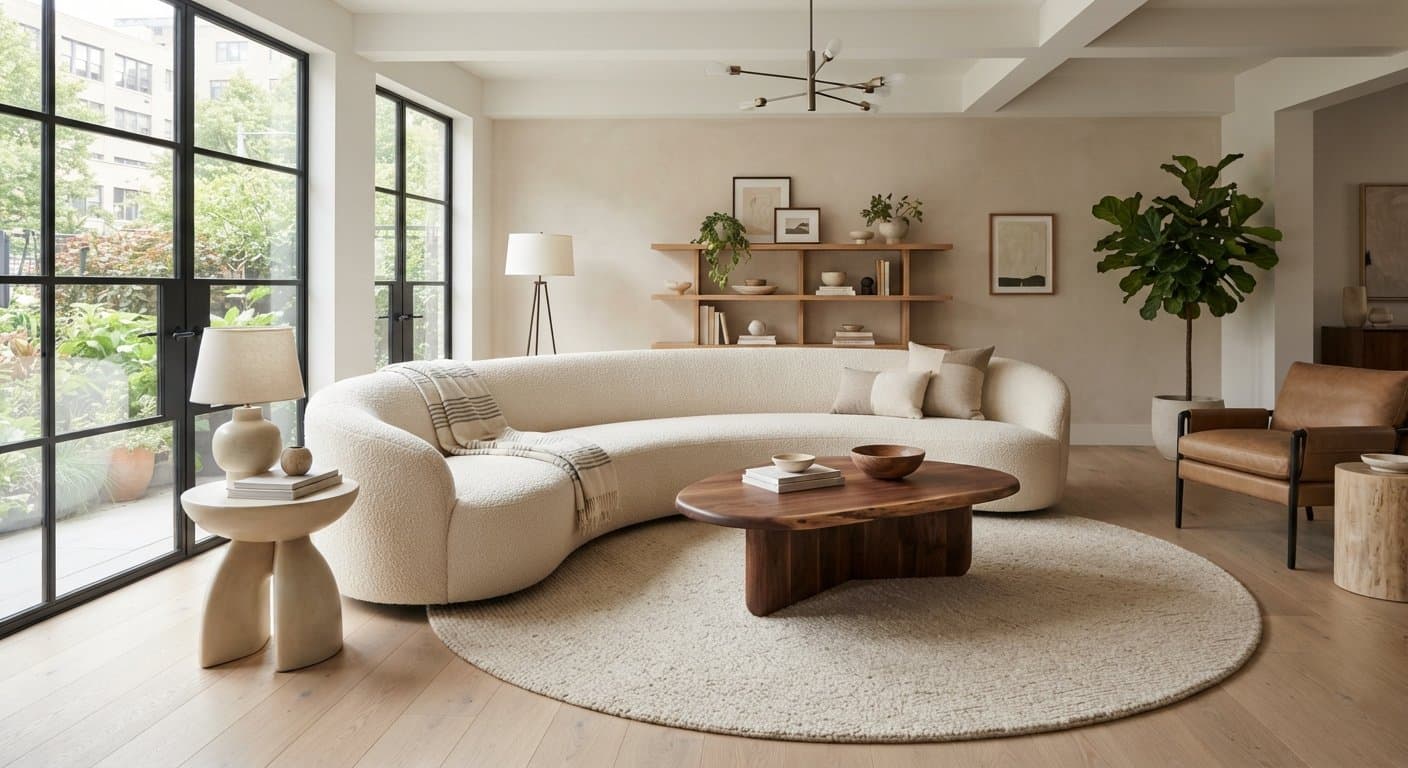
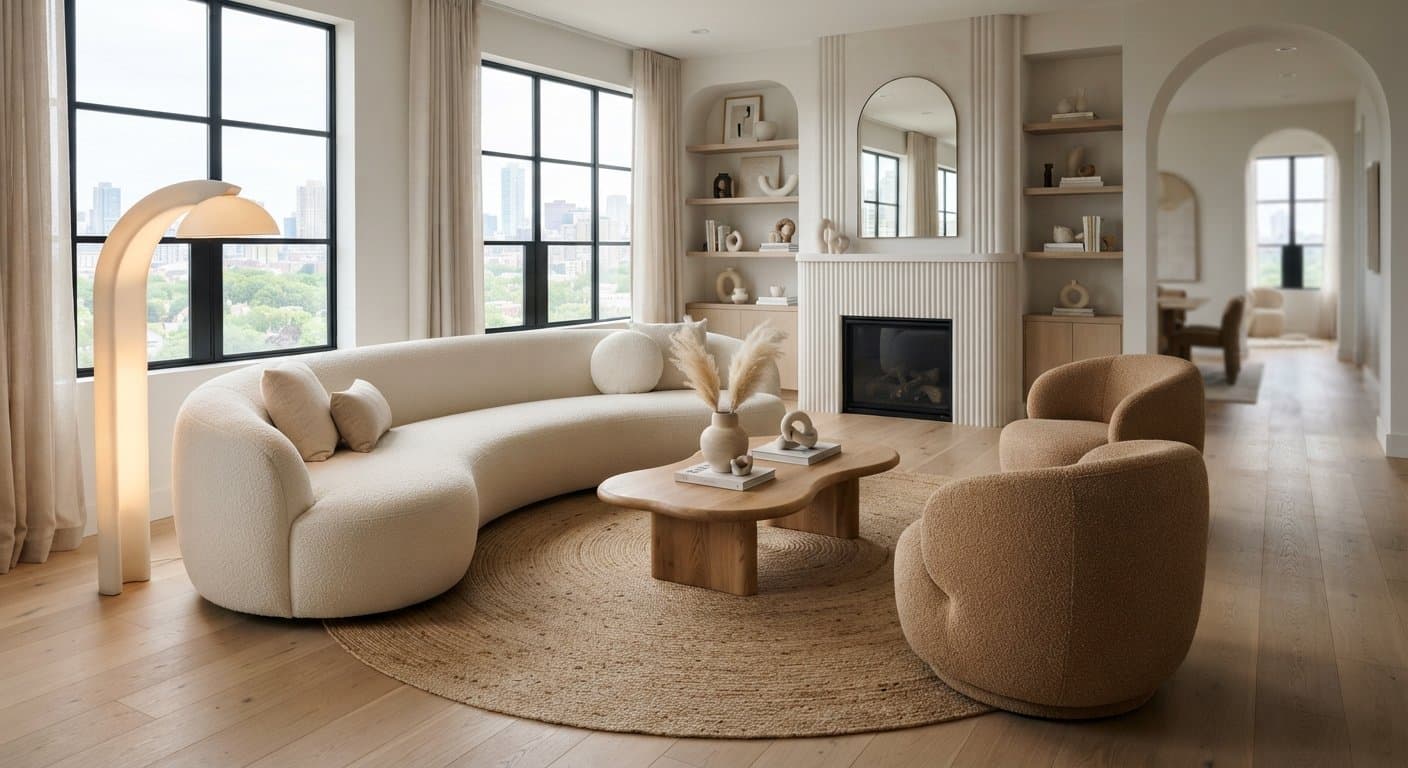
- A crescent or kidney shaped sofa makes a strong visual statement. It often works best in a spacious room where its shape can be seen from multiple angles.
- A modular curved sofa lets you arrange separate sections to suit changing needs. Check that the pieces connect securely and that the finished curve fits your floor plan.
- A curved sectional can wrap around a central coffee table or face a fireplace, creating a generous seating zone. Measure the full footprint carefully, including its deepest point.
Before shopping, mark the sofa outline on the floor with painter tape or paper. Leave clear paths to doorways, windows, and other frequently used areas. A beautiful silhouette should make your room easier to enjoy, not turn the route to the kitchen into an obstacle course.
Balance Soft Forms With Practical Pieces
A curved sofa has plenty of personality, so supporting furniture should complement its shape instead of competing with it. A round coffee table echoes the sofa lines, while an oval table offers a softer edge and useful surface area. If you prefer a square or rectangular table, choose one with rounded corners for a comfortable middle ground.
Layering different shapes gives the room depth. Try a round side table beside one arm, a low circular ottoman opposite the sofa, or an arched floor lamp that repeats the room gentle movement. Keep enough space between pieces for people to sit and walk comfortably.
Your rug can help anchor the arrangement. A round rug emphasizes a sculptural seating group, while a rectangular rug provides a clear foundation in a long room. Make sure the rug is large enough for at least the front legs of the sofa and nearby chairs to rest on it. This small detail helps the furniture feel connected rather than scattered.
For color, consider the atmosphere you want. Cream, warm gray, and muted green can create a calm backdrop, while a richer rust or deep blue makes the sofa a bold centerpiece. Textured upholstery, such as boucle or a nubby weave, adds tactile warmth, but review cleaning instructions before choosing a fabric for a home with pets or young children.
Plan for Comfort, Scale, and Budget
A sofa can look striking in a showroom and feel entirely different in your own home. Sit on it before buying when possible, and pay attention to seat depth, back support, cushion firmness, and arm height. Some curved designs have a shallower seat or unusual contours, so comfort depends on your preferred posture.
Measure more than the space where the sofa will sit. Check the width and height of entry doors, hallways, stair turns, and elevators. Ask the retailer for the sofa delivery dimensions, especially if it is a one piece design. Modular sections may be easier to maneuver, although their connectors and seams should feel secure.
Costs vary with size, upholstery, construction, and whether the design is custom or modular. An affordable option might be a compact sofa in a durable, easy care fabric. Midrange designs often offer more upholstery choices and sturdier frames. Premium or custom pieces can provide tailored dimensions, distinctive fabrics, and refined construction, but delivery and special order fees may add to the total.
To keep your budget on track, compare the full delivered price, not only the listed sofa price. Ask about fabric samples, care requirements, warranties, and return terms. Consider a smaller curved sofa with movable chairs if a large sectional stretches your budget. Set aside room for a suitable rug and tables, since the sofa may change how the rest of the arrangement works.
Make the Shape Work in Everyday Living
Curves are versatile, but placement matters. In a compact room, position a smaller curved sofa away from the walls if the layout allows. This can make the space feel intentionally arranged, though you should preserve a clear walking route. In a larger open plan room, use the sofa back to gently separate the lounge from a dining area while keeping the space visually open.
Lighting can bring out the sofa form. A floor lamp beside the curve creates a cozy reading spot, while a pendant or ceiling fixture can help define the seating area from above. Add cushions in a mix of shapes, but avoid overcrowding the seat. One or two well chosen cushions can emphasize the silhouette without hiding it.
If you are drawn to the rounded furniture trend but not ready to replace your main sofa, start with a curved accent chair, an oval coffee table, or a rounded ottoman. These smaller choices introduce organic forms gradually and let you see how they fit your home. You can build from there as your needs and budget allow.
Select the Right Curved Sofa for Your Space
Start by measuring your room dimensions and noting traffic patterns. Consider how the sofa will interact with existing furniture and architectural features. Test different curve depths by arranging temporary seating arrangements with chairs or ottomans.
Pay attention to the sofa scale relative to your ceiling height and room proportions. A dramatic curve works best in larger spaces with high ceilings, while subtle curves suit standard rooms. Check that the sofa depth allows comfortable conversation distances between seated guests.
Maintain Your Curved Sofa Investment
Regular maintenance keeps curved sofas looking fresh and extends their lifespan. Rotate cushions weekly to prevent uneven wear along the curve. Vacuum upholstery monthly using appropriate attachments, and address spills immediately according to fabric care labels.
Professional cleaning every twelve to eighteen months preserves fabric integrity, especially for textured materials like boucle. Keep pets nails trimmed and consider washable slipcovers for homes with children. Store extra fabric swatches for future repairs or color matching.
Whether you are dreaming of a serene reading nook or a lively gathering place, the right curved sofa can make your living room feel more generous and relaxed. Get ready to choose a piece that suits your measurements, comfort preferences, and daily routines, then let its soft outline guide the rest of the room.