Curved Boucle Sofas Transform Boxy Living Rooms
A curved boucle sofa introduces sculptural comfort to a living room while softening rigid architectural lines. The rounded silhouette and textured upholstery create a focal point that encourages conversation without relying on bold color. Success depends on matching the sofa dimensions to the room layout, selecting appropriate fabric, and pairing the piece with complementary furniture.
When a Curved Sofa Improves the Space
Most living rooms contain straight walls, rectangular windows, and furniture arranged parallel to those edges. A curved sofa interrupts this geometry by guiding the eye inward and positioning people to face one another. This arrangement works particularly well in open-plan spaces where the sofa needs to define the living area without blocking sightlines to the kitchen or dining space.
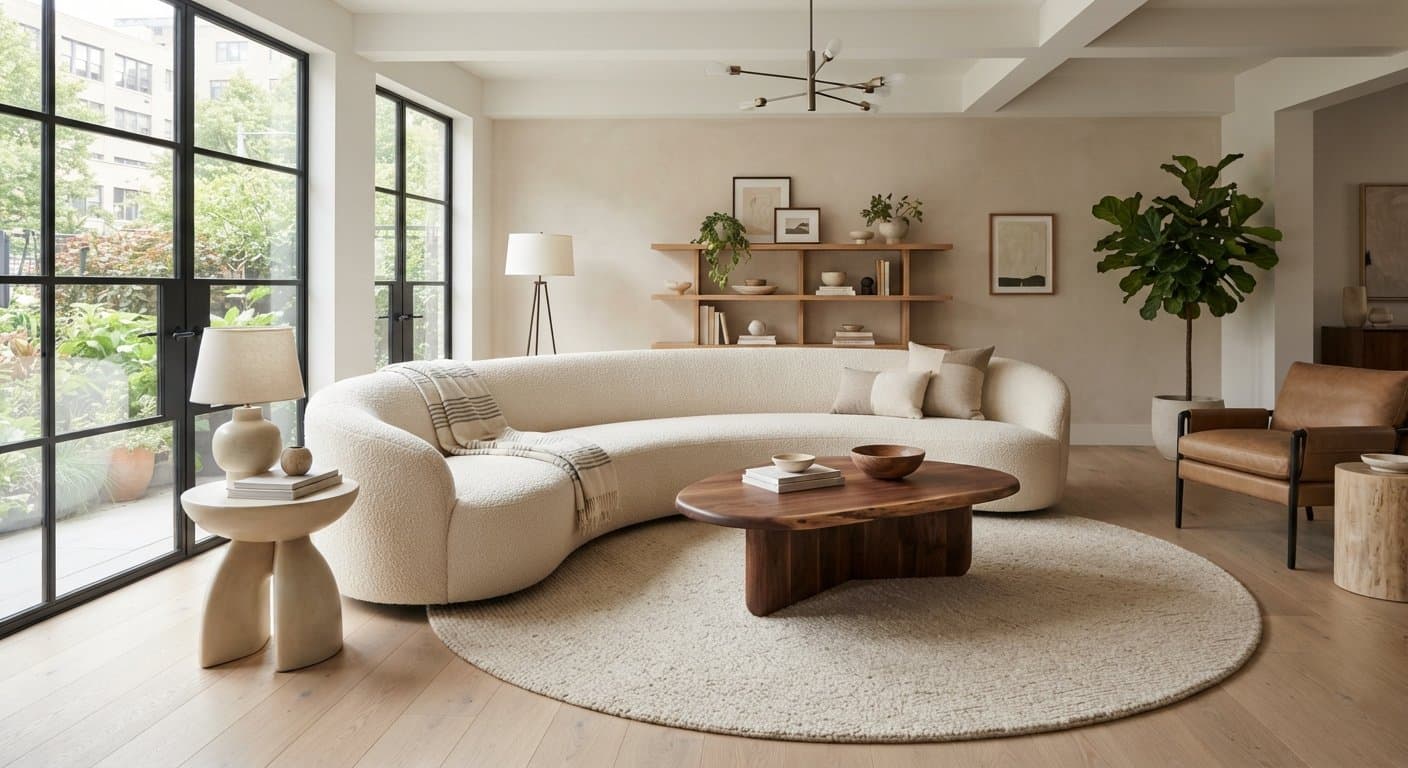
Boucle fabric adds another dimension. The looped texture catches light softly and gives the rounded form a cozy appearance. Creamy white or warm ivory boucle brightens a room, while caramel, olive, or charcoal tones add depth without overwhelming the space. The combination creates visual interest that remains approachable rather than dramatic.
Layout Considerations Before Purchase
Measure the room carefully before selecting a curved sofa. Use painter's tape to mark the sofa's widest points on the floor, including the curve's extension into walkways. A curved piece often requires more clearance than a straight sofa of similar length, and insufficient space makes the furniture feel intrusive rather than inviting.
Check access routes as well. Hallways, doorways, and stair turns may be narrower than the living room itself. Confirm whether the sofa arrives in sections or with removable legs, and request packed dimensions if delivery presents challenges.
Selecting the Right Sofa for Daily Use
Consider how the household uses the seating area. Some curved sofas feature shallow seats and upright backs suited for conversation, while others offer deeper cushions for extended lounging. Test the model in person when possible, noting seat depth, cushion firmness, and back support.
Fabric choice affects both appearance and maintenance. Boucle made from wool, cotton, polyester, or blends each requires different care. A tighter synthetic blend suits busy households with children or pets, while wool-rich fabric offers a naturally rich texture. Request cleaning guidance and a fabric sample to evaluate the color and texture under the room's lighting conditions.
Furniture Pairings That Support the Design
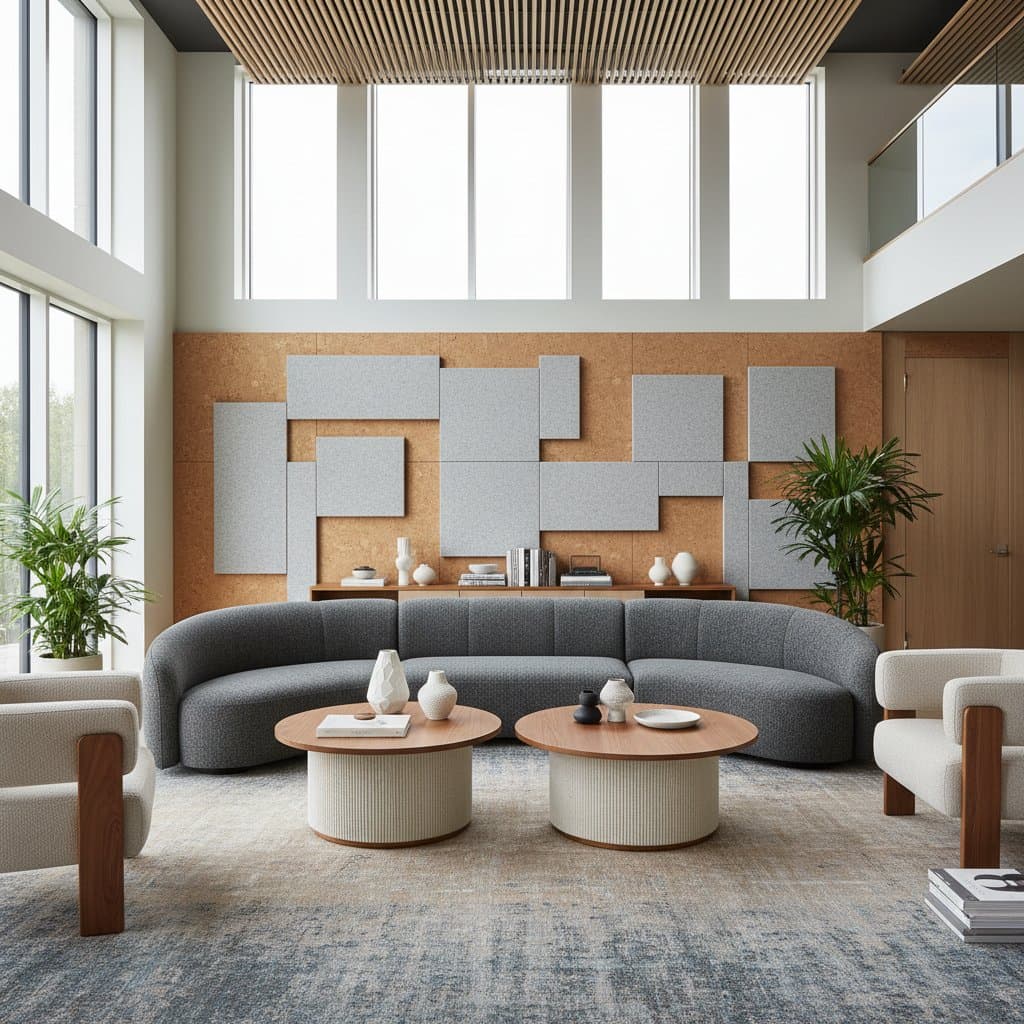
A sculptural sofa needs supporting pieces that complement rather than compete with its curves. A circular or oval coffee table echoes the sofa's silhouette and provides easier movement around the seating area. A slim rectangular table can work if adequate clearance exists at the corners.
Layer lighting throughout the space. A floor lamp positioned behind one end of the sofa creates a reading area, while table lamps and wall sconces provide softer illumination than a single overhead fixture. Mix materials such as walnut, brushed metal, matte ceramic, and smooth stone to create contrast with the boucle texture.
Rug Placement and Accessory Choices
A rug should extend beneath the front legs of all seating pieces to connect the arrangement visually. In smaller rooms, a light-colored rug helps the sofa feel less imposing. In larger spaces, a subtly patterned wool rug grounds the seating zone and prevents the arrangement from appearing to float.
Keep accessories minimal. One textured throw and a few cushions add color without obscuring the sofa's sculptural outline. Excessive pillows flatten the curved profile and reduce the design impact.
Maintenance for Long-Term Satisfaction
Boucle upholstery requires regular attention to maintain its appearance. Vacuum weekly with an upholstery attachment to remove dust from the loops. Address spills immediately according to the fabric's cleaning code, and rotate cushions periodically to distribute wear evenly.
Households with pets may benefit from a mid-tone fabric that conceals hair and minor marks. A basket of throws positioned nearby provides protection during daily use without making the room feel formal. Removable covers, when available, simplify deep cleaning.
Creating Conversation Areas
Position the curved sofa to define a welcoming zone rather than pushing it against a wall. The rounded back creates a gentle boundary while the open ends allow people to enter the seating area from multiple directions. This arrangement works well for both family gatherings and entertaining guests.
Add a side table and reading lamp at one end to create a quiet corner within the larger seating area. The combination supports different activities within the same space, from conversation to individual reading.
Budget and Construction Options
Compact curved sofas in durable blended fabrics provide the sculptural effect at lower cost. Premium options may include custom upholstery, higher-grade frames, feather and foam cushions, or removable covers. Compare construction details and care requirements rather than focusing solely on initial softness.
Daily Living With the Design
A well-chosen curved boucle sofa supports ordinary household routines while improving the room's overall feel. The rounded form creates a gathering place for conversation, offers guests an inviting seat, and softens spaces used for work and relaxation. When the dimensions, fabric, and supporting furniture align with the household's needs, the sofa becomes a practical focal point rather than a design statement alone.