Soundproof Textiles That Silence Your Living Room
Consider the moment when you settle on the sofa with a cup of tea, only to hear every footstep from the hallway, the hum of the refrigerator, and the neighbor's television through the wall. Your living room may appear inviting, yet it amplifies these disturbances. Most spaces prioritize visual appeal over acoustic comfort, with hard floors, bare windows, and sparse furniture allowing sounds to reverberate endlessly.
Soundproof textiles offer a subtle solution. These materials combine aesthetic appeal with functional benefits, absorbing echoes and dampening noise without altering the room's character. Simple additions can create a more grounded and serene environment. The following sections explore effective options for enhancing your living room's acoustics.
1. Curtains and Drapes That Muffle Outside Noise
Windows often serve as entry points for external sounds, such as traffic or neighborhood activity. Heavy curtains or drapes act as barriers, reducing the transmission of these noises into the space.
Why it matters: Thick fabrics prevent sound waves from passing through glass, which reflects rather than absorbs audio. Layered drapes with insulating backings capture mid-to-high frequencies effectively.
Smart detail: Select floor-length panels made from velvet, suede, or thermal-lined cotton. Hang them close to the window frame to minimize gaps, and consider pleated styles for increased fabric density. Sheer curtains provide light but little acoustic benefit, so pair them with heavier liners if style demands transparency.
Designer insight: Interior specialists note that clients experience immediate relief from street noise after installing custom drapes. Conversations become clearer, and the room feels more insulated from the world outside.
2. Upholstery That Softens Every Sound
Sofas and chairs represent substantial surfaces in a living room. Upholstered pieces with dense padding absorb mid-range frequencies that contribute to hollow echoes in empty spaces.
Why it matters: Soft, fibrous materials trap sound vibrations, preventing reflection off hard surfaces. This creates a balanced acoustic environment where noises dissipate quickly.
Smart detail: Opt for fabrics such as chenille, velvet, or heavy twill, which offer superior absorption while maintaining durability. Leather provides elegance but reflects sound; counteract this by adding fabric throws or ottomans covered in plush materials.
Designer insight: Clients often report that switching from a leather sectional to a deeply cushioned fabric version lowers the need for high television volumes and improves conversational clarity. Such changes deliver understated acoustic luxury.
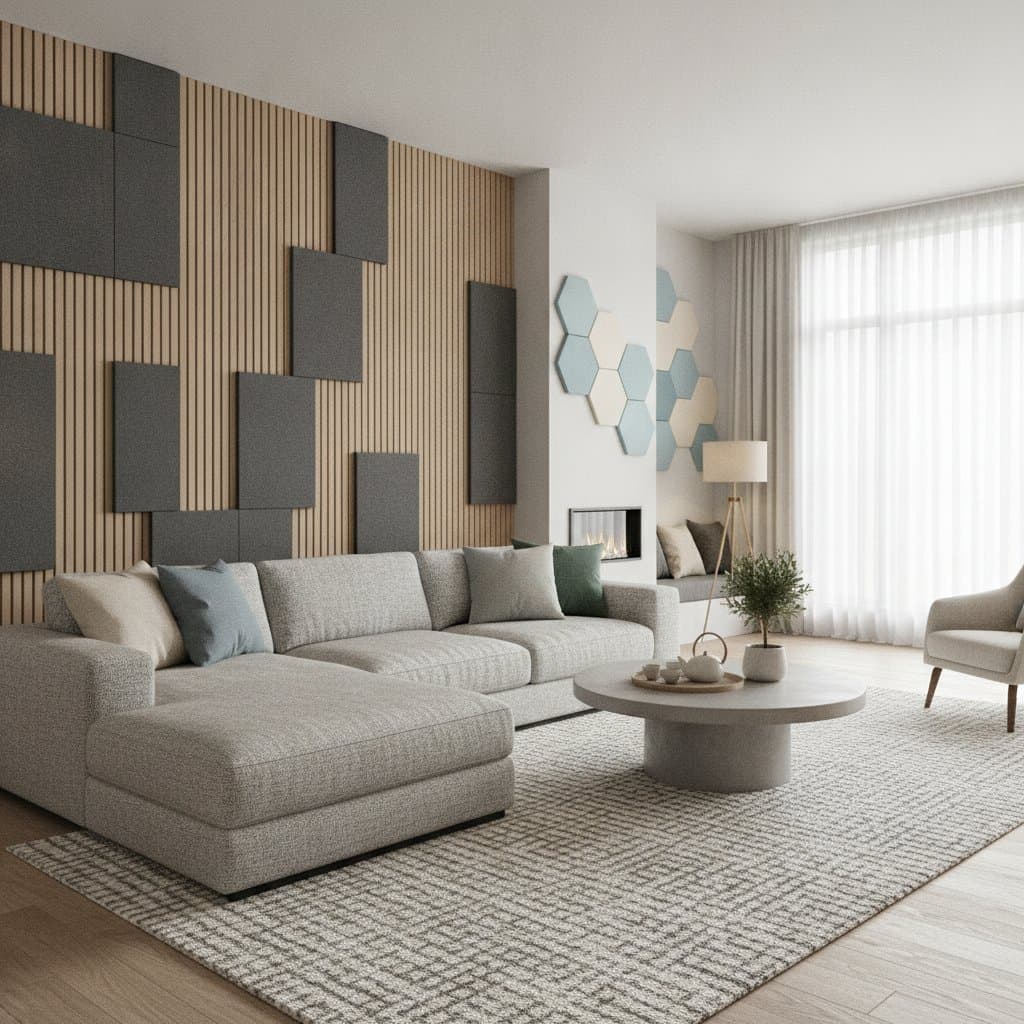
3. Acoustic Panels Disguised as Art
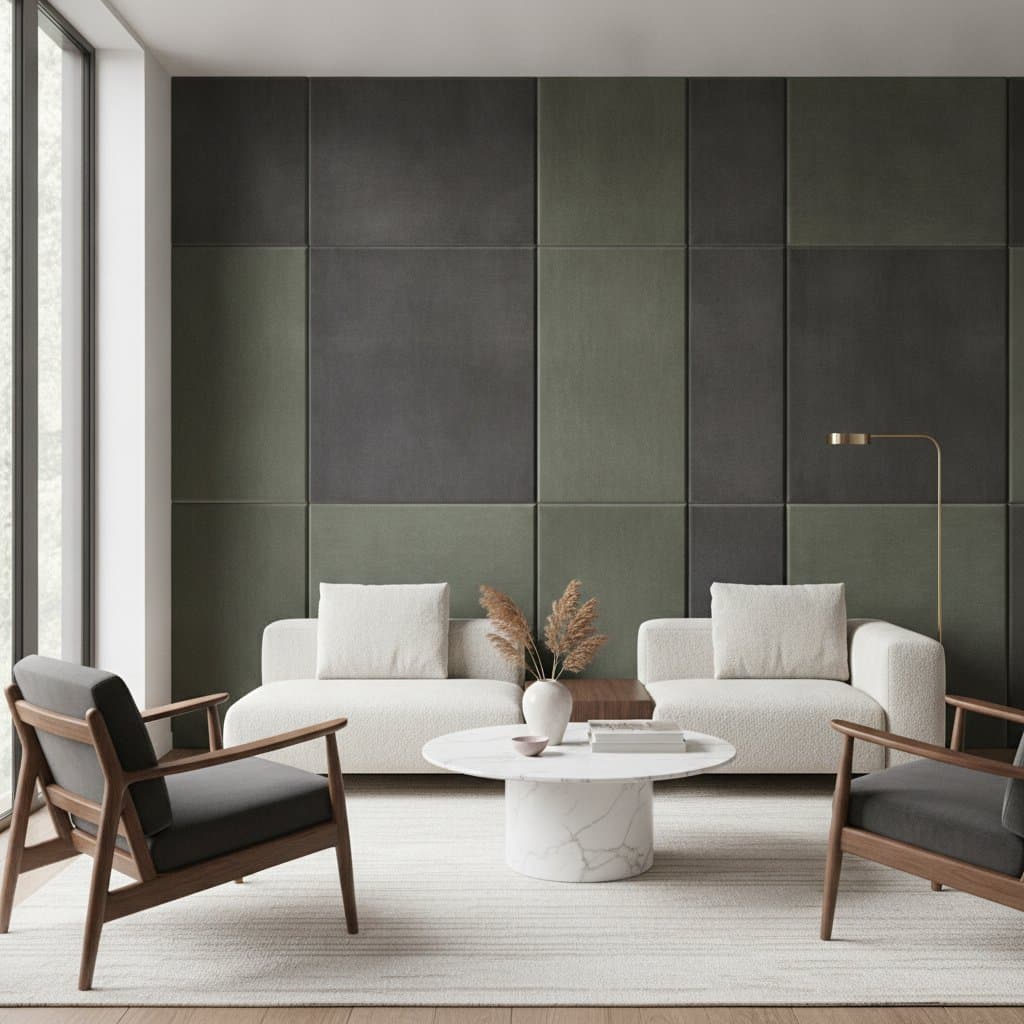
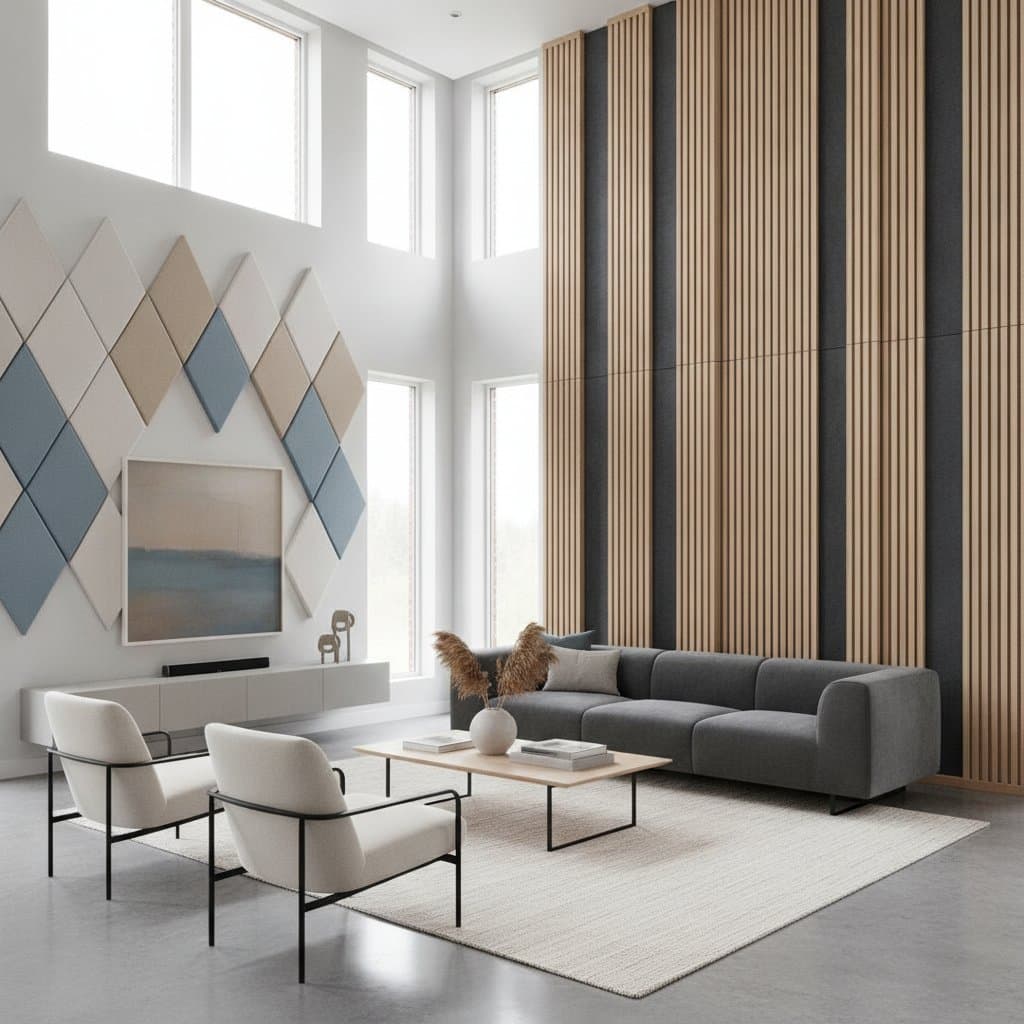
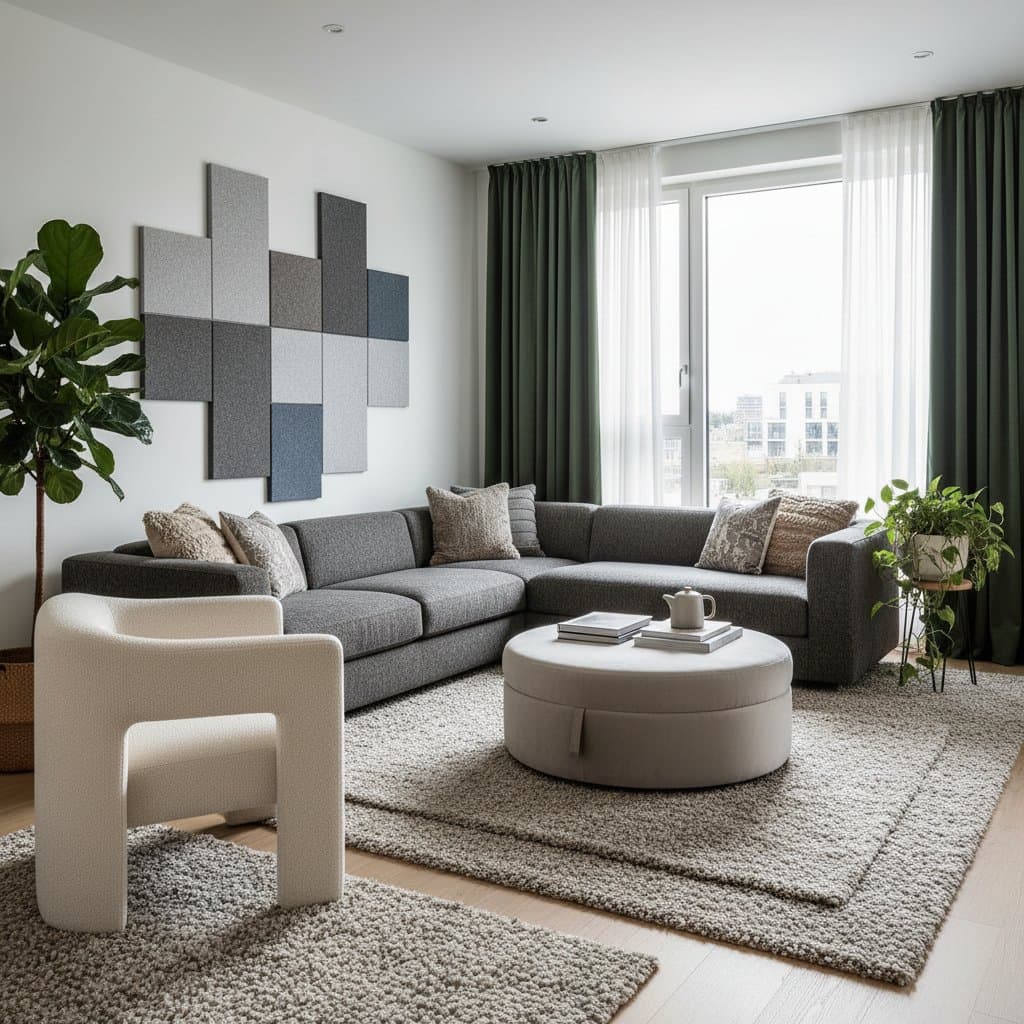
Exposed walls amplify echoes, turning minor sounds into persistent distractions. Acoustic panels, when covered in decorative fabric, blend functionality with design.
Why it matters: These panels target reverberation by absorbing sound across a broad frequency range. Placed strategically, they reduce overall noise levels without dominating the visual landscape.
Smart detail: Choose panels wrapped in linen, wool, or patterned textiles that match your decor. Mount them behind seating areas or along longer walls for optimal coverage. DIY options include framing absorbent foam with fabric, ensuring at least two-inch thickness for effectiveness.
Designer insight: Professionals recommend starting with four to six panels in a standard living room. Homeowners frequently describe the result as a noticeable softening of ambient noise, making the space feel more intimate.
4. Rugs That Do More Than Warm Your Toes
Hard flooring materials like wood or tile reflect footsteps and furniture shifts loudly. A substantial rug with proper underlayment absorbs these impacts and airborne sounds.
Why it matters: Dense pile and padding function like a foundational sound barrier, defining acoustic zones in open-plan areas.
Practical advice: Select wool, cotton, or jute rugs paired with thick felt or rubber pads. Layering a large base rug with a smaller patterned one enhances both absorption and visual interest. Thin synthetics provide minimal benefit, so prioritize natural fibers for longevity and performance.
Everyday perk: Beyond acoustics, rugs improve comfort underfoot and reduce physical strain during daily activities. This combination elevates the room's practicality.
5. Wall Hangings and Tapestries for Added Depth
Blank walls contribute to sound buildup by offering no resistance to echoes. Fabric wall hangings or tapestries introduce soft textures that interrupt sound paths.
Why it matters: These elements cover vertical surfaces, absorbing higher frequencies that bounce between walls and ceilings.
Smart detail: Use large-scale tapestries or quilted hangings in breathable fabrics like cotton or silk blends. Position them opposite windows or above doorways to target common reflection points. Avoid lightweight prints; heavier weaves yield better results.
Designer insight: In treatments for open living areas, these additions create subtle divisions that enhance privacy and calm. Users appreciate how they add warmth without overwhelming the space.
6. Cushions and Throws That Pull Double Duty
Accessories like pillows and blankets accumulate soft surfaces incrementally. Distributed thoughtfully, they disrupt sound travel near reflective elements such as glass tables or stone accents.
Why it matters: Multiple layers increase encounters between sound waves and absorbent materials, gradually reducing reverberation.
Simple strategy: Incorporate varied textures, including knits, velvets, and wools, across seating and surfaces. Replace hard accents, like metal trays, with fabric poufs to amplify the effect.
Bonus effect: The added softness visually reinforces acoustic improvements, fostering a cohesive sense of tranquility.
Selecting Effective Textiles
Effectiveness depends on material properties rather than appearance alone. Prioritize density and texture to maximize absorption.
Checklist for success:
- Weight: Favor heavier options, such as those designed for blackout or insulation.
- Texture: Select nubby, plush, or fibrous surfaces over smooth finishes.
- Coverage: Apply fabrics across floors, windows, walls, and furniture for comprehensive impact.
- Balance: Combine dense pieces with lighter ones to maintain airiness.
- Integration: Ensure colors and patterns harmonize with existing decor for seamless enhancement.
Approach implementation as cumulative layering. Individual items contribute modestly, but collective application transforms the acoustics.
Achieving Lasting Acoustic Comfort
Soundproof textiles integrate effortlessly into living room designs, preserving style while delivering quiet benefits. Drapes hush external intrusions, upholstery tempers internal echoes, and rugs ground the space overall.
These elements cultivate an environment that supports relaxation and focus. The result is a living room where serenity enhances daily life, proving that thoughtful fabric choices yield profound, enduring improvements.