Create Silent Sanctuaries with Acoustic Bedroom Decor
Noise drains energy in subtle ways. Traffic hums, neighbor televisions, or footsteps from adjacent rooms disrupt the rest essential for restoration. A bedroom serves as a retreat that restores balance and permits the body and mind to unwind. Thoughtful acoustic decor softens sound, reduces echo, and crafts a cocoon of peace without demanding a complete renovation.
The Quiet Power of Sound Control
Sound shapes emotions within a space. Rooms that absorb noise rather than reflect it promote stability and calm. Acoustic decor diminishes reverberation and external intrusions while introducing warmth and texture. Soft surfaces, layered fabrics, and natural materials foster comfort that encourages relaxation.
Modern acoustic design integrates aesthetics with function. Materials appear elegant yet perform silently. The aim involves nurturing quiet rather than stark emptiness.
Start with the Surfaces
Surfaces dictate sound behavior in a bedroom. Hard, uncovered walls and floors amplify noise, whereas soft, porous elements absorb it. Examine primary areas to address acoustics effectively.
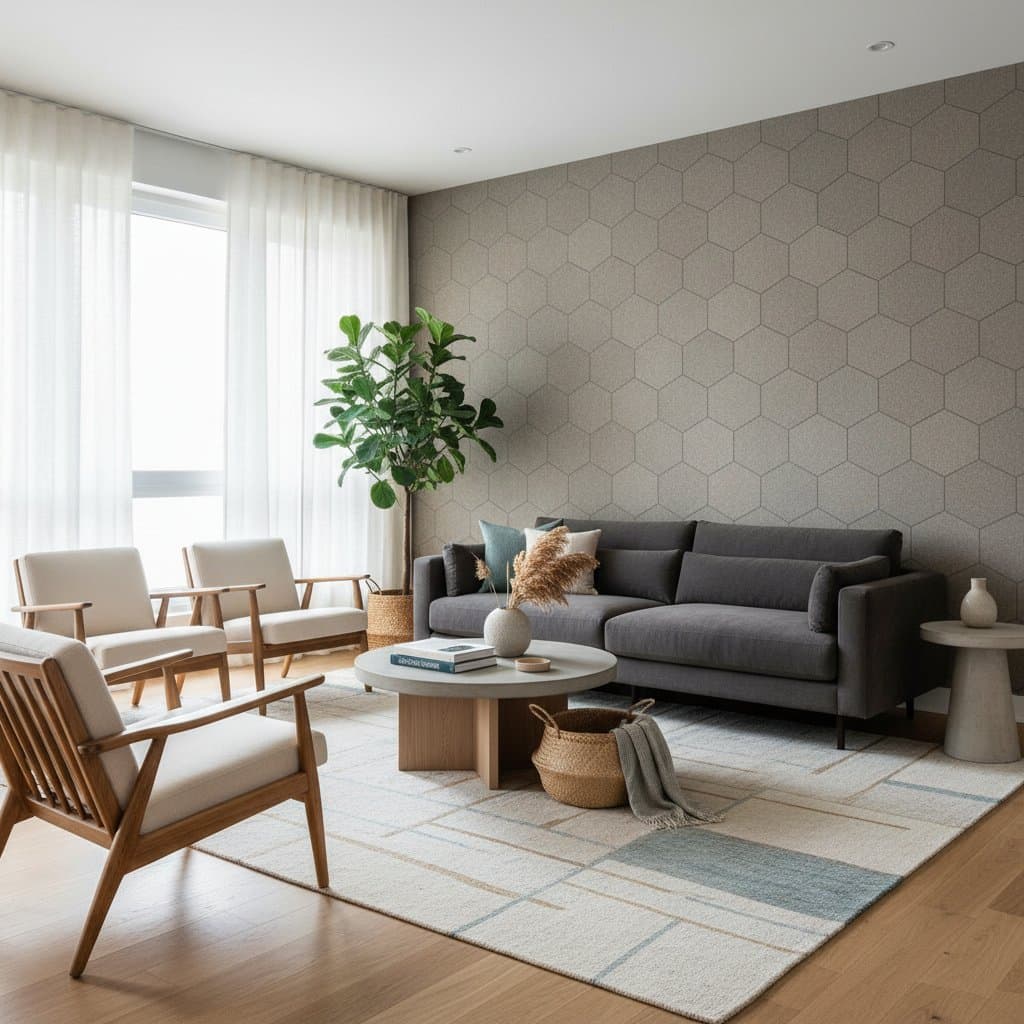
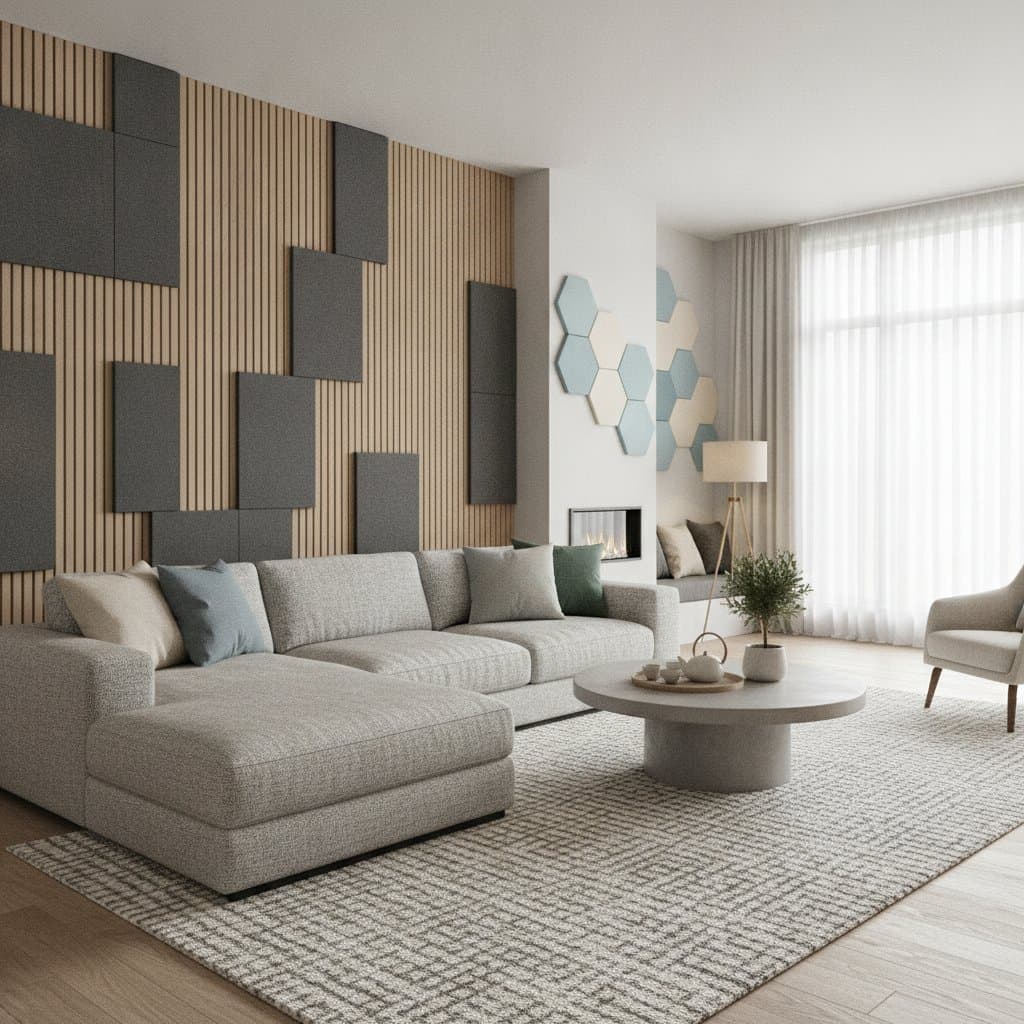
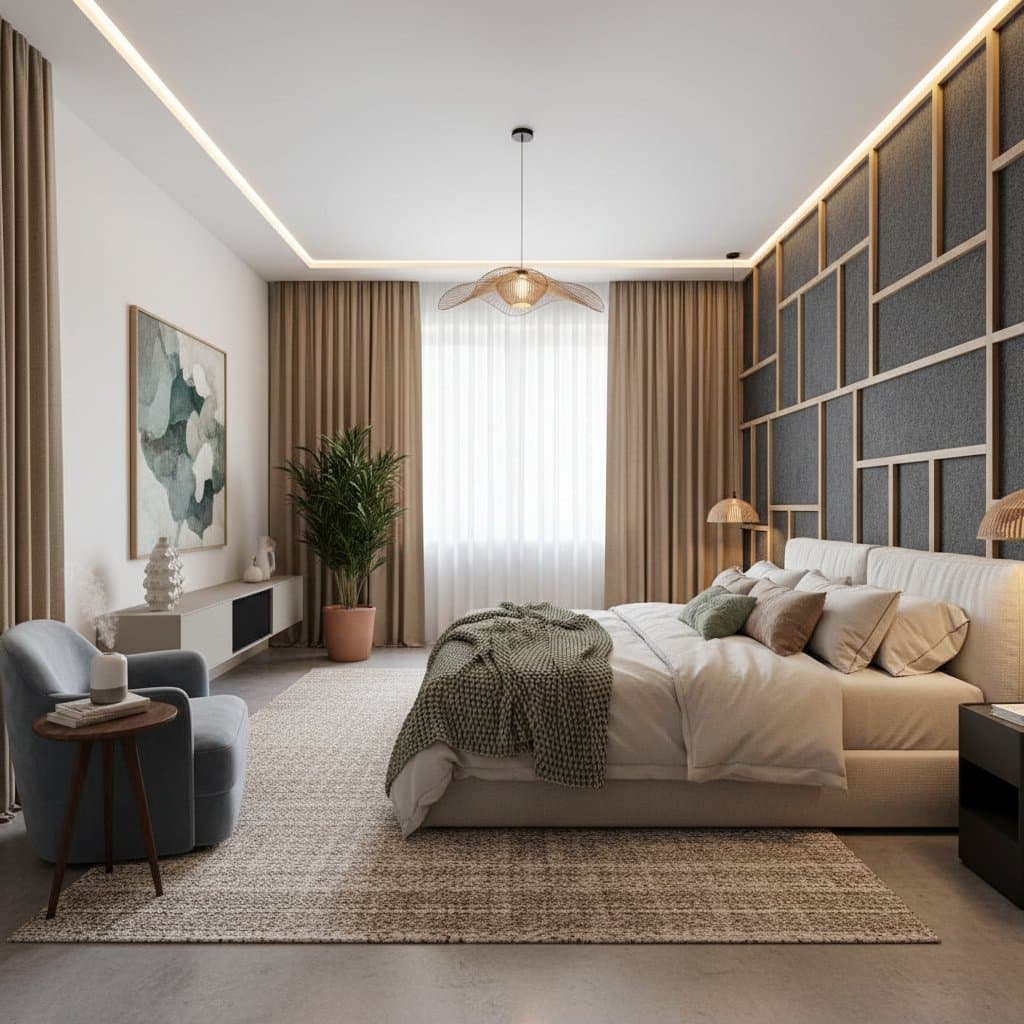
- Walls: Install acoustic panels or upholstered wall art to cut echo significantly. Select fabric-wrapped options that align with your palette; they mimic minimalist art or integrate seamlessly.
- Floors: Place a thick area rug to cushion steps and muffle inter-floor transmission.
- Windows: Employ layered curtains with a sheer inner panel for light diffusion and a dense outer layer for noise blockade. Opt for linings of felt or heavy fabric to enhance performance.
- Ceilings: Address overhead sounds with lightweight acoustic tiles or a fabric canopy that scatters noise.
- Doors: Hollow-core doors permit easy sound passage; upgrade to solid-core models or attach a soundproof sweep to seal bottom gaps.
These modifications extend beyond sound absorption. They infuse tactile depth that grounds the room and enhances security.
Layering for Comfort and Quiet
After addressing core surfaces, incorporate layers for dual visual and acoustic benefits. Textures intercept sound waves and moderate their travel.
- Bedding: Select natural fibers such as cotton, linen, or bamboo; their weaves capture micro-vibrations and provide skin-soothing contact.
- Throws and Cushions: Arrange several on the bed or a reading chair to function as compact sound dampeners while contributing color and warmth.
- Headboards: Upholstered versions deliver luxury and superior absorption. A tall design shields against noise from adjacent walls.
- Tapestries or Fabric Panels: Suspend woven or fabric art pieces for aesthetic and acoustic value; they trap echoes and introduce organic elements.
Build layers gradually. Initiate with modest additions, observe improvements, and expand until acoustic equilibrium emerges.
Choosing the Right Acoustic Panels
Acoustic panels function as understated champions in sound-optimized interiors. Designs range from sleek rectangles to artistic forms that serve as decor. Evaluate these factors during selection:
- Material: Prioritize felt, recycled fabrics, or natural fibers for effective absorption without synthetic irritants.
- Placement: Target the wall facing the primary noise origin, such as positioning behind the headboard if hallway sounds intrude.
- Color and Texture: Match wall hues for subtlety or select bold accents; neutral shades evoke serenity, and varied textures provide dimension.
- Size: Larger formats handle bass frequencies adeptly; mix smaller units for adaptability or form a focal installation.
Panel installation suits a weekend endeavor. Results appear instantly, with options for reconfiguration alongside furniture shifts.
Furniture Placement that Supports Silence
Furniture influences sound pathways. A loaded bookshelf against a shared wall forms an organic barrier. Upholstered benches or padded chairs capture vibrations. Bed positioning counts; situate it distant from the home's noisiest walls when feasible.
Conduct this assessment: Clap in the bedroom and note the echo duration. Visualize introducing a curtain, rug, or furnishing where rebound occurs most. Incremental additions progressively mute the resonance to a soothing level.
Lighting and Mood in a Quieter Space
Reduced noise heightens awareness of ambiance, where light plays a complementary role. Warm bulbs and diffused shades cultivate calm. Select fixtures free of hums or buzzes, as minor mechanics intensify in tranquil settings.
For ambient sounds like music or white noise, employ compact speakers with pure output over amplified levels. Harmony prevails, accommodating subtle elements such as rainfall simulations or natural rustles alongside steady breath.
Overcoming Common Challenges
Concerns about bulkiness or cost often deter acoustic upgrades. Simple exchanges yield substantial gains. Address typical hurdles as follows:
- Limited Budget: Focus on textiles; a dense rug paired with multi-layer curtains curbs echo affordably.
- Rental Restrictions: Utilize peel-and-stick tiles or removable fabric panels; freestanding dividers offer versatile alternatives.
- Small Spaces: Employ pale fabrics and panels to preserve openness; seek equilibrium over absolute quiet.
- Skeptical Partner: Introduce subtle elements like additional cushions or wall hangings; tangible softening convinces through experience.
Advances accumulate through incremental efforts. Each step amplifies overall serenity.
Maintaining the Sanctuary
Preserve acoustic balance with routine care akin to any serene environment. Vacuum rugs and curtains to sustain fiber vitality. Rotate and aerate bedding to retain plushness. Monitor emerging noises and apply targeted tweaks. Sound optimization evolves with lifestyle demands, not as a static fix.
Experiencing the Benefits of Quiet Design
Entering a sound-tempered bedroom delivers instant relief. Stillness envelops, prompting instinctive relaxation. Sleep deepens, and awakenings soften. This quiet integrates into daily rhythms, enriching rest, reflection, and renewal.