Style Meets Silence: Acoustic Panels as Art
Quiet serves as a luxury in today's fast-paced homes. Open floor plans amplify everyday sounds, making noise reduction essential without sacrificing visual appeal. Acoustic panels, previously limited to studios and offices, now enhance residential spaces by combining sound control with artistic expression. Designers craft these panels into focal points that add personality to interiors.
In living rooms, dining areas, and home offices, acoustic art panels elevate comfort. They dampen echoes and introduce depth, color, and texture to otherwise plain walls. The outcome is a refined home that appears thoughtfully designed and maintains acoustic harmony.
Why Acoustic Panels Are Having a Design Moment
Contemporary interiors often feature hard surfaces like concrete floors, glass partitions, and sleek cabinetry. These materials reflect sound waves, intensifying conversations, footsteps, and ambient noise. Acoustic panels counteract this by absorbing mid- to high-frequency sounds, which reduces reverberation and fosters a clearer auditory environment.
Innovative materials expand the design potential of these panels. Options include wool-felt composites, molded foam, and wood veneers shaped into artistic forms. Interior designer Maria Dellarosa of Studio M notes, "People are realizing that silence can be beautiful. You no longer have to choose between a quiet room and a stylish one."
At a Glance
- Who uses them: Homeowners pursuing quieter, more inviting living spaces
- Where: Living rooms, dining areas, open-plan kitchens, home offices, creative studios
- Size range: From 12 by 12 inches (30 by 30 cm) panels to expansive wall coverings
- Design teams leading the trend: Studio M Interiors, Acoustic Form, EchoCraft Design
- Materials: Wool felt, cork, wood slats, recycled PET fibers
Before: The Problem of Echo and Cluttered Sound
Open-layout homes frequently suffer from persistent echoes. Voices rebound off hard surfaces, television audio permeates distant rooms, and kitchen activities resonate throughout. This issue becomes evident in empty spaces where lingering reverberation disrupts tranquility.
Homeowner David Lin recalls his downtown loft prior to renovation as "visually stunning but acoustically harsh." High ceilings and concrete walls allowed sound to travel unimpeded. "It looked great in photos, but you could not have a conversation without raising your voice," he explains.
Conventional soundproofing options appeared too utilitarian, and additions like heavy drapes or rugs conflicted with the minimalist aesthetic. Lin sought a seamless solution that preserved style while improving livability.
After: Art That Absorbs Sound
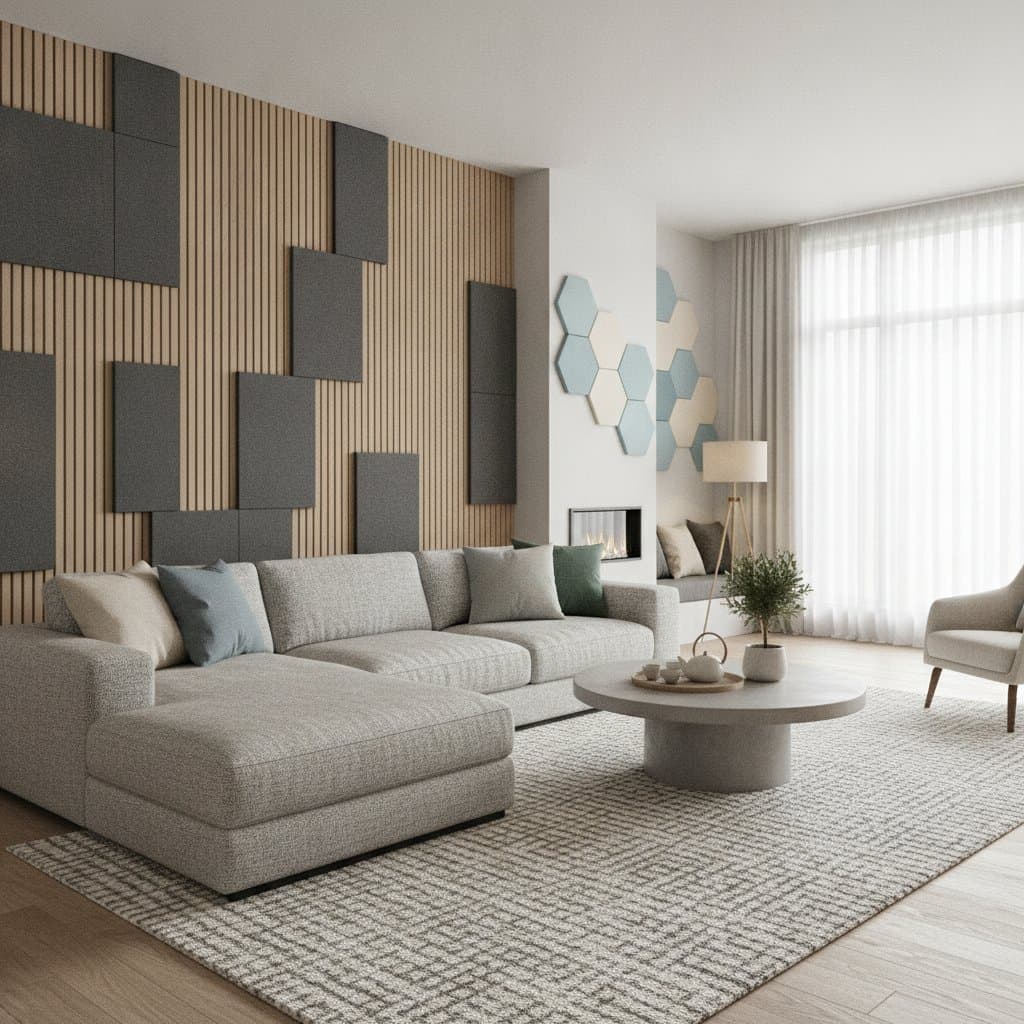
The solution for Lin involved installing hexagonal wool panels in a grid behind the sofa. Arranged in a gradient from deep gray to pale ivory, the panels formed a striking geometric feature. Acoustics improved instantly, with Lin stating, "The space finally sounded as refined as it looked."
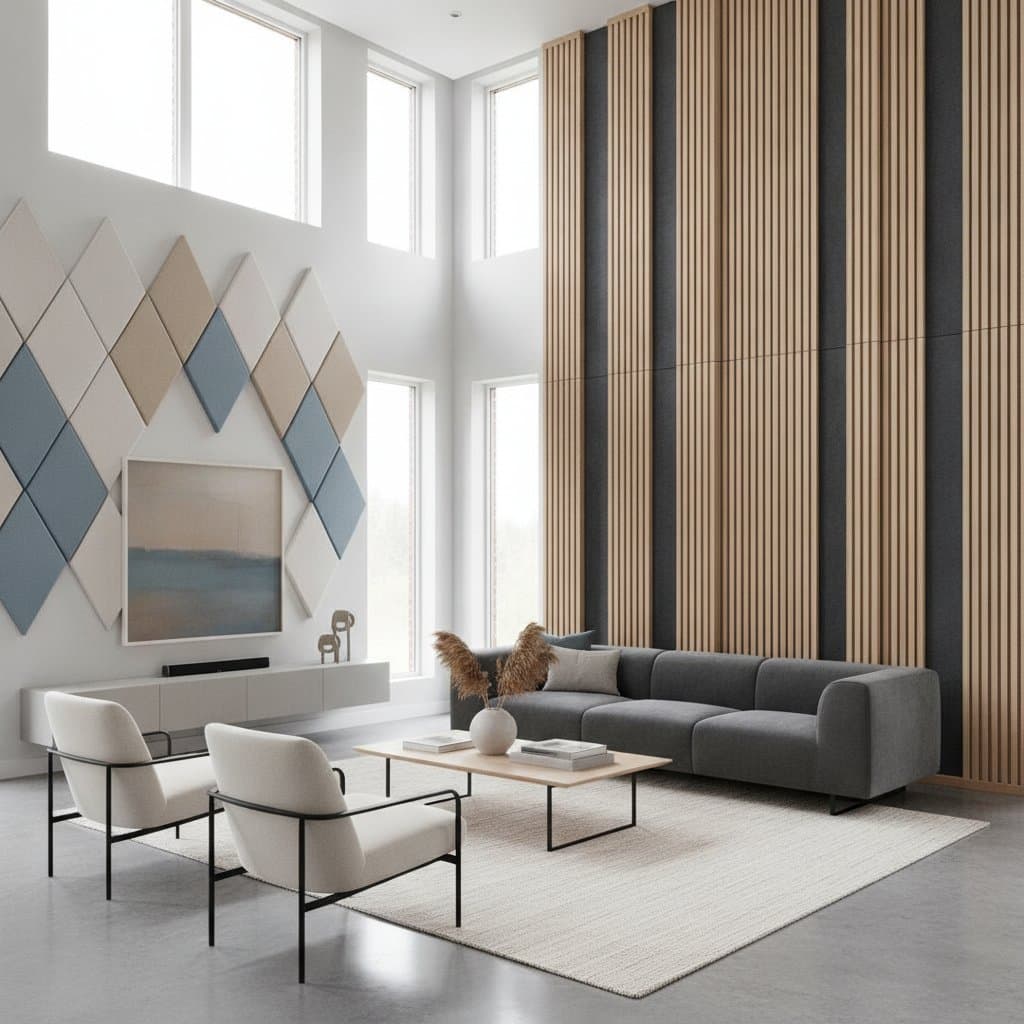
In a project by Acoustic Form, custom oak slat panels with felt backing covered a dining room wall. Vertical lines accentuated room height, while the felt absorbed table chatter and utensil sounds. Designer Carla Nguyen comments, "We wanted warmth and texture, but we also wanted to keep sound from bouncing between the table and the ceiling. The wood slats give rhythm, while the felt quiets the space."
Such installations demonstrate how acoustic panels provide both visual anchorage and practical benefits. They convert ordinary walls into purposeful, sculptural elements.
Design Details
- Materials: Natural wool felt, recycled polyester, cork composites, timber veneers
- Mounting options: Adhesive strips for compact panels, track systems for broad areas, framed designs for portable art
- Shapes: Squares, circles, hexagons, custom CNC-cut contours
- Colors: Muted neutrals to bold accents that function as artwork
- Patterns: Layered grids, linear slats, nature-inspired organic forms
- Lighting integration: Built-in LED strips that emphasize texture and minimize glare
The Science Behind the Silence
Acoustic panels absorb sound energy and convert it to minimal heat via porous structures. Material thickness and density dictate frequency absorption, with thicker options handling bass tones and thinner ones targeting mids and highs.
For living rooms with hard finishes, covering 20 to 30 percent of wall space yields significant results. Ceiling applications prove useful in high-echo areas like vaulted rooms or staircases.
These panels enhance internal sound quality rather than block inter-room transmission. The focus remains on achieving clarity within the space.
Artistic Expression with Practical Purpose
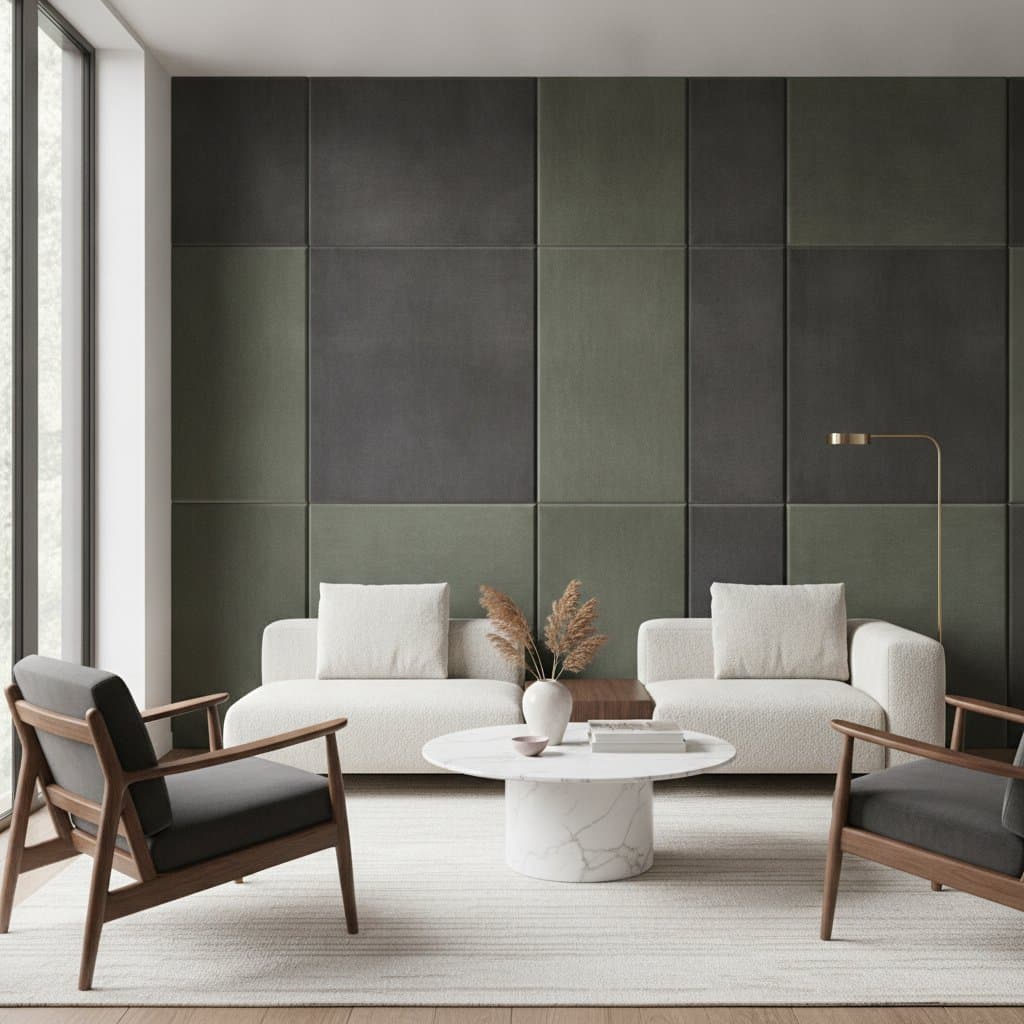
Aesthetic acoustic solutions redefine wall art approaches. Designers layer panels that serve dual roles as decoration and treatment, moving beyond single canvases.
Studio M renovated a modern townhouse with framed textile panels in blush and taupe shades. Positioned in the open living area, they resembled abstract paintings and controlled echoes effectively. Photographer Leo Kim documented how the panels scattered natural light, reducing harsh shadows on white walls.
Dellarosa adds, "Clients love that they can choose colors and shapes like they would for artwork. It becomes a creative process, not just a technical fix."
How to Choose the Right Panels for Your Space
Start selection by pinpointing echo sources, such as parallel hard surfaces like opposing walls or floors and ceilings. Treat one or two surfaces initially, then assess the acoustic changes before further adjustments.
Key Considerations
- Room type: Opt for thicker, softer panels in bedrooms and offices to improve speech intelligibility. Combine wall and ceiling options in living areas for comprehensive control.
- Material texture: Select felt or wool for warmth and strong absorption. Choose wood slats to complement modern furnishings.
- Color palette: Coordinate with or contrast against wall colors. Darker shades recede visually, while lighter ones brighten the area.
- Installation flexibility: Use removable adhesives for rental properties. Install track systems in owned homes for durability.
- Maintenance: Clean fibers with gentle vacuuming or a soft brush to preserve appearance.
Smart Storage Moves That Enhance Quiet
Effective sound management pairs well with organized storage. Features like soft-close cabinet doors, fabric-lined drawers, and cushioned benches minimize noise from daily use.
EchoCraft Design integrated wall panels into custom storage cubbies for one project. Designer Nathan Cho observes, "When storage is integrated, it eliminates clutter that can reflect sound. Every surface works a little harder."
Real Homes, Real Results
A suburban family home achieved harmony by adding a mural-style acoustic panel in the living area. Featuring abstract mountain motifs in green and tan, the installation sat above a walnut media console with internal insulation. This setup halved echoes while maintaining an organic warmth.
In a small studio apartment, Carla Nguyen suspended ceiling baffles over the workspace. Varied heights created a dynamic canopy that softened sounds and introduced visual interest. Nguyen describes it as "adding clouds to the room. Functionally it quieted the space, but visually it became the feature."
Trade-Offs to Consider
Acoustic panels deliver substantial advantages but demand careful evaluation.
- Budget: Custom designs and high-end materials increase expenses, though modular kits offer cost-effective alternatives.
- Space: Visible placement maximizes absorption, potentially overlapping existing art or features.
- Maintenance: Fabric surfaces require periodic dusting to retain sharpness.
These considerations pale against the gains in comfort and acoustic precision.
Living with Your Design
Installed panels blend seamlessly, rarely highlighting their functional role. They foster a composed atmosphere where conversations clarify, music deepens, and routine sounds recede.
The design remains adaptable, with many systems permitting reconfiguration or swaps to match evolving tastes. Homeowners report a subtle transformation that promotes focus, rest, and meaningful interactions.