Acoustic Panels: Bold Art That Tames Living Room Noise
When Mariah and Lucas moved into their open-concept loft, they appreciated its features except for the persistent echo. Conversations reverberated like a ball in a game of table tennis. During movie nights, dialogue became difficult to discern, and dinner parties grew increasingly noisy with each serving of wine. The issue stemmed from abundant hard surfaces and insufficient soft elements to absorb sound waves. Their resolution arrived through acoustic panels that resembled contemporary artwork more than functional soundproofing devices.
Acoustic panels have evolved beyond the plain gray felt squares associated with office environments. These panels now feature sculptural forms, vibrant colors, and whimsical designs. In skilled applications, they moderate room acoustics while integrating seamlessly into the space's character. Most notably, they subtly alter the sensory experience of a room, both audibly and emotionally.
Before: A Space That Looked Appealing but Sounded Harsh
The loft embodied classic industrial aesthetics with high ceilings, concrete flooring, exposed brick walls, and expansive windows that invited abundant natural light. Visually, the design impressed. Acoustically, however, the space overwhelmed with noise. Sounds from the adjacent kitchen and hallway propagated freely throughout the area. The television volume required constant adjustment to compete with echoes, and even footsteps resonated sharply, hindering relaxation.
Mariah described the space as overly revealing, where every noise stood exposed. Initial attempts with area rugs and heavy curtains yielded minimal improvement. The room demanded a targeted intervention that enhanced acoustics without compromising its stylistic integrity.
How Acoustic Panels Function
Acoustic panels capture sound waves upon contact with hard surfaces, preventing reflection. Typically constructed from dense foam or mineral fiber cores encased in fabric, these panels convert sound energy into minimal heat through absorption. This process reduces reverberation without eliminating all noise.
In residential settings, the effect proves understated yet significant. Conversations gain clarity and intimacy. Music playback reveals nuanced layers rather than blurred tones. This acoustic enhancement parallels optimal lighting, most appreciated in its absence.
Design Elements for Effective Integration
Mariah and Lucas commissioned panels from a boutique manufacturer in North Carolina, selecting customizable fabric coverings. They opted for a palette of warm grays and terracotta shades, accented by a single panel in rich rust to serve as a visual anchor. The arrangement drew inspiration from abstract art, featuring staggered rectangular forms that guided the viewer's gaze across the wall surface rather than clustering centrally.
Strategic lighting enhanced the installation. Adjustable track fixtures directed beams onto the panels, producing gentle color gradients and highlighting fabric textures. Set against the stark concrete floors and reflective glass, the panels introduced a soothing coziness. The designer recommended incorporating matching hues in ancillary items, such as a linen sofa throw and a terracotta vase on the console. This approach achieved harmony without artificiality. The panels functioned as scientific tools disguised as artistic elements.
Cost-Effective Options with Strong Visual Appeal
Custom installations suit many budgets, yet accessible alternatives deliver comparable acoustic benefits alongside aesthetic value.
- DIY Fabric-Wrapped Panels: Secure high-density foam or fiberglass boards with adhesive, then cover with selected upholstery fabric. Frame and mount these as wall art using standard hardware for a professional finish.
- Cork Wall Tiles: Apply self-adhesive cork sheets, which provide natural absorption and impart an earthy, textured warmth to neutral walls.
- Textured Wall Hangings: Suspend heavy macramé pieces or wool tapestries from rods; their density dampens mid-range frequencies while adding dimensional interest.
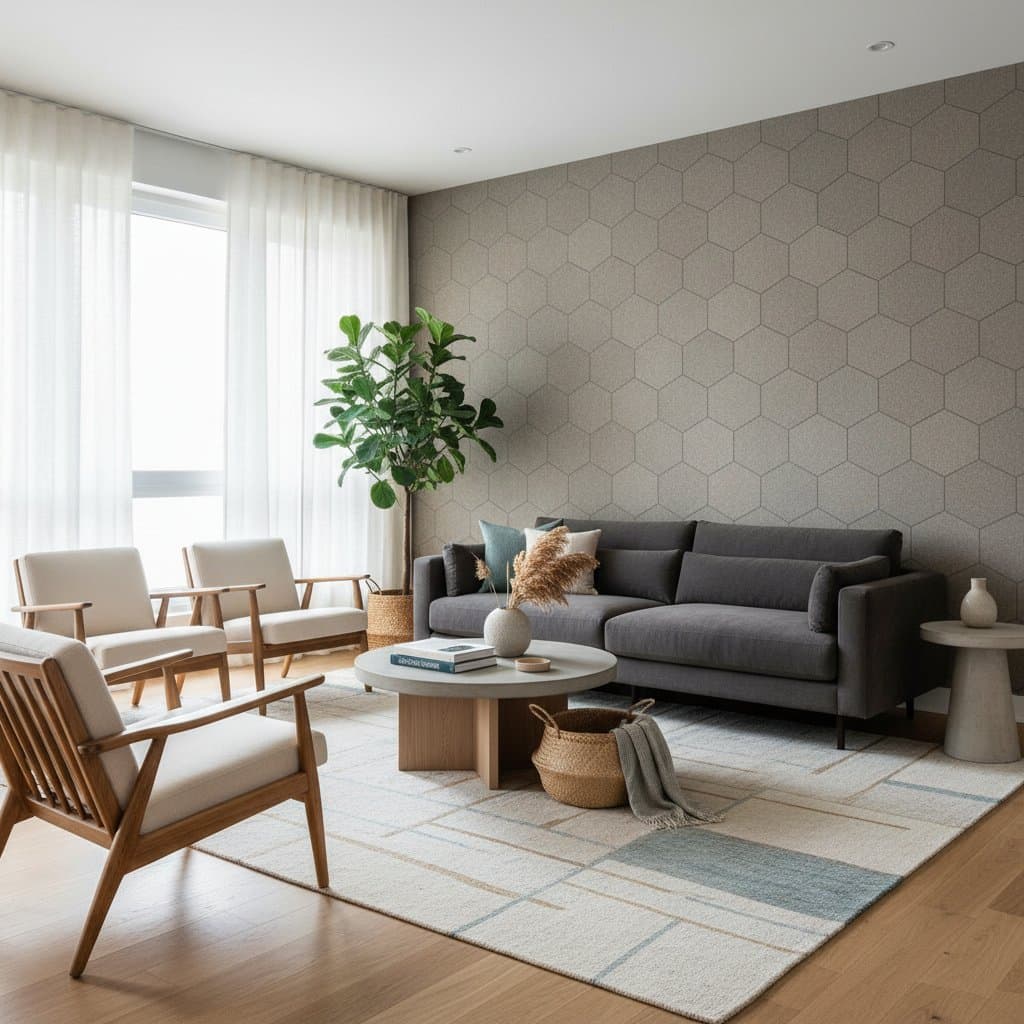
- Modular Felt Configurations: Arrange prefabricated felt tiles in geometric motifs, such as interlocking hexagons, for customizable patterns that adapt to room dimensions.
Renters can employ freestanding frames or command-style hooks for non-permanent placement. Strategic positioning of just three to five units often yields measurable acoustic relief.
Stylistic Flexibility Across Interior Themes
Contemporary acoustic panels accommodate diverse aesthetics, from subtle integrations to dramatic statements.
- Minimalist Environments: Select panels in monochromatic tones matching wall colors to introduce faint textural depth without visual disruption.
- Eclectic Settings: Combine varied fabric hues and geometric shapes to mimic an art installation; experiment with squares, hexagons, and triangles for dynamic compositions.
- Organic Modern Spaces: Prioritize natural materials like wool or linen in neutral earth tones, paired with wooden elements or basketry for grounded warmth.
- Bold Contemporary Designs: Install large-scale panels in saturated colors such as charcoal gray, deep emerald, or midnight blue to command attention and unify the palette.
This versatility allows incremental adoption. Begin with a modest set, assess the impact, and adjust arrangements as personal preferences develop.
Experiencing the Transformation Over Time
Several months post-installation, Mariah and Lucas report profound shifts in room usage. They no longer escape to the bedroom for private calls to avoid echoes. Film viewings now immerse without auditory fatigue. Visitors frequently remark on the serene ambiance.
The panels reshaped their approach to interior design. As Lucas observed, design encompasses sensory experiences beyond visuals; sound contributes fundamentally to spatial perception. Their loft retains its rugged industrial essence while gaining intimacy and depth.
For those exploring acoustic panels, integrate them thoughtfully into the room's visual vocabulary, akin to selecting paint or furnishings.
Implementing Acoustic Improvements at Home
- Assess the Acoustics: Produce a sharp clap or articulate phrases across the room. Identify zones with prolonged reverberation.
- Pinpoint Problem Areas: Focus on expansive glass, unpainted walls, and rigid flooring as primary reflectors.
- Incorporate Soft Elements Progressively: Introduce thick rugs, floor-length drapes, and cushioned seating to build baseline absorption.
- Choose Complementary Panels: Align fabric selections and color schemes with existing decor for seamless incorporation.
- Prototype Arrangements: Use cut paper or painter's tape to outline potential layouts and evaluate visual balance.
- Refine Iteratively: Monitor sound quality post-installation; relocate units or supplement with additional absorbers as needed.
Acoustic optimization extends beyond professional studios into everyday home areas like living rooms and offices. These spaces host daily interactions and reflections. A balanced auditory environment fosters tranquility and connection.