Introduction to Recycled Glass Terrazzo
In an era where sustainability shapes design choices, recycled glass terrazzo emerges as a compelling solution for modern kitchens. This composite material blends crushed post-consumer glass with a binding resin, creating surfaces that capture light and color in unique patterns. Homeowners and designers alike appreciate how it turns discarded bottles and glassware into functional art, reducing landfill contributions while enhancing interior spaces.
The appeal lies in its dual role as an eco-friendly option and a stylish element. Unlike traditional materials that deplete natural resources, recycled glass terrazzo promotes a circular economy. It invites users to envision kitchens not just as utilitarian areas, but as showcases of responsible living.
The Composition and Production Process
Recycled glass terrazzo consists primarily of recycled glass aggregates embedded in a polymer resin matrix. The glass comes from sources such as curbside collections, manufacturing scraps, and even architectural debris, ensuring a high percentage of post-consumer content. This composition yields a material that is both visually striking and structurally sound.
Production begins with sorting and crushing the glass into varied sizes, from fine powders to larger chips, to achieve desired textures. These aggregates mix with resin, pigments, and sometimes natural additives for enhanced performance. The mixture pours into molds, cures under controlled conditions, and polishes to reveal its glossy finish. This process minimizes energy use compared to quarrying stone, aligning with green building standards.
Factories often certify their products through environmental assessments, verifying low volatile organic compound emissions. The result is a slab ready for fabrication into kitchen components, with each piece telling a story of reclamation.
Environmental Advantages
One of the primary benefits of recycled glass terrazzo is its role in waste diversion. By repurposing glass that would otherwise occupy landfills, it conserves resources and reduces pollution from extraction industries. Each square foot of terrazzo can incorporate up to 90 percent recycled content, significantly lowering the carbon footprint of kitchen renovations.
This material supports broader sustainability goals, such as those outlined in LEED certification for homes. It requires no ongoing resource inputs after installation, unlike wood or certain plastics that degrade over time. Designers select it to meet client demands for ethical sourcing, fostering a sense of planetary stewardship in daily environments.
Beyond waste reduction, recycled glass terrazzo contributes to energy efficiency. Its reflective properties can brighten kitchens, potentially decreasing reliance on artificial lighting. This subtle advantage amplifies its appeal in eco-conscious households.
Durability and Performance in Kitchen Settings
Kitchens demand surfaces that withstand heat, stains, and heavy use, and recycled glass terrazzo delivers exceptional resilience. The resin binder creates a non-porous barrier that resists moisture and bacteria, making it ideal for food preparation areas. Unlike natural stone, it avoids the need for sealing, simplifying long-term care.
Testing shows that terrazzo surfaces endure impacts without chipping easily, thanks to the even distribution of glass particles. They handle temperatures up to 300 degrees Fahrenheit, suitable for placing hot pots directly from the oven. This durability extends the lifespan of kitchen installations, offering value over decades.
In high-traffic homes, the material maintains its integrity without fading or dulling. Its hardness rivals granite, yet it weighs less, easing installation in retrofits.
Aesthetic Versatility and Design Integration
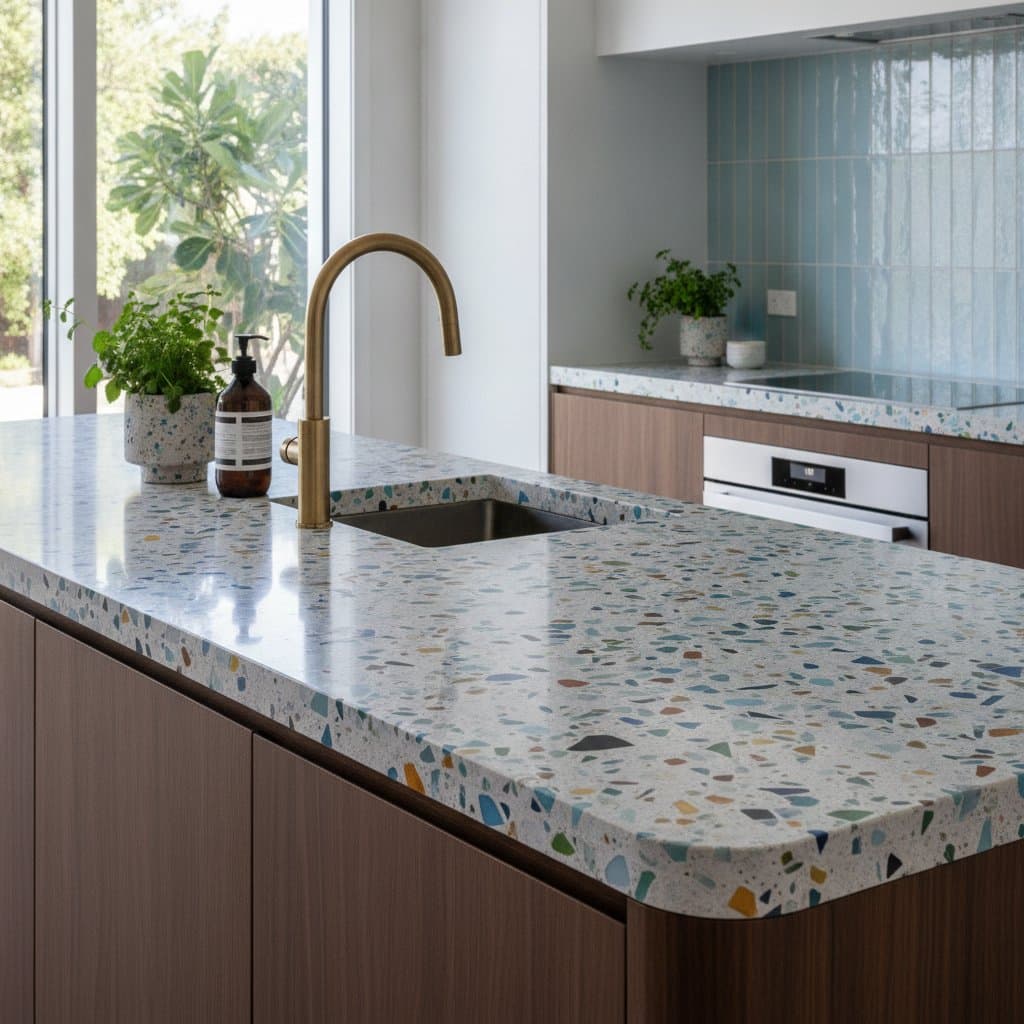
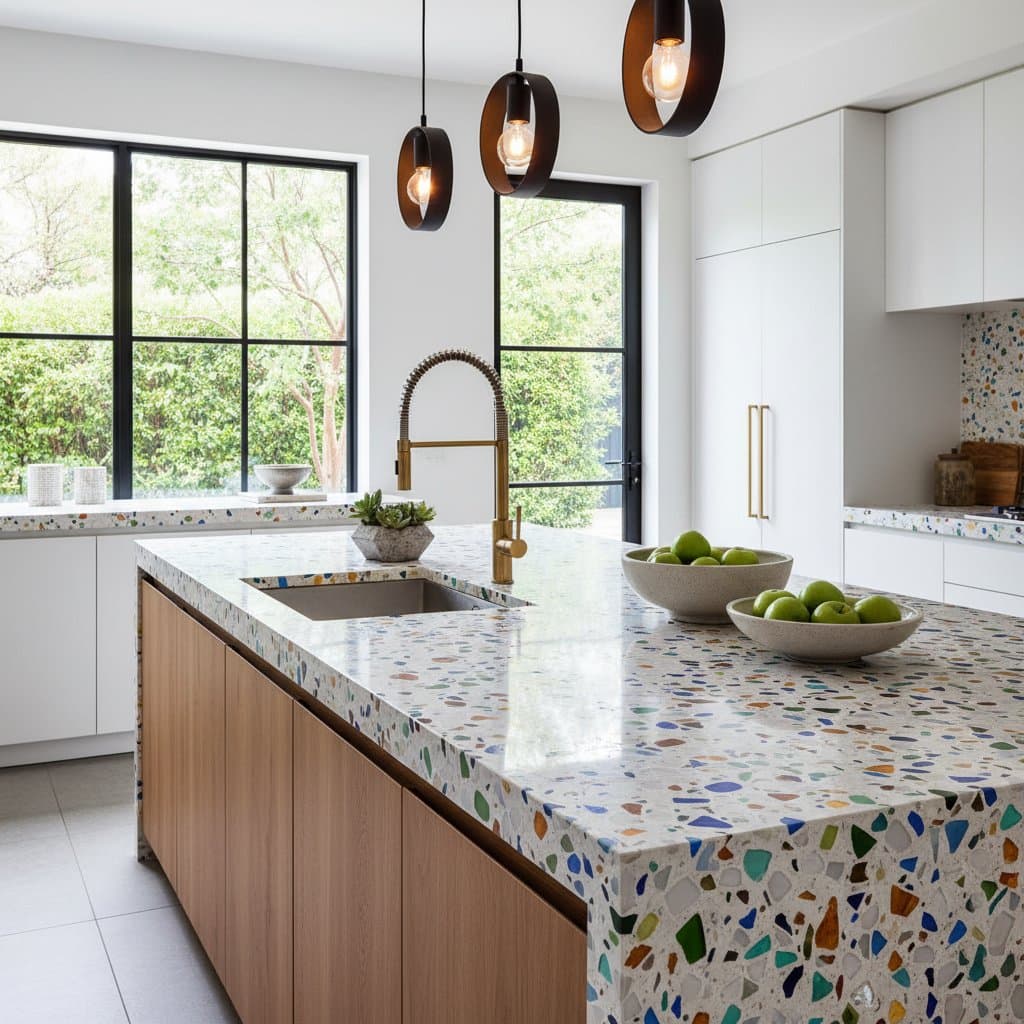
The beauty of recycled glass terrazzo stems from its customizable palette. Glass in shades of clear, cobalt, emerald, and amber allows for endless combinations, mimicking marble veining or creating abstract mosaics. Designers embed patterns that complement cabinetry, from sleek modern lines to rustic farmhouse vibes.
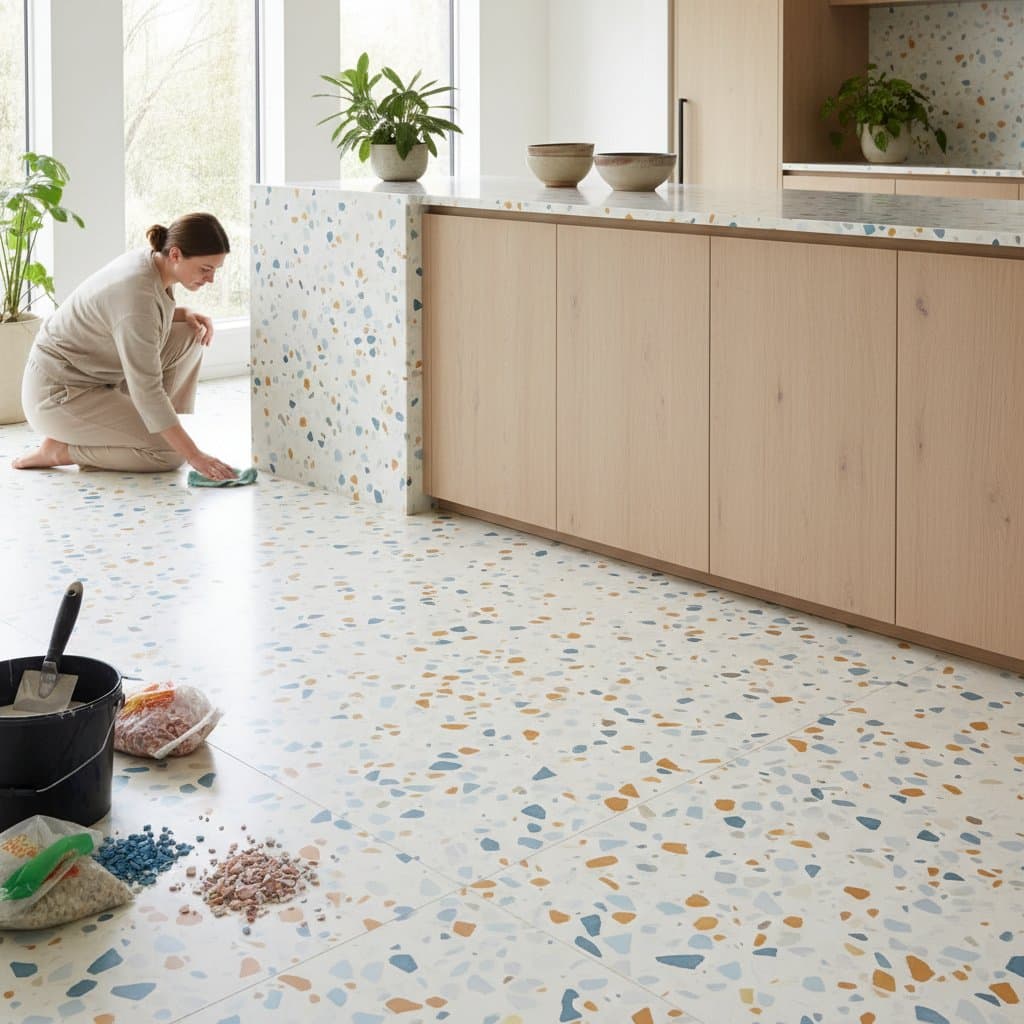
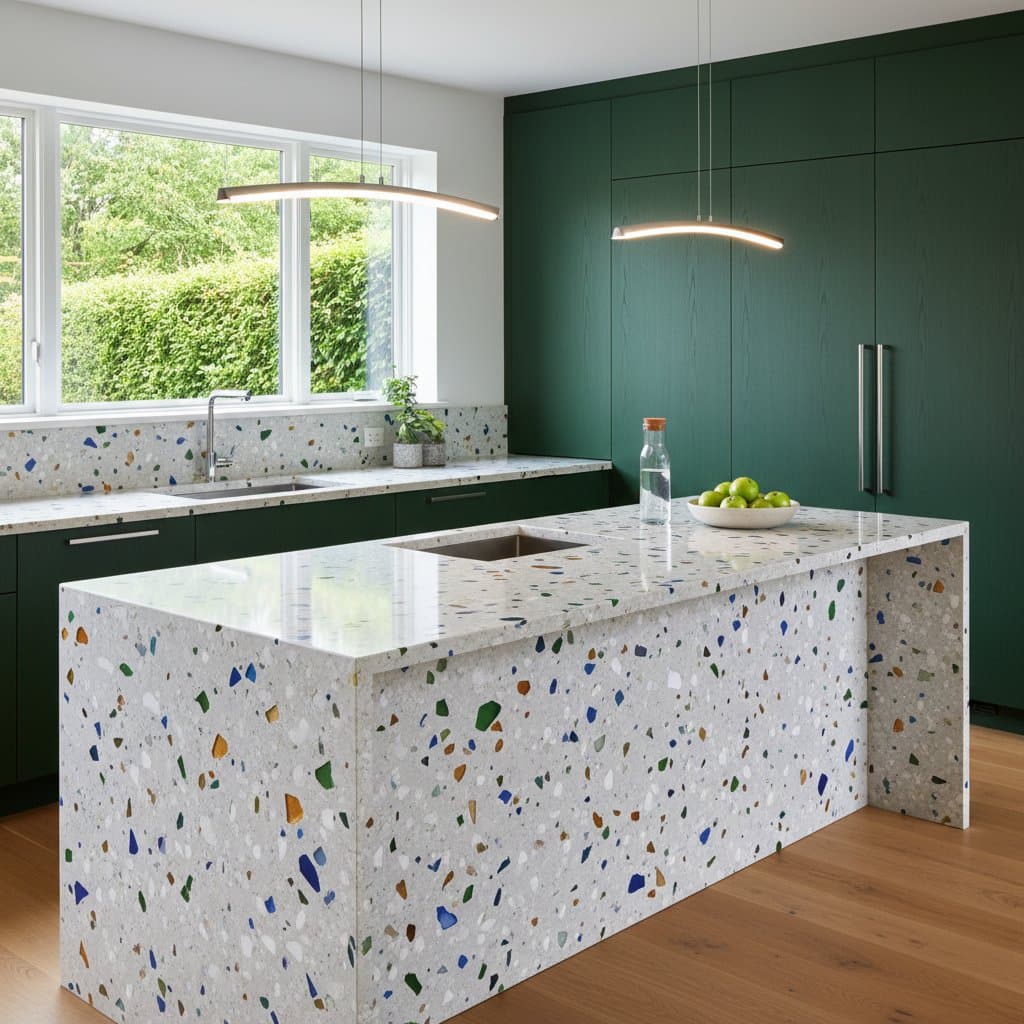
In kitchen applications, it shines as countertops, where its luminosity adds depth to islands and peninsulas. Backsplashes benefit from its ability to reflect light, expanding perceived space in compact areas. Flooring options extend the cohesive look, unifying the room underfoot.
Pairing terrazzo with metals like brass or wood accents creates balanced contrasts. For instance, a countertop in sea-glass hues pairs seamlessly with matte black fixtures, evoking coastal serenity. This flexibility ensures every kitchen reflects personal style while upholding sustainable principles.
Customizing Your Terrazzo Kitchen
-
Select glass types based on color preferences, such as vibrant recycled bottles for bold statements or neutral tones for subtlety.
-
Choose aggregate sizes to influence texture; finer grains yield smooth surfaces, while larger chips add tactile interest.
-
Incorporate edge profiles during fabrication, from eased edges for contemporary feel to bullnosed for traditional warmth.
-
Test samples in your lighting conditions to preview the final glow and pattern interplay.
These steps empower homeowners to tailor terrazzo precisely, ensuring harmony with existing decor.
Installation Considerations
Professional installation ensures optimal results for recycled glass terrazzo. Fabricators measure spaces accurately, cutting slabs to fit countertops and backsplashes with precision. Adhesives compatible with the resin secure pieces, often over existing substrates to minimize disruption.
The process typically spans a few days, involving template creation, cutting, and on-site polishing. Unlike poured-in-place terrazzo, pre-fabricated slabs reduce mess and downtime in occupied homes. Contractors recommend coordinating with plumbers for sink integrations during this phase.
Post-installation, the surface requires only a gentle clean with mild soap, avoiding abrasives that could scratch the glass. This low-maintenance aspect appeals to busy families seeking practicality without sacrificing design.
Real-World Applications and Inspirations
Consider a urban loft kitchen where recycled glass terrazzo forms a waterfall edge island, its azure flecks echoing city skyline views. The surface withstands daily meals for a family of four, its eco-story resonating with environmentally aware residents.
In a suburban remodel, emerald-infused backsplashes brighten a breakfast nook, drawing compliments from guests. The material's seamless integration with quartzite floors creates a flowing, nature-inspired aesthetic. These examples illustrate how terrazzo adapts to diverse lifestyles, blending form and function.
Architects increasingly specify it for open-plan designs, where its reflective quality enhances natural light flow. Such applications highlight terrazzo's evolution from historical floors to contemporary kitchen stars.
Embracing Sustainable Kitchen Innovation
Choosing recycled glass terrazzo means investing in a kitchen that endures both stylistically and ethically. It transforms ordinary waste into extraordinary spaces, where every glance reminds of thoughtful choices. As sustainability becomes central to design, this material positions kitchens at the forefront of innovation.
Homeowners gain not only beauty and durability but also the satisfaction of contributing to a greener future. Explore options with local fabricators to discover how terrazzo can elevate your home, creating legacies of elegance and responsibility.