Recycled Glass Terrazzo: The Sustainable Evolution of Kitchen Surfaces
Cluttered countertops often transform cooking into a task rather than a pleasure. The surface under daily use influences the kitchen's atmosphere and reveals personal priorities. Recycled glass terrazzo emerges as an elegant, robust, and environmentally sound option for individuals seeking refreshed, contemporary, and intentional kitchen environments. Embedded with hues, luminescence, and narratives of repurposing, this material revitalizes former waste, infusing every countertop with purpose.
The Artistry of Renewal
Recycled glass terrazzo combines timeless appeal with innovative purpose. Initially, it appears as a vibrant mosaic of tones and textures. Upon closer inspection, fragments from bottles, jars, and surplus glassware reveal themselves, now refined into a lustrous finish that captures light. Terrazzo has earned acclaim for its durability and craftsmanship over centuries. Incorporating recycled glass elevates this tradition, emphasizing resource conservation, landfill diversion, and a lifespan that spans generations with minimal upkeep.
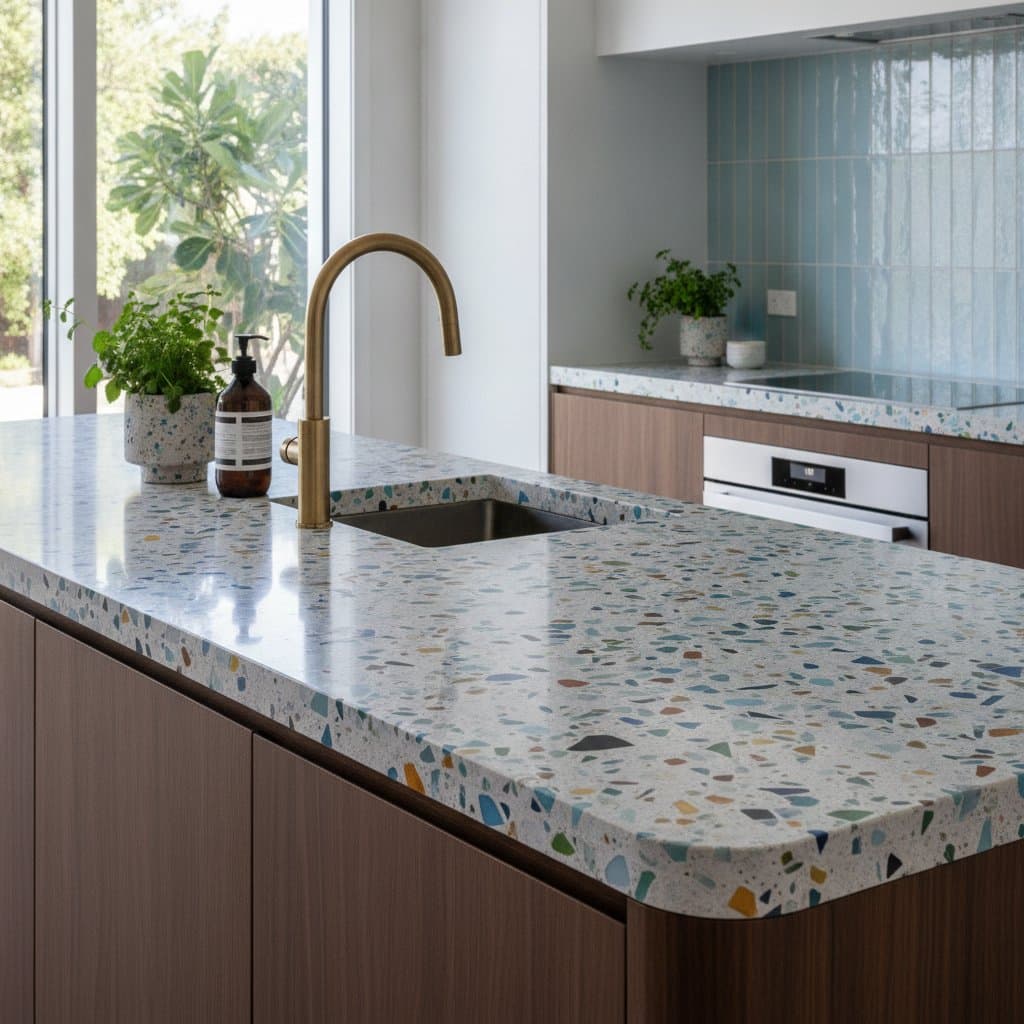
The allure stems from its inherent variability. No slab replicates another precisely. Certain varieties gleam with oceanic blues and muted greens, while others radiate with amber or transparent flecks. This outcome achieves a balance of organic authenticity and polished sophistication, positioning recycled glass terrazzo as an ideal connector between earthy coziness and sleek modernity. It suits serene, streamlined settings or vibrant, eclectic kitchens equally. Every installation narrates a subtle tale of metamorphosis.
Sustainability at Its Core
Selecting recycled glass terrazzo represents a deliberate choice for both style and planetary health. Production starts with post-consumer glass sourced from community recycling initiatives and industrial remnants. Workers crush, purify, and integrate these pieces with a cement or resin matrix. The blend undergoes pouring, compression, and buffing to yield a seamless, radiant plane. This method repurposes items destined for disposal, curtailing the need for virgin materials and diminishing energy use relative to stone extraction or artificial substitutes.
Terrazzo's extended service life further bolsters its eco-profile. Proper sealing renders it impervious to abrasions, thermal exposure, and discoloration. Numerous owners report that routine upkeep suffices post-installation, involving only soft wiping. A material that persists for decades inherently minimizes discards and refurbishments, aligning with principles of deliberate, reduced-consumption living.
Creative Applications in Kitchen Design
Recycled glass terrazzo unlocks imaginative possibilities unmatched by many alternatives. Its spectrum spans understated earth tones to exuberant, speckled arrays. Professionals frequently pair it with timber cabinetry, subdued hardware, or simple backsplashes. The inherent reflectivity amplifies illumination, expanding the perceived scale and luminosity of compact kitchens.
To integrate it effectively during a kitchen update, follow these strategies:
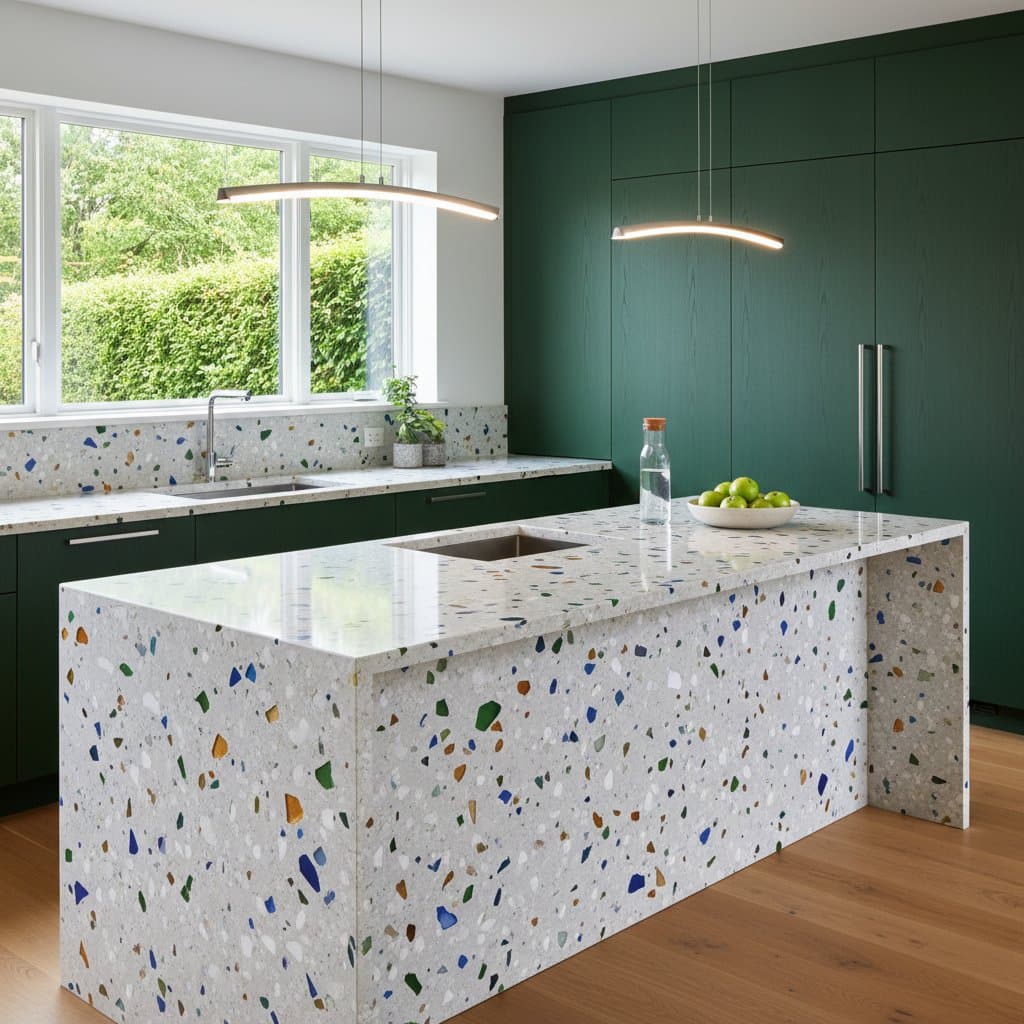
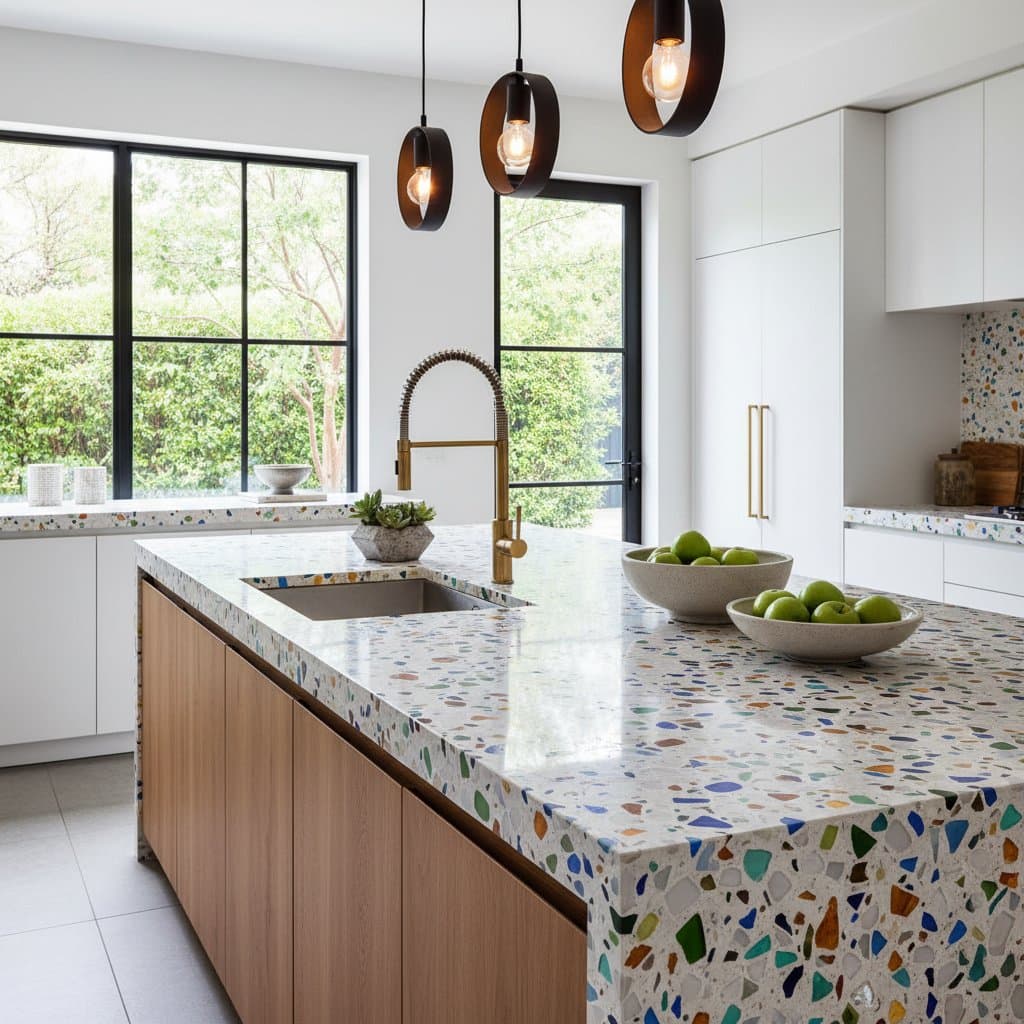
- Select tonal harmony. Opt for terrazzo featuring pale whites, silvers, or lucid shards for a serene, enduring aesthetic. For dynamic impact, incorporate striking combinations of cobalt, metallic golds, or verdant highlights.
- Incorporate textural variety. Offset the terrazzo's glossy expanse with organic elements such as oak panels or fabric accents to foster depth and invitation.
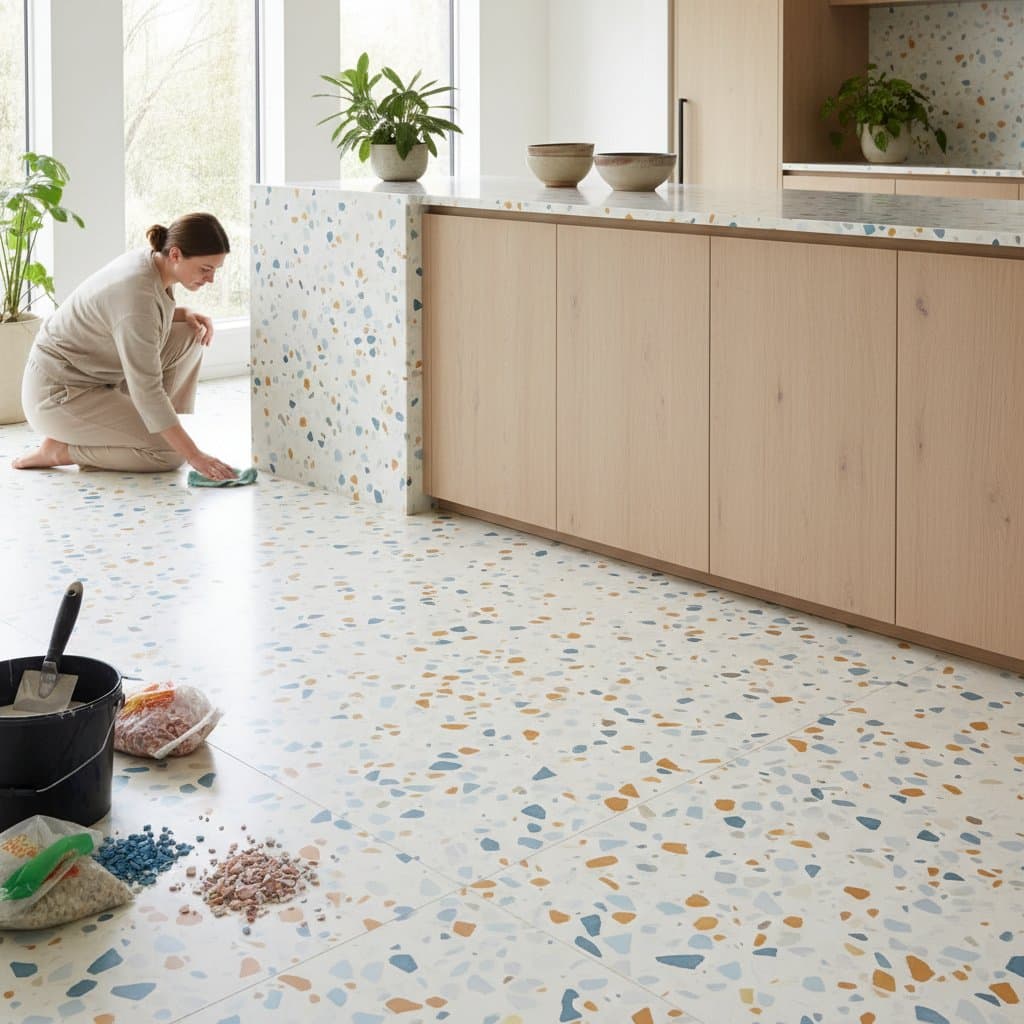
- Extend usage areas. Apply recycled glass terrazzo not only to counters but also to splash guards, central islands, or floors, ensuring cohesive visual flow.
- Optimize illumination. Install task lighting beneath cabinets or suspended fixtures to accentuate the material's iridescence and reveal layered pigments within the glass.
- Curate sparse accents. Allow the surface to dominate by limiting additions to essentials, like a slate tray or glass vessel, for refined composure.
Maintenance for Enduring Appeal
Terrazzo demonstrates remarkable fortitude, yet intentional care sustains its vibrancy. For everyday use, employ a moistened cloth paired with a neutral detergent to address residues or particles. Steer clear of corrosive agents or rough scrubbers, as they may erode the sheen progressively. Resin-sealed versions benefit from periodic reapplication every three to five years to reinforce barriers and luster. Cement variants respond well to occasional buffing for sustained evenness. Such routines ensure the surface remains inviting and pristine.
Integrating Ethics into Everyday Spaces
Kitchens transcend mere utility; they serve as vital hubs for routines and connections. Thoughtful material selections reshape experiences within these areas. Recycled glass terrazzo instills a profound contentment, linking visual grace to ethical practice. Preparing meals on a counter born from repurposed refuse evokes appreciation. It underscores the feasibility of rejuvenation in commonplace elements.
For audiences prioritizing form and conscience, terrazzo delivers an exemplary fusion. Manufacturing bolsters recycling infrastructures, longevity curtails excess, and adaptability supports individuality. Whether central to a comprehensive overhaul or a targeted enhancement, it materializes ecological mindfulness into durable reality.
Addressing Practical Concerns
Prospective users sometimes pause over expenses or setup intricacies. Although pricier than vinyl or standard ceramics upfront, its resilience frequently recoups costs through longevity. It withstands discoloration and seldom demands substitution, conserving resources long-term. Expert fitting guarantees uniform composition and finish, though preformed panels simplify retrofits. For modest endeavors, target an island top or serving ledge to sample its allure sans extensive disruption.
Aesthetic apprehension arises from the material's diversity, potentially overwhelming selection. Counter this by collecting physical samples and observing them across lighting conditions. Assess which palettes evoke tranquility and which energize. Rely on personal resonance. Recycled glass terrazzo's strength lies in its boundless interpretations, where every choice aligns uniquely.
Embracing Circular Design Principles
Incorporating green materials need not overwhelm. Initiate with a focused commitment, like adopting recycled glass terrazzo in an upcoming kitchen initiative. This step champions a loop where refuse evolves into assets. It delivers a functional yet evocative plane, prompting ongoing reflection on restorative potential.
Experiencing Daily Harmony
After placement, observe how sunlight refracts uniquely over the counters, or how faint tonal variations infuse routine tasks with delight. Activities like chopping vegetables, wiping surfaces, or hosting guests gain alignment with core beliefs. Recycled glass terrazzo encourages pause, admiration of form, and stewardship of existing assets.