Recycled Glass Terrazzo Replaces Stone Countertops
Recycled glass terrazzo now appears in residential kitchens as a surface that combines visual depth with environmental benefits. It consists of crushed recycled glass bound in cement or resin. This composition diverts waste from landfills while providing a durable work surface.
Designers select the material for its range of colors and subtle reflective qualities. Homeowners appreciate the narrative of resourcefulness that accompanies each installation.
The Shift From Stone and Quartz
Granite and engineered quartz once defined most kitchen surfaces. These options offered reliable performance yet involved energy intensive extraction or imported resins. Many clients now seek alternatives that reduce environmental impact without sacrificing strength.
Interior designer Mariel Soto worked with a homeowner who rejected the predictable veining of marble. The team required a luminous material that felt substantial. Recycled glass terrazzo satisfied both criteria.
Material Composition and Options
- Composition: Approximately 70 percent recycled glass mixed with cement or epoxy resin.
- Color palette: Infinite combinations from monochrome whites to multicolored mixes.
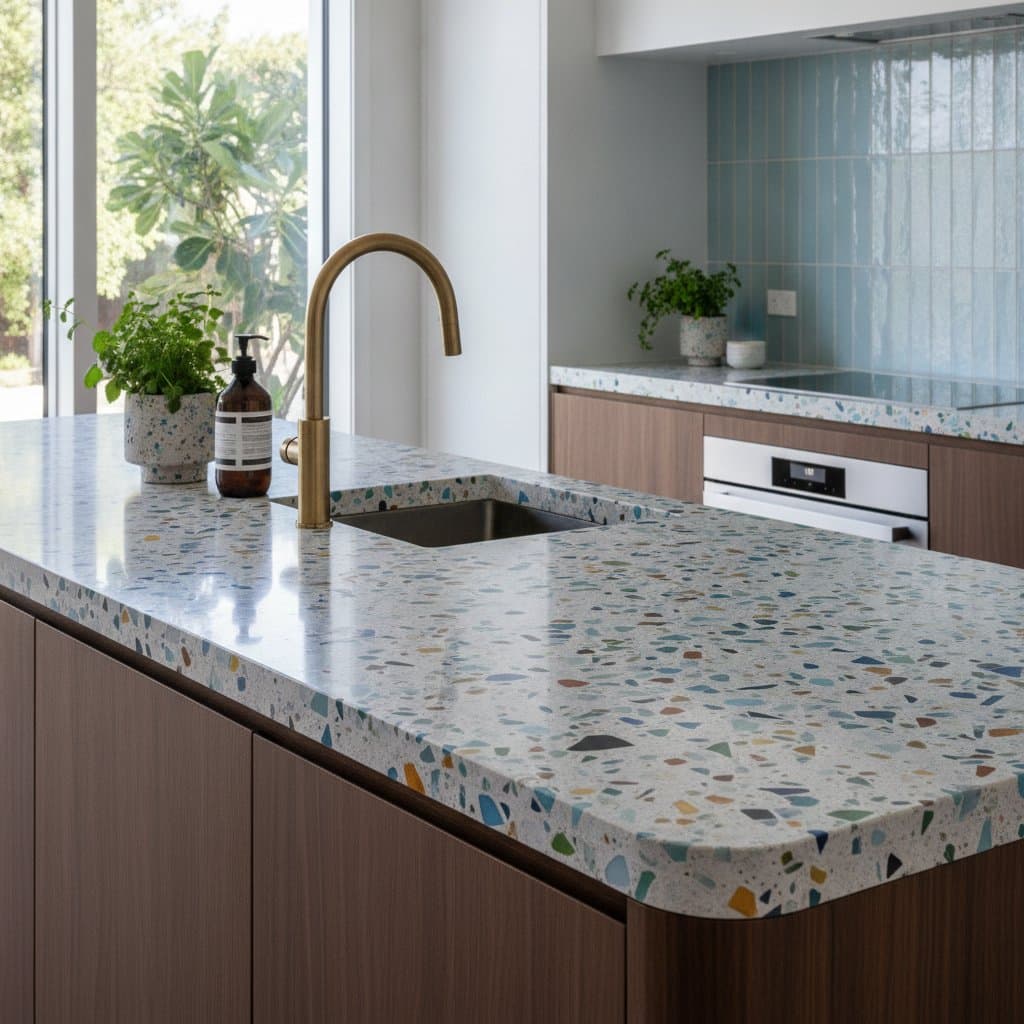
- Edge profiles: Straight, eased, or bullnose edges create clean transitions.
- Finish options: Polished, honed, or lightly textured surfaces.
- Maintenance: Seal cement based versions every few years. Clean with mild soap and water.
- Durability: Comparable to natural stone when properly sealed.
- Sustainability: Post consumer glass reduces landfill use and transport emissions when sourced locally.
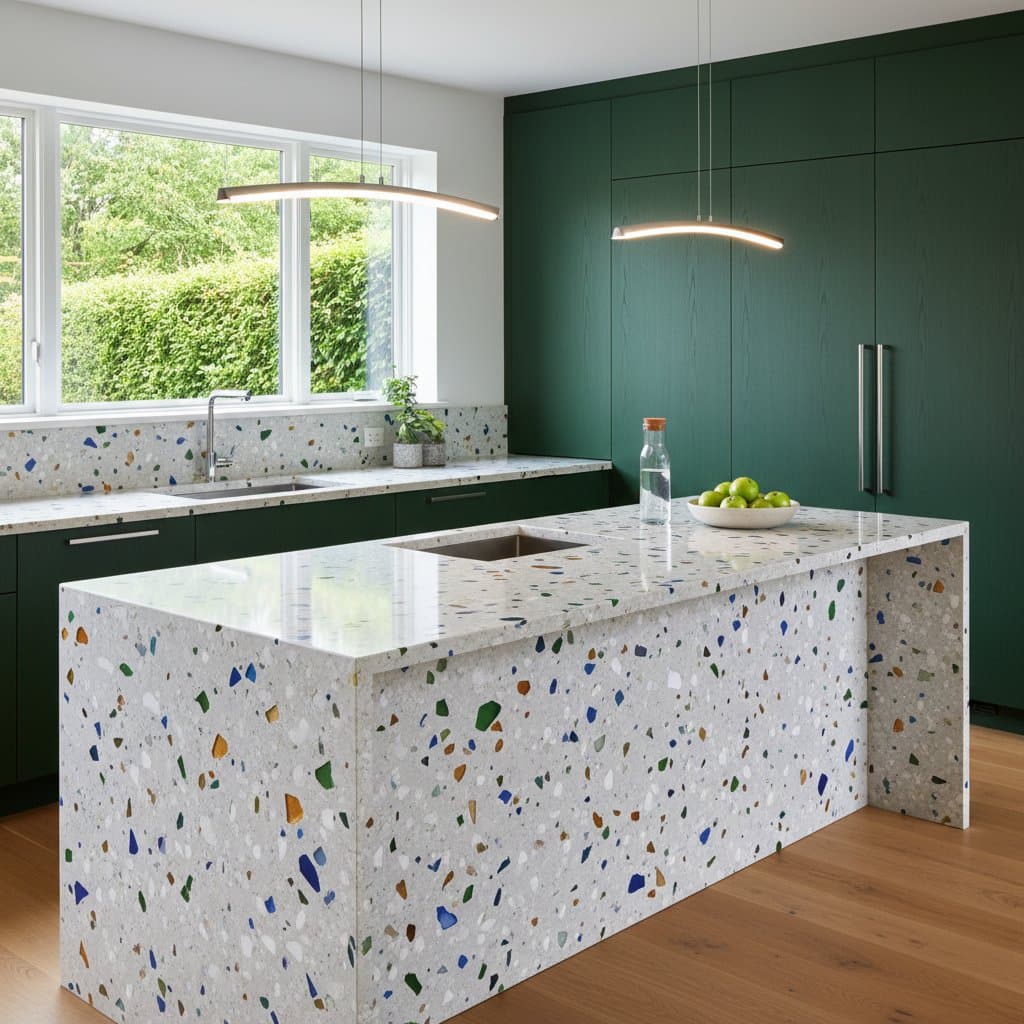
- Customization: Slabs cast into integrated sinks or waterfall edges.
Installation and Layout
Standard slabs measure approximately 120 by 55 inches. This size supports large islands with few seams. Professional fabricators handle the weight and use diamond tools for precise cuts.
Integrated backsplashes allow the glass fragments to appear continuous. Under cabinet lighting reveals the embedded sparkle. Matte finishes reduce glare in smaller rooms while retaining texture.
Compatible Storage and Pairings
White oak, bamboo, and walnut cabinetry complement the speckled pattern. Matte lacquer in soft gray tones keeps attention on the countertop. Slab front doors with integrated pulls prevent visual clutter.
Floating shelves in matching terrazzo extend the reflective quality. Homeowners can apply the material to window sills for visual continuity across the space.
Practical Trade Offs
Weight may require additional cabinet support. Cement based terrazzo needs periodic sealing. Casting adds lead time compared with stock slabs. Joints remain visible on large runs and require careful alignment.
Most users report that longevity and distinctive appearance outweigh these considerations.
Bringing the Material Into Your Kitchen
Request samples first. Test each sample under both daylight and evening lighting to observe color shifts. Compare the chosen blend with cabinet and flooring samples before ordering.
Smaller applications such as tiles on a prep area offer an entry point when full slabs exceed budget. Select blends that incorporate one or two tones already present in the room palette. This approach maintains calm in compact kitchens.
Supply Chain and Environmental Factors
Post consumer bottles supply most glass content through local recycling streams. Low VOC binders limit off gassing during curing. Closed loop water systems reduce waste at fabrication facilities.
Soto notes that the beauty arises from transformed waste. This perspective appeals to clients who track material origins and future reuse potential.
Daily Experience With the Surface
Morning light can accent blue flecks while evening lamps reveal amber tones. The cooled surface withstands routine food preparation and cleaning. Refinishing remains possible, extending service life beyond many manufactured alternatives.