Bring Wellness Home with Grounding Floors
Designers have long understood how light, color, and texture influence comfort. Now, more homeowners are asking how materials beneath their feet can improve wellness. Grounding floors, often called earthing floors, use natural or conductive materials that reconnect interior spaces with the earth’s calming qualities. The idea is simple: surfaces that feel alive can help people feel more balanced and at ease.
This approach is not only about barefoot contact with nature-inspired materials. It is also about how those choices look, sound, and age in daily use. A grounded floor anchors the visual language of a room, absorbs noise, and helps regulate body and mind through tactile connection. The result is a living surface that supports focus, rest, and restoration.
At a Glance
Who lives here: Families and individuals seeking natural comfort and durable design
Location: Various climates and regions where natural materials are accessible
Size: Works across apartments or homes from 400 to 3,000 square feet (37 to 279 square meters)
Design teams: Studio Terra, GroundForm Design, Atelier Clay, and Hearth & Home Interiors
Photography: Courtesy of the respective design studios
After: Warmth, Texture, and Calm
Replacing synthetic floors with natural composites transforms the atmosphere immediately. Designers begin with materials that hold subtle irregularities, which absorb light instead of bouncing it. Clay tiles with matte finishes, lime-washed concrete, and oiled oak planks create visual depth that softens edges and sound alike.
In one project by GroundForm Design, a loft apartment received reclaimed elm floors sanded to a satin finish. The boards measure 6 inches (15 centimeters) wide, with beveled edges that catch light gently. Paired with linen curtains and clay-painted walls, the space gained a grounded, tranquil rhythm. The homeowner described walking barefoot as “a small daily reset.”
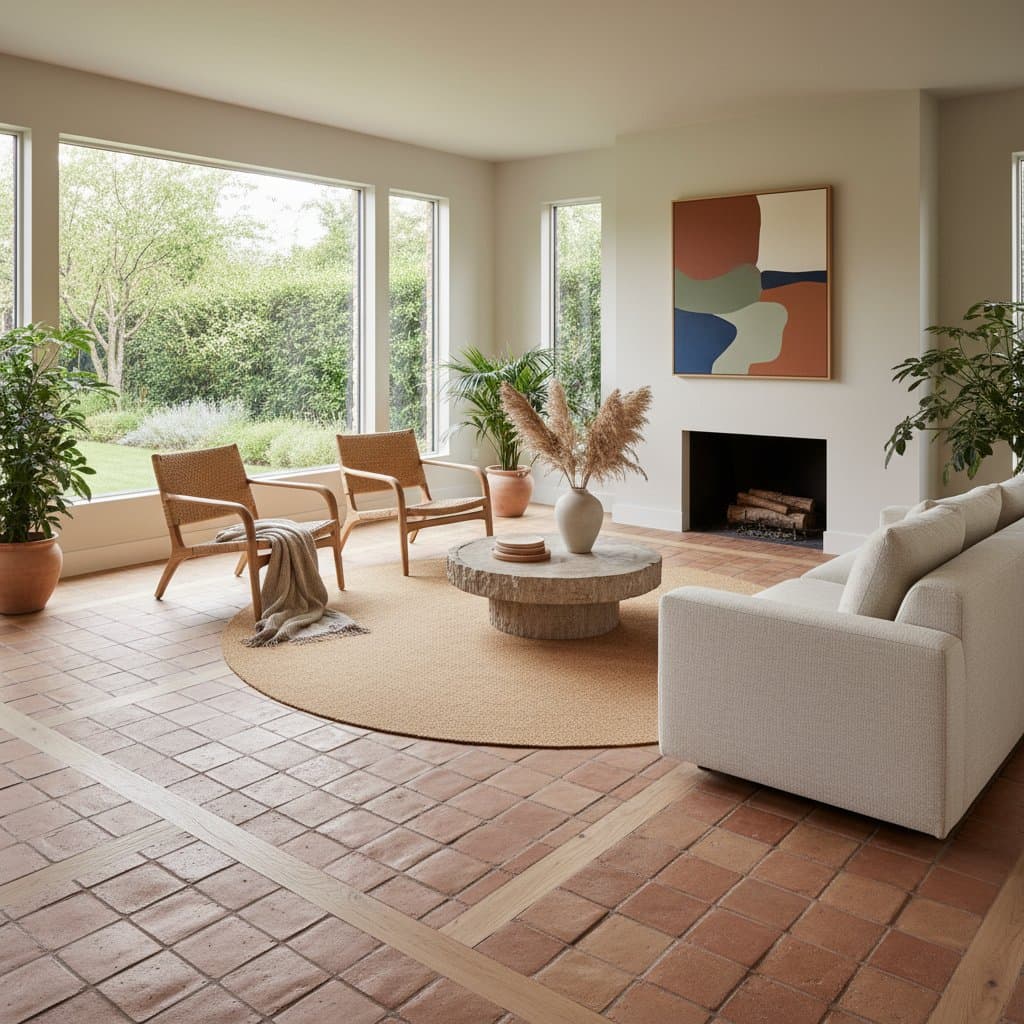
Another example from Atelier Clay used compressed earth tiles in a sunroom. The tiles, sealed with a natural wax, maintain a faint mineral scent and steady warmth. Their uneven tone connects the interior to the surrounding garden, blurring the boundary between indoors and out.
How Grounding Floors Support Wellness
A grounded floor engages multiple senses at once. Texture underfoot provides gentle resistance that encourages mindful movement. The temperature of natural materials stays relatively stable, avoiding the shock of cold tile on bare feet. Sound absorption improves focus, particularly in multipurpose homes where cooking, working, and relaxing overlap.
Materials such as clay and wood also support better indoor air quality. They regulate humidity naturally, absorbing and releasing moisture as needed. This creates a microclimate that feels fresh without heavy mechanical air control. For allergy-sensitive households, breathable finishes and low-toxicity sealers make a tangible difference.
Beyond physical benefits, grounding floors encourage emotional calm. The act of choosing, maintaining, and noticing these materials invites a slower rhythm. As designer Laura Kim explained, “It is about creating surfaces that ask us to pay attention to the moment. That awareness is the core of wellness.”
Trade Offs to Consider
Grounding floors are an investment in both material and labor. Natural wood or clay costs more upfront than laminate, and installation requires skilled craftspeople. Maintenance takes time, though the process is straightforward once learned.
Moisture exposure can be a concern in bathrooms or basements. Designers mitigate this with breathable sealers and proper ventilation. Some households may prefer to combine materials, using stone or sealed concrete in high-moisture zones and wood elsewhere. The goal is consistency in tone and feel rather than a single material throughout.
Budget-conscious homeowners can start small. Cork or engineered wood with natural finishes offers similar comfort at lower cost. Even area rugs made from untreated wool can create pockets of grounding in rented spaces.
Your Next Steps Toward a Grounded Home
Creating a grounded floor begins with observation. Notice how existing surfaces sound, feel, and reflect light at different times of day. That awareness will guide material choices that match the home’s rhythm.
For small updates:
- Introduce a natural fiber rug over synthetic flooring
- Use a beeswax conditioner on existing wood to restore tactile warmth
For full renovations:
- Choose one continuous natural surface across living areas
- Coordinate wall finishes and lighting temperature for a cohesive sensory experience
For long-term wellness:
- Maintain breathable finishes and avoid over-sealing
- Keep shoes at the door to preserve the tactile connection between skin and surface
Wellness begins where we stand. A grounding floor does more than complete a room; it defines how that space feels and functions every day. By choosing materials that connect us with the earth, homes become places of quiet restoration. Whether through reclaimed timber, earthen tile, or cork composite, each step reminds us that comfort starts from the ground up.