Grounding Floors: Earthing Principles for Bedroom Wellness
Megan and Luca settled into their hillside contemporary home, where the primary bedroom initially appeared tranquil. Pale gray carpet covered the floor, an oak bed anchored the space, and gauzy curtains filtered morning light. However, Megan sensed an underlying unease, describing a persistent static-like restlessness that disrupted her sleep. Their designer, Claire Holt, identified the issue: synthetic materials isolated the room from natural grounding.
Claire proposed a grounding floor to address this. Grounding, also known as earthing, integrates conductive natural materials to link the human body with the earth's surface. This practice aims to neutralize excess electrical charge in the body, potentially enhancing sleep quality and lowering stress levels. Even if the physiological benefits remain under debate, the shift to natural flooring undeniably alters a bedroom's sensory experience.
Project Overview
- Home Style: Hillside contemporary residence
- Target Space: Primary bedroom
- Primary Objective: Foster a restful, connected environment
- Core Materials: Clay-based earthing paint, carbon-infused conductive underlay, unfinished oak planks, grounding straps
- Overall Ambiance: Serene, tactile, and inherently balanced
The Original Setup: Synthetic Isolation
The pre-renovation bedroom featured standard builder-grade elements. Nylon carpet provided softness but generated subtle static on humid days, while a foam underlayment retained warmth and trapped particles. Megan likened the sensation to traversing plastic film, which contributed to a cool, impersonal palette that heightened nighttime sterility.
The room functioned adequately for daily use, yet it failed to promote emotional relaxation. Luca noted frequent pre-bedtime pacing, a sign of the space's lack of inherent warmth. Claire's suggestion of a natural base intrigued the couple, though they questioned whether flooring alone could influence sleep patterns.
The Renovation: Establishing a Soothing Foundation
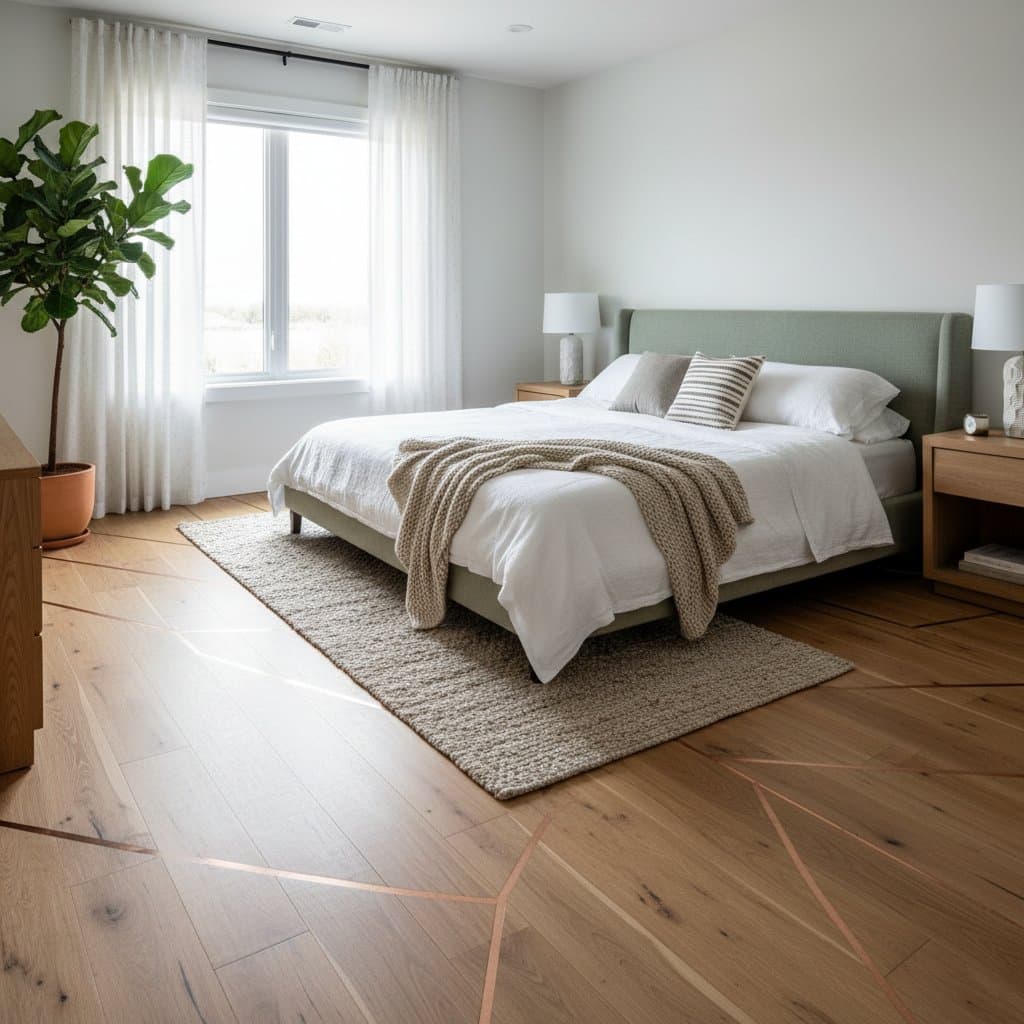
Renovation started with removing existing layers down to the subfloor. Claire selected wide-plank oak boards, finished only with a light application of hand-rubbed oil to preserve their natural state. Underneath, a carbon-infused fabric layer connected to a grounding port facilitated electrical discharge and earth linkage.
The visual impact proved immediate and inviting. The oak's subtle honey tones captured sunlight, while the wood's grain introduced texture and depth without overwhelming the room. Barefoot contact with the surface replaced synthetic friction, yielding quieter footsteps and fresher air. On the first post-installation night, Megan experienced uninterrupted sleep until dawn, a rarity for her.
Elements of an Effective Grounding Floor
Grounding floors merge organic substances with conductive elements to enable static energy dissipation from the body. Key components include:
- Organic Surfaces: Uncoated wood, clay, stone, or cork that maintain natural conductivity.
- Conductive Substrates: Mats woven with carbon or silver threads positioned beneath the top layer.
- Earthing Linkage: Metal straps or cords that tie the system to a grounded electrical outlet or exterior rod.
This indoor adaptation draws from outdoor earthing activities, such as barefoot contact with soil or beach sand. It delivers comparable sensory benefits in a permanent residential setting. Individuals seeking either scientific grounding or textural authenticity find these floors promote measurable tranquility.
Layered Design Approach: Materials and Sensory Integration
Claire designed the space as a cohesive sensory progression, starting with the floor and extending to surrounding elements.
Color and Surface Treatment
The oak received a matte oil finish to ensure breathability and expose the grain. This choice eliminated the artificial gloss of polyurethane, allowing a warm honey-brown hue to diffuse light softly and anchor the room in earthy tones.
Tactile Sensation
Comfort for bare feet guided material selection. The conductive mat provided minimal padding while supporting the oak's stability. Contact with the floor conveys a vital, slightly warmed responsiveness distinct from conventional hardwoods.
Harmonizing Elements
To echo the floor, Claire specified linen bedding in neutral sands and walls coated in clay-based paint. Visual and physical continuity unified the surfaces. Baseboards shifted to raw maple sealed with beeswax, reinforcing the natural theme.
Illumination Strategy
Ambient lighting enhanced the organic feel. Wall-mounted sconces replaced harsh overhead lights, projecting gentle illumination that highlighted the wood's texture and cultivated evening repose.
Linking Design to Wellness Outcomes
Grounding floors align with broader wellness architecture trends, where elements actively support recovery and equilibrium. For Megan and Luca, benefits extended past appearance: her headaches diminished, and shared evenings gained a relaxed pace. These effects may stem from static reduction or the psychological uplift of authentic materials.
Practical advantages include superior humidity control compared to synthetics, preventing stale air buildup. Such floors resist chemical emissions, simplify maintenance, and enhance air quality. Wellness enthusiasts can pair them with low-electromagnetic-field fixtures, air filtration systems, and natural fabrics to create holistic sanctuaries.
Cost and Implementation Considerations
Implementing grounding flooring remains accessible across budgets. Expenses vary by scale and specifics; consider these factors:
- Natural Wood Installation: Wide-plank oak or maple costs range from moderate to high per square foot, influenced by quality and treatment.
- Conductive Substrate: Comparable in price to premium acoustic underlays, available from specialized suppliers.
- Earthing Hardware: Inexpensive kits require professional electrician installation for compliance.
- Ongoing Care: Apply oil or wax periodically; steer clear of abrasive cleaners to protect inherent properties.
Budget-conscious options like cork tiles or clay finishes deliver analogous benefits sans full conductivity. Prioritize untreated materials to maximize natural affinity.
Embracing the Transformed Space
Several months post-renovation, Megan characterizes entering the bedroom as absorbing tranquility. The floor has developed a gentle patina, intensifying its inviting glow. Even in colder seasons, the space evokes outdoor immersion. Luca concedes the absence of pre-sleep agitation, attributing it to the room's inherent poise.
Daily interactions with the design unfold naturally. Morning bare feet encounter cool wood that warms gradually, while the cat claims sun-warmed spots. This foundation serves as an unobtrusive enhancer of habits.
To integrate grounding elements, begin modestly: position a conductive mat near the bed or opt for unfinished wood in a single area. Observe shifts in sensation and atmosphere. Subtle modifications often yield enduring impacts.
A grounding floor may not address all rest challenges, yet it cultivates profound environmental attunement. Wellness originates at the base, inviting harmony with the world below.