Acoustic Ceiling Clouds Transform Noisy Living Rooms
A living room should feel calm and connected. Open layouts, hard flooring, and minimal window treatments often turn beautiful spaces into noisy ones. Acoustic ceiling clouds offer a solution by addressing sound issues from above.
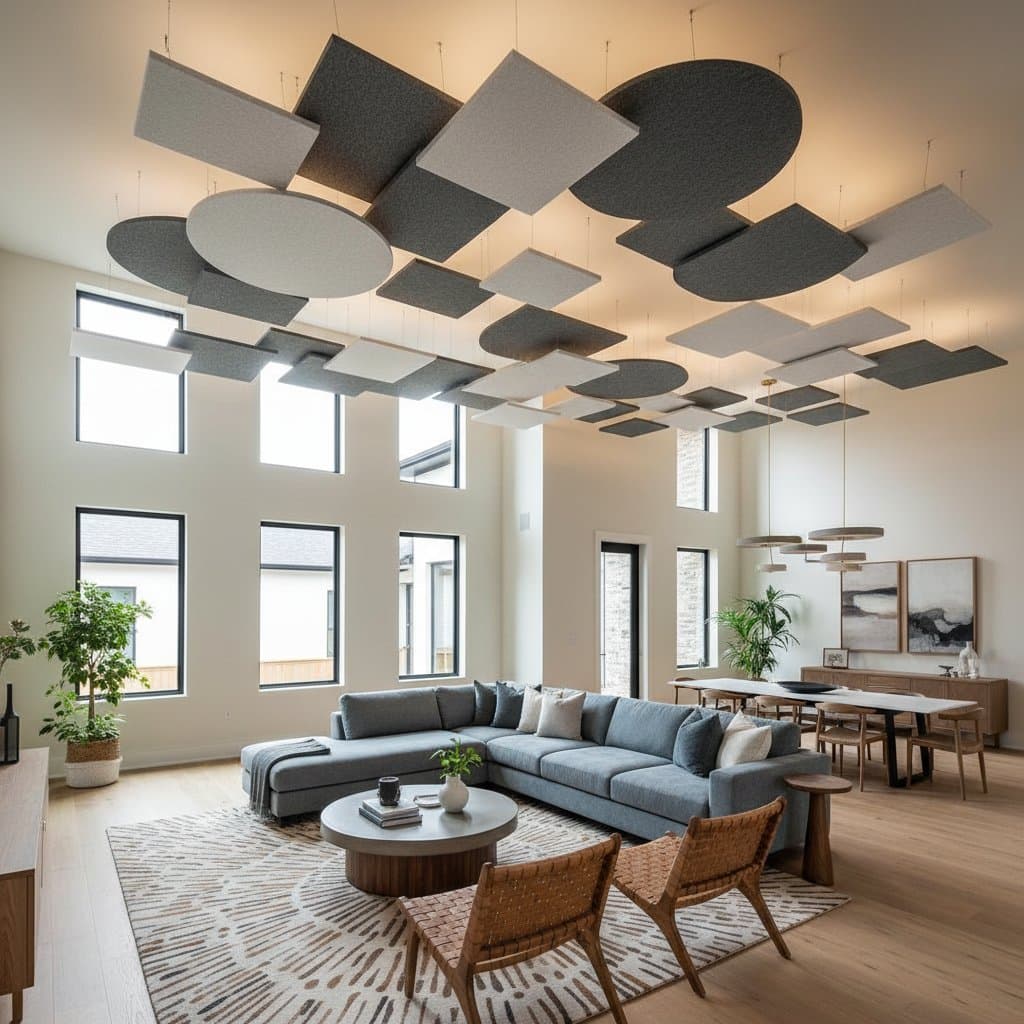
These sculptural panels suspend below the ceiling to absorb and diffuse sound waves. They come in many shapes, colors, and materials. Thoughtful use allows them to serve as both an acoustic treatment and a design feature.
Project Overview
- Families, couples, and professionals seek quieter open plan living spaces.
- Urban apartments and suburban homes often feature reflective surfaces that amplify sound.
- Living rooms typically range from 250 to 400 square feet.
- Acoustic specialists, interior designers, and lighting consultants collaborate on projects.
- The key goal remains reduction of echo while preserving visual balance.
Echo Challenges in Modern Spaces
Modern living rooms favor clean lines and open sightlines. These qualities contribute to poor acoustics when paired with a large sectional, a wall mounted screen, and wood or tile floors. Sound bounces repeatedly and creates a restless atmosphere.
Designer Julia Kent of Studio Harlow noted that families loved their new open concept yet struggled to hear the television without raising the volume. The sound felt chaotic during gatherings. Rugs and curtains provide limited relief because the ceiling acts as a large reflective surface.
Improvements After Installation
Treated living rooms show immediate changes. Speech becomes crisper and background noise fades. Floating panels absorb mid and high frequencies that cause echo while their placement distributes sound evenly.
Designers position clouds as sculptural features. In one project rectangular panels wrapped in pale wool felt hover in a staggered grid above a walnut coffee table. Recessed linear lights run between rows to create a layered ceiling appearance.
The outcome yields a curated yet relaxed room. Conversations flow naturally and the television no longer competes with room acoustics.
Material and Installation Options
- Wool felt, polyester fiber, wood veneer over acoustic foam, or fabric wrapped fiberglass provide material choices.
- Thickness ranges from 1 to 2 inches based on absorption needs.
- Cables or metal frames create the floating effect.
- Soft neutrals such as oatmeal, charcoal, and clay gray dominate palettes while bold hues define zones.
- Squares, circles, and custom organic forms offer shape variety.
- Pendant lights or track fixtures integrate with panels for cohesive layering.
Acoustic Performance Details
Sound reflects off flat hard surfaces much like light. Ceiling clouds interrupt reflections by trapping sound energy. Their suspended position absorbs sound from both sides and proves more effective than wall panels alone.
Panels carry a Noise Reduction Coefficient rating. A value of 0.8 indicates absorption of 80 percent of striking sound. Strategic placement above conversation zones can reduce reverberation time by more than half. Reduced echo also improves clarity for sound systems and lessens listener fatigue.
Design Integration Examples
Homeowners may choose panels that blend with the ceiling or stand out as decor. In a renovated loft round felt discs in muted blue float above a deep gray sofa and mirror the circular rug below. The tactile quality of felt adds warmth in rooms with glass and metal.
Wood veneer panels suit mid century or Scandinavian interiors. Installation uses adjustable cables from existing joists. A four inch gap between panel and ceiling enhances performance.
Designers begin with an acoustic assessment. In a 300 square foot living room six to eight medium panels deliver noticeable improvement. Modular systems combine absorption with lighting or ventilation.
Complementary Sound Control Steps
- Upholstered chairs, fabric ottomans, and heavy curtains absorb sound at ear level.
- Art panels with sound dampening backing or textile wall hangings reduce mid level reflections.
- Filled bookshelves scatter sound waves to limit echo buildup.
These elements combined with ceiling clouds create balanced acoustics.
Budget and Practical Considerations
Fabric wrapped fiberglass panels start at moderate cost per square foot. Custom wood veneer or integrated lighting systems cost more. Rooms under eight feet in height suit shallow profile panels or edge mounted baffles.
Felt and fabric attract dust yet respond to gentle vacuuming. View acoustic treatments as long term investments in comfort.
Budget Based Approaches
Entry level projects install ready made felt clouds above seating and pair them with a plush rug plus floor length curtains. Mid range selections use custom panels in coordinated fabrics with integrated LED downlights arranged in a grid. High end work involves acoustic consultants for sculptural wood veneer clouds with built in lighting and concealed wiring.
Daily Benefits and Flexibility
Installed clouds improve daily life through clearer conversations and lower television volumes. Guests linger because the space feels comfortable. Suspended panels allow repositioning if layouts change. Seasonal cover swaps provide additional variety.
The ceiling becomes a dynamic design element. Acoustic clouds deliver quiet sophistication and better function. Their influence appears in softened sound and a calmer daily rhythm.
Planning Your Project
Consider acoustics early during living room renovations alongside lighting and furniture placement. Assess where sound lingers then select configurations that match existing style. Treat acoustic clouds as part of the architecture to balance beauty and function.