Acoustic Panels Turn Noise Reduction Into Home Decor
Acoustic panels once belonged to recording studios and offices. They now appear in homes as visible design elements that reduce echo and define spaces. Homeowners use them to manage sound in open layouts without covering surfaces with heavy fabrics.
Why Noise Control Matters at Home
Open kitchens and living areas allow sound to travel freely across hard surfaces such as concrete and glass. This creates constant reverberation that leads to fatigue during daily activities. Panels absorb sound waves and lower reverberation time so rooms feel more balanced.
Interior designer Rachel Lim notes that treated spaces allow clearer conversations and reduce overall strain. The change appears most noticeable in combined living and dining zones.
The Shift From Studio to Living Room
Manufacturers now produce panels in sculptural shapes and natural materials that suit residential settings. Wool felt, cork, and wood veneers replace basic foam squares. These options fit into walls, ceilings, and furniture while matching existing finishes.
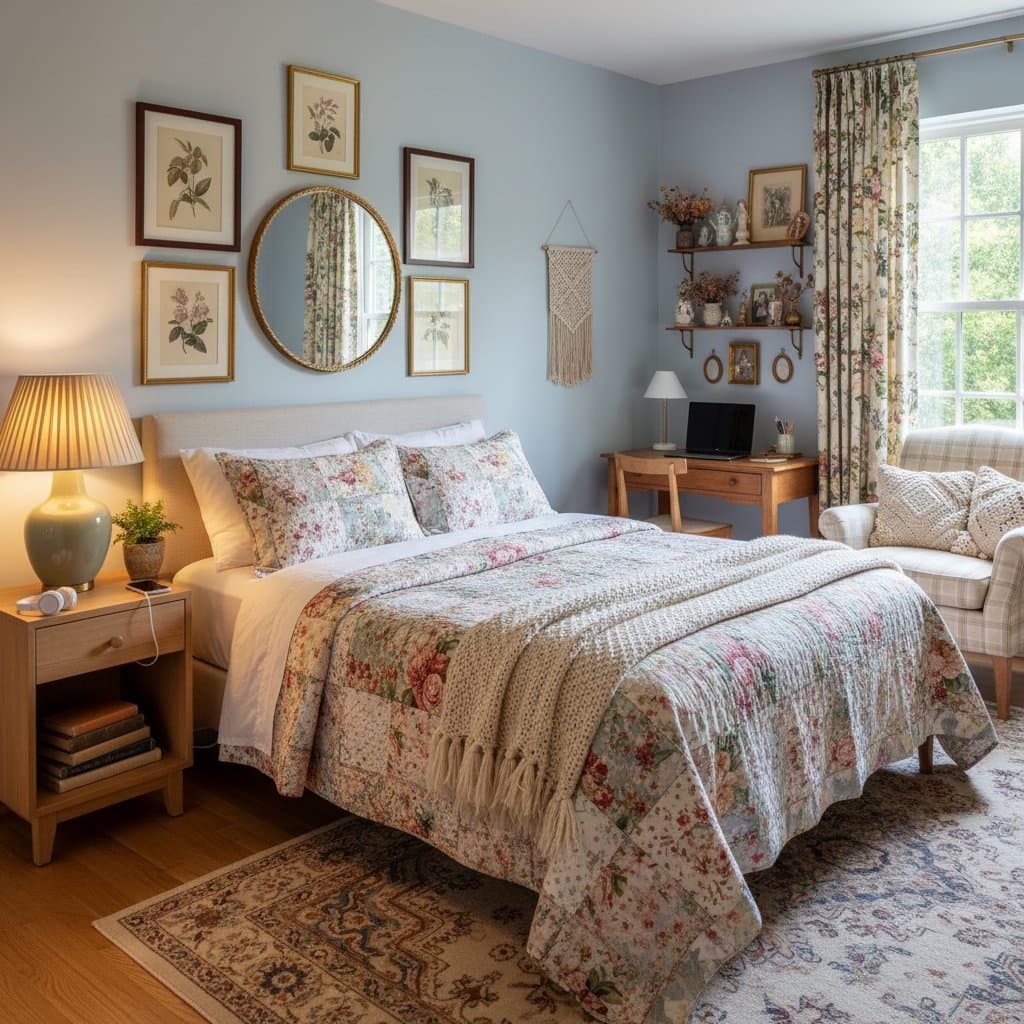
Designers place panels behind headboards or as ceiling clouds to improve speech clarity. The result supports sensory comfort alongside lighting and airflow planning.
At a Glance
- Purpose: Reduce echo in living areas, bedrooms, and offices.
- Common Materials: Wool felt, recycled polyester, wood slats, cork.
- Ideal Placement: Walls opposite windows, ceilings above desks, or integrated into cabinet fronts.
- Leading Teams: Baux, Autex, FilzFelt, Studio Z, Soundform Panels.
- Average Size: Individual panels from 12 by 12 inches up to full wall systems of 10 feet.
Before Installation
Homeowners often notice sound problems after renovations that feature smooth plaster and open sightlines. Every drawer or conversation amplifies across the room. Rugs alone rarely solve the issue in high ceiling spaces.
Modern panels offer a cleaner alternative to heavy drapes. They maintain visual lines while addressing reflections from parallel walls.
After Installation
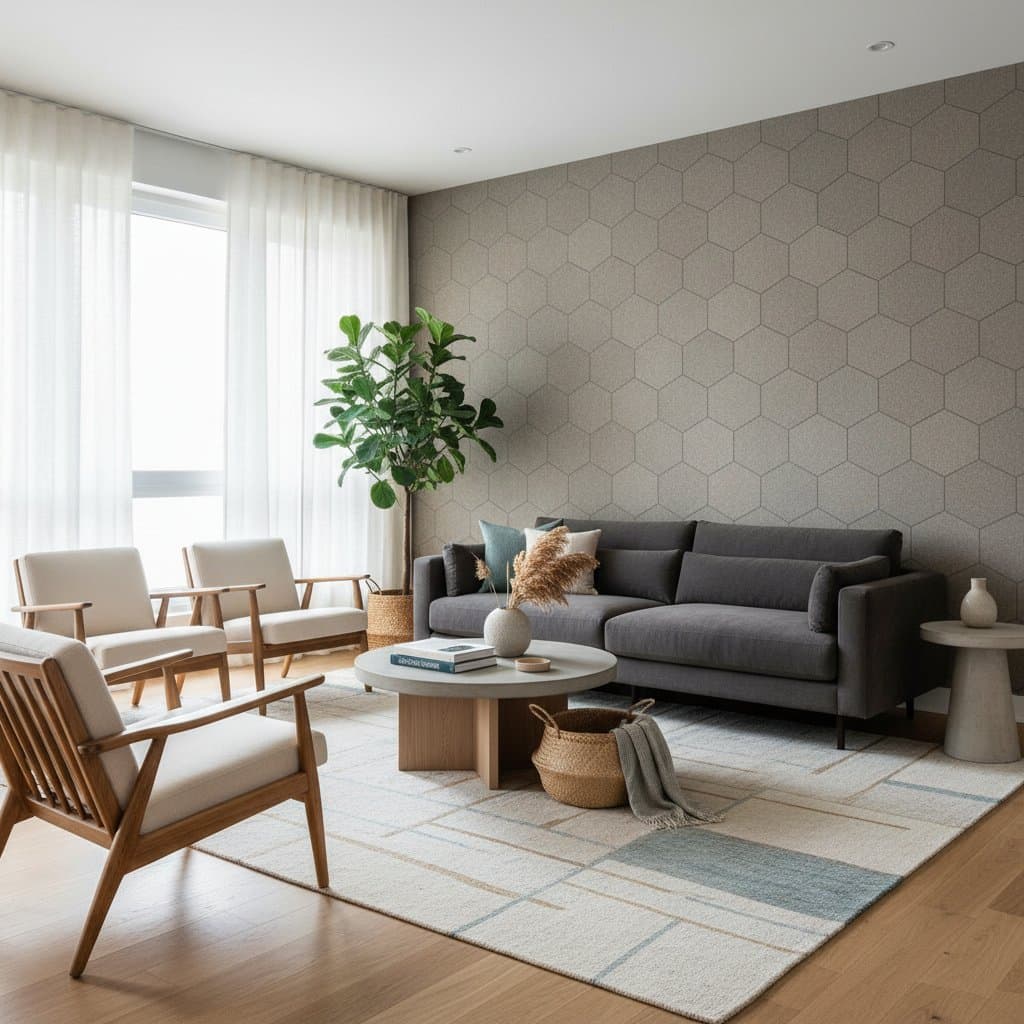
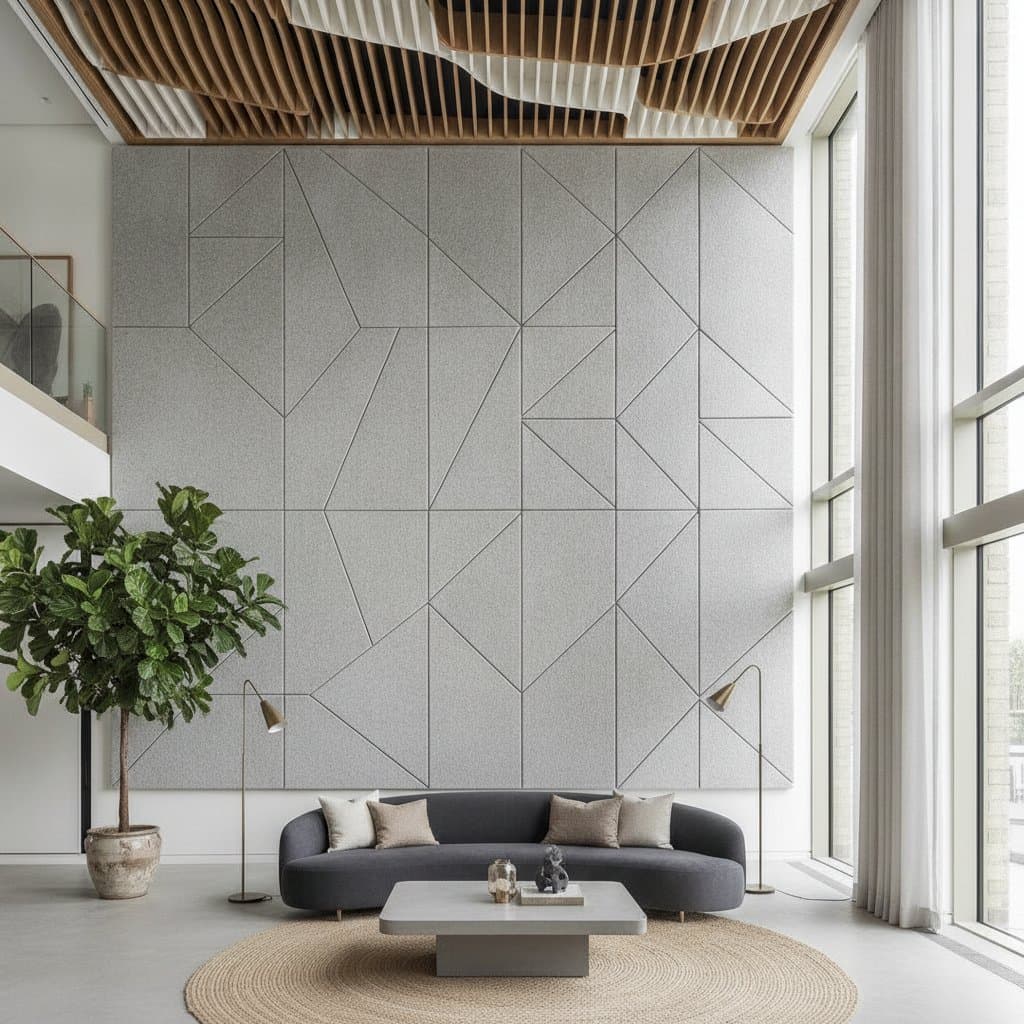
Wool felt panels arranged in geometric patterns create a feature wall that absorbs sound and frames artwork. Wood slat systems on ceilings add rhythm and conceal wiring. Both approaches make rooms feel more intimate without visual clutter.
Design Details
- Space panels about 1 inch from the wall to allow sound waves to dissipate.
- Match tones to walls for a subtle effect or use contrast for graphic impact.
- Vacuum felt surfaces regularly and wipe wood finishes with a damp cloth.
- Add recessed LED strips to emphasize texture and create depth.
How Panels Work
Porous materials convert sound energy into heat as waves pass through fibers. Coverage of 20 to 30 percent of wall or ceiling area produces noticeable results. Corners and parallel surfaces receive priority because they reflect sound directly back into the room.
When Design Meets Acoustics
Circular felt discs in gradient colors form abstract patterns that reference art collections. Printed panels mimic canvas while modular systems allow rearrangement over time. Color choices extend from neutrals to saturated greens and terracotta.
Integrating Panels Into Furniture
Upholstered banquettes and freestanding screens use sound absorbing foam beneath fabric. Cabinet fronts lined with acoustic material soften kitchen noise without altering appearance. Headboards with padded sections provide quiet backdrops in bedrooms.
Ceiling Treatments
Suspended felt baffles or wood clouds absorb sound from above in dining rooms and home offices. Track lighting or recessed fixtures fit between panels to keep the ceiling light in appearance.
Sustainable Materials and Craft
Recycled polyester from plastic bottles and renewable options such as wool or cork reduce environmental impact. These fibers also help regulate humidity. Take back programs allow responsible disposal at the end of use.
Smart Placement by Room Type
Living Room
Focus on walls facing windows or screens. Combine with rugs and upholstery for balanced results.
Kitchen
Place panels on dining walls away from cooking areas. Choose wipeable surfaces to handle moisture.
Bedroom
Install padded panels behind the bed and pair them with curtains for restful conditions.
Home Office
Position panels behind and beside the desk to improve call clarity. Screens can serve as pinboards.
Entry and Hallways
Use slim cork tiles or felt strips to reduce footsteps in narrow spaces.
Trade Offs to Consider
Quality panels range from moderate to high cost depending on size and material. Large installations may require professional mounting. Felt surfaces need regular dusting compared with hard finishes. Dark panels absorb light so pair them with brighter nearby surfaces.
Smart Storage Moves with Acoustic Benefits
Bookshelves and woven baskets diffuse sound while adding warmth. Fabric inserts on wardrobe doors provide subtle absorption. Storage planning forms part of the overall acoustic approach.
Bringing Panels Into Your Own Home
Begin with one room that experiences harsh sound such as a living area with high ceilings. Test small felt samples before scaling up. Expand coverage once the initial improvement is confirmed.
Living with Your Design
Installed panels reduce television volume needs and make conversations feel natural. Daily routines gain a calmer quality as sound settles into the background.