Acoustic Panels Turn Living Rooms into Quiet Retreats
You know that moment when you are trying to relax in your living room, but the TV echo bounces off the walls like you are sitting in a tiled gym. Or when you can hear every word of the neighbor phone call through the shared wall. That is when you realize that sound has weight. It fills rooms, leaks through corners, and steals calm from your space.
Acoustic panels are the quiet heroes of modern decor. They do not shout for attention, yet they quietly transform a room from noisy to soothing. You do not need to live in a recording studio to appreciate them. With thoughtful placement and a bit of design savvy, they can turn a regular living room into a soft, serene retreat.
Why Acoustic Panels Matter
Noise is sneaky. It creeps in from outside traffic, bounces off hard surfaces, and builds layers of echo until your favorite room sounds like a hallway. The right acoustic panels absorb those reflections and stop sound from ricocheting around. They do not make a room silent, but they create balance. You still hear the laughter, the music, and the clinking glasses, only without the harsh edge.
Think of acoustic panels as rugs for your walls. Where rugs tame footsteps, panels tame echoes. They add texture, warmth, and a sense of calm that you can feel even before you pinpoint why the room sounds better.
Seven Upgrades for a Quieter Living Room
Here are seven thoughtful upgrades that can help any living room feel softer, calmer, and more refined. Each one tackles noise in its own way while still fitting beautifully into your decor.
-
Fabric-Wrapped Acoustic Panels
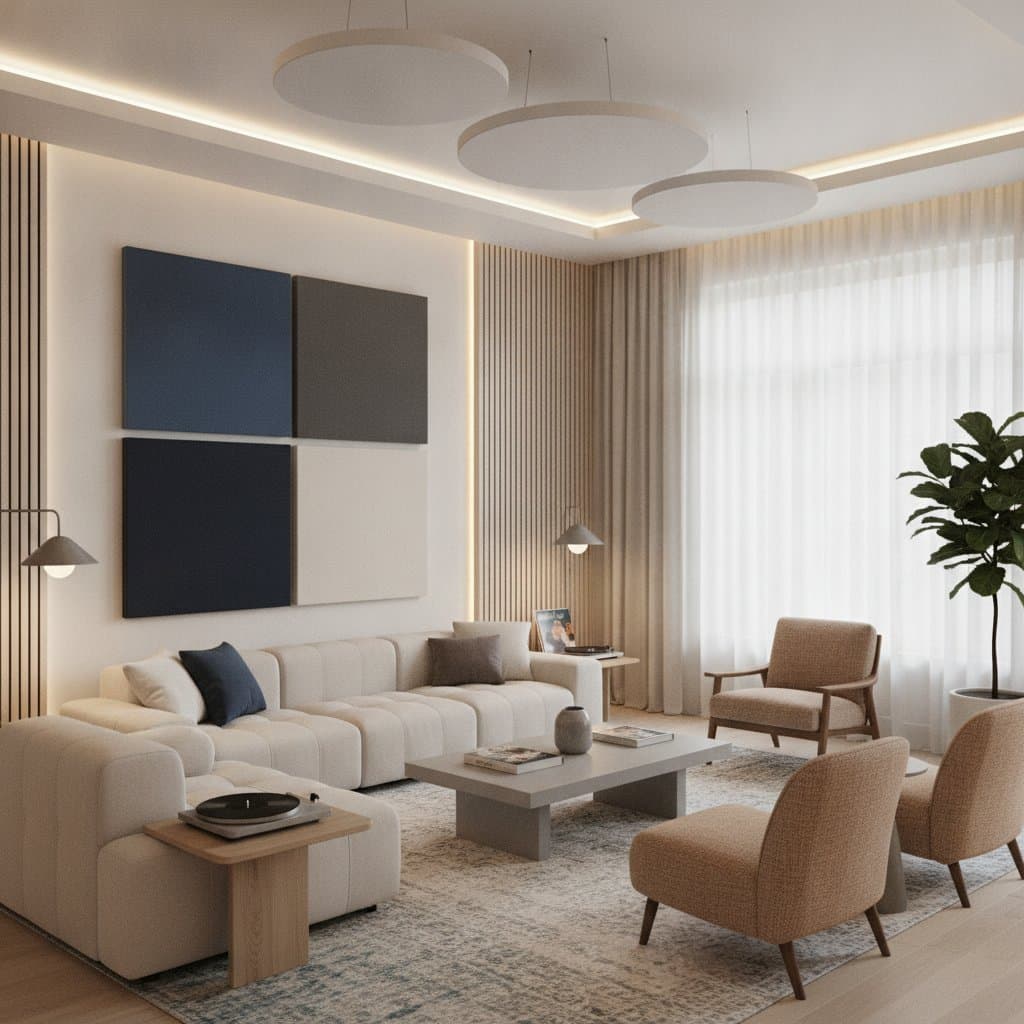
These are the classic choice for good reason. They look like art but work like sound sponges. Wrapped in linen, felt, or even patterned fabric, they can blend with your walls or stand out as statement pieces. The trick is to choose fabrics that let sound pass through rather than reflect it. You can reduce echo without losing style. A few well-placed panels can make your space feel instantly more comfortable. -
Wood Slat Acoustic Panels
If you love the natural warmth of wood, these panels are a dream. Thin wooden slats sit over an acoustic felt backing, creating a rhythm of texture that breaks up sound waves. They work especially well on one accent wall or behind a TV. You get the cozy vibe of wood without the noise bounce. The slats diffuse sound instead of letting it reflect straight back. -
Ceiling Baffles or Clouds
Sound does not only bounce off walls. It ricochets from the ceiling too. Hanging acoustic baffles or clouds above seating areas can make a huge difference. They are ideal if you have high ceilings or a large open-plan space where sound tends to travel. These overhead panels catch noise before it spreads. They also add architectural interest, especially when arranged in geometric patterns or suspended at different heights. -
Acoustic Art Panels
Acoustic panels do not have to look plain. Many companies print custom artwork directly onto sound-absorbing material. You can hang a cityscape, a botanical print, or even a family photo, all while improving the acoustics. You get double duty from your wall decor. Instead of filling space with art that reflects sound, you fill it with art that softens it. -
Corner Bass Traps
Low-frequency sounds are the hardest to tame. They gather in corners like dust bunnies of noise. Bass traps are thicker panels designed to absorb those deep tones. They fit neatly where the walls meet the ceiling or floor. If your space feels boomy during movies or music, these are your fix. They smooth out sound so you hear clear dialogue and balanced bass without rattling picture frames. -
Acoustic Curtains
These look like regular drapes but hide dense, sound-absorbing layers inside. They help block exterior noise and reduce echo from large windows. Choose a heavy fabric with a soft backing for the best results. They are easy to install and easy to love. Pull them closed, and you instantly notice the quieter feel. The bonus is better insulation, which makes your room feel warmer and more private. -
Acoustic Rugs and Upholstery Choices
Every soft surface helps. A plush rug, thick cushions, and upholstered furniture all absorb sound. Combine these with wall or ceiling panels for a layered approach. You do not have to cover every surface with panels. Sometimes, combining a few acoustic upgrades with smart furnishings is enough to calm the noise.
Finding the Right Placement
You do not need to fill every wall with panels. A few strategic spots can make all the difference. Start with the wall opposite your main sound source, such as the TV or speakers. Add panels where sound might bounce back, like above or beside a sofa. Corners and ceilings are often overlooked, but they play a big role in how balanced a room sounds. If your space still feels echoey, consider adding a few ceiling panels or a corner trap. A good rule of thumb is to aim for coverage on about a quarter of your surfaces. You will still get plenty of quiet without losing the lively character of the room.
Blending Panels with Your Decor
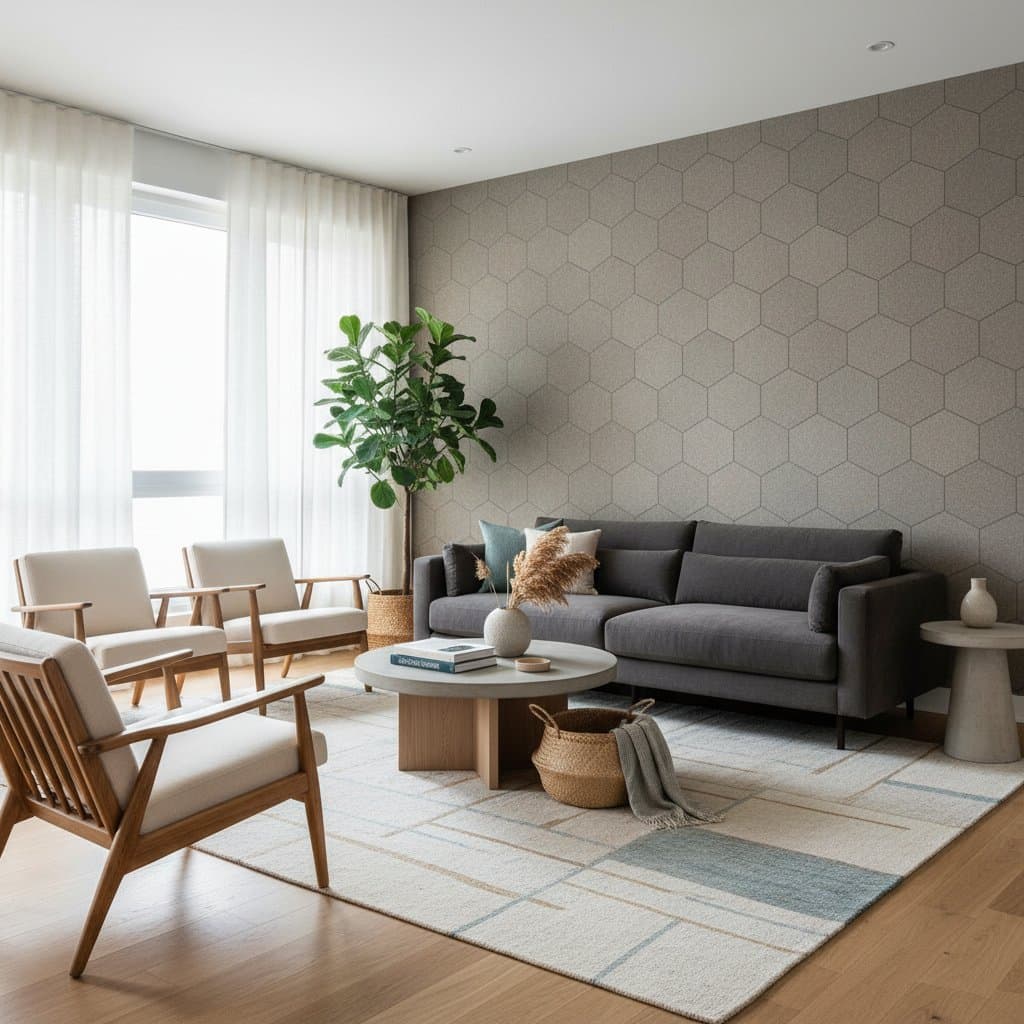
Acoustic upgrades do not need to look technical. The newest panels come in materials that blend beautifully with home styling. You can find felt in soft neutrals, wood veneers in rich tones, or even panels wrapped in boucle or velvet. Try matching your panels to an existing color palette. In a minimalist space, choose panels that disappear into the wall color. In a more eclectic room, pick contrasting textures so they look intentional. Mounting panels in symmetrical arrangements can make them read as wall art rather than utilities.
For renters or commitment-shy decorators, peel-and-stick acoustic tiles are a simple solution. They can be rearranged, replaced, or removed without damage. You can even mix colors for a playful mosaic effect.
Living with the Difference
Once you install acoustic panels, you start noticing quiet differently. Conversations sound clearer. Music feels richer. Even the hum of daily life softens. You realize how much background noise you had been tolerating. Some homeowners describe it as taking the hard edges off the sound. It is not silence, but serenity. The shift is subtle yet deeply satisfying. Suddenly, reading on the couch or watching a movie feels more immersive.
If you work from home, the benefits double. Acoustic panels can help reduce echo on video calls and make voices sound more natural. A calm acoustic environment also helps concentration. The mind relaxes when it is not fighting through reverberation.
Making It Happen
Creating a quiet retreat does not require a full renovation. Start small. Try a few panels on the most reflective walls, or replace lightweight drapes with acoustic curtains. If you notice an immediate difference, expand from there. Think of it as layering comfort. First, you quiet the echoes. Then, you notice your favorite playlist sounds better. Soon, your living room becomes a place where the outside noise feels far away.
Keep in mind that sound behaves differently in every space. High ceilings, large windows, and hard floors make noise linger. Soft furnishings, rugs, and curtains help absorb it. The best results come from combining materials until the room feels balanced. Over time, you may find yourself paying more attention to the sound of your home. The soft click of a cabinet closing, the hush that settles after a conversation, the peacefulness of a movie night without echo. These small moments are what make a space feel personal.
Acoustic panels are not just about reducing decibels. They are about improving how you live and feel in your home. When your living room sounds as good as it looks, it becomes more than a gathering place. It becomes a retreat.