Acoustic Panels Redefine Luxury in Living Room Design
Imagine stepping into your living room after a long day and hearing echoes bounce off every surface. The conversation from the kitchen drifts in, traffic hums through windows, and the space feels far from calm. Many homeowners encounter this issue in open layouts or rooms with hard floors and few textiles. Modern acoustic panels address these problems by turning living rooms into sanctuaries that balance sound control with visual appeal.
Sound Challenges in Modern Spaces
Luxury interiors now consider how a room sounds as well as how it looks. Visual elegance loses impact when sound waves reflect off walls and ceilings. Echo and background noise make conversations tiring and relaxation difficult. Open windows, high ceilings, and expansive glass amplify these effects in many homes.
Minimalist designs often favor sleek surfaces over soft furnishings. This choice unintentionally increases noise levels. Addressing acoustics early prevents these issues from undermining comfort.
Evolution of Acoustic Panels
Acoustic panels originated in studios and performance venues. They now serve as design features that enhance residential interiors. Panels suit Scandinavian minimalism, mid-century modern rooms, or layered bohemian spaces. Their range of textures and shapes allows integration with existing decor or creation of focal points.
Versatility extends to function. Some panels absorb sound while others diffuse it evenly. This flexibility supports both quiet conversation and clear audio playback.
Principles of Sound Absorption
Hard surfaces such as drywall, glass, and tile reflect sound waves. Overlapping reflections produce the muddiness common in untreated rooms. Acoustic panels trap these waves in dense, porous materials. Layered constructions increase absorption depth while diffusers distribute sound more evenly.
The outcome is improved clarity for speech and music. Homeowners notice reduced need to raise television volume once reflections decrease.
Selection Process for Living Rooms
Effective panel selection starts with an assessment of room dimensions, ceiling height, and existing furnishings. Follow these steps:
- Map primary noise sources and reflection points along walls or ceilings.
- Choose finishes that either match wall colors or introduce texture through wood or felt.
- Position panels at key reflection zones rather than covering entire surfaces.
- Consider dual-purpose designs such as ceiling canopies or wall art that incorporate lighting.
Current Design Approaches
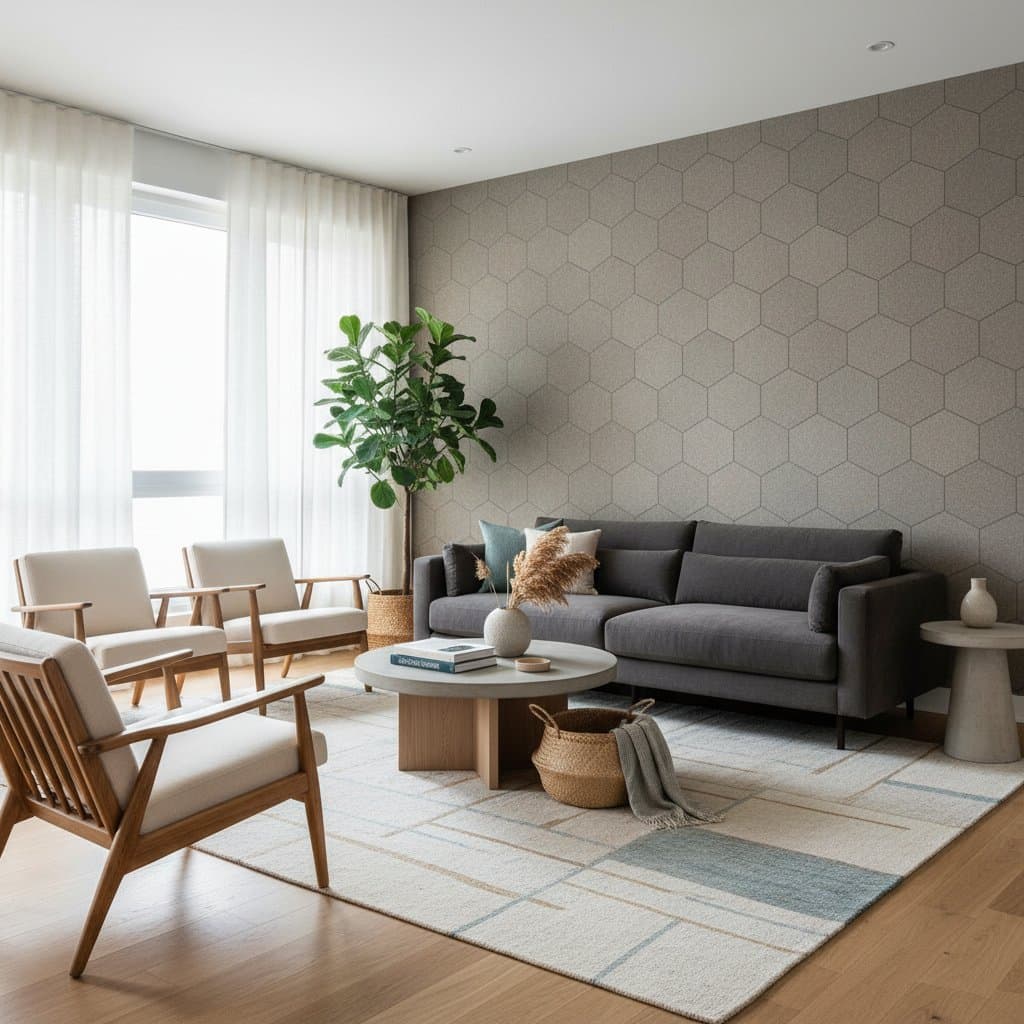
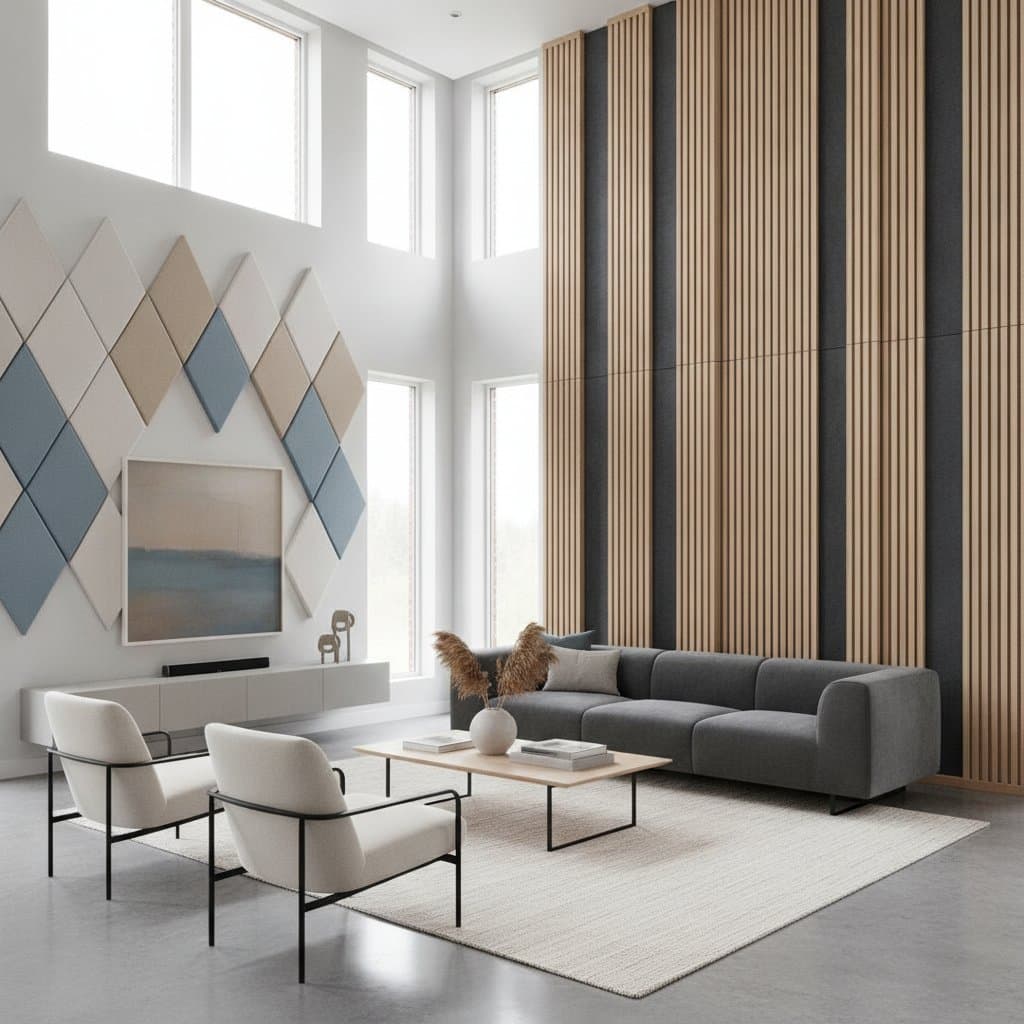
Designers now treat acoustic elements as visible style features. Wood slat panels introduce rhythm and pair with plants or neutral palettes. Felt and wool panels add color in geometric patterns. Modular systems allow rearrangement without construction. Ceiling baffles manage vertical echoes in tall rooms.
Material choice depends on climate. Compressed polyester resists moisture in coastal areas. Natural fabrics perform better in dry regions by reducing static.
Cost and Installation Factors
Entry-level foam or polyester panels cost about the same as a decorative print. Mid-range fabric or wood veneer sets run several hundred dollars for a typical wall treatment. Premium custom work with integrated lighting reaches several thousand dollars.
Homeowners can install many panels with basic tools. Ceiling or large units often require professional mounting. Confirm wall anchoring capacity before starting. Local codes may call for permits when panels form part of broader renovations.
Daily Advantages of Improved Acoustics
Residents report calmer atmospheres and smoother conversations after installation. Background music gains definition. Families with children or pets experience fewer distractions. Remote workers benefit from reduced ambient noise during focused tasks.
Care and Durability
Fabric panels need occasional vacuuming. Wood surfaces respond to light polishing. Stable core materials prevent warping during humidity changes. Most panels maintain performance for years and many incorporate recyclable components.
Practical Next Steps
View the living room as a complete sensory space where light, texture, and sound interact. Begin with targeted panels behind seating or expand to full wall treatments. The result is an environment that feels both refined and restful.