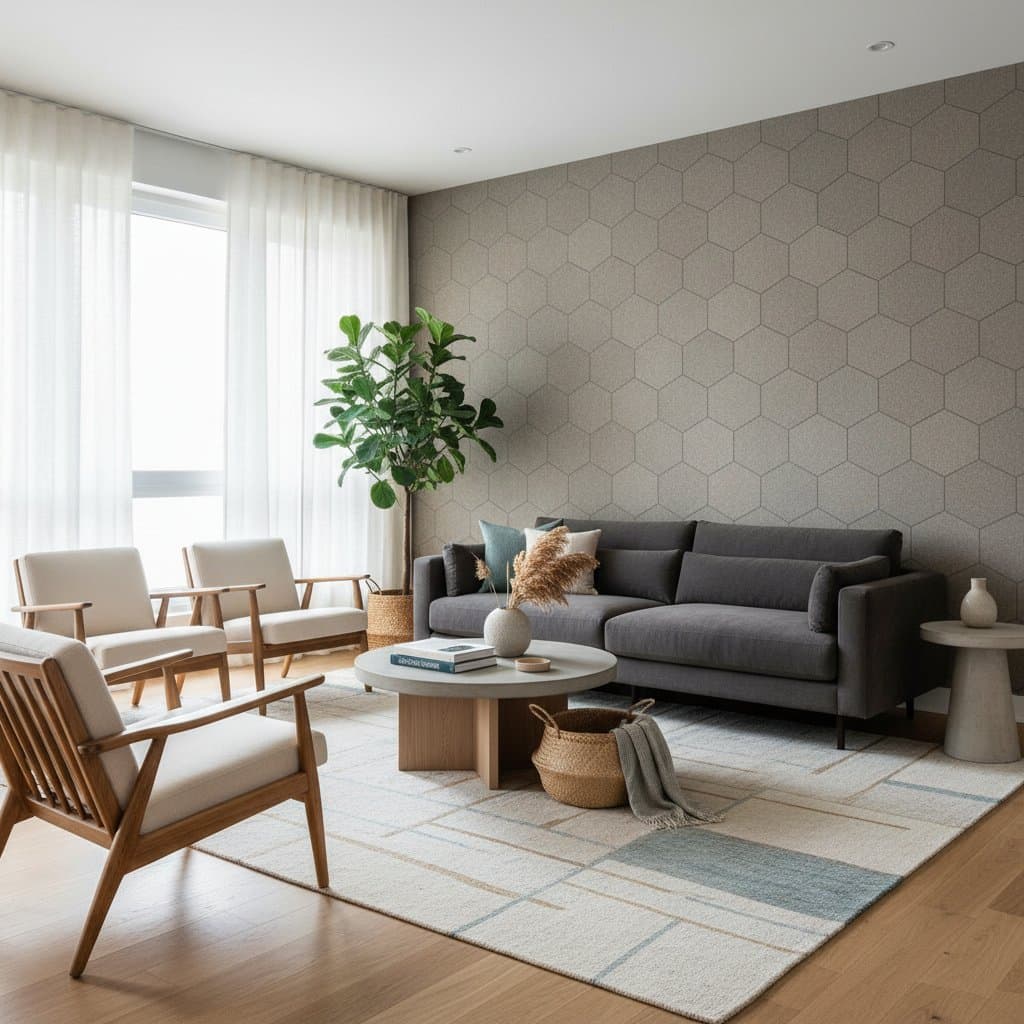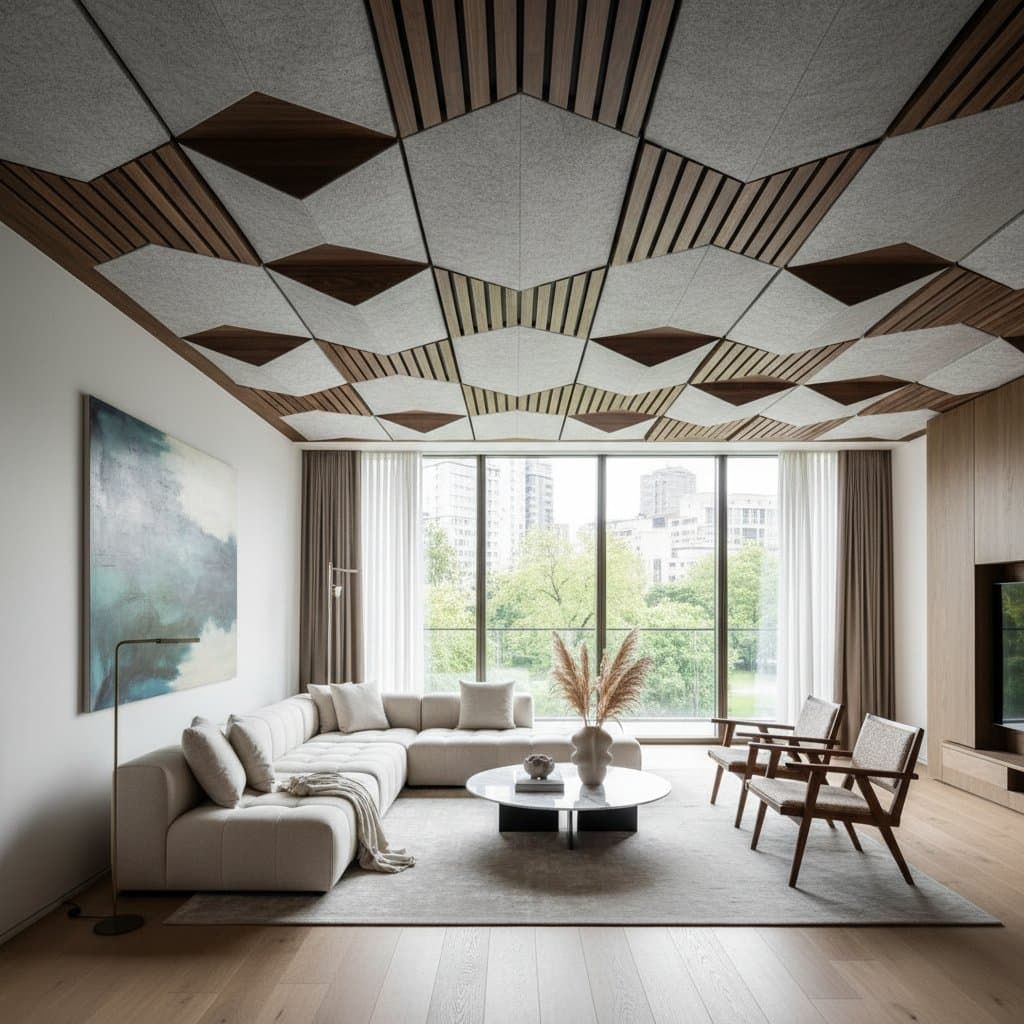
Why Acoustic Panels Are Redefining Ceiling Style
Acoustic panels once served a purely functional role, concealed behind drywall or integrated into office ceilings to absorb unwanted noise. Today, these elements emerge as prominent design features. Interior professionals leverage them to influence both auditory and visual experiences, converting flat ceilings into dynamic, purposeful planes.
Open-plan homes and versatile workspaces demand effective sound management alongside thoughtful aesthetics. Contemporary ceiling panels demonstrate that acoustic solutions enhance visual interest without compromise.
At a Glance
Primary users: Homeowners, architects, and interior designers prioritizing acoustic comfort and spatial performance
Common applications: Kitchens, home offices, restaurants, and communal living areas
Standard dimensions: Panels typically measure 2 by 4 feet (0.6 by 1.2 meters), with options for custom configurations covering full ceiling expanses
Key design elements: Sound absorption capabilities, surface textures, linear rhythms, and light-diffusing properties
Prevalent materials: Felt composites, wooden slats, recycled polyethylene terephthalate (PET) fibers, fabric-covered cores, and metallic frameworks
Challenges Posed by Standard Ceilings
Conventional ceilings contribute to what experts term hard-surface reverberation. In expansive layouts, audio waves reflect off floors, walls, and overhead surfaces, intensifying ambient sounds. Such conditions hinder clear communication and diminish overall room usability.
Interior designer Carla Mendes observes, "We were seeing beautiful rooms that looked amazing but felt noisy and sharp. The sound didn’t match the visual calm. That disconnect became a design problem to solve."
Gypsum board ceilings provide minimal noise reduction, and ornamental plaster accents fail to mitigate echoes. Property owners increasingly seek interventions that foster tranquility while preserving decorative integrity.
Evolution of Acoustic Ceiling Designs
Current acoustic panels demand visibility through layered compositions, geometric patterns, and occasional three-dimensional forms. Professionals regard ceilings as an additional architectural surface, essential for establishing room ambiance.
These systems employ modular units that secure to overhead structures via direct fixation or suspended frameworks. Arrangements may feature aligned rows to direct visual flow or grouped formations functioning as sculptural accents.
Architectural designer Leo Fong notes the transformation: "The ceiling used to be a blank field. Now we treat it as a texture. The panels absorb sound, but they also frame light, guide sightlines, and make large spaces feel more contained."
Essential Design Considerations
- Material diversity: Felt options in subdued shades like clay, charcoal, and sand deliver subtle warmth and tactile depth. Select thicknesses from 1 to 2 inches to balance absorption and profile.
- Wooden slat configurations: Parallel timber strips backed by absorptive layers merge fabric-like softness with wood's inherent rigidity. Space slats 0.5 to 1 inch apart for optimal light play and sound control.
- Color harmony: Tonal schemes link ceiling treatments to surrounding walls or furnishings, ensuring seamless visual transitions. Test samples under room lighting to confirm cohesion.
- Illumination synergy: Embedded or linear lights position between panel segments for uniform lighting devoid of harsh reflections. Integrate LED strips for energy efficiency and dimmable effects.
- Eco-friendly attributes: Construction from recycled PET or plant-based fibers attracts environmentally aware clients. Verify certifications like Cradle to Cradle for sustainable sourcing.
These elements foster environments that integrate serenity and unity. Panels fulfill acoustic requirements while advancing creative objectives, bridging utility and expression.
Optimal Spaces for Acoustic Ceilings
Acoustic treatments excel in multifunctional areas. Within open residences, panels positioned over dining or seating zones delineate areas absent physical barriers. Home offices gain from reduced reverberation, enhancing concentration during virtual interactions.
Commercial venues such as eateries, lodging facilities, and educational settings derive similar advantages. Professionals adjust panel concentration and positioning to suit specific uses; for instance, targeted groupings above restaurant tables curb din, whereas linear arrays in classrooms ensure consistent audio clarity.
In high-traffic zones like lobbies, full-coverage installations minimize background noise. For residential media rooms, dense paneling absorbs surround sound reflections, creating immersive yet comfortable listening spaces.
Practical Installation and Tailoring Options
Installation involves securing panels to slim grids or mounting hardware. Covering a standard 10 by 12 foot (3 by 3.6 meter) area requires approximately one day of professional labor. Thicknesses vary from 1 to 2 inches (2.5 to 5 centimeters) to match absorption needs.
Customization encompasses digital prints, precision-cut motifs, or embedded luminous pathways. Combinations of materials, like oak finishes paired with neutral felt, introduce layered dimensionality. Consult fabricators early to align custom elements with structural constraints.
For DIY enthusiasts, adhesive-backed panels offer simpler application on low ceilings. Always verify load-bearing capacity and fire ratings before finalizing choices.
Integrating Functional Elements
Beyond acoustics, these ceilings accommodate concealed utilities. Common integrations include:
- Access panels for systems: Disguised entries aligned with the overall pattern for maintenance ease. Position them near HVAC units or electrical boxes for quick servicing.
- Embedded audio components: Surface-level speakers that integrate flush with the framework. Wire them through panel voids to maintain clean lines.
- Wiring conduits: Pathways for electrical and monitoring lines, preserving a streamlined appearance. Use flexible tubing to route cables without disrupting panel alignment.
These approaches conceal infrastructure while upholding the serene aesthetic central to acoustic strategies. Plan integrations during the design phase to avoid retrofitting challenges.
Key Considerations and Potential Drawbacks
Implementing acoustic panels necessitates careful evaluation. They may reduce overhead clearance marginally, and in heritage structures, compatibility with existing frameworks requires assessment. Certain surfaces accumulate particulates over time, warranting gentle vacuuming with specialized tools.
Expenses fluctuate with material selection and intricacy; felt-based setups prove economical, whereas timber or bespoke variants command premiums. Owners generally deem the gains in livability and refinement justifiable.
Budget for professional acoustics testing post-installation to measure noise reduction coefficient (NRC) values, typically aiming for 0.7 or higher. Address moisture-prone areas with treated materials to prevent degradation.
Experiencing the Transformation
Post-installation, enhancements manifest promptly. Spaces register as hushed, dialogues as distinct, and overhead elements as deliberate. Ceilings evolve from overlooked to integral to the ambiance.
Designer Carla Mendes captures the essence: "People notice how quiet it feels before they notice what changed visually. Then they look up and realize the ceiling is part of the design story."
Acoustic panels deliver exceptional versatility for renovations or new constructions, refining acoustics while infusing overhead warmth, pattern, and elegance.
Steps to Implement Acoustic Solutions
To pursue this upgrade, pinpoint high-noise areas in your residence. Calculate overhead dimensions and account for fixtures like lights or safety devices. Engage an interior specialist or acoustics consultant to determine appropriate coverage and surface selections tailored to your environment.
Start with a site survey to assess reverberation times using free apps or basic sound meters. Source samples from multiple suppliers to compare textures and colors in situ. Schedule installation during off-peak seasons to minimize disruption and control costs.