Acoustic Panels: Stylish Soundproofing Tops Home Trends
When a family of four in a busy city converted their open-plan living space into a home that truly worked for them, the biggest challenge was not furniture or paint color. It was noise. Between a lively toddler, a remote-working spouse, and the occasional blender at 7 a.m., the echoes proved relentless. The solution arrived not from heavy curtains or thick rugs but from something far sleeker: acoustic panels that looked as good as they performed.
Across homes everywhere, acoustic panels step out of the shadows of recording studios and into the spotlight of everyday interiors. They address more than muting echoes. They create calm, textured environments that feel intentional and beautiful.
At a Glance
- Purpose: Reduce echo and absorb noise in homes, offices, and shared spaces
- Design Options: Fabric-wrapped panels, wood slats, felt designs, printed art panels
- Budget Range: Moderate to high, depending on materials and customization
- Ideal Locations: Living rooms, home offices, dining areas, bedrooms
Before: The Echo Chamber Effect
If you have ever clapped your hands in an empty room and heard that sharp, hollow echo, you recognize the sound of poor acoustics. Many modern homes share this problem. Wide, open layouts, hard floors, and minimal furnishings amplify every sound. Conversations bounce. Footsteps linger. Even small noises feel exaggerated.
In the city home mentioned earlier, the family’s living area featured towering ceilings and polished concrete floors. The space looked sleek but sounded harsh. Phone calls became stressful, movie nights required subtitles, and quiet moments proved rare. They required a change that softened the sound without sacrificing their modern aesthetic.
After: Quiet Beauty
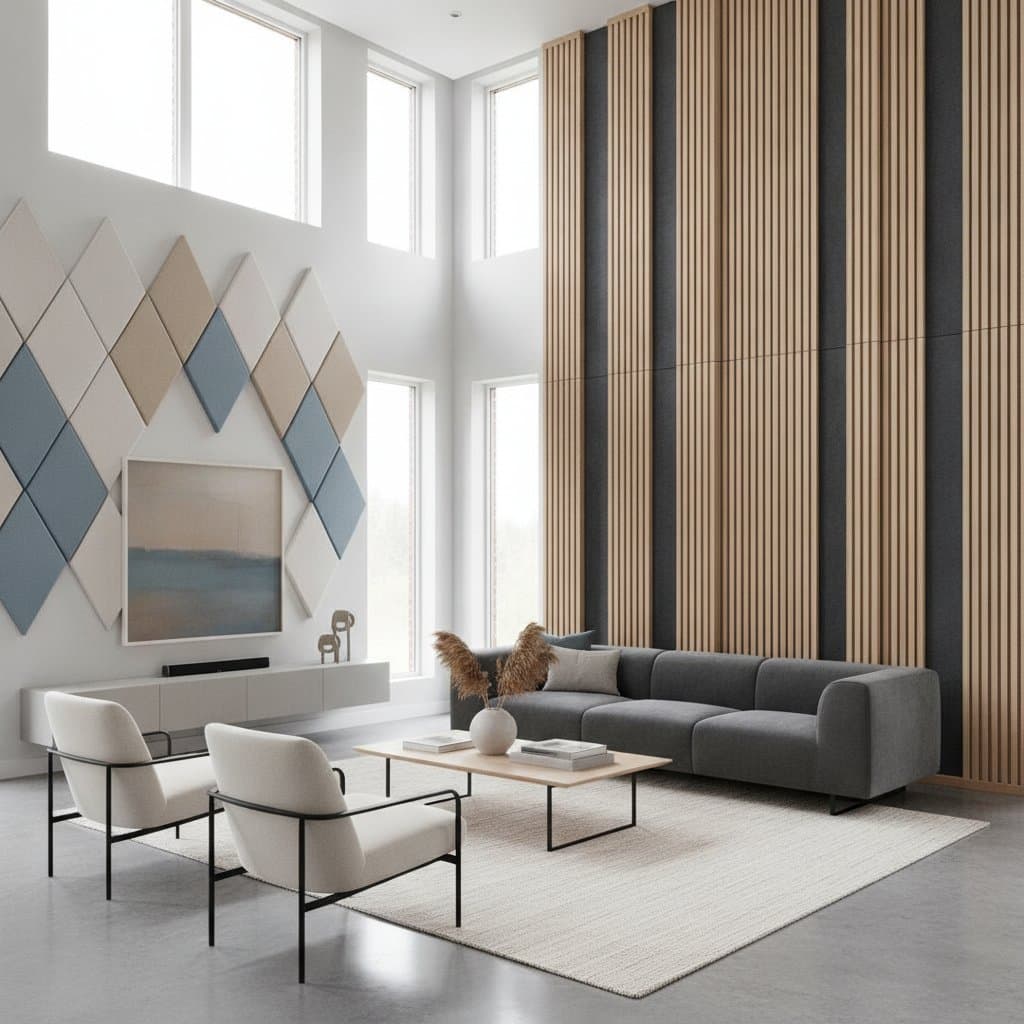
Enter acoustic panels, but not the dull gray squares one might imagine. The family selected slatted oak panels, arranged vertically to draw the eye upward and visually warm the space. The effect proved immediate. Sound softened, voices became clear, and the room felt grounded.
What surprised them most was how the panels transformed the mood. The space did not just sound better. It felt calmer, more composed, more like home. That is the secret of modern soundproofing: it merges acoustic performance with design in a way that enhances both.
Why Acoustic Panels Are Trending
Acoustic panels have evolved from utilitarian to design-forward. Homeowners now view them as another layer of décor, one that adds depth, texture, and purpose. Here is why they top home design trends:
- Open-concept living needs them. With fewer walls, sound has nowhere to go. Panels help restore balance, allowing conversation and quiet to coexist.
- Remote work changed everything. Home offices now demand privacy and focus. Panels reduce background noise, improving both productivity and sanity.
- They look incredible. From wool felt in muted tones to wood veneer grids, panels serve as a statement piece. Many designers use them as feature walls.
- They are easy to install. Most panels mount like art. Some peel-and-stick versions work even in rentals.
- Sustainability counts. Many brands use recycled materials, natural fibers, or responsibly sourced wood.
Design Details: Form Meets Function
The beauty of acoustic panels lies in their variety. You can tailor them to any style, from Scandinavian calm to industrial edge.
Fabric Panels
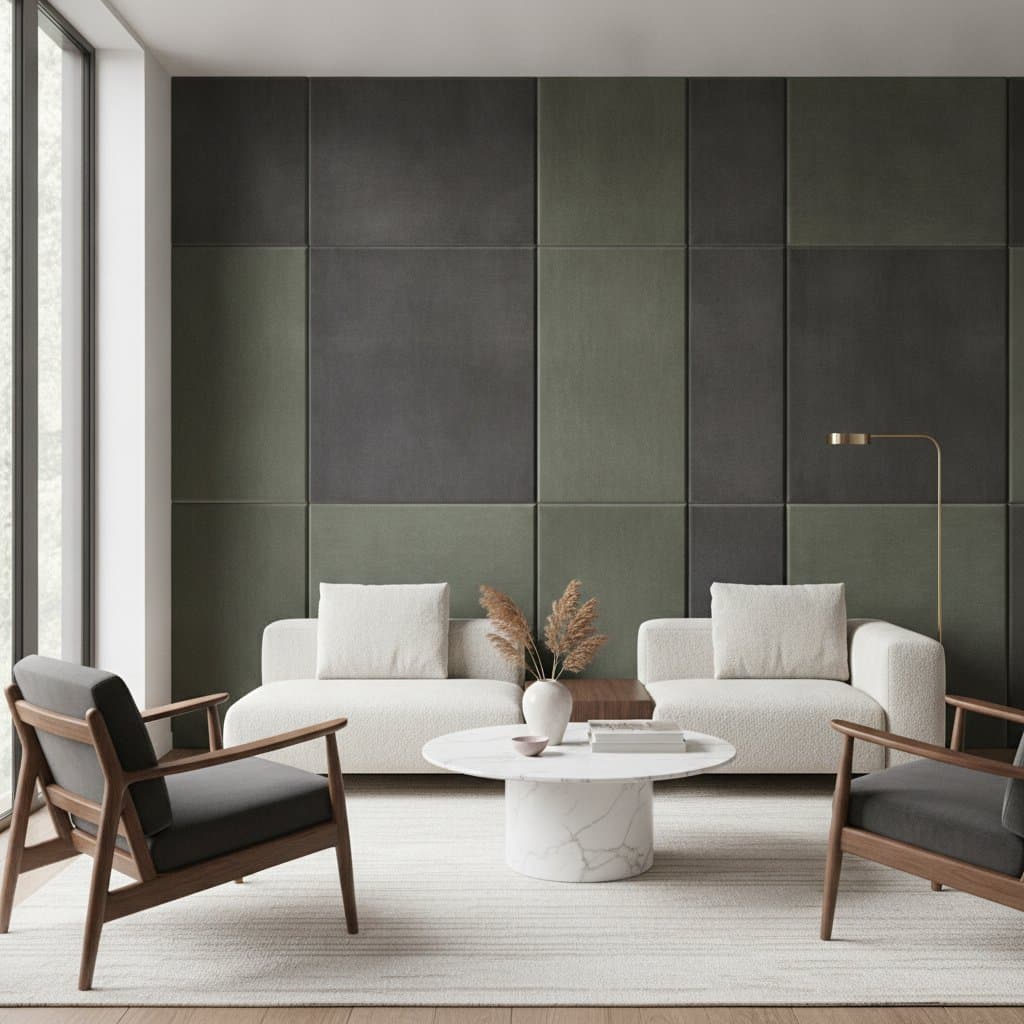
These represent the classic go-to for home theaters and offices. Wrapped in linen, wool, or polyester blends, they absorb sound effectively while adding a soft texture to walls. Choose earthy neutrals for subtle warmth or deep tones like charcoal or navy for contrast. For optimal performance, select panels with a noise reduction coefficient of at least 0.5, which indicates moderate sound absorption.
Wood Slat Panels
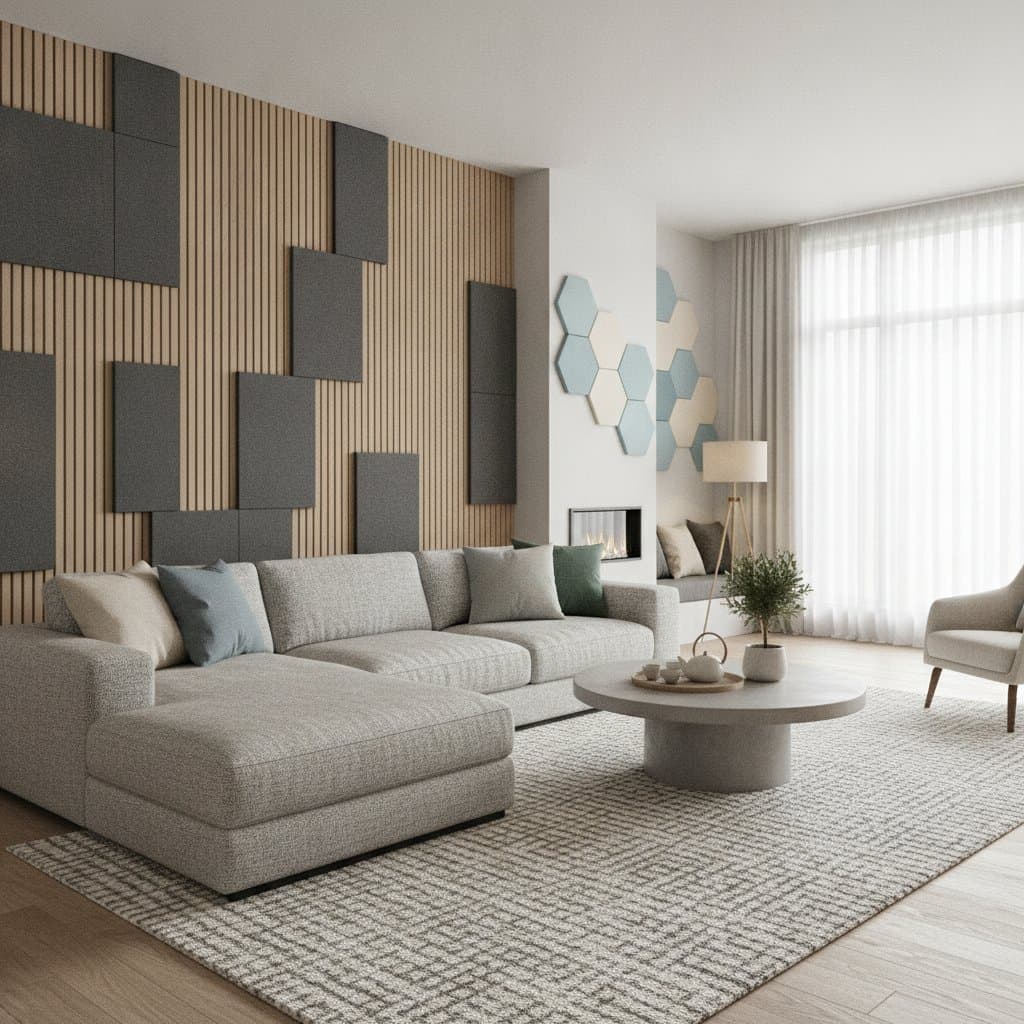
Wood panels enjoy a current moment of popularity. Picture thin oak or walnut slats mounted over acoustic felt. The result appears sculptural and refined. They work beautifully behind a sofa or as a headboard accent wall. The gaps between the slats not only add rhythm but also trap and diffuse sound, enhancing clarity in conversations.
Felt and Cork Options
For those who prefer a lighter, more playful look, felt tiles offer endless possibilities. Cut into hexagons, circles, or custom shapes, they can double as pinboards in creative studios or children’s rooms. Cork provides a similar appeal, with a natural grain that pairs well with minimalist interiors. Both materials install quickly and require no special tools beyond adhesive hooks.
Printed or Artistic Panels
Some companies now produce acoustic panels that resemble framed art. You can print photographs, abstract patterns, or hand-drawn designs onto sound-absorbing material. It serves as a clever way to disguise function behind beauty. Consider matte finishes to minimize glare and maintain focus on the artwork itself.
Where to Use Them
Acoustic panels work almost anywhere, but the best results come from strategic placement.
- Living Rooms: Position panels behind the main sofa or TV to soften reflective surfaces. This placement reduces reverb during gatherings.
- Dining Areas: Place a few panels on one wall to reduce clatter during meals. Target walls opposite the table for even absorption.
- Bedrooms: Upholstered headboards and soft wall panels create a restful, cocoon-like feel. Add panels near windows to dampen street noise.
- Home Offices: Add panels behind your desk or on the ceiling above to absorb echo during calls. Ceiling panels prove especially effective in rooms with high ceilings.
- Hallways: Narrow spaces often carry sound. A few vertical panels can quiet them instantly. Opt for slim profiles to avoid crowding the area.
Lifestyle Benefits
Sound shapes how people feel in a space. A room that echoes feels unsettled. A quiet one feels grounded. With acoustic panels, the difference proves tangible.
For families, less noise means better conversation and calmer mornings. For professionals, it means focus and privacy. For everyone, it means comfort that goes beyond what one sees.
One homeowner described her new living room panels as “a hug for your ears.” It is a fitting phrase. When sound behaves, the whole home relaxes.
Balancing Budget and Style
You do not need a massive budget to make an acoustic difference. Start small. A few panels in key spots can dramatically improve sound quality.
- Entry-level: Felt tiles or cork panels, easy to mount and often modular. These options cost under $50 per square foot.
- Mid-range: Fabric-wrapped panels or wood veneer options that blend with existing furniture. Expect $75 to $150 per square foot.
- High-end: Custom wood slats, printed panels, or integrated acoustic ceilings. Prices reach $200 or more per square foot for bespoke designs.
If you are handy, build DIY panels using insulation board, fabric, and a simple wood frame. Just ensure the core material, such as rockwool or fiberglass, meets fire safety standards and provides adequate absorption.
Living with Your Design
Once installed, acoustic panels become part of your daily rhythm. You will notice how footsteps fade, how music sounds richer, and how your home feels more serene. Maintenance proves minimal. A light dusting or occasional vacuum keeps them fresh.
Over time, you might find yourself craving that same quiet texture in other rooms. Many homeowners start with one feature wall and end up expanding throughout their house. It is a subtle addiction, the good kind, where comfort meets beauty.
If your space feels too loud, too sharp, or simply unfinished, acoustic panels might provide the missing layer. They offer proof that practical design can prove stunning, and that quiet can express as much as color or furniture.
So next time you step into a room and feel that little echo of emptiness, imagine what it could sound like softened by texture, pattern, and purpose. Sometimes silence, or something close to it, stands as the most beautiful design element of all.