Acoustic Panels That Elevate Living Room Style Naturally
A living room should feel calm, connected, and comfortable. Open layouts and hard surfaces often create unwanted echo instead. Acoustic panels now serve as decorative elements that soften sound while adding texture, warmth, and visual rhythm. The latest styles fit seamlessly into home interiors through natural materials and subtle geometry.
Why Acoustic Panels Belong in Living Rooms
Modern living rooms often feature tall ceilings, wide windows, and minimal furnishings. These choices bring light and spaciousness yet also create sound bounce that can make conversations sharp and television audio unclear. Acoustic panels absorb excess reverberation. They improve clarity and make the room feel more grounded.
Interior designer Marisol Greene said, "When we add acoustic panels, it is not just about quieting a space. The effect is emotional. You feel calmer because the room stops shouting back." This balance of comfort and design explains why acoustic panels appear more often in premium living spaces.
Natural Materials That Double as Art
The most appealing acoustic panels use organic materials such as felted wool, wood veneer, cork, and compressed cellulose. These fibers and finishes dampen sound and bring tactile depth to walls that might otherwise feel flat.
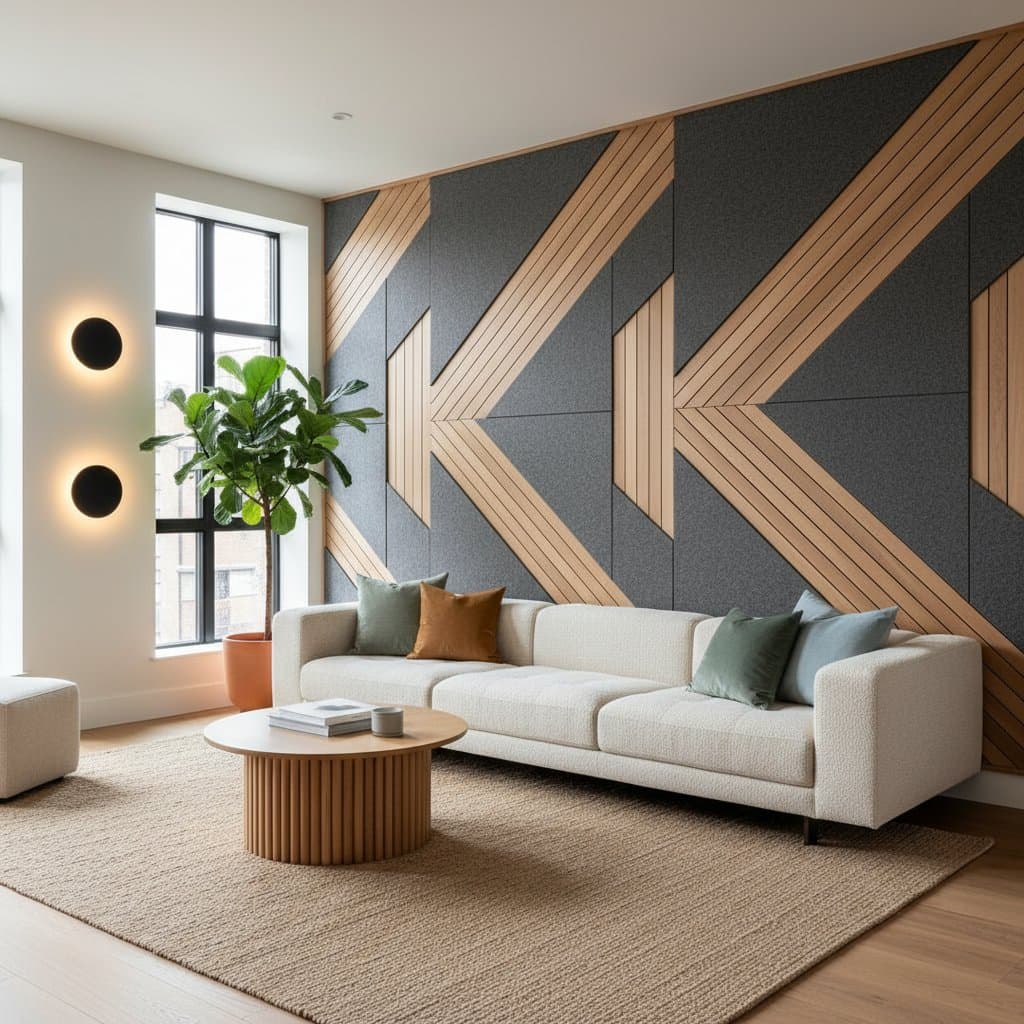
Wood slat panels offer a linear texture that can align with flooring tones or ceiling beams. A walnut veneer panel paired with cream walls adds warmth and contrast. Light oak slats keep a Scandinavian palette cohesive. Cork panels bring a softer, more casual look suitable for family rooms or creative corners. In small apartments, fabric wrapped panels in linen or cotton blends work well behind sofas or televisions, where they read as refined wall art.
Each material choice influences both acoustics and appearance. Denser materials absorb lower frequencies. Softer fabrics reduce higher ones. Combining types helps balance the overall sound profile of the room.
Design Integration and Placement
Acoustic panels perform best when placed on walls opposite major sound sources, such as behind the main seating area or along side walls near speakers. Ceiling applications can also make a visible difference, especially in loft style rooms or spaces with concrete floors.
For a subtle approach, designers often use panels as part of a larger composition. A set of three vertical panels framed by wall sconces can read as an intentional art installation. In other cases, panels are concealed behind decorative slats or upholstered wall sections. The goal is to make the panels feel integral rather than added as an afterthought.
Greene adds, "We think of panels as another layer of design, like rugs or curtains. They need to fit the proportion of the room, the tone of the palette, and the rhythm of the architecture."
Design Details
- Material Options: Felted wool, cork, wood veneer, recycled PET fiber, linen wrapped foam
- Finish Choices: Stained or oiled wood, matte fabric, painted backing boards
- Panel Thickness: Commonly between 1 to 2 inches (2.5 to 5 centimeters) for balanced performance
- Mounting Systems: Adhesive strips for small panels, cleats or track systems for large or heavy installations
- Maintenance: Occasional vacuuming with a soft brush attachment keeps dust from dulling textures
Style Directions Gaining Ground
- Slatted Wood Panels: Repeating vertical lines bring structure and calm, ideal for modern or midcentury interiors.
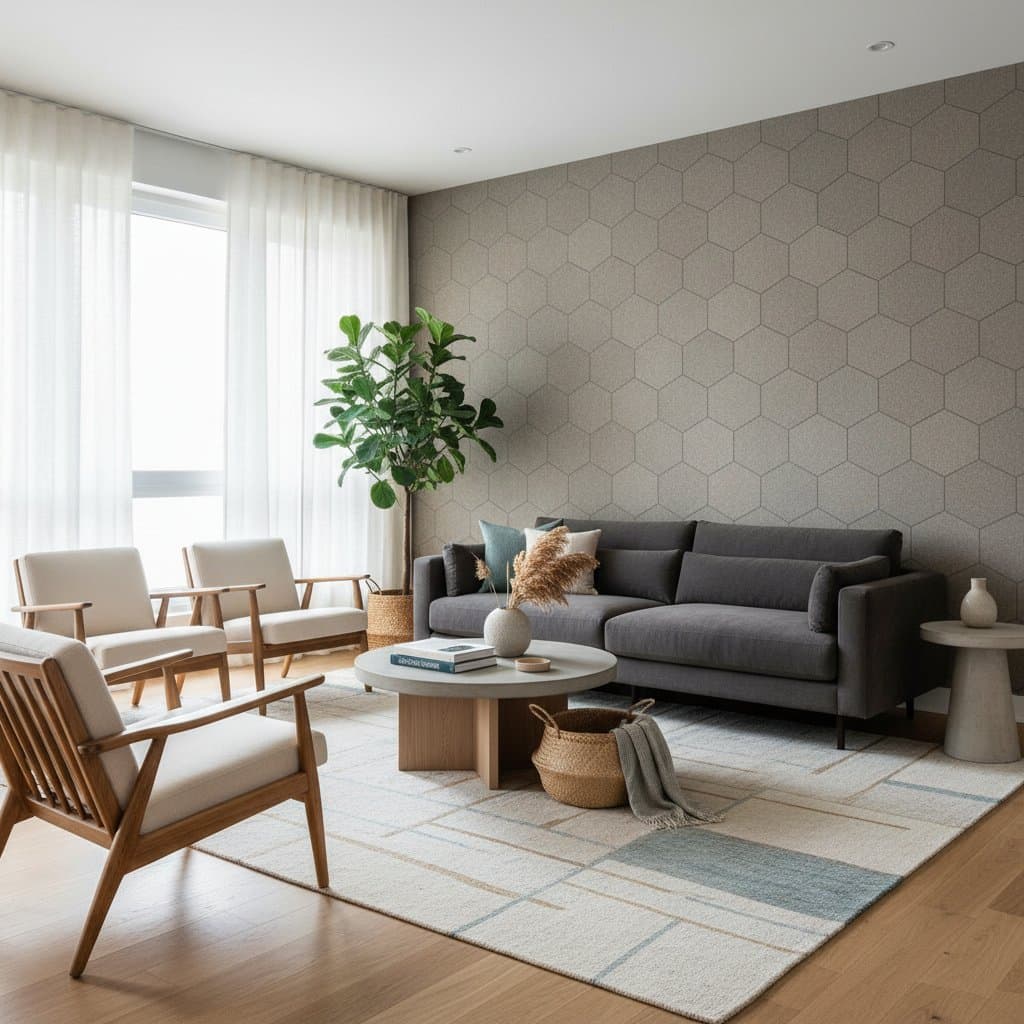
- Fabric Grids: Square or rectangular panels in neutral textiles create a tailored, architectural look.
- Cork and Composite Panels: Natural variation in tone adds organic character while improving acoustics.
- Mixed Texture Walls: Combining wood and fabric introduces depth and visual interest, especially behind a media console.
- Ceiling Baffles: Suspended acoustic fins lighten the visual mass of high ceilings while reducing echo.
Each direction has its own mood. The choice depends on how much presence the panels should have compared to other elements in the room.
Practical Steps for Installation
Homeowners can add panels gradually. Start with one accent wall, gauge the sound difference, and build from there. Many modular systems allow for rearrangement or expansion. This flexibility supports evolving layouts without major renovation.
The benefit of acoustic panels extends beyond sound control. They foster a more relaxed atmosphere where voices feel close and clear. Watching a film or hosting guests becomes easier because every word carries evenly through the space. The sense of quiet is not total silence but a refined calm that supports conversation and rest.
A well balanced room does not just look right. It sounds right too. By choosing natural materials and thoughtful placement, acoustic panels transform a living room into a space that feels both serene and beautifully finished.