Acoustic Ceilings: Blending Style and Silence
A quiet revolution unfolds overhead. Acoustic ceilings, previously reserved for office buildings and recording studios, now grace homes, restaurants, and boutique hotels. These installations harmonize aesthetics with functionality. They dampen noise, delineate areas, and introduce sculptural elements to interiors plagued by echoes and disruptions. This trend gains popularity because it fulfills a contemporary demand for serene, textured environments that perform as well as they appear.
Key Overview
Primary users: Homeowners, interior designers, and restaurant owners who prioritize acoustics alongside visual appeal
Common locations: Open-plan lofts, small apartments, and hospitality venues
Scale and methods: Typically applied over entire ceilings or as suspended elements, covering 50 to 200 square feet (4.6 to 18.6 square meters)
Collaborators: Interior architects, acoustics experts, and manufacturers working with felt, wood, and recycled materials
The Challenge
Modern interiors often incorporate concrete, glass, and drywall, surfaces that amplify sound rather than contain it. This creates vibrant yet chaotic settings where dialogue battles echoes from utensils and footsteps. Homeowner and visual artist Lina Torres described her minimalist loft: “We loved the light in our living area, but the echo made it feel like a train station.” The goal remained to retain openness while fostering a more peaceful setting for routine activities and professional tasks.
The Transformation
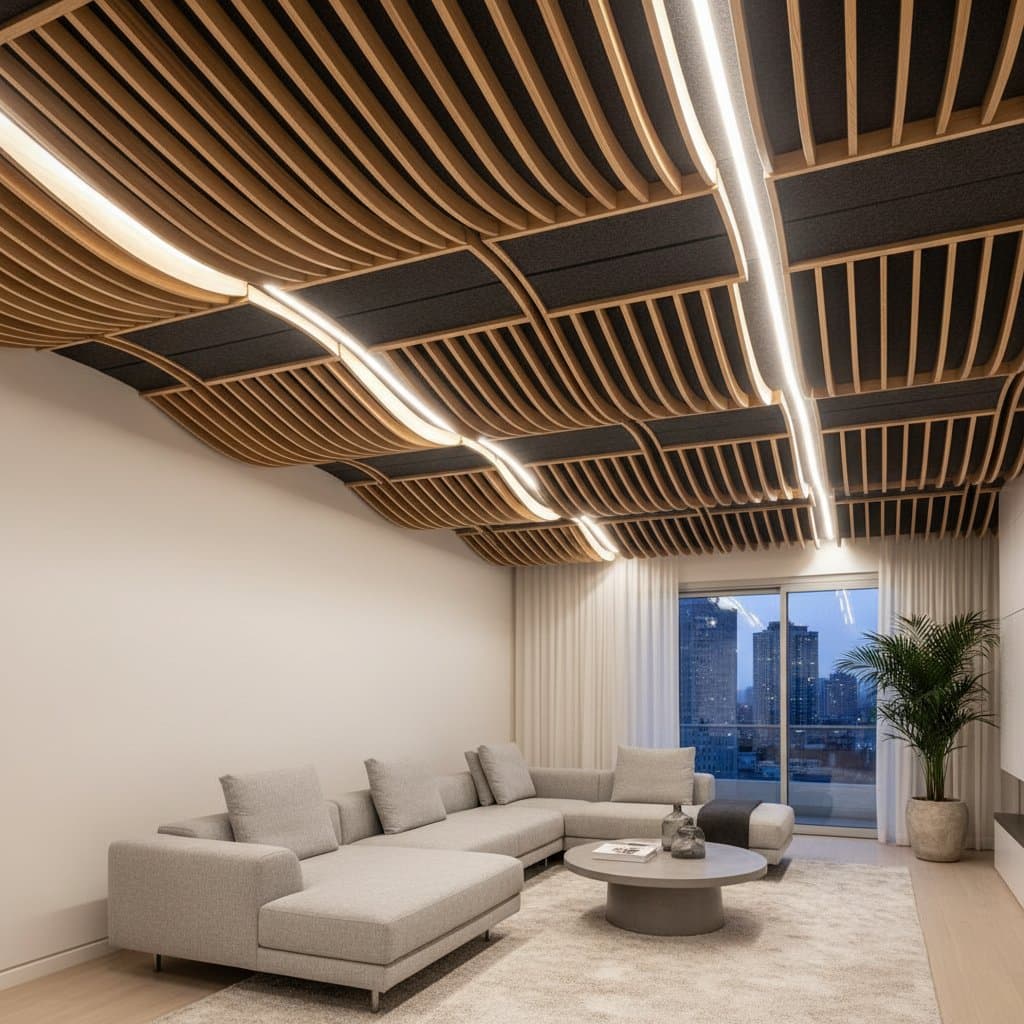
A multi-layered ceiling system provided the answer, integrating performance with visual harmony. Felt acoustic panels, each 24 inches (61 centimeters) square, formed a grid pattern. These panels suspend just below the main ceiling, with a narrow air space that enhances absorption. Designer Mark Hsu of Studio H noted, “We wanted the panels to read as part of the architecture, not as an afterthought.” The addition promptly muted echoes during talks and introduced a dynamic graphic motif that shifts with natural light.
In cafes and shared workspaces, comparable configurations prevail. Neutral suspended baffles position above seating, and perforated wood covers ceilings in conference zones. These choices deliver utility and ambiance. Noise diminishes, and the ceiling serves as a focal point that influences movement and social interaction.
Technical Specifications
- Core materials: Compressed wool felt, perforated oak veneer, recycled PET panels
- Surface treatments: Matte finishes, fabric encasements, or custom paints to blend with existing ceilings
- Mounting techniques: Direct attachment or suspension via slender cables for an elevated appearance
- Illumination compatibility: Integrated LED strips or compact pendants positioned in panel gaps
- Upkeep routines: Regular vacuuming or brushing; individual panel replacement as required
- Additional benefits: In lowered ceiling setups, the space above conceals electrical wiring or compact audio devices
Material selection affects both auditory performance and emotional tone. Textiles impart coziness to sparse rooms, whereas wooden slats introduce pattern and dimension. Professionals pair these panels with complementary quiet elements, like wool carpets or cushioned furniture, to amplify the outcome.
The Broader Impact
Excessive noise ranks among top issues in expansive living areas. Acoustic ceilings tackle this concern while elevating room aesthetics. The approach refines rather than silences daily sounds. Optimized acoustics facilitate clearer discussions, alleviate tension, and permit subtle music or background noise. Architect Rachel Kim, who incorporated ribbed wood panels in urban residences, observed, “When the space sounds right, everything else feels calmer.”
Ideal Applications
- Open kitchens and dining spaces dominated by rigid materials. Suspended acoustic clouds over tables delineate areas and sharpen verbal intelligibility.
- Multipurpose home offices serving as guest accommodations. Felt installations boost focus without evoking a professional studio.
- Hospitality environments emphasizing mood. Bars, lounges, and intimate eateries gain from lowered reverb that safeguards privacy in talks.
- High-ceilinged corridors and entrances. Patterned acoustic tiles add tactile interest while mitigating echoes from solid floors.
Practical Considerations
These ceilings introduce vertical layers, which may subtly reduce apparent room height. In smaller spaces, experts recommend pale hues and tight panel intervals to maintain an open sensation. Expenses depend on selections, with felt and PET options proving economical and bespoke wood arrangements incurring premiums. Setup proves simple, yet expert oversight guarantees precise alignment and uniform distribution.
Sustaining the Design
After placement, acoustic ceilings operate unobtrusively, yet their effects persist. They reshape spatial perception and utility over time. Superior executions integrate seamlessly, allowing occupants to experience tranquility without pinpointing its source. For renovation projects, addressing the ceiling first offers an innovative path to balanced comfort and elegance.