Why Wabi-Sabi Textures Advance Japandi Design
A home that balances lived warmth with serene simplicity offers profound comfort. Japandi design achieves this harmony by merging Japanese minimalism and Scandinavian coziness through uncluttered layouts, natural elements, and intentional choices. Recent trends reveal an emerging layer of depth in Japandi interiors, one that feels authentic and inviting. Wabi-sabi textures introduce these qualities, using imperfect, tactile surfaces to infuse minimal spaces with emotional resonance and sensory appeal.
Japandi emphasizes equilibrium, while wabi-sabi embraces transience, imperfection, and incompleteness. Their integration creates interiors that function efficiently yet engage the senses fully. This textured minimalism honors artisanal processes, temporal changes, and material narratives, elevating standard designs into meaningful retreats.
The Move to Textural Serenity
Minimalist environments occasionally appear overly sleek or detached. Wabi-sabi textures counter this by introducing subtle irregularities that foster genuine tranquility. For instance, raw linen drapes, hand-formed pottery, or limewashed finishes add vitality without disrupting calm.
This evolution avoids accumulation or extravagance. Instead, it employs strategic textural layers to enhance simplicity. Consider a polished oak console paired with a textured stone vessel, or a seagrass mat anchoring a neutral linen armchair. Such pairings guide the gaze softly, enriching the ambiance with understated elegance.
Core Elements of Wabi-Sabi Textures
Wabi-sabi philosophy reveres asymmetry, natural wear, and modest forms. In interior applications, it manifests in materials that encourage tactile exploration and reveal organic qualities.
Key examples include:
- Handcrafted pottery featuring irregular glazes or faint fingerprints from the potter's touch.
- Unfinished timber displaying knots, pronounced grains, and signs of maturation.
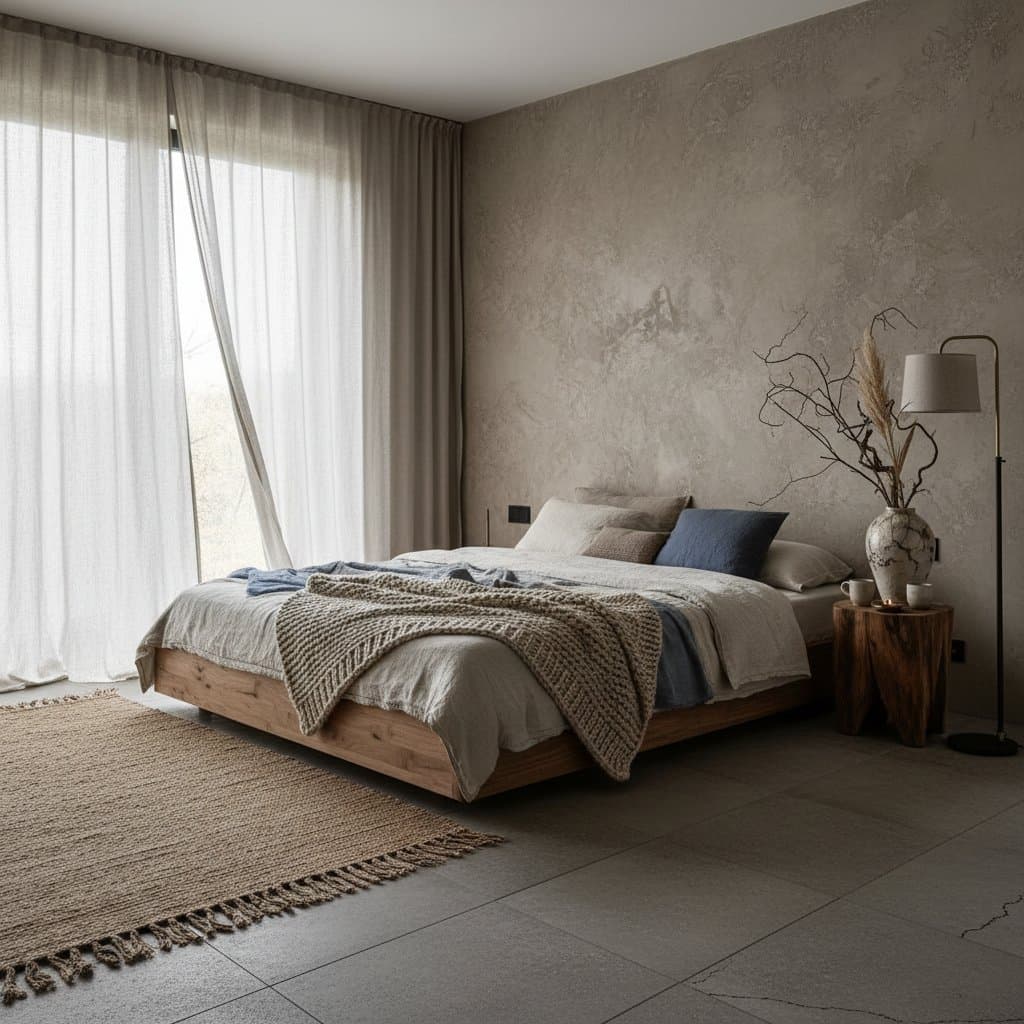
- Velvety plasters or limewash applications that absorb and reflect light variably.
- Organic textiles like unbleached linen, coarse jute, or hand-spun wool that develop softness through handling.
- Rough-hewn stone with evident striations or matte polishes that highlight natural contours.
These selections embody history and intention. They convert visually subdued areas into emotionally nurturing ones.
Seamless Integration with Japandi Principles
Japandi draws from cultures that prioritize moderation, environmental harmony, and skilled workmanship. Nordic influences provide practical warmth, and Japanese elements offer contemplative focus. Wabi-sabi textures strengthen these foundations by promoting tolerance for flaws.
In a Japandi setting, selections reflect deliberate curation. Incorporating wabi-sabi elements amplifies this by valuing uniqueness. An asymmetrical teacup prompts pauses in routine, while a patinated oak stool conveys enduring utility rather than deterioration.
Both traditions regard nature as an enduring influence. Wabi-sabi materials mirror landscapes with their variability, from rugged coastlines to ancient forests. Introducing them indoors imports subtle natural rhythms, anchoring rooms in authentic peace.
Incorporating Wabi-Sabi Textures in Japandi Spaces
Significant overhauls prove unnecessary for this transition. Wabi-sabi develops incrementally, enhancing existing designs. The following strategies provide practical entry points.
1. Focus on a Single Element
Select one feature for textural emphasis, such as a limewashed accent wall, an oiled walnut shelf, or sheer linen panels. Allow this choice to influence the room's overall tone without dominating it.
2. Prioritize Artisanal Creations
Opt for pieces bearing visible craftsmanship, like wheel-thrown vessels, loom-woven cushions, or lathe-turned accents. These convey personal narrative and tactile allure absent in mass-produced alternatives.
3. Combine Subdued Sheens
Counter reflective finishes with non-glossy options, including matte stoneware, distempered panels, or raw-edged boards. This combination yields balanced depth while upholding minimalist restraint.
4. Incorporate Layered Fibers
Replace manufactured textiles with breathable naturals such as organic cotton throws, merino wool pillows, or sisal runners. These additions deliver tactile comfort and visual nuance in measured amounts.
5. Permit Natural Evolution
Allow wooden accents or leather goods to acquire patina through regular use. A seasoned pine bench or supple hide ottoman gains narrative depth, integrating seamlessly into the home's evolving character.
6. Maintain Neutral Tones
Let surface variations serve as the primary interest, supported by subdued earth hues like terracotta, taupe, slate, and ivory. This restraint ensures textures remain prominent amid tranquil backdrops.
Sensory and Psychological Benefits of Texture
Beyond aesthetics, textures influence emotional states within living spaces. Uniform planes promote relaxation, yet excessive sameness risks sterility. Introducing varied surfaces engages touch, cultivating an enveloping sense of security.
Tactile environments promote attentiveness. Tracing wood's ridges or fabric's threads encourages deceleration. Such interactions transform mundane tasks, like arranging a textured platter or traversing a knotted rug, into mindful practices.
Achieving Harmony in Layering
Merging wabi-sabi with Japandi demands discipline to preserve essential spaciousness. Overabundance can obscure the style's inherent poise. Aim for selective placement: designate one prominent texture per area.
For example, pair a grooved cedar sideboard with sleek metal frames, or offset a stippled ceiling with plain flooring. This method sustains the restorative openness central to Japandi.
Relevance in Contemporary Living
Homes increasingly serve as refuges amid external demands. Japandi enhanced by wabi-sabi textures fulfills this role effectively, prioritizing holistic wellness over mere appearance. It fosters deeper bonds with possessions through intentional, enduring choices.
Sustainability emerges as a key advantage. Durable, eco-derived materials minimize replacement needs, while honoring wear extends lifespans. A vessel with minor fissures retains appeal, evolving alongside its owner.
Cultivating Enduring Appreciation
Adopting wabi-sabi perspectives reshapes perceptions of domestic details. Uneven plaster strokes, sunlight-dappled weaves, or faint etchings on surfaces reveal inherent charm. This viewpoint cultivates contentment and equanimity in design and beyond.
Beauty in this framework remains fluid, adapting to illumination, seasons, and usage. Textural infusions render homes dynamic and attuned, far from static displays.
Practical Steps for Implementation
Commence with modest adjustments in a chosen area. Introduce select natural pieces and observe their impact on daily interactions. Assess whether they inspire unhurried movements, steadier breaths, or heightened comfort.
Gradual additions build cohesion. A textured runner in the entry, a handmade lantern in the lounge, or aged linens in the bedroom each contribute to layered serenity. These elements underscore that true elegance resides in unadorned truth.
A Japandi interior enriched with wabi-sabi textures embodies gentle repose. It requires only mindful engagement. By permitting materials to unfold their tales, spaces transcend decoration to mirror intentional, adaptive existence.