Why Recycled Terrazzo Leads Kitchen Design Trends
Sarah and Tom purchased a modest brick bungalow in North Carolina. Their kitchen appeared outdated, with yellowed laminate counters and flat lighting that created a utilitarian atmosphere rather than a welcoming space. They sought a material that combined durability, sustainability, and visual appeal without overwhelming the room. Recycled terrazzo emerged as the ideal solution, offering a subtle blend of color, texture, and environmental significance.
Recycled terrazzo gains prominence in contemporary kitchens for reasons beyond its appearance. This material redefines sustainable home design by integrating timeless elegance with modern practicality. Homeowners and designers appreciate how it transforms everyday spaces into areas of enduring style and conscious choice.
The Original Kitchen's Shortcomings
Prior to renovation, Sarah's kitchen featured a monotonous beige scheme. Counters merged seamlessly with the flooring, and the space lacked elements to reflect light or add interest. Sarah noted, "We wanted a feature that drew the eye while remaining practical for daily use."
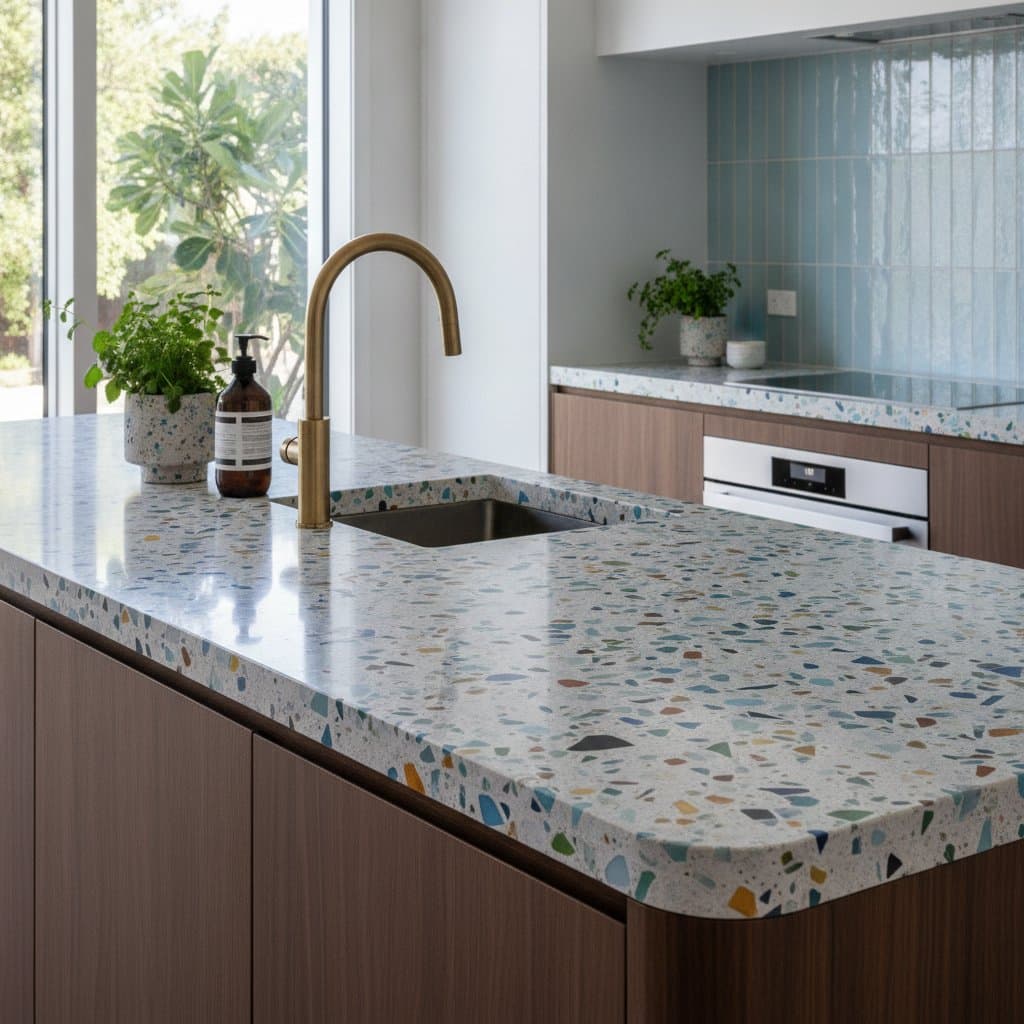
Options like traditional granite seemed too imposing, and quartz appeared overly uniform. Terrazzo provided the desired character through its recycled composition. Under warm pendant lights, the softly speckled surface resembled confetti embedded in stone, which convinced them to proceed.
Key Characteristics of Recycled Terrazzo
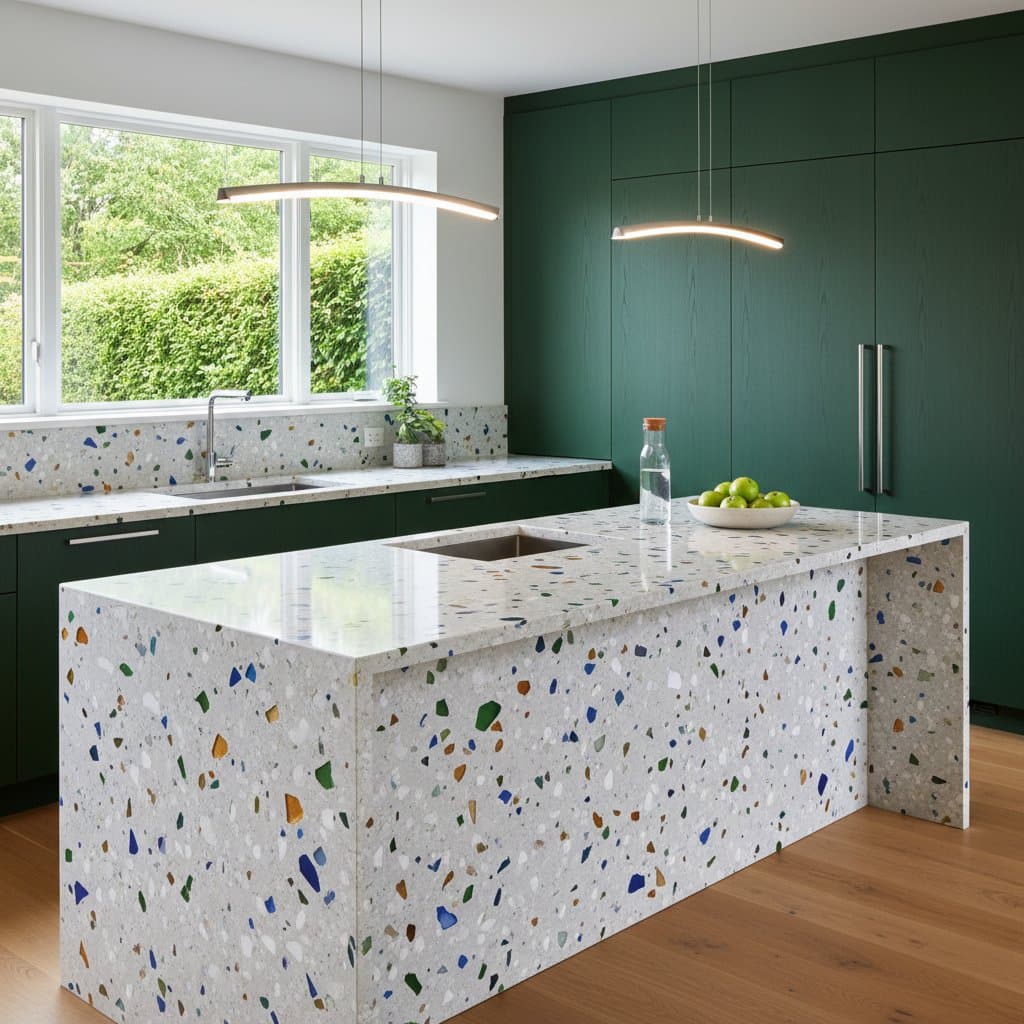
Contemporary recycled terrazzo differs from the utilitarian floors of past commercial spaces. It incorporates chips of repurposed glass, marble, quartz, or porcelain bound in cement or resin. After pouring, curing, and polishing, the result is a sleek, durable surface comparable to natural stone.
The sustainable aspect sets it apart. Manufacturers repurpose waste materials destined for landfills, often sourcing locally to minimize emissions and costs. This approach appeals to environmentally aware homeowners seeking versatile, eco-friendly options.
Key Benefits:
- Constructed from recycled glass, marble, or stone fragments.
- Offers exceptional durability for long-term use.
- Allows customization of colors, aggregate sizes, and patterns.
- Requires minimal maintenance with periodic sealing.
- Serves as an environmentally sound substitute for newly quarried stone.
Practical Advantages for Daily Use
Terrazzo excels in functionality alongside its visual appeal. It withstands scratches and heat more effectively than many engineered surfaces. Proper sealing enables it to handle spills of coffee, oil, or wine without damage.
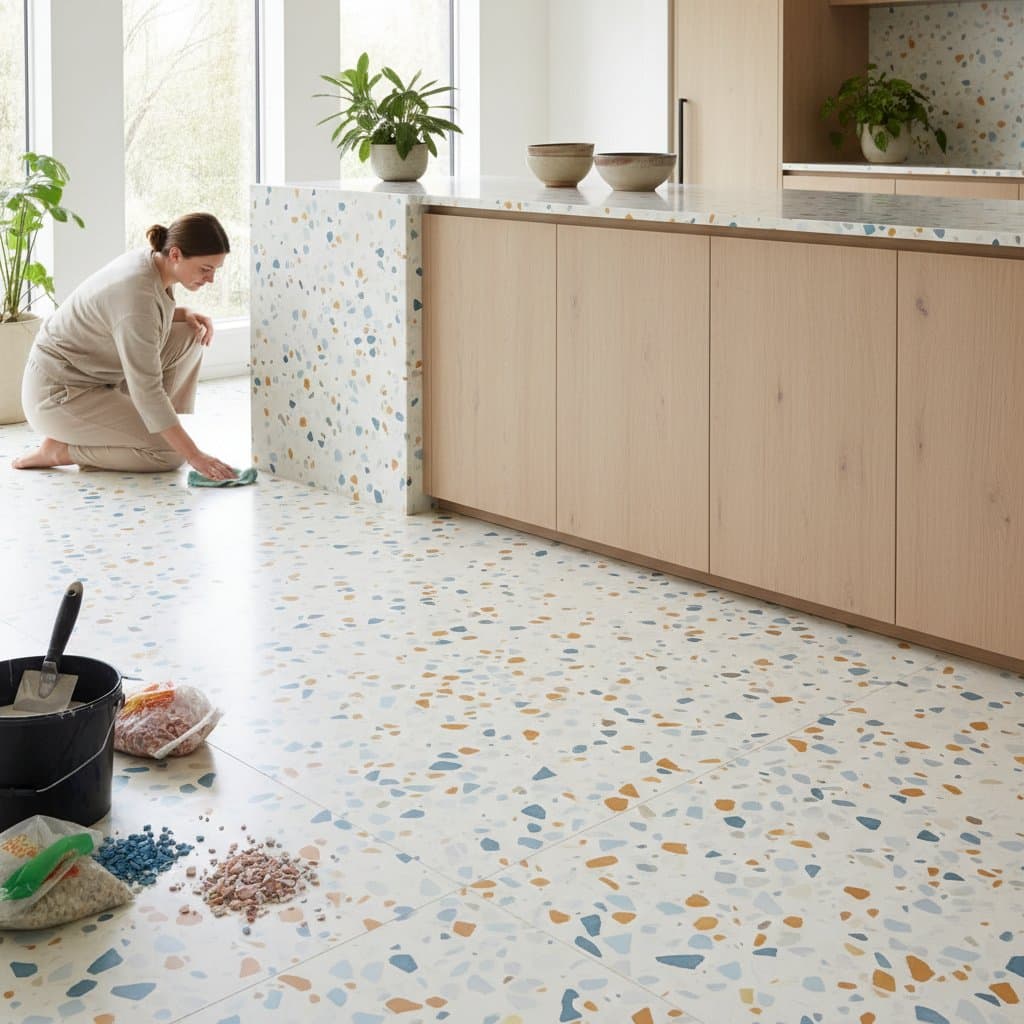
Routine care involves wiping with a neutral cleaner. Resealing every few years maintains its shine. Over time, the surface acquires a subtle patina that enhances its charm, adapting to real-life wear rather than demanding perfection.
Sarah emphasized this aspect: "I did not want to treat the counters delicately. With frequent cooking and children, resilience was essential." Such qualities make terrazzo suitable for active households.
Ideal Applications in Kitchen Design
Recycled terrazzo performs best in well-lit areas with neutral surroundings. It complements:
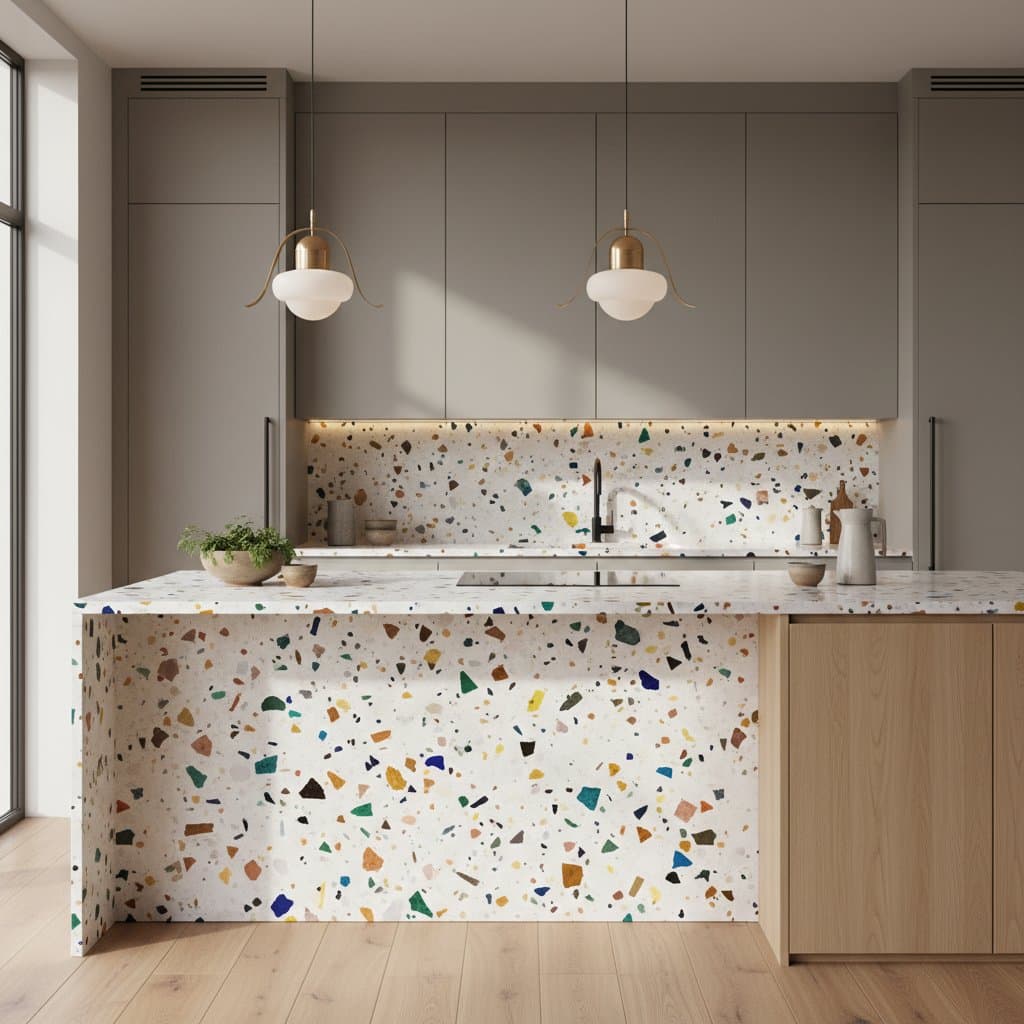
- White or natural oak cabinets, allowing the pattern to emerge prominently.
- Matte black fixtures, which provide sharp contrast.
- Brushed brass hardware, introducing warmth and elegance.
- Concrete or neutral tile floors, directing attention to the countertop's texture.
For emphasis, apply terrazzo exclusively to a kitchen island as a centerpiece, paired with simpler adjacent surfaces. It also enhances backsplashes or tabletops, where the intricate design receives full appreciation.
Considerations for Cost and Personalization
Pricing depends on the aggregates and binder selected. Cement-based versions typically cost less than resin-based ones, though the latter support brighter hues. Recycled glass aggregates prove more economical than marble inclusions.
Personalization elevates its value. Select base colors and fragment combinations to match your kitchen's scheme. Some incorporate meaningful items, such as shattered ceramics or glassware, infusing the surface with personal narrative.
This adaptability shifts terrazzo from institutional applications to residential creativity. It functions as both a functional element and a canvas for individual expression.
Experiencing Terrazzo in Everyday Life
Several months post-renovation, Sarah and Tom continue to discover nuances in their terrazzo counters. Tom observed, "Light shifts reveal new colors each time. The surface changes subtly with the day."
This evolving quality defines terrazzo's appeal. It endures gracefully, conveys a narrative of sustainability, and integrates seamlessly into routines. The kitchen now radiates brightness, aligns with their principles, and feels uniquely personal.
Steps to Incorporate Recycled Terrazzo
Explore sustainable kitchen enhancements by considering recycled terrazzo for its fusion of aesthetics and ethics. It fosters spaces that spark dialogue and admiration.
- Identify local fabricators and inquire about recycled material sources and percentages.
- Obtain physical samples to assess texture, scale, and color in your lighting.
- Consult on sealing methods and care protocols to maximize durability.
- Select complementary elements like cabinets and fixtures to highlight the terrazzo.
- Embrace natural variations, as each installation carries inherent uniqueness.