Terrazzo 2.0: The Rise of Recycled Glass Countertops
A countertop that captures light in subtle, iridescent patterns offers a sense of quiet elegance. Recycled glass terrazzo surfaces achieve this effect while delivering strength and environmental responsibility. Once known primarily as a vintage flooring option, terrazzo has evolved into a contemporary staple for countertops, driven by innovative techniques and a focus on sustainability.
This resurgence aligns with growing preferences for materials that balance visual allure and practical utility. Homeowners increasingly select these surfaces for their ability to integrate seamlessly into diverse interior styles, from minimalist to eclectic. The transformation of everyday glass waste into functional art underscores a broader movement toward resourceful design.
Redefining Tradition with Recycled Innovation
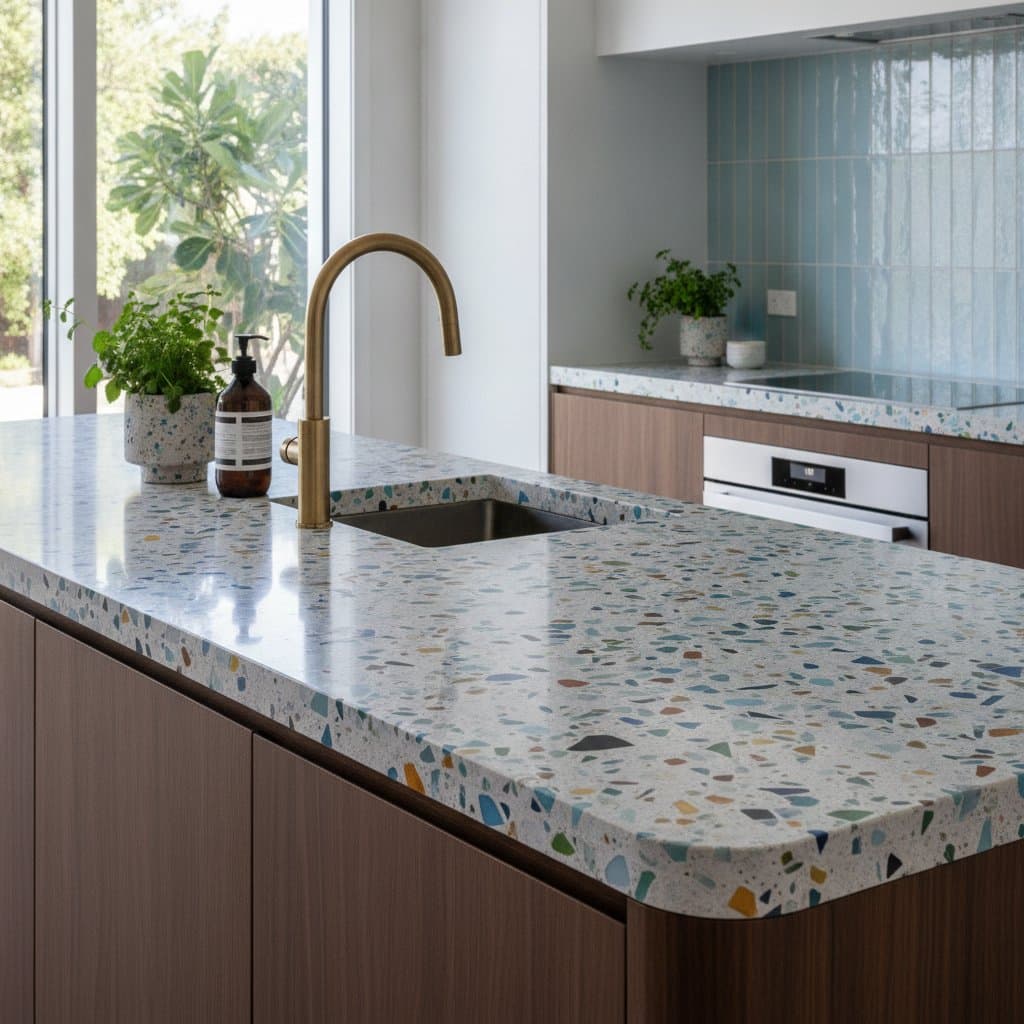
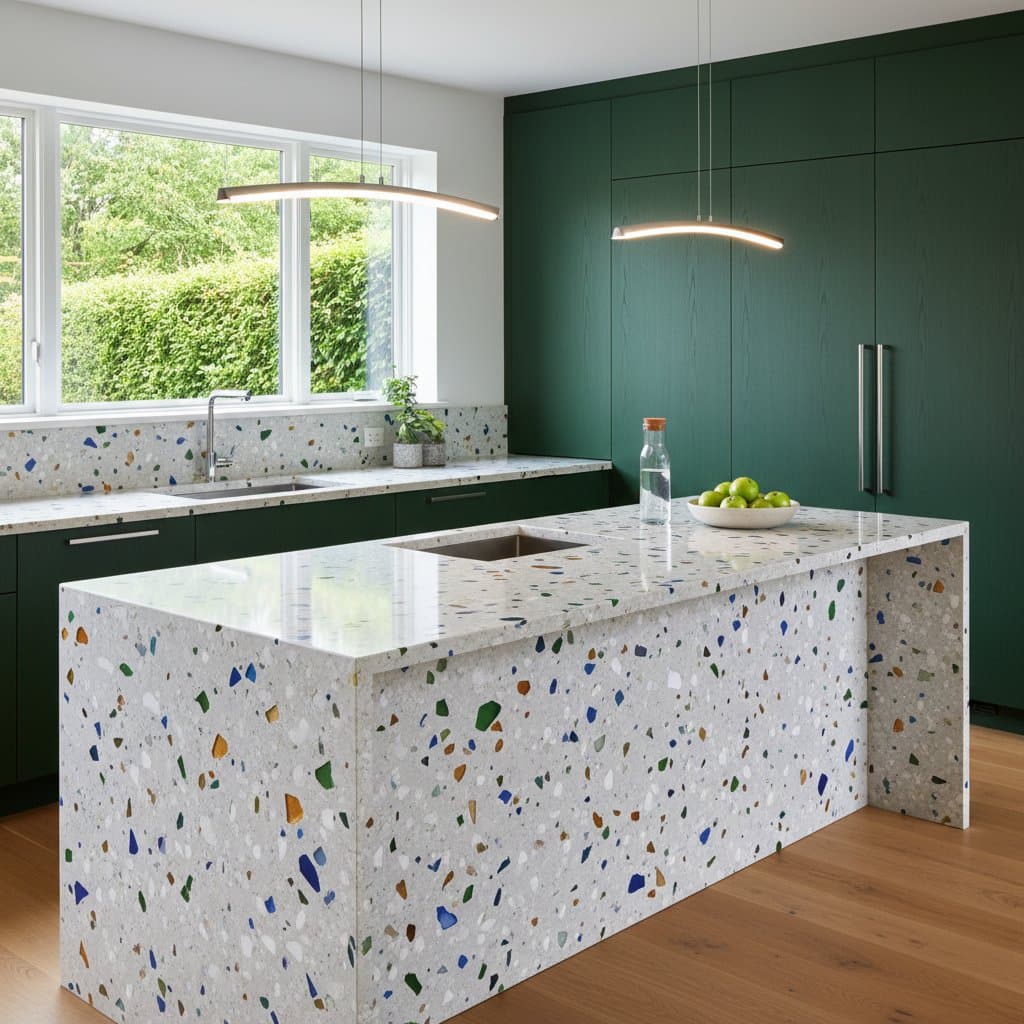
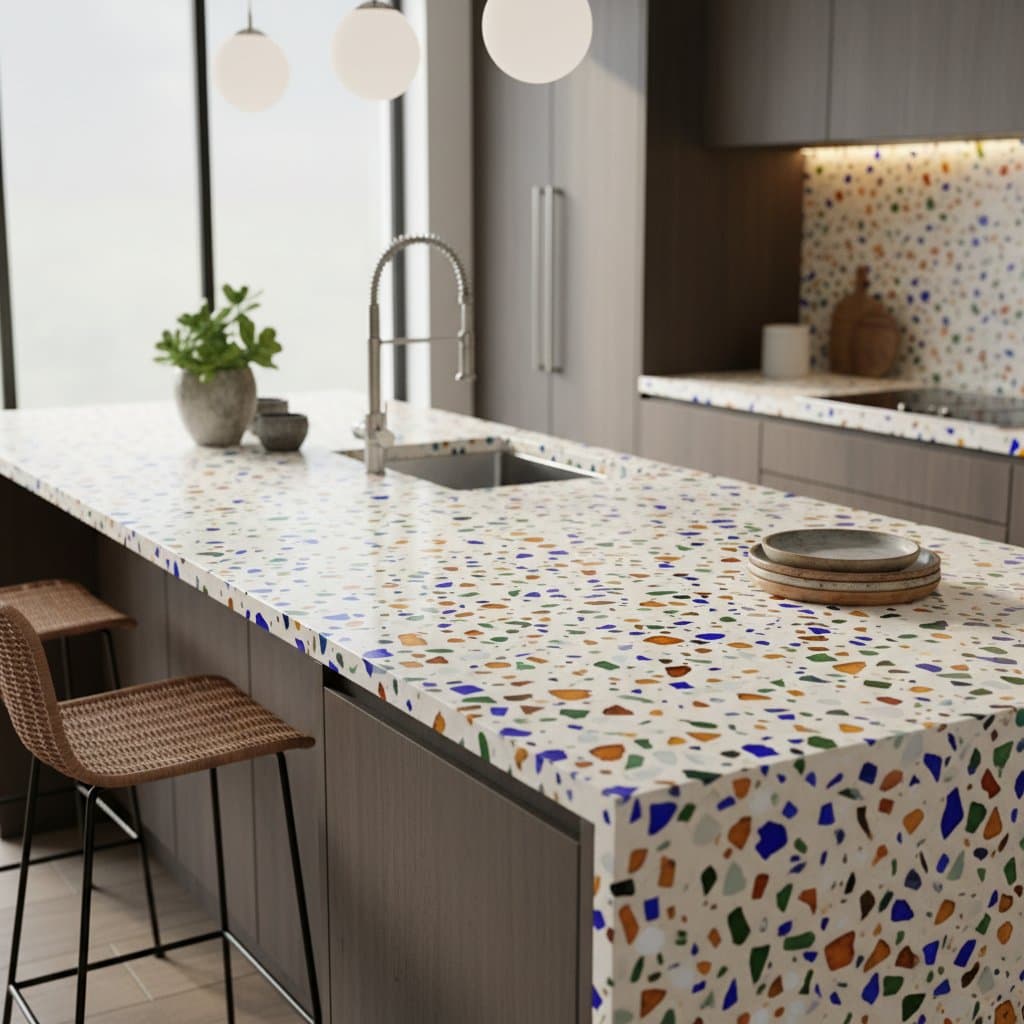
Classic terrazzo relied on marble aggregates embedded in cement or epoxy binders. In contrast, Terrazzo 2.0 incorporates crushed recycled glass, yielding a translucent mosaic of hues like sapphire blues, emerald greens, and golden ambers. Each fragment originates from discarded bottles, windows, or industrial glass, diverting potential landfill contributions into enduring home features.
This approach resonates in residences seeking harmony between aesthetics and ethics. The finished product exudes sophistication, suitable for kitchen islands, bathroom vanities, or decorative accents. Unlike uniform marble slabs, these countertops provide inherent variation, ensuring no two installations appear identical.
Production emphasizes precision: glass is sourced locally where possible, sorted by color, and processed to uniform sizes ranging from fine powder to larger pebbles. Binders are selected for their non-toxic properties, often epoxy for enhanced clarity or cement for a more traditional texture. The result withstands heavy use while maintaining a polished, reflective quality.
Key Advantages Driving Popularity
Several attributes position recycled glass terrazzo as a superior alternative to marble:
- Dynamic Visual Interest. Embedded glass particles refract light, creating depth that shifts with illumination, from warm daylight to ambient evening tones.
- Superior Resilience. Sealed properly, the surface repels stains from wine or coffee, resists moisture in humid environments, and endures scratches better than softer natural stones.
- Simplified Upkeep. Daily care involves wiping with a pH-neutral cleaner and soft cloth; no frequent resealing is required, unlike porous marble.
- Environmental Impact. Repurposing glass conserves resources, lowers carbon footprints associated with quarrying, and promotes a closed-loop economy.
- Tailored Design Options. Select aggregates in sizes from 1/8 inch to 1/2 inch and blend colors to complement cabinetry, flooring, or themes, such as oceanic palettes for coastal homes or earthy mixes for rustic settings.
These features make the material accessible for both new builds and renovations, appealing to design enthusiasts who value individuality over convention.
The Craft Behind Sustainable Elegance
Fabrication begins with gathering glass from recycling centers or municipal programs, ensuring contaminants are removed through thorough washing and sorting. The cleaned glass undergoes crushing in industrial mills to achieve desired granularity, then blends with the binder in controlled ratios for optimal strength.
Pouring occurs on-site or in prefabricated slabs, followed by a curing period of 24 to 48 hours. Polishing with diamond abrasives reveals the glass inclusions, achieving a glossy or matte finish based on preference. This method not only minimizes waste but also allows for intricate patterns, such as embedded metallic flecks for added shimmer.
Adopting terrazzo often inspires further sustainable practices, like pairing it with reclaimed wood cabinetry or low-VOC paints. Such integrations foster cohesive spaces that embody thoughtful consumption, extending the material's influence beyond the countertop itself.
Practical Maintenance for Longevity
Preserving the vibrancy of a recycled glass terrazzo surface requires consistent, straightforward habits:
-
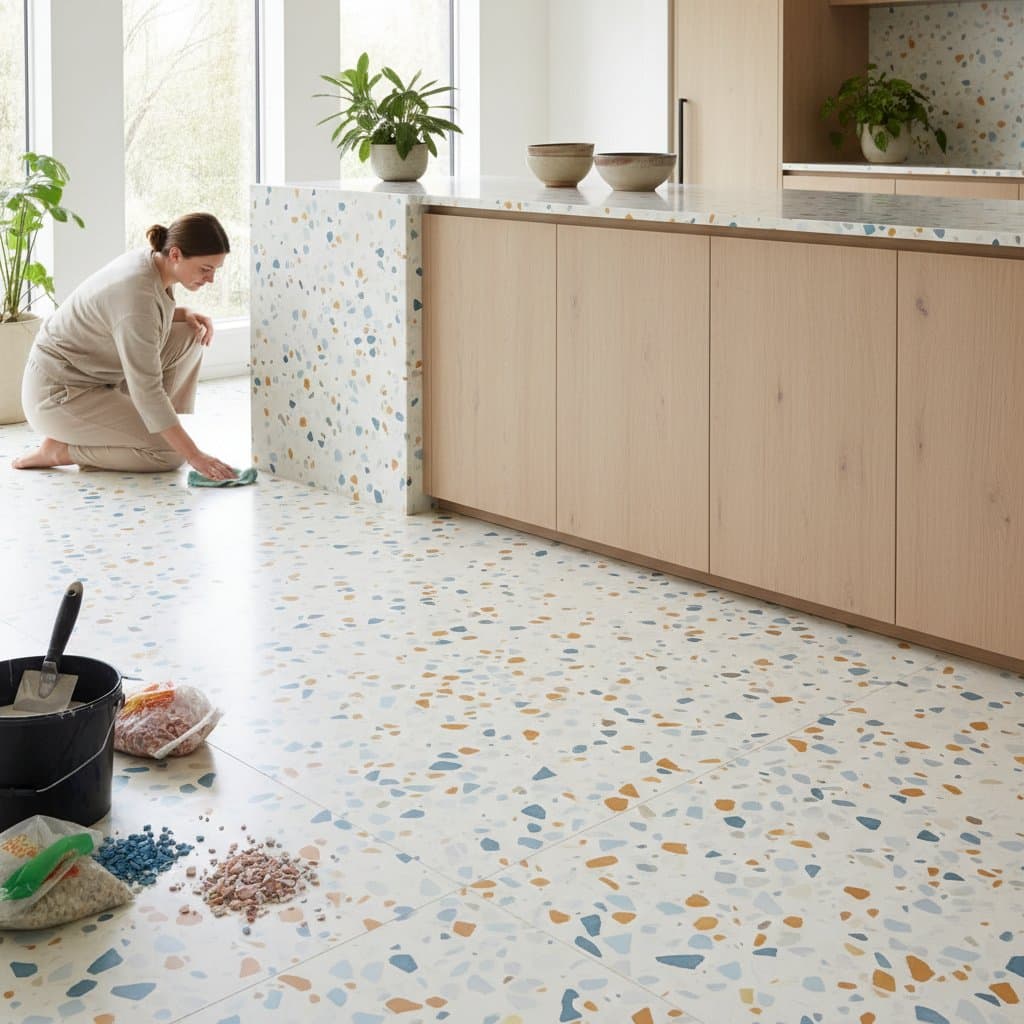
Address spills immediately using a damp cloth to avoid any potential binder erosion.
-
Clean routinely with warm water and a mild, non-abrasive soap, followed by thorough drying.
-
Schedule professional sealing every one to two years, depending on usage, to reinforce stain resistance.
-
Steer clear of acidic substances like vinegar or bleach, and opt for cutting boards to protect against direct knife contact.
These practices ensure the surface retains its luster for decades, often outlasting multiple kitchen remodels.
Embracing Design with Purpose
Recycled glass terrazzo countertops merge innovation, utility, and planetary stewardship into one compelling choice. They illuminate everyday routines with their subtle glow, turning functional areas into focal points of inspiration. By selecting this material, individuals contribute to waste reduction while curating environments that reflect intentional, forward-thinking values.