The Rise of Recycled Glass Terrazzo Countertops in 2025
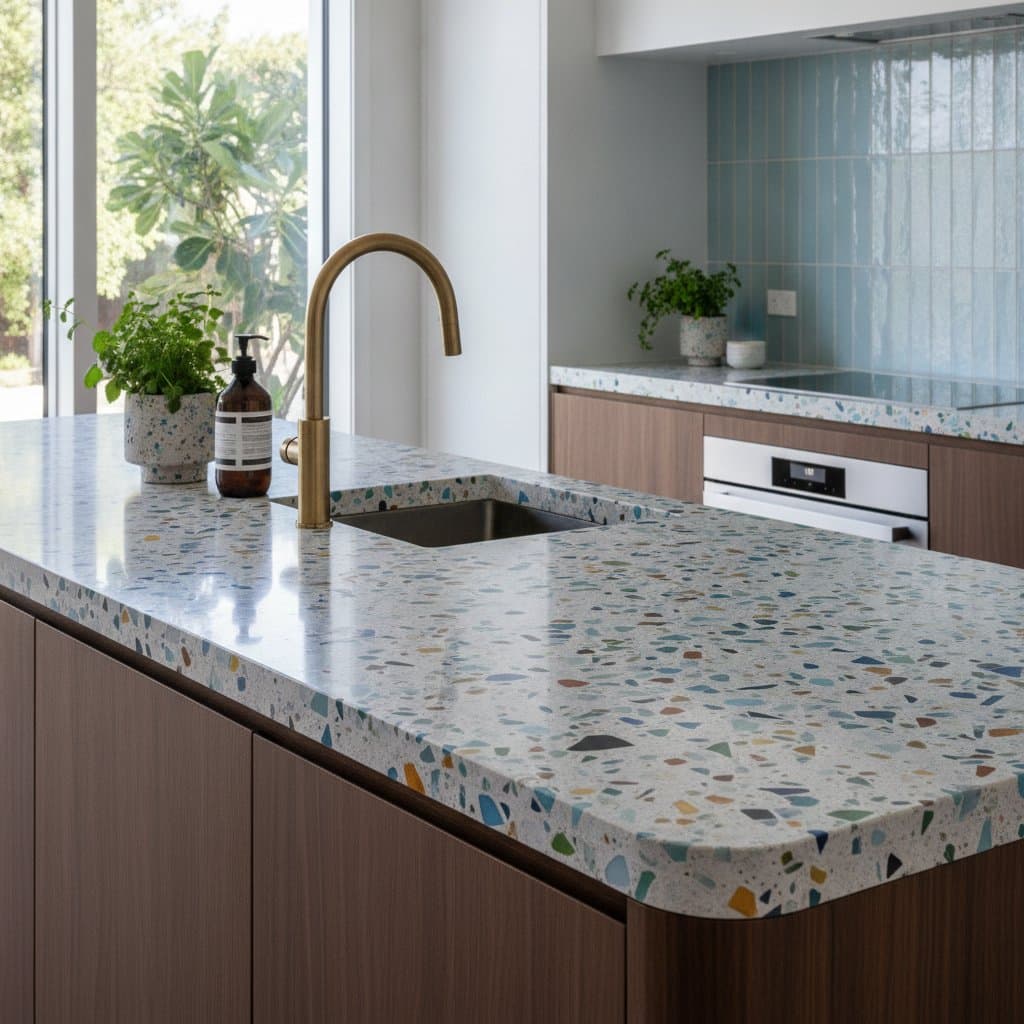
Picture a sunlit kitchen where the countertop gleams with subtle flecks of amber, sea green, and cobalt blue, capturing light like embedded gems. This surface feels modern and timeless, bold and sustainable. Recycled glass terrazzo countertops offer homeowners a way to merge artistry, functionality, and environmental responsibility into one captivating material.
If you plan to update your kitchen or bathroom, consider options beyond quartz, granite, marble, or concrete. Recycled glass terrazzo stands out as poured stone infused with colorful glass fragments. It delivers character, durability, and eco-conscious design in a single choice.
Why Recycled Glass Terrazzo Captures Attention
The material's appeal stems from its origin. Manufacturers combine post-consumer or post-industrial glass—sourced from bottles, windows, or discarded decorative pieces—with cement or epoxy binders. Workers hand-select glass fragments to craft a strong, visually dynamic surface that resembles a mosaic of reclaimed elements.
Homeowners now prioritize materials aligned with their values. Sustainability integrates into design decisions. Selecting recycled glass terrazzo reduces waste and bolsters a circular economy, yielding a personal, responsible, and stylish countertop.
A Blend of Art and Engineering
Terrazzo traces its roots to European architecture, where builders repurposed marble chips for practical flooring. Modern techniques employ advanced binders and polishing methods. Incorporating glass adds translucency that refracts light, producing depth and shimmer unmatched by traditional stone.
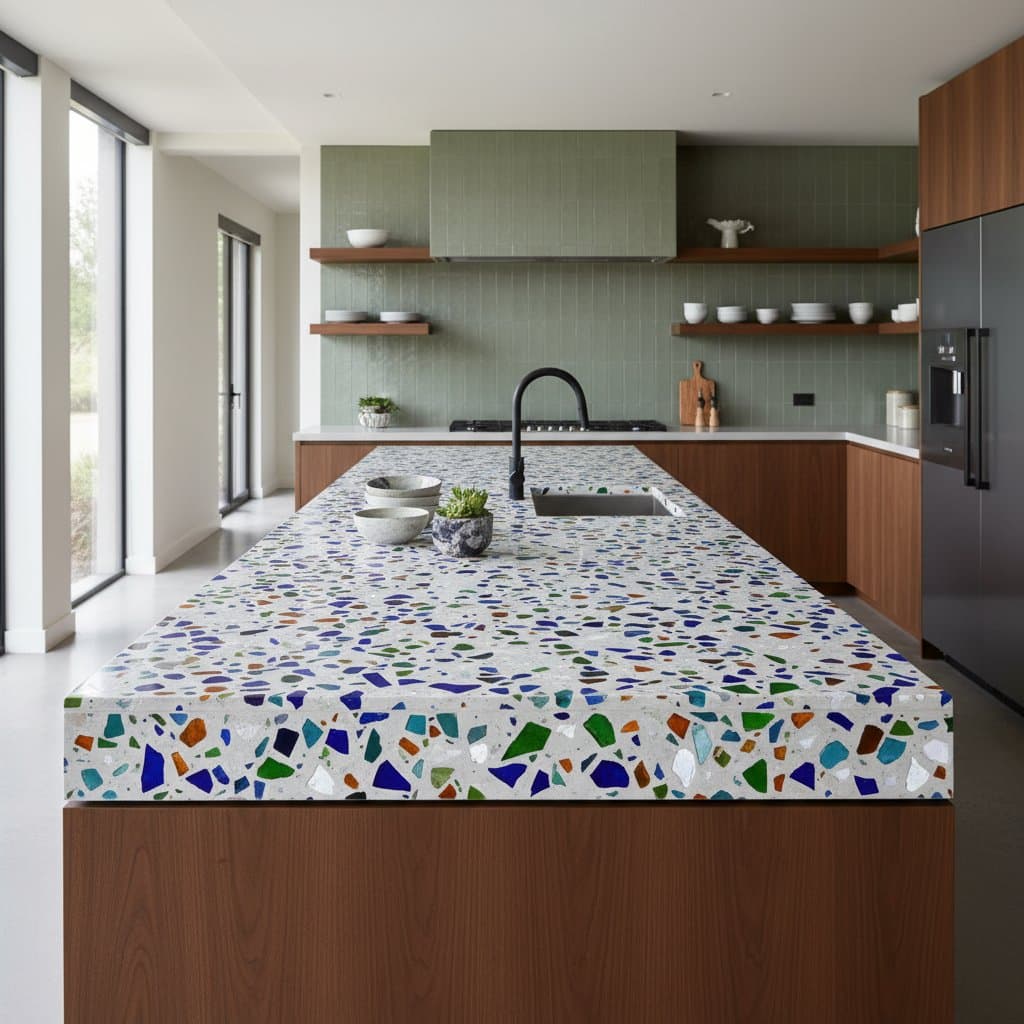
This contemporary terrazzo provides versatility. Installers pour it in place for seamless areas or fabricate it into slabs for cutting like quartz. It suits sleek waterfall islands or custom vanity tops, adapting to diverse visions.
The Environmental Edge
Recycled glass terrazzo meets the rising call for eco-friendly options. Glass comprises 70 to 85 percent of the composition, varying by producer. Reusing glass diverts it from landfills and cuts environmental waste.
Some manufacturers source glass locally to lower transportation emissions, especially in sustainability-focused areas. The production demands less energy than quarrying stone or making synthetics. Repairable and refinishable, the material extends its lifecycle and reduces replacements. Environmentally aware homeowners gain a clear benefit.
Performance in Everyday Use
Durability matters for countertops. Recycled glass terrazzo resists scratches and remains nonporous when sealed. It handles cooking, cleaning, and daily wear without fading.
Though slightly more brittle than quartz, proper installation and support prevent cracking. Maintenance involves mild soap and water for routine care. Seal every few years to maintain finish and vibrancy. The surface repels bacteria and stains, making it hygienic for kitchens and bathrooms.
Aesthetic Range and Customization
Design flexibility defines recycled glass terrazzo. Options span subtle neutrals to vibrant jewel tones. Select soft whites with clear glass specks for minimalist elegance or bold turquoise, amber, and mirrored mixes for a focal island.
Adjust chip sizes for effect: larger pieces yield dramatic contemporary looks, while smaller ones create smooth uniformity. Request custom blends to harmonize with cabinetry, flooring, or tile.
Cost and Local Considerations
Prices depend on region, dimensions, and installation details. Expect costs comparable to mid-range granite or high-end quartz. Local production, tied to community recycling, often proves more affordable.
Factor in shipping and fabrication. Partner with nearby fabricators to control expenses. View total value over initial outlay: the material endures decades with low upkeep, proving economical long-term. Repolish during remodels to avoid full replacement.
The Installation Process
Skilled fabricators handle recycled glass terrazzo installation. Follow these steps:
- Template Creation: Take precise measurements using thin boards or digital scans to match curves and corners.
- Cutting and Polishing: Cut slabs to size and polish for matte or gloss finishes.
- Edge Detailing: Select square, rounded, or beveled profiles to suit cabinetry.
- Sealing and Finishing: Apply sealant against stains and moisture, then secure with adhesives and supports.
- Final Inspection: Verify level surfaces and seamless joints.
The process demands care but yields a substantial, cool-to-touch, unique result.
Comparisons to Other Materials
Evaluate recycled glass terrazzo against alternatives:
- Quartz: Delivers uniform color and superior durability but misses terrazzo's texture and sustainability story.
- Granite: Offers natural appeal yet needs frequent sealing and draws from limited quarries.
- Concrete: Matches modern style but weighs more and risks fine cracks.
- Marble: Provides elegance though porosity demands high maintenance.
Terrazzo combines artistic uniqueness with sustainable strength, embracing its distinct identity over imitation.
Climate and Regional Suitability
In humid coastal areas, sealed terrazzo resists moisture, mold, and mildew. Arid zones benefit from its stability against temperature shifts, with low expansion or contraction.
Local materials allow tailoring to regional conditions and codes. Urban dwellers support recycling by choosing nearby sources, cutting landfill contributions. Rural settings gain modern polish that complements natural landscapes.
Safety and Practical Tips
Prioritize safety in renovations. Confirm certifications for indoor use and non-toxic binders. Ensure compliance with food-surface standards.
For large sections, reinforce cabinets against the material's weight. Professionals assess structural needs during planning.
Selecting Professionals
Choose contractors experienced in terrazzo or composites for optimal results. They handle cutting, polishing, and sealing accurately. Use vetted networks to find licensed, insured experts rated by clients, building project confidence.
Applications Across Spaces
Extend recycled glass terrazzo beyond kitchens to bathrooms, laundry areas, or outdoor bars. A glittering vanity enhances soft lighting; a patio bar echoes nearby foliage. Custom pouring integrates it into backsplashes, tables, or stairs for unity.
In commercial venues like coffee shops or hotels, it withstands traffic while sparking discussions on creativity and ecology.
Embracing Long-Term Value
Recycled glass terrazzo fosters connection to renewal. Each fragment recounts a journey from waste to beauty. Beyond style and sustainability, it promotes harmony with meaningful materials, delivering enduring satisfaction.