Japandi Minimalism Gains Wabi-Sabi Texture
The pared-back calm of Japandi interiors balances Japanese restraint with Scandinavian warmth. A new layer of texture inspired by wabi-sabi principles now softens those edges. The result is a version of minimalism that feels lived-in and tactile.
Designers lean into surfaces that carry quiet irregularity. Hand-troweled plaster, open-grain oak, linen with visible weave, and stone with subtle veining catch light in shifting ways. These materials enrich the neutral palettes that define Japandi spaces.
Core Elements of the Updated Style
- Style focus: Japandi minimalism infused with wabi-sabi texture
- Palette: Muted neutrals, chalky whites, natural woods, earthy grays
- Key materials: Limewash, raw oak, linen, stone, clay, handmade ceramics
- Design goal: Maintain visual calm while adding touchable depth
How Texture Replaces Ornament
The wabi-sabi influence reintroduces the handmade and the naturally worn. Designers layer tactile finishes into the minimalist framework. A plaster wall with faint trowel marks replaces smooth paint. Linen drapery with a visible weave catches morning light. An oak cabinet finished in matte oil reveals small knots and grain shifts.
These choices honor both Japanese and Scandinavian philosophies. Wabi-sabi brings acceptance of impermanence and imperfection. The Nordic side contributes a love of honest, natural materials. Together they form a language of simplicity that feels emotionally richer.
Designer Mia Sandström replaced a glossy white kitchen with ash wood cabinetry and a limestone counter in one project. The surfaces still read as minimalist, yet the grain registers under fingertips. Sunlight moves across the counter and changes tone through the day.
Why Texture Matters Now
Minimalism has always promised calm. Textured minimalism gives that calm a human pulse. Surfaces invite touch. Small irregularities create subtle shadows that shift through the day. Rooms feel more natural even when the layout stays spare.
Texture also adds longevity. A hand-troweled wall ages gracefully. A glossy surface shows every mark. Wabi-sabi encourages appreciation of this aging. A small chip in a ceramic bowl or a faint stain on an oak counter becomes part of the story.
Architect Satoshi Kuroda notes that materials carrying traces of making encourage gentler treatment. People sense care in the process and respond with care in use. This emotional connection turns minimalism from style into experience.
Layering Light to Reveal Depth
Lighting plays a crucial role in revealing texture. Soft, indirect light grazes surfaces and brings out their depth. Designers prefer paper, linen, or rattan shades that diffuse illumination. A pendant hung low over a dining table casts a gentle gradient across a plaster wall.
Natural light receives equal care. Wide windows with simple linen panels filter brightness without blocking it. The goal is to let light reveal the character of materials. Even in small apartments this layered approach draws attention to surface quality instead of clutter.
Keeping Clarity While Adding Warmth
The challenge lies in adding texture without losing minimalist clarity. Designers limit the number of materials yet allow each to express its full character. A living room may combine limewashed walls, one type of wood floor, and a single stone surface. Consistency of tone preserves calm while variation in texture supplies depth.
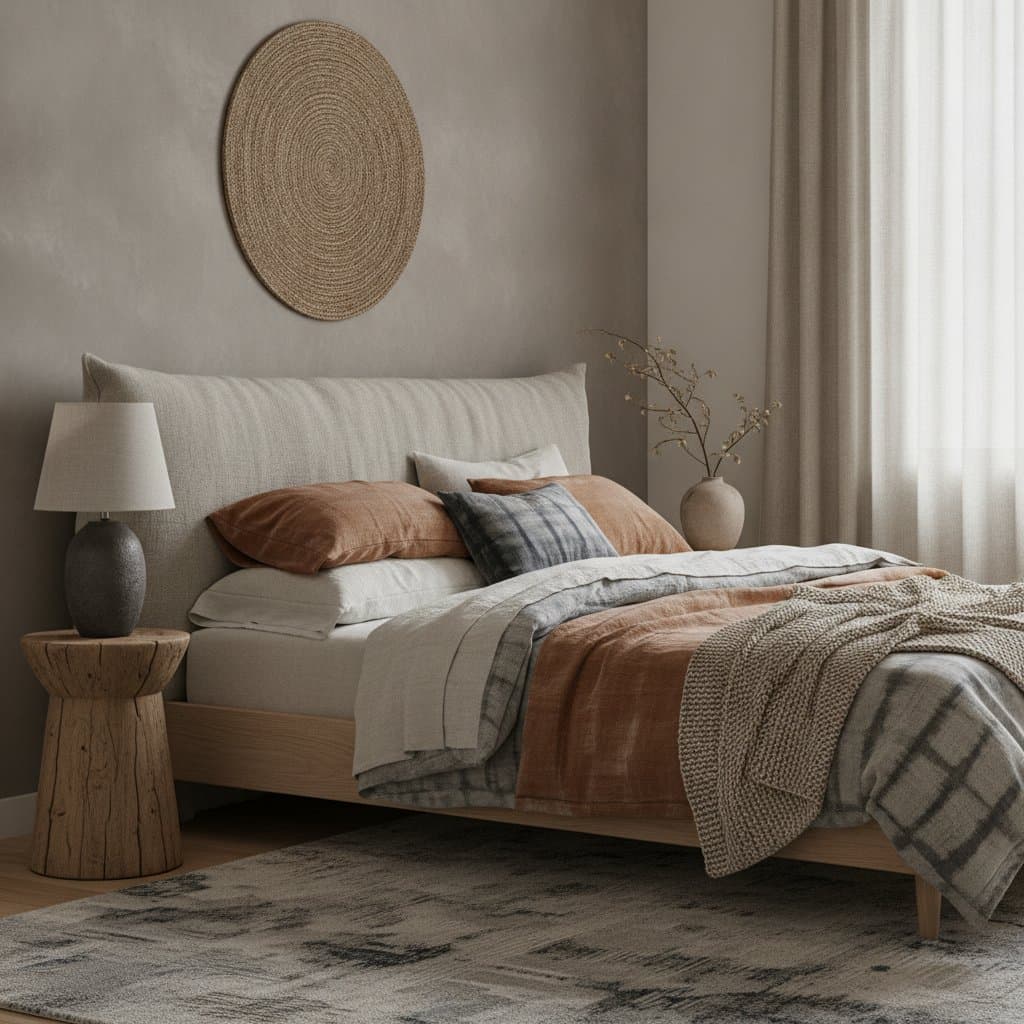
Furniture follows the same logic. Clean-lined sofas upholstered in coarse linen, low tables in solid oak, and woven fiber chairs maintain the Japandi silhouette yet feel approachable. Even a ceramic vase or wool throw contributes to layered simplicity.
Homeowners achieve the effect by focusing on tactile quality rather than quantity. One handcrafted piece can carry visual interest. Restraint keeps the space open while textures make it engaging.
Practical Storage That Supports Calm
- Built-in benches with hidden drawers keep clutter out of sight while providing seating.
- Floating shelves finished to match walls or cabinetry maintain visual continuity.
- Sliding panels in fabric or wood soften transitions between rooms.
- Low storage units double as display surfaces for ceramics or plants.
These solutions support the calm flow central to Japandi living.
Maintenance and Budget Considerations
Textured minimalism requires maintenance awareness. Limewash and clay plaster are more delicate than standard paint and may need occasional touch-ups. Natural wood finishes patinate over time. For many homeowners this aging process forms part of the appeal.
Budget can shift depending on craftsmanship. Hand-applied finishes or bespoke joinery take time. Limit custom work to focal areas such as a kitchen backsplash or feature wall, then use simpler finishes elsewhere.
Steps to Introduce the Look
Start small. Choose one room and introduce texture in layers.
- Refine the walls by replacing flat paint with limewash or a matte mineral finish.
- Simplify the palette while keeping colors quiet but varied.
- Swap synthetic fabrics for linen, cotton, or wool and let wrinkles show.
- Use diffused lighting sources such as paper pendants or frosted glass.
- Select fewer, better pieces of handcrafted furniture or pottery.
Daily Interaction With the Finished Space
The beauty of this evolution appears in daily interaction. The more surfaces are touched, the better they look. A plaster wall deepens in tone as light shifts. An oak countertop gains a soft sheen from use. Linen curtains fall into natural folds.
Wabi-sabi texture completes minimalism rather than replacing it. The approach turns a visual style into a sensory experience where every surface tells a story of material, maker, and time.