Acoustic Ceiling Panels for Superior Room Acoustics
Hard surfaces in many homes create persistent echoes that disrupt conversations and concentration. Acoustic ceiling panels address this issue directly by absorbing sound waves that travel upward. The result is a quieter space that supports relaxation and clear communication.
The Challenge of Poor Room Acoustics
Sound reflects off drywall, glass, tile, and wood, building layers of unwanted noise. Rugs and curtains provide limited relief because they leave the ceiling untreated. In open layouts or rooms with high ceilings, this reflection becomes especially noticeable during group conversations or media playback.
Benefits of Acoustic Ceiling Panels
These panels capture sound energy and convert it to minimal heat, lowering echo levels throughout the room. They also add visual texture that can complement existing decor. Home offices gain focus, while living areas and dining rooms become more inviting for extended use.
How These Panels Control Sound
Panels with a Noise Reduction Coefficient of 0.70 or higher absorb roughly seventy percent of incident sound. Materials such as fiberglass, mineral wool, or recycled PET felt trap waves effectively when mounted with a small air gap. This approach prevents the ceiling from acting as a reflective surface.
Selecting Panels for Your Needs
Match panel thickness and finish to the room function. Fabric-wrapped tiles suit home offices that require a professional appearance. Thicker cloud-style panels work well in media rooms for enhanced bass control. Moisture-resistant options perform best in kitchens where humidity fluctuates.
Fiberglass and mineral wool deliver strong absorption and accept decorative fabrics. Foam panels cost less but wear faster. Sustainable choices include compressed polyester felt or recycled cotton. Finishes range from neutral tones that recede visually to bold patterns that serve as focal points.
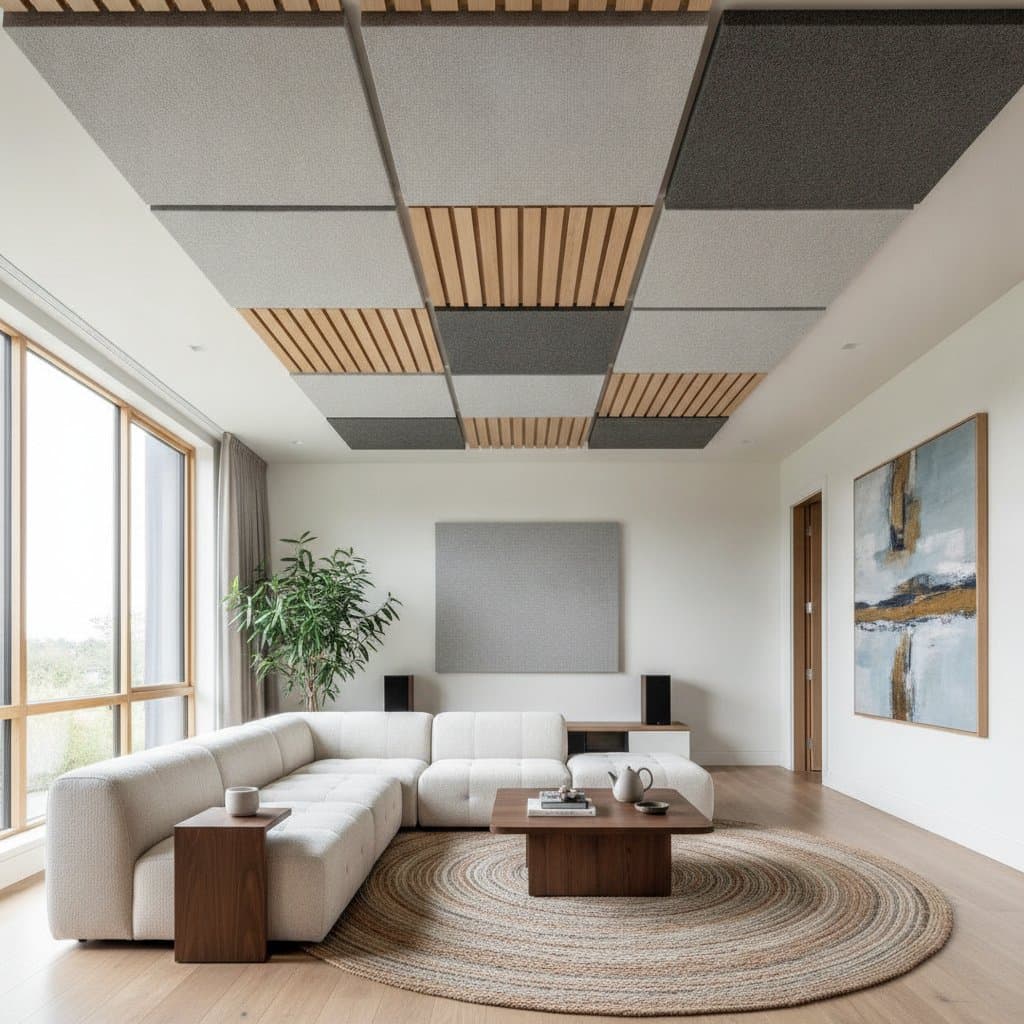
Installation methods include direct mounting to drywall, drop-ceiling grids, or suspended baffles. Suspended systems allow sound absorption from multiple sides and create a floating appearance.
Planning and Installation Steps
- Test acoustics by clapping in different locations to locate persistent echoes.
- Cover twenty-five to forty percent of the ceiling area above seating or activity zones.
- Choose materials that align with ceiling height and existing architecture.
- Verify fire ratings, especially near kitchens, and confirm Class A compliance where required.
- Engage a professional installer for heavier panels or complex suspension systems to ensure secure attachment.
Design Approaches for Visual Appeal
Layer rectangular panels at varying heights to produce depth. Alternate light and dark tiles in geometric patterns for subtle interest. Integrate recessed lighting within the layout so the ceiling functions as both acoustic treatment and design element.
Climate Considerations for Durability
Humid regions require PVC-faced fiberglass or polyester felt to resist warping. Drier climates allow standard fabric-wrapped mineral wool without expansion concerns. Mechanical fasteners outperform adhesives in areas with large temperature swings.
Avoiding Common Installation Errors
Insufficient coverage leaves residual echo. Overcrowding the surface can make speech sound muffled. Corner placement and consistent air gaps improve overall performance.
Broader Advantages of Acoustic Treatment
Reduced echo improves speech clarity and lowers listener fatigue. The added insulation layer can moderate temperature swings and support modest energy savings. Over time, the treated space feels more balanced for daily activities.
Selecting Materials for Long-Term Performance
Assess your room layout and budget before selecting materials. Work with an experienced installer to finalize placement and finish details. The finished ceiling will support both acoustic comfort and visual cohesion for years of use.