Soundproof Panels as Elegant Decor for Noise-Free Living
Noise intrudes on quiet moments in many homes. Soundproof panels address this issue by absorbing excess sound while serving as decorative elements. They integrate texture and visual interest into walls without drawing attention to their functional role.
These panels transform hard surfaces into softer ones that reduce echoes. Proper selection allows them to function as art pieces, headboards, or architectural features. The result supports both acoustic comfort and design cohesion.
Core Principles of Acoustic Treatment at Home
Hard surfaces reflect sound waves and create persistent echoes. Adding dense, porous materials in targeted locations absorbs those waves effectively. This shift produces rooms that feel calmer and more controlled.
Modern panels use compressed foam, felt, or recycled fibers beneath finished surfaces. The outer layers range from fabric to wood, allowing them to match varied interior styles. Placement near seating areas or opposite reflective walls yields the strongest results.
Practical Options for Stylish Acoustic Control
Several panel types combine performance with visual appeal. Each option suits different room functions and design preferences.
-
Fabric-Wrapped Panels
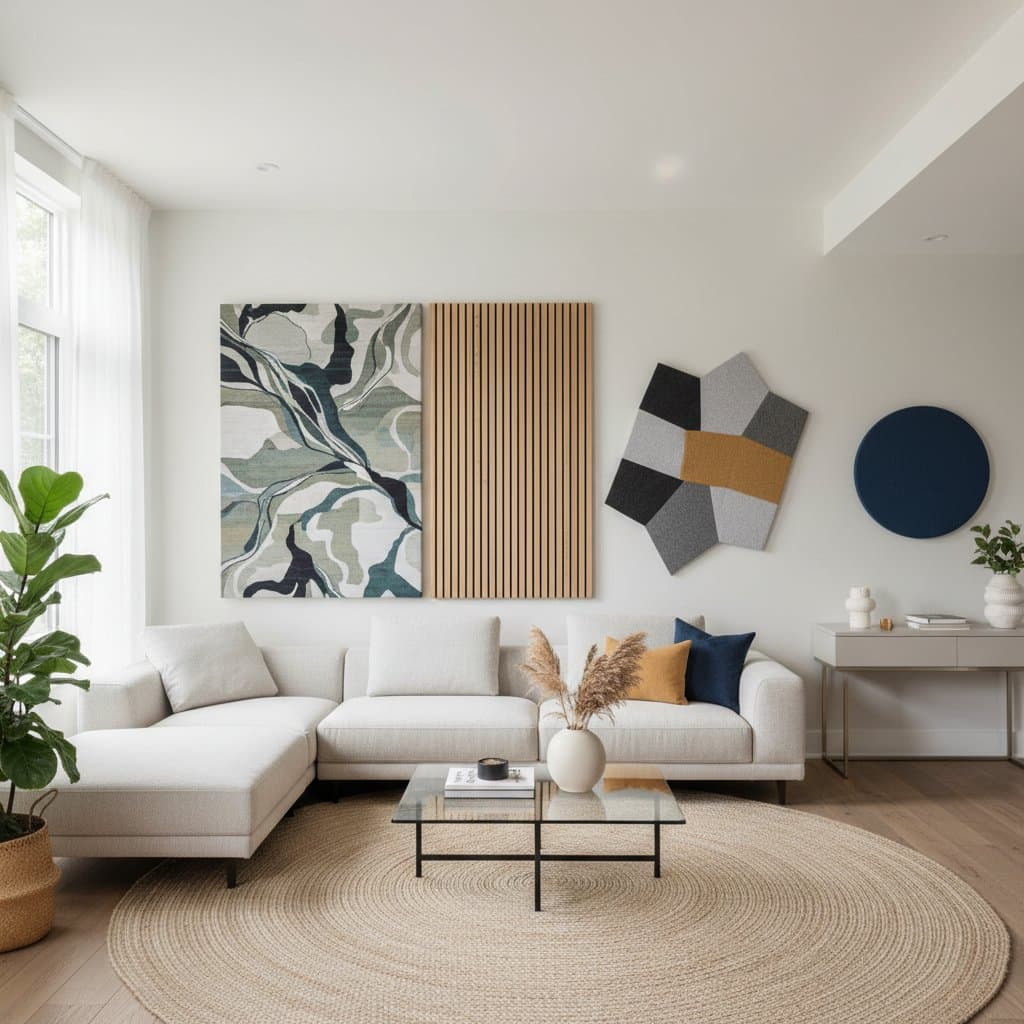
These panels accept any fabric color or texture. Position a set behind a sofa to create a focal point that also reduces voice reverberation. Frame them as large canvases for a finished appearance. -
Wood Slat Panels
Thin wood strips mounted over felt backing add vertical lines that make ceilings appear taller. Install them along one wall in living rooms to ground the space and limit sound travel. -
Modular Felt Tiles
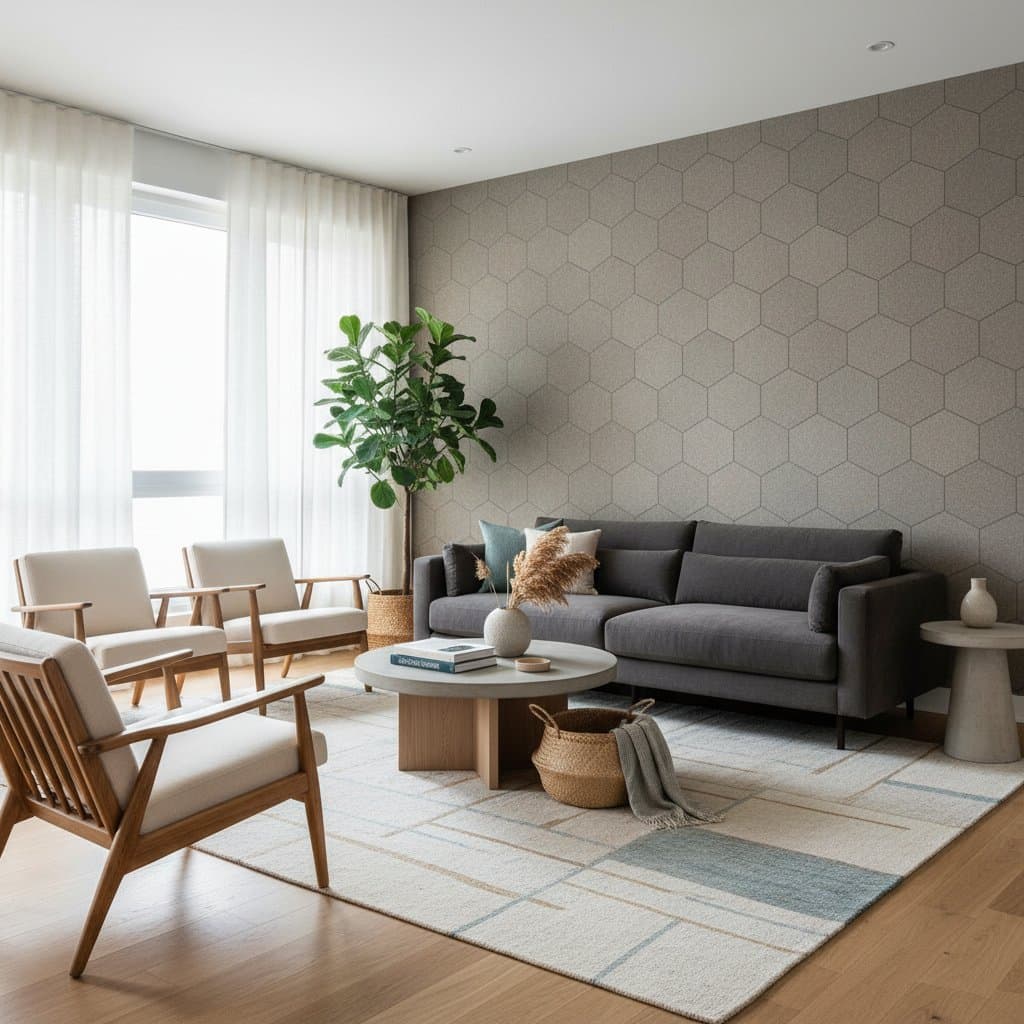
Hexagonal or circular tiles adhere directly to walls and allow custom patterns. Use them in home offices or playrooms where frequent rearrangement may be needed. -
Acoustic Art Panels
High-resolution images printed on acoustic fabric let panels function as wall art. Renters can hang them without permanent changes while still lowering echo levels. -
Ceiling Clouds
Suspended panels above dining tables or kitchen islands capture sound that would otherwise reflect downward. Coordinate their finish with existing light fixtures for visual integration. -
Headboard Panels
Upholstered acoustic panels replace standard headboards and absorb noise from adjacent rooms. This choice creates a quieter sleep environment with minimal added furniture. -
Concealed Panels
Position acoustic material behind bookshelves or large mirrors with a small air gap. Sound reaches the core while the room maintains its existing aesthetic.
Room-Specific Placement Strategies
Identify primary noise sources before installation. In offices, cover the wall facing a desk to improve call clarity. Living rooms benefit from coverage behind main seating to soften group conversations.
Match panel colors to wall paint for a seamless effect or select contrasting tones for emphasis. Layer wood slats with felt accents to add depth without visual clutter. Use adhesive clips or simple tracks for secure mounting that preserves wall surfaces.
Ongoing Care and Material Choices
Vacuum fabric panels regularly and dust wood surfaces with a soft cloth. Many systems allow fabric replacement without discarding the acoustic core. Select low-VOC or recycled-content options to align with sustainable building practices.
Daily Benefits of Integrated Acoustic Design
Reduced background noise supports clearer thinking and better rest. Open-plan spaces gain distinct zones when sound is managed rather than amplified. Panels also introduce tactile variety that plain walls lack.
Over time, these additions create consistent comfort across daily activities. The home becomes a place where sound supports rather than disrupts intended use.