Elevate Living Rooms with Stylish Acoustic Panels
Cluttered sound disrupts relaxation as much as visual disorder. Echoes rebounding from walls or the persistent hum of daily activities hinder tranquility. A living room ought to serve as a welcoming haven, where conversations proceed smoothly and quiet intervals promote peace. Acoustic panels achieve this equilibrium by managing sound while infusing personality into the decor.
The goal extends beyond mimicking a recording studio. These panels foster a gentler auditory environment and introduce texture, color, and warmth to walls. Through deliberate selections, they emerge as integral design elements that render the space both aesthetically pleasing and acoustically serene.
Why Sound Comfort Matters at Home
Noise influences mood in understated ways. Reverberating sounds generate subtle discomfort, even when unidentified. Improved acoustics facilitate easier settling, enhancing enjoyment of discussions or melodies. Regardless of shared living or solitude, sound management promotes a sense of stability and comfort.
Acoustic panels mitigate surplus noise by absorbing echoes and reverberations. This results in reduced interruptions during reading, distinct dialogue in films, and a more tranquil daily ambiance. Such modifications subtly reshape the perception of the living area.
Choosing Panels That Match Your Style
Effective acoustic panels integrate effortlessly with existing decor. They require no industrial or monotonous appearance. Contemporary options resemble artworks or plush wall coverings, available in woven fabrics, wooden slats, felt, or printed motifs.
Consider These Style Directions
-
Natural Texture
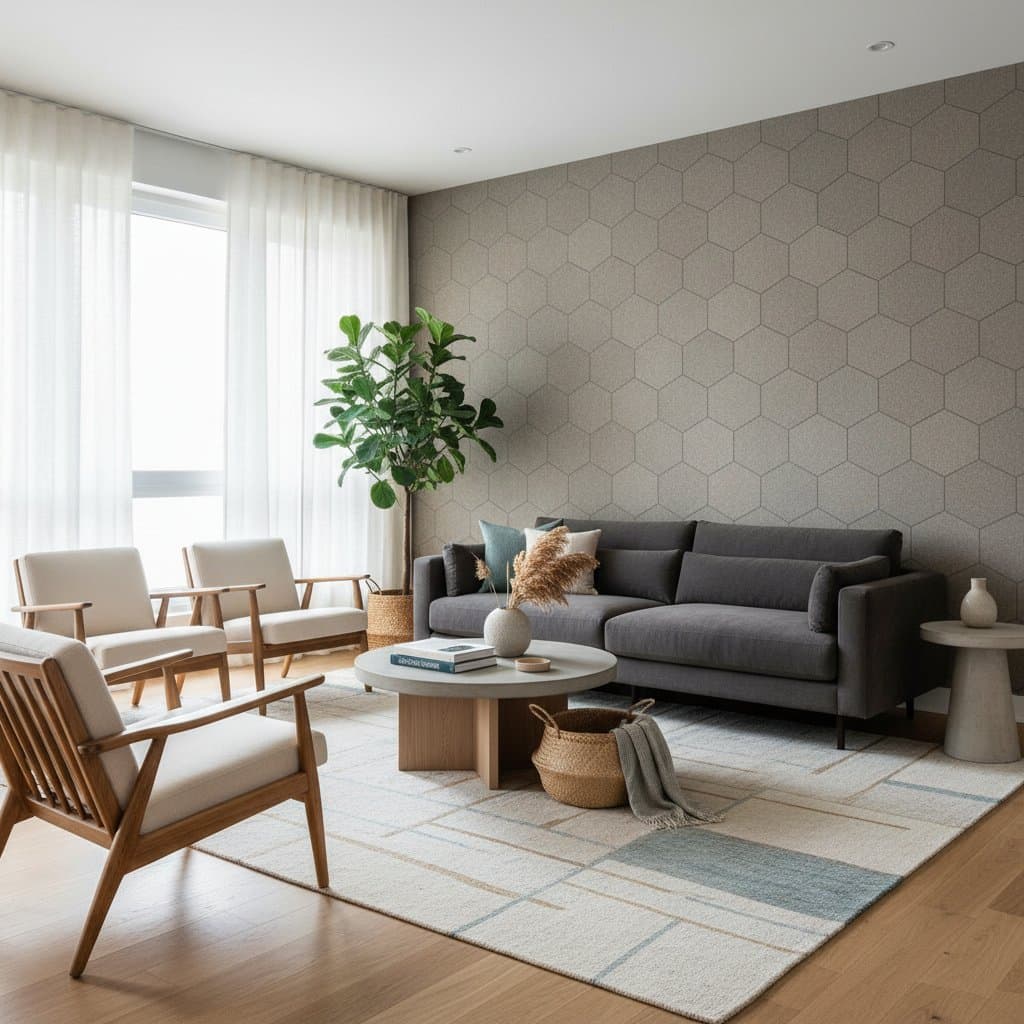
Panels clad in linen, wool, or felt evoke coziness and organic appeal. Opt for neutral tones such as beige, ivory, or muted gray to harmonize with diverse interiors. -
Modern Geometry
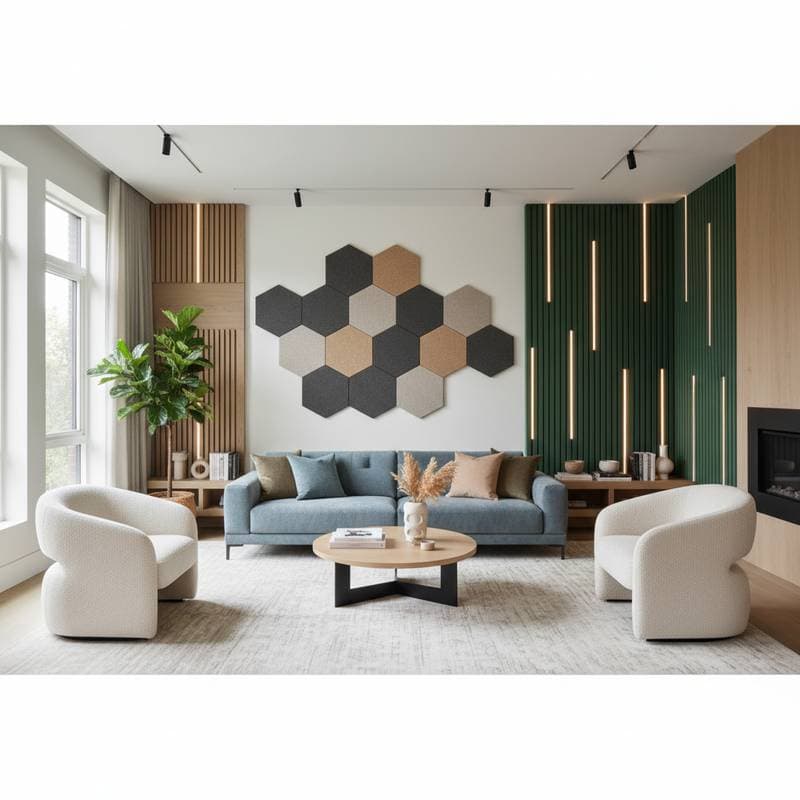
Select panels featuring basic forms like hexagons or rectangles in patterned layouts. These introduce visual cadence without dominating the wall space. -
Wood Accents
Slatted wooden panels merge sound absorption with bold architectural flair. They suit modern, Scandinavian, or mid-century modern aesthetics seamlessly. -
Bold Art Panels
Panels with printed patterns or fabric overlays that emulate paintings serve dual purposes. They idealize scenarios where acoustic solutions function as decorative accents. -
Custom Creations
For those inclined toward do-it-yourself endeavors, encase acoustic foam cores in preferred fabrics. This method ensures precise alignment with the room's color scheme.
When evaluating finishes, assess light interaction within the space. Matte surfaces diffuse illumination for serene effects, while vibrant fabrics or wooden hues infuse vitality and coziness. Select pairings that foster equilibrium and invitation.
Where to Place Acoustic Panels
Sound dynamics vary with room geometry and surfaces. Strategic panel placement yields significant improvements without exhaustive coverage. Begin by attentively discerning echo-prone zones.
Key Locations to Try
-
Behind the Sofa or Seating Area
Position panels here to capture reflections from speech, ensuring clearer vocal projection. -
Opposite Large Windows
Glass surfaces reflect audio readily; panels facing windows counteract this for balanced sound. -
Above the Television
Near media setups, panels temper speaker output and sharpen audiovisual experiences. -
Hallway Connections
In open-plan areas linking to corridors, panels at thresholds curb excessive sound propagation.
Full wall coverage proves unnecessary. Initiate with minimal panels and observe auditory shifts. Often, three or four targeted placements suffice to instill quietude and stability throughout the room.
Simple Steps to Install and Arrange
Acoustic panel installation qualifies as a straightforward weekend task. Secure them via mounting strips, hooks, or brackets based on weight and material. Follow this structured method for optimal results.
-
Measure and Plan
Pinpoint zones requiring acoustic softening. Apply painter's tape to mock up configurations prior to fixation. -
Check Heights and Balance
Align panels at seated ear height for maximum efficacy. Maintain uniform intervals to convey purposeful design. -
Use Adhesive Mounts or Screws
Attach lightweight variants with detachable adhesive. Employ wall anchors or brackets for substantial pieces. -
Test and Adjust
Post-installation, inhabit the space actively. Generate sounds like hand claps or moderate-volume tunes, then reposition panels to eliminate lingering echoes.
Completion yields dual enhancements in aesthetics and acoustics, delivering immediate serenity.
Combining Function with Comfort
Beyond sound control, acoustic panels contribute tactile softness and spatial enclosure that nurture repose. Integrate them with layered elements such as draperies, area rugs, and pillows to amplify sensory harmony.
Coordinate panel fabrics with adjacent items like cushions or seating covers. This textural recurrence builds cohesive visuals, positioning panels as inherent components rather than appendages.
Illumination enhances these attributes. Panels cast subtle shadows and dimension on surfaces. Adjacent floor lamps or sconces accentuate textures, elevating acoustic solutions to atmospheric highlights.
Overcoming Common Hesitations
Concerns often arise regarding industrial aesthetics or installation complexity. Evolved designs dispel such notions through diverse colors, finishes, and peel-and-stick varieties for simplicity.
Budget limitations warrant incremental approaches. A single pair initiates perceptible change, with expansions following observed advantages. Focus remains on progressive refinement over flawlessness.
Commitment issues, particularly for renters, find resolution in non-permanent options. Numerous panels detach cleanly, preserving surfaces intact.
Living with Better Sound
With panels installed, discern refinements surpassing mere noise diminution. Vocal tones warm, melodies deepen, and the room's overall temperament turns restorative. These understated gains stem from intentional acoustics.
Engage the space during evening hours as activity wanes. Observe how subdued soundscapes bolster unwinding. Extended stays for reading or contemplation may naturally ensue.
Building on This Momentum
Enhanced sound comfort sparks further enhancements. A serene setting motivates tidying surfaces, updating fixtures, or reconfiguring layouts to align with routines.
Sustain advantages through weekly environmental audits. Evaluate quietude and detect emerging disturbances. Minor tweaks, including rug additions or furnishing shifts, preserve the acoustic poise established by panels.
Acknowledge these advancements. Each deliberate adjustment cultivates a supportive dwelling. With acoustics refined and aesthetics uplifted, the living room evolves into a soothing sanctuary for dialogue and repose.