Scent-Infused Textiles for a Calming Bedroom Oasis
After a long day, slipping into bed can bring the gentle aroma of lavender and sandalwood from the sheets themselves. The fabric releases serenity with every movement. This experience comes from scent-infused textiles, a trend that turns bedrooms into spaces for genuine rest.
The Role of Scent in Bedroom Design
A bedroom functions best as a place where stress fades and senses settle. Many people select colors and lighting yet miss the steady effect of fragrance. The right scent can lower heart rate and signal the body to prepare for sleep. Scent-infused textiles place fragrance inside the fabrics used nightly.
Pillowcases can release a trace of chamomile at first contact. Curtains can carry a light eucalyptus note that moves with the air. These materials combine fabric texture with fragrance to support relaxation rather than simply improve odor.
Technology Behind Scent Release
Microencapsulation holds essential oils or fragrances in tiny capsules attached to fabric fibers. Movement or pressure breaks the capsules and releases measured amounts of scent. Some versions activate through body heat or room temperature for gradual release.
These textiles appear in bedding, furniture upholstery, curtains, and throws. Fragrance lasts through several washes before it fades. Manufacturers now supply versions made with natural essential oils for users who prefer fewer synthetic elements.
Selecting Scents That Match Sleep Goals
Each fragrance creates a distinct atmosphere. Match the choice to the feeling desired upon entering the room.
- Lavender suits those who need help falling asleep or easing anxiety.
- Chamomile offers a soft, warm note that fits neutral or earthy room styles.
- Sandalwood provides depth and a grounded quality for a spa-like setting.
- Eucalyptus delivers a clean scent that may support clearer breathing in warmer rooms.
- Citrus blends such as bergamot add light energy without excess stimulation.
Start with a single scented pillow or small throw to test the strength before purchasing larger sets.
Combining Fabrics and Scents
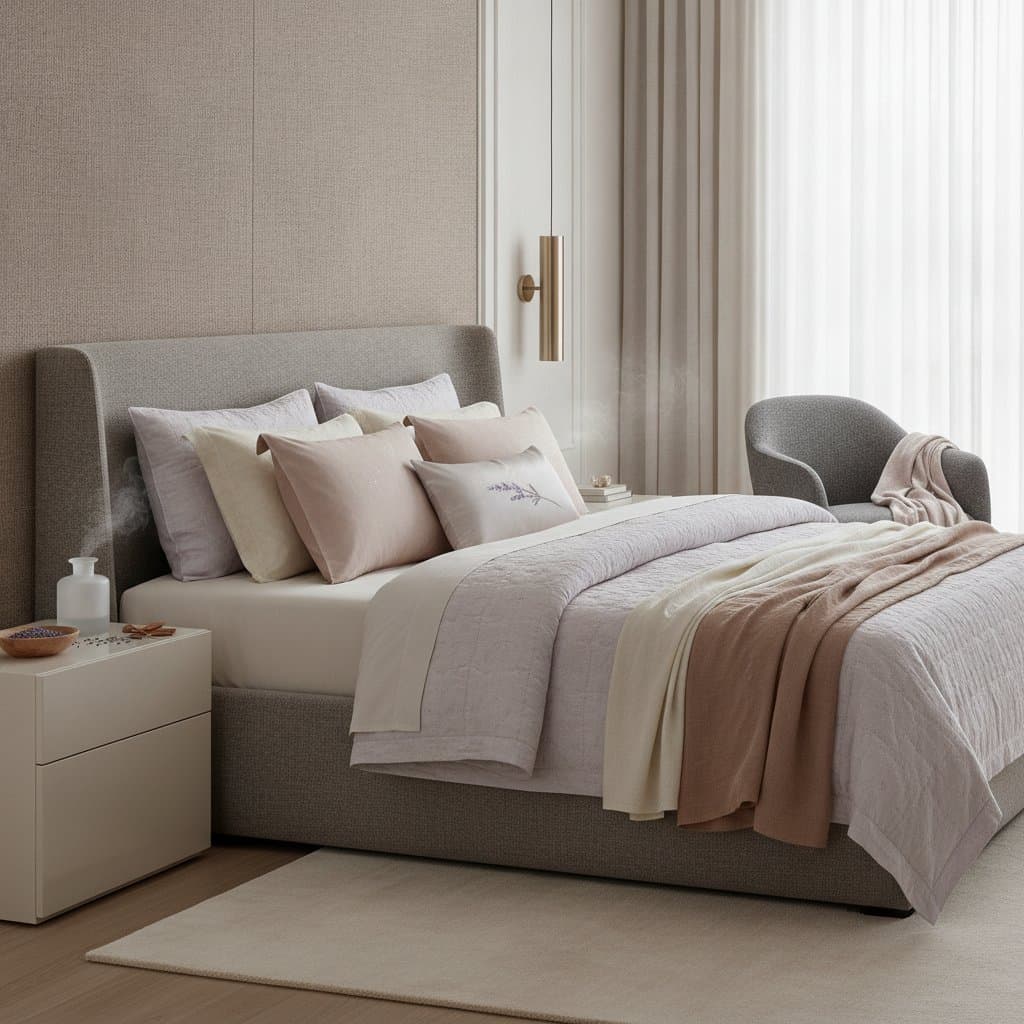
Effective rooms layer different textiles for both visual and sensory interest. A linen duvet with lavender can pair with cotton pillowcases that carry chamomile. Soft fabrics such as brushed cotton or bamboo retain scent well and feel comfortable against skin. Heavier materials like velvet work for accents that release fragrance more slowly. Cool blues and muted greens support a restful mood, while creams and soft grays maintain a calm appearance.
Maintenance Practices
Follow manufacturer washing instructions to preserve capsules. Use gentle cycles and avoid high heat. A light mist of matching essential oil can refresh fading scent when tested first on a small area. Rotate accent pieces every few months to keep the overall profile consistent without full replacement.
Price Ranges and Selection
Entry-level options use cotton or polyester blends with synthetic capsules and suit initial trials. Mid-range sets feature natural fibers such as organic cotton or bamboo with essential oils. Luxury versions employ silk or high-grade cotton with custom blends and refill options. Local makers sometimes provide custom infusions using regional oils.
Health and Sensitivity Factors
Review ingredient lists for anyone with allergies or asthma. Hypoallergenic or essential-oil-only products reduce risk. Limit the number of scented surfaces in one room to prevent overload. Pair strong bedding with unscented curtains when space is small.
Placement Within a Full Design
Treat scent-infused textiles as one element alongside lighting and color. Neutral bedding lets fragrance stand out. A scented throw on a chair adds aroma without filling the entire room. Lightweight curtains release scent with air movement. Mix scented and plain pillows to control intensity.
Sourcing Options
Check local stores that focus on natural materials or work with nearby growers for regionally sourced oils. Professionals can match fabric performance to climate and budget.
Establishing a Consistent Rest Routine
The fabrics create a repeated sensory signal that the body links with slowing down. A single lavender pillow or a complete set both move the room toward steady calm. The result is an environment that supports rest through every layer of fabric.