Japandi Maximalism: The Intentional Abundance Shift
Japanese minimalism provides quiet refinement through clean forms and natural elements, while Scandinavian design delivers inviting simplicity with functional warmth. Contemporary interiors now seek greater vibrancy, tactile interest, and individual flair. Japandi Maximalism emerges from this evolution, preserving serene foundations while embracing collected, comforting details. This approach prioritizes deliberate layering over sterile voids, fostering spaces alive with purpose.
The style harmonizes restraint with relational depth. Interiors maintain openness yet pulse with subtle energy. Consider a cluster of well-loved novels next to fresh-picked blooms in a ceramic vessel. Faded fabrics drape alongside subtle patterns. Each selection conveys purpose without strain.
Core Principles of Japandi Maximalism
Japandi Maximalism centers on equilibrium. It draws from classic Japandi aesthetics, including streamlined silhouettes, organic substances, and subdued shades. Maximalist influences then infuse narrative and uniqueness. The outcome yields residences that soothe while reflecting personal essence.
Traditional minimalism focuses on subtraction. In contrast, this method evaluates retention based on significance. It values asymmetry in craftsmanship, the allure of artisanal works, and the solace of accumulation. The aim involves selective enrichment via sensory variety, subtle pigmentation, and evocative remnants rather than exhaustive occupation.
Essential Components of the Aesthetic
View your residence as an evolving tableau. These principles establish the groundwork for Japandi Maximalism:
-
Organic Substances Enhanced by Variety
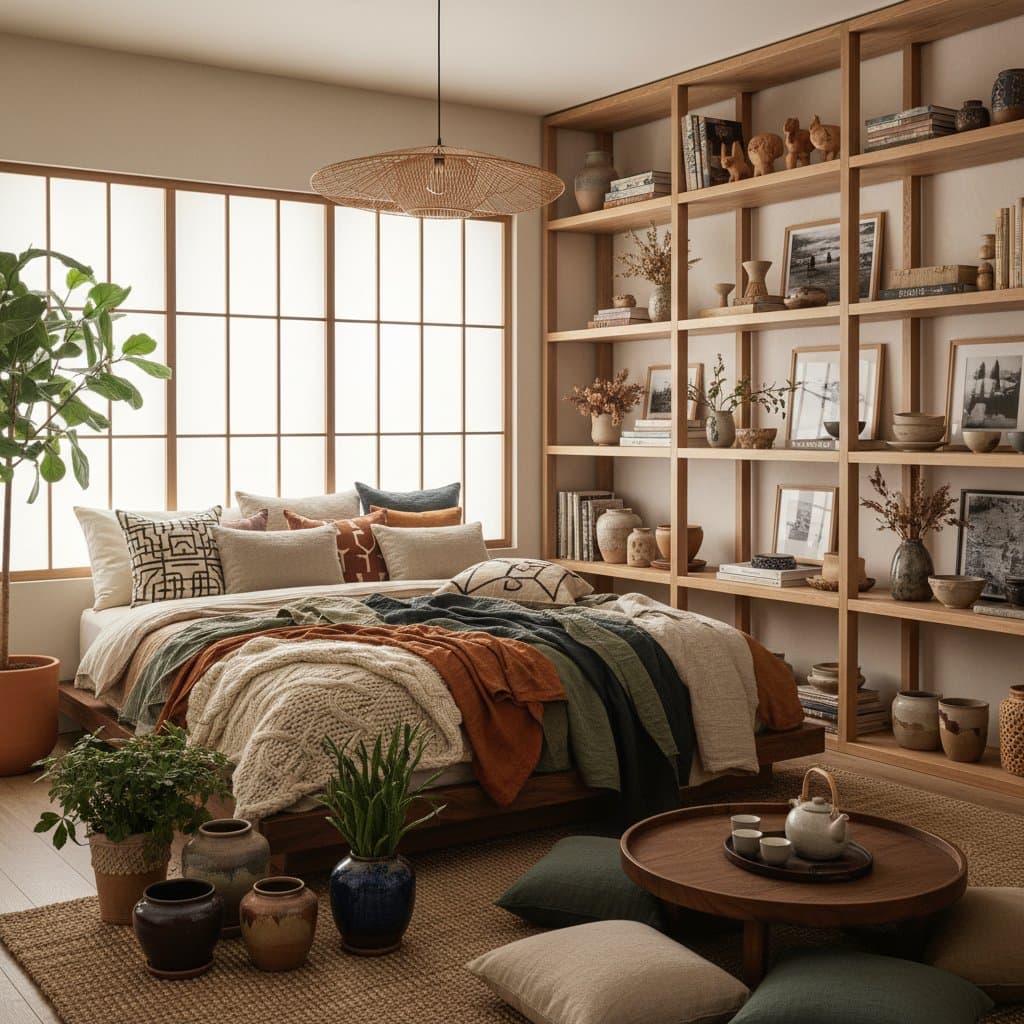
Select timber, earthenware, flax fibers, and rock as primaries, then combine them dynamically. Envision light ash wood adjacent to rich ebony grains, or glossy pottery alongside coarse weaves. Such juxtapositions anchor the environment in vitality. -
Pigmentation That Nurtures
Neutral bases prevail, framing bolder accents. Earthy terracotta, verdant sage, or softened navy integrate via wall hangings, upholstery, or secondary furnishings. The scheme remains tranquil while evoking emotional depth. -
Possessions with Narrative Value
Present groupings purposefully rather than concealing them. Arrange artisanal vessels on open shelving, align journey-inspired drawings, or assemble heirloom images. Intention governs display to infuse character minus disarray. -
Sensory Layers for Tactile Appeal
Stack fleece, cane, and canvas to build dimension. Position a sleek surface near braided underlays, or a textured pot by a refined fixture. This interplay generates an inviting cadence that encourages interaction. -
Fluid Spatial Arrangement
Despite increased elements, circulation stays unobstructed. Maintain generous walkways and space around major pieces. Equilibrium ensures profusion complements rather than competes with expansiveness.
Building an Inviting, Layered Environment
A Japandi Maximalist setting appears to develop organically through seasons of use. Initiate with existing holdings for gradual integration over wholesale overhaul.
Begin with foundational neutrality in walls and primary furniture. This establishes a serene canvas for subsequent embellishments.
Incorporate purposeful additions like interlaced containers, sculptural illuminators, or wheel-turned cups. Cluster in trios or fives to mimic natural asymmetry.
Blend contemporary and vintage forms. A sleek platform couch pairs effectively with a patinaed timber perch, enhancing authenticity through temporal dialogue.
Employ diffused illumination with amber sources, rice-paper shades, and beeswax flames. Ambient radiance promotes intimacy over stark revelation.
Accept signs of use, such as faint marks, creases, or irregular contours. These elements narrate routine engagement, prioritizing lived ease above flawless presentation.
The Intentional Dimension of Layered Living
Beyond aesthetics, Japandi Maximalism embodies a philosophy of discernment. Curating possessions cultivates appreciation and mindfulness.
This practice prompts pauses to appreciate surface grains, savor aromatic woods, or relish fabric yields. Daily acts, like steeping tea in a cherished vessel or wrapping in a softened coverlet, ground one in serene focus.
Selective accumulation promotes relational bonds over disorder. Items retain significance when selected thoughtfully, bridging past experiences with present sanctuary.
Practical Steps for Integration
Transition to this layered harmony incrementally. Follow these measures to adopt the aesthetic fluidly.
-
Refine Collections Thoughtfully
Traverse spaces assessing emotional resonance. Retain objects evoking delight or history. Part with those impeding current well-being. -
Unify Through Motifs
Select recurring threads, such as fibrous weaves, crafted pottery, or flora motifs. Allow them to recur subtly for unity without constraint. -
Incorporate Gradually
Introduce single or paired elements sequentially. Evaluate their synergy with established features. Progression remains unhurried and intuitive. -
Explore Juxtapositions
Combine polished and rugged, pale and profound, dull and lustrous finishes. Variations yield the nuanced opulence central to the style. -
Align with Natural Illumination
Monitor daylight patterns and object interactions. Minor repositioning alters ambiance profoundly.
Addressing Common Challenges
Concerns about emerging disorder often arise with added layers. Discernment resolves this: each item must justify inclusion through utility or sentiment.
When equilibrium eludes between sparsity and excess, withdraw clusters methodically until harmony returns. The aesthetic should embrace rather than burden.
Style fusion may intimidate, yet Japandi Maximalism flourishes in subtle tensions. A streamlined fixture near a folk-hewn seat, or a refined container with foraged stems, infuses vitality precisely.
Weekend Initiative: Curating a Maximalist Nook
A focused area can refresh overall ambiance. Dedicate time to craft a resonant vignette embodying the style.
Select the Area
Identify a serene yet idle zone, such as a lounge seat, nightstand, or pantry ledge.
Prepare the Foundation
Evacuate contents, cleanse planes, and assess light ingress. This resets the base intuitively.
Establish Primary Layers
Anchor with a neutral element like a timber block, fabric band, or plaited base. Build with a coverlet, volume pile, or earthen dish for dimension.
Infuse Individuality
Introduce a singular focal point, perhaps an inked rendering, taper, or potted herb. It warms without overshadowing.
Refine the Composition
View from distance, reposition for poise. Success lies in the urge to dwell.
By project's end, the residence gains a haven of solace, demonstrating incremental impact.
Sustaining the Aesthetic Over Time
Japandi Maximalism adapts alongside personal growth. Refresh through periodic rotations of displays or positional shifts.
Maintain quarterly reviews to affirm ongoing relevance. Rehome items diverging from current inspirations. This preserves tranquility amid change.
Attune updates to seasonal rhythms. Summer favors airy linens and verdant accents; winter welcomes saturated shades and insulating layers. Such cycles ensure responsiveness.
Cultivating Intentional Surroundings
This design philosophy extends to nurturing harmony between self and space. A reflective environment energizes daily existence.
Adopt deliberate selection as routine practice. Each acquisition or adjustment reinforces ease and awareness. Gradually, these choices forge a residence both anchored and articulate.
Japandi Maximalism illustrates harmony between restraint and richness. Interiors achieve poise and profundity simultaneously.