Japandi Bathrooms: Redefining Zen-Inspired Minimalism
Consider the deep breath taken after a demanding day, a moment when the body craves tranquility. A Japandi bathroom embodies this essence by combining the peaceful aura of Japanese aesthetics with the functional warmth of Scandinavian design. Clean lines, diffused lighting, and organic textures collaborate to convert everyday activities into intentional, calming practices.
This style of bathroom conveys luxury through subtlety rather than ostentation. The appeal resides in precise details that encourage pauses for reflection and renewal. Below, explore key elements that elevate a standard bathroom into a haven of composed simplicity.
1. Floating Vanities with Integrated Storage Solutions
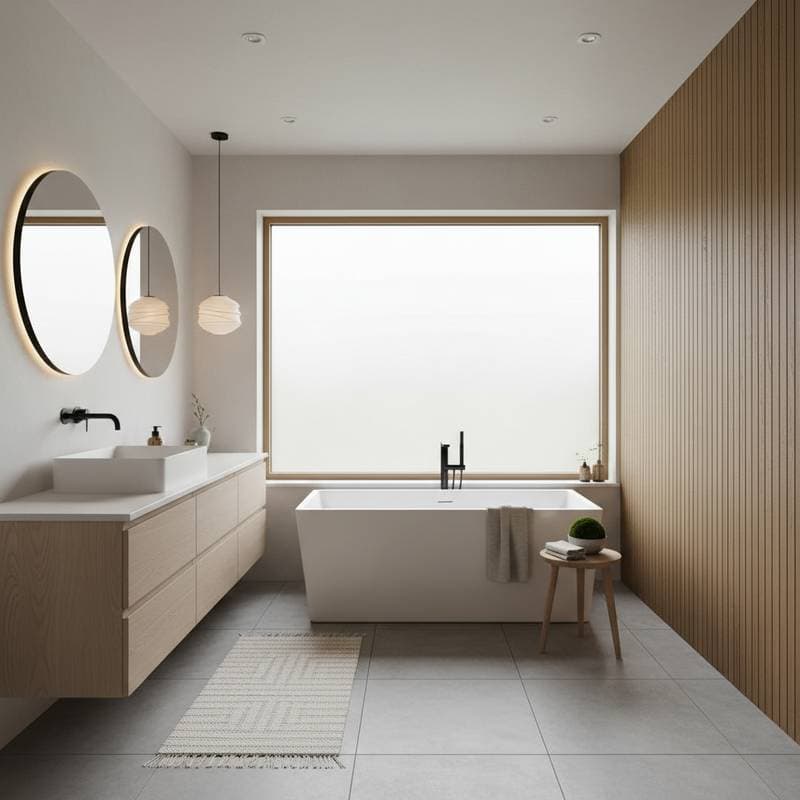
A floating vanity eliminates visual clutter by suspending above the floor, which expands the perceived space and imparts a sense of lightness. Select designs featuring deep drawers or concealed compartments to store essentials discreetly. This arrangement promotes organization beyond mere neatness; it maintains a serene visual field. As a result, morning preparations unfold as deliberate rituals rather than frantic searches for daily items.
To implement this effectively, measure your space to ensure the vanity aligns with wall proportions, typically 30 to 36 inches in height. Opt for materials like matte lacquer or light-toned wood that harmonize with neutral surroundings. Pair it with a seamless stone countertop to enhance the floating illusion while providing a durable surface for grooming tasks.
2. Warm Wood Accents for Organic Balance
Wood introduces warmth to the precise forms characteristic of minimalist interiors. Incorporate light oak or bamboo in forms such as open shelves, a low bench near the bathtub, or even a simple tray for amenities. These elements counterbalance the cooler tones of ceramic tiles and stone surfaces. A modest wooden accessory, like a handcrafted soap holder, infuses the area with a natural, approachable quality.
When choosing woods, prioritize sustainably sourced options with subtle grain patterns to avoid overwhelming the palette. Install floating shelves at eye level for towels or plants, ensuring they remain uncluttered to preserve the minimalist ethos. This addition grounds the space, making it feel inviting and connected to nature during quiet moments of reflection.
3. Soft-Close Hardware for Refined Functionality
The abrupt noise of a slamming door disrupts any peaceful interlude. Soft-close mechanisms on hinges and drawer slides offer a premium touch that operates smoothly and silently. Although they require a modest investment, these features deliver lasting sophistication. After installation, standard hardware elsewhere appears jarring by comparison, highlighting the value of this understated enhancement.
Installation proves straightforward for most DIY enthusiasts; simply replace existing fittings with compatible soft-close versions rated for bathroom humidity. Focus on matte black or brushed nickel finishes to blend seamlessly. This upgrade extends to medicine cabinets and linen storage, ensuring every interaction contributes to the overall atmosphere of composure.
4. Textured Tiles for Subtle Sensory Comfort
Polished tiles often appear impersonal, yet a gentle texture encourages barefoot pauses. Seek matte surfaces or designs mimicking natural stone that diffuse light softly without glare. Integrating underfloor heating complements this choice, warming the tiles invisibly for year-round comfort. Such features embed luxury into the everyday without drawing attention to themselves.
For best results, select large-format tiles in earth-inspired hues like soft gray or beige to minimize grout lines and maintain flow. Lay them in a staggered pattern for visual interest that remains understated. This flooring choice not only supports the Japandi aesthetic but also enhances accessibility and ease of maintenance in high-moisture environments.
5. Minimalist Fixtures in Neutral Metallics
Streamlined fixtures serve as subtle anchors within a Japandi bathroom. Black models provide sharp definition against light stone backgrounds, whereas brushed brass introduces gentle warmth without excess shine. These finishes integrate with a monochromatic scheme, allowing natural elements to dominate. The emphasis lies on cohesion rather than bold statements.
Choose wall-mounted faucets or rain showerheads with single-lever controls for effortless operation. Ensure proportions match the scale of your vanity or tub; for instance, a compact basin pairs well with a low-arc spout. Regular polishing keeps brass vibrant, while black fixtures resist water spots, preserving the clean lines essential to the design.
6. Remote Ventilation Systems for Unobtrusive Air Quality
Effective ventilation maintains freshness without intrusion, and a remote-mounted fan achieves this ideal. By relocating the motor outside the bathroom, noise levels drop to near silence, preserving the tranquil ambiance. Guests may not notice the upgrade immediately, but its absence of sound becomes evident during use.
Professional installation ensures proper ducting to avoid moisture buildup, a critical factor in humid spaces. Opt for models with humidity sensors that activate automatically, integrating seamlessly into the routine. This system supports the Japandi principle of functionality hidden in plain sight, contributing to a healthier, more peaceful environment.
7. Layered Lighting for Gentle Illumination
Effective lighting balances focused beams for tasks with ambient softness for relaxation. Concealed LED strips beneath vanities or along mirror edges create depth without intensity. This setup mimics natural dawn light, easing transitions between wakefulness and rest. The contrast with stark overhead fixtures underscores the thoughtful approach.
Incorporate dimmable sconces on either side of the mirror for even coverage, avoiding shadows during grooming. Use warm white bulbs at 2700K to evoke woodsy glows that complement organic materials. Smart controls allow preset moods, from energizing morning light to soothing evening hues, enhancing the ritualistic quality of the space.
Cultivating Serenity Through Intentional Design
A Japandi bathroom encourages a deliberate pace in daily life. Thoughtful choices, from silent closures to tactile surfaces, establish a cadence of tranquility. The philosophy thrives on purposeful selection over excess, where each component supports renewal. Envision this as an integrated retreat that delivers spa-like respite within the home, one harmonious detail at a time.