Japandi Bathrooms Bring Spa Calm to Homes
Stepping into a bathroom filled with crowded counters, harsh lighting, and no clear surface can set a rushed tone for the day. A Japandi approach transforms that space into a quiet retreat by combining Japanese simplicity with Scandinavian warmth. Natural materials, useful storage, and a softer sensory palette replace visual noise with calm order.
Bathrooms in most homes face daily demands from damp winters, humid summers, and fast family routines. Japandi design meets those demands through practical choices rather than decorative excess. A wood-toned vanity, tactile tile, gentle lighting, and open floor space work together to create a room that feels both composed and comfortable.
Core Elements of Japandi Bathroom Design
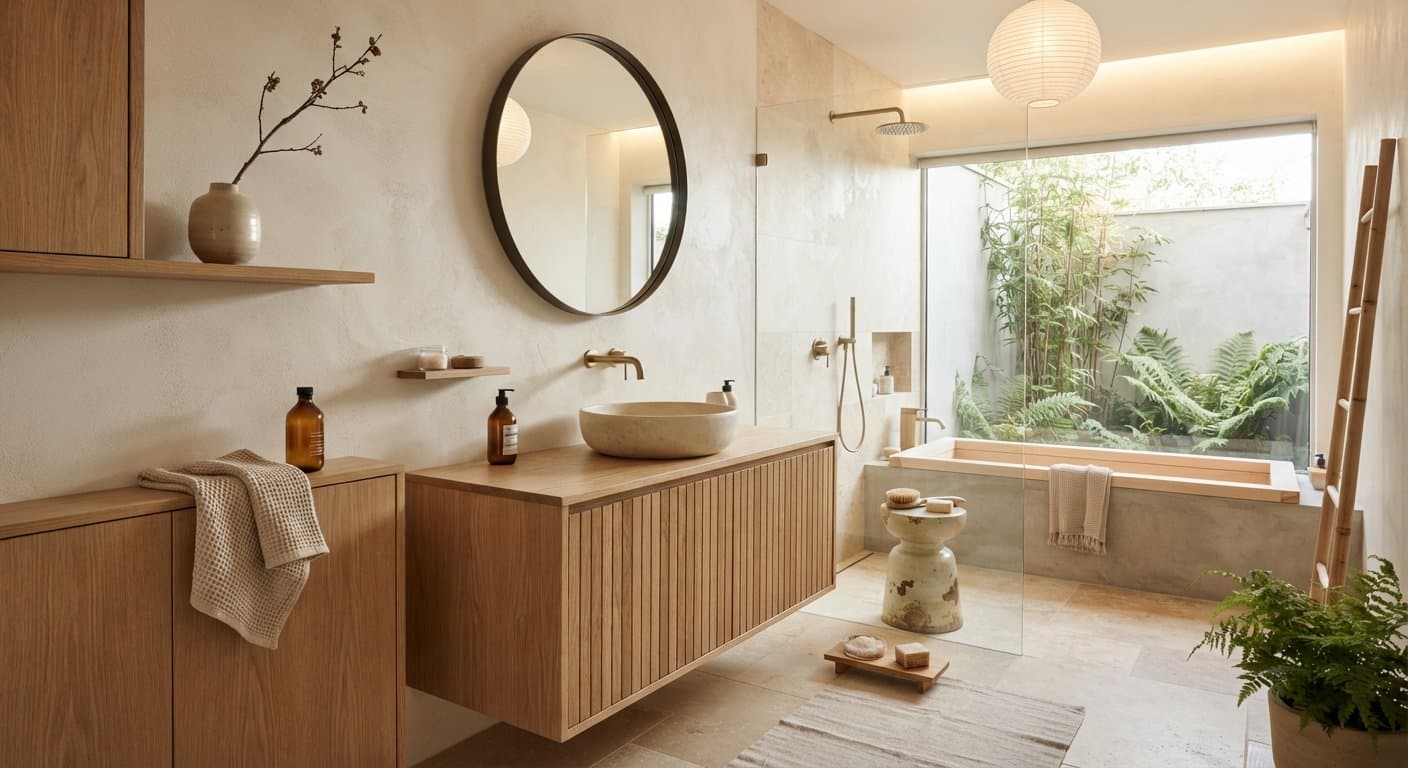
Japandi style merges clean lines with purposeful function and the quiet appreciation of natural texture. This does not require an unfinished or stark appearance. A handmade-look basin, subtly varied tile, or natural stone introduces character while the overall room stays balanced and composed.
The color palette typically starts with warm whites, sand, greige, muted brown, or soft charcoal. Pale oak and walnut add warmth, while stone, ceramic, and linen provide depth. Instead of filling surfaces with accessories, select a few useful pieces and give each one room to breathe.
Successful schemes consider how each element feels as well as how it looks. A smooth countertop balances ribbed tile. A compact vanity feels lighter with wall-mounted fittings. A woven basket softens a hard floor while keeping towels within reach.
Practical Changes That Create Immediate Impact
A full renovation is not required to achieve a spa-like atmosphere. Focus first on the features that shape daily experience.
- Clear visual clutter by removing expired products and relocating rarely used items. Store everyday essentials in drawers or simple containers so counters remain open and the room feels more generous.
- Improve lighting by replacing a single harsh ceiling fixture with layered options. A dimmable overhead light paired with well-positioned vanity lights allows the room to shift from morning grooming to a calmer evening routine.
- Choose one natural focal point such as a wood vanity, stone-look basin, or handmade-style tile. Repeat its tone elsewhere rather than introducing several competing finishes.
- Add softness with purpose through plush towels, a washable bath mat, or a simple shower curtain in a warm neutral. Keep fabrics away from persistent splashes and allow them to dry fully between uses.
Materials That Perform in Real Conditions
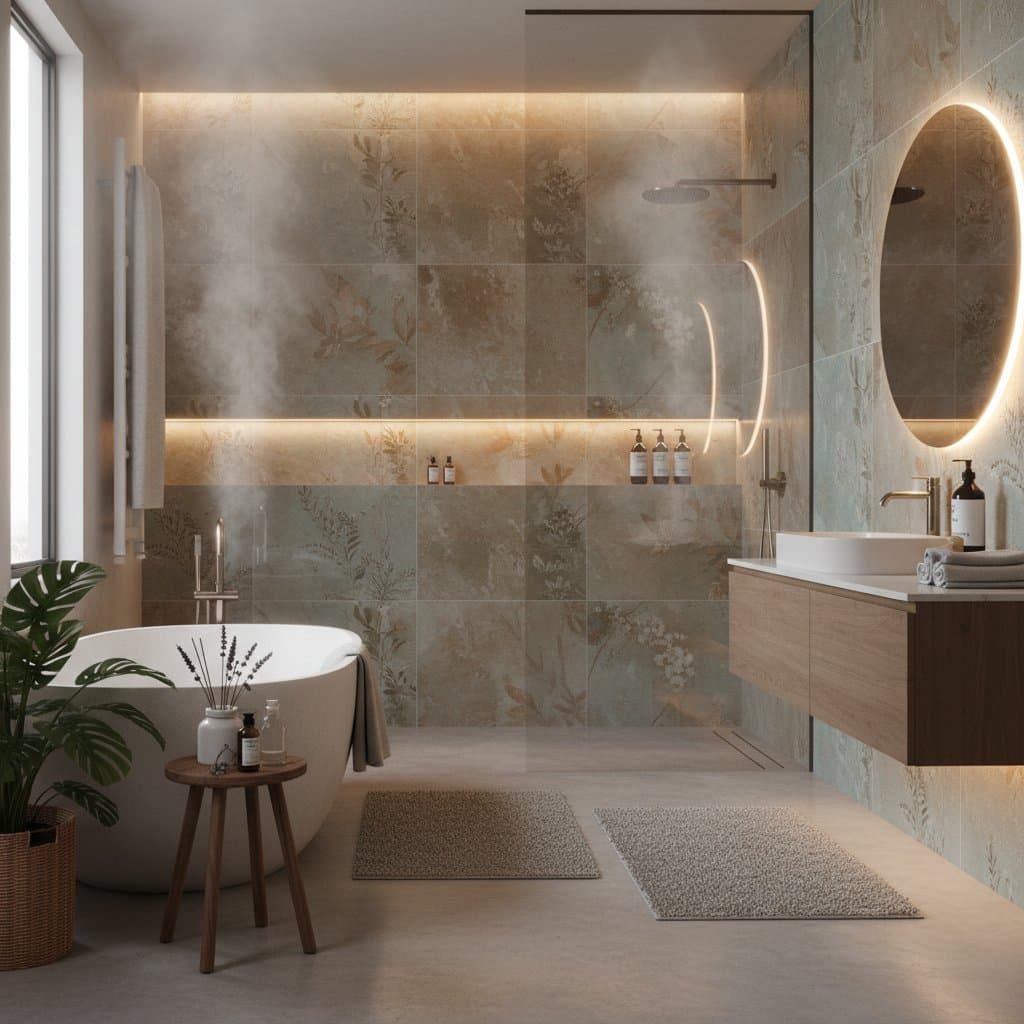
Natural materials create the tactile character of a Japandi bathroom, yet wet rooms require surfaces that handle regular moisture. Porcelain tile works well for floors and shower walls because it can mimic wood grain or stone movement. Larger tiles with fewer grout lines produce a quieter look, provided the floor layout and slope support proper drainage.
Real timber brings warmth to vanities or shelving, but it needs a suitable finish and protection from standing water. Ask your contractor about sealing methods and maintenance requirements. In a frequently used family bathroom, a durable wood-look surface often provides a lower-maintenance alternative.
For wabi-sabi inspired details, look for gentle variation rather than deliberate damage. Hand-finished ceramic, softly mottled tile, and natural stone add individuality. Seal porous materials according to manufacturer recommendations and clean them with appropriate products. A beautiful finish should remain easy to care for within your actual household routine.
Sensory Planning for Daily Comfort
A spa atmosphere does not depend on a soaking tub or large footprint. It can come from a warm shower, a comfortable place to set your towel, and a room that feels peaceful upon entry.
Sound control begins with a quiet exhaust fan and well-fitted plumbing that reduce distracting noise. Keep a small speaker away from water if you enjoy music during routines.
Touch comfort comes from selecting handles that feel good in hand, smooth countertop edges, and towels that feel pleasant against skin.
Scent management starts with proper ventilation. Add a subtle fragrance only if everyone in the household tolerates it.
Light quality improves with warmer bulbs and indirect fixtures that make evening routines feel gentler. Place all fixtures in locations suitable for wet areas and follow electrical safety requirements.
Budget, Timing, and Professional Considerations
Project costs depend on room size, material choices, plumbing changes, and local labor rates. A modest refresh might include paint, new hardware, improved lighting, and storage solutions. A full renovation costs more when tile, fixtures, waterproofing, or plumbing require replacement. Request itemized estimates so you can see what each line includes, and maintain a contingency for hidden damage discovered behind walls or under floors.
A cosmetic project may take several days, while a renovation involving demolition, waterproofing, inspections, and finish work can take several weeks. Your household may need access to another bathroom during construction. Confirm product availability before work begins, since delayed tile or fixtures can interrupt the schedule.
Permits and inspections depend on your location and the scope of work. Moving plumbing, changing electrical circuits, altering ventilation, or modifying structural elements often requires permits or licensed professionals. Waterproofing remains especially important because poor installation can allow moisture into walls and floors, leading to repairs that exceed the cost of hiring a qualified installer. Ask who handles permits, what warranties apply, and how the work will be inspected.
For smoother project management, compare contractors on experience, communication, insurance, references, and a written scope of work. Discuss your goals, budget range, and preferred materials before selecting a team.
Adapting the Design to Your Specific Home
A Japandi bathroom should reflect how you live rather than copy a showroom display. In a compact urban bathroom, a floating vanity and mirrored cabinet can improve storage without crowding the floor. In a family home, durable porcelain and easy-to-clean surfaces may matter more than delicate stone finishes. In cold climates, radiant floor heating adds comfort, though it increases project cost and may require electrical or plumbing expertise.
Begin by noting what frustrates you most. Perhaps towels lack a proper home, the shower feels cramped, or the light appears unflattering. Solve those practical problems first, then layer in natural textures and restrained details. The result feels refined without becoming precious.
Creating a Room That Supports Daily Life
Thoughtful planning turns your bathroom into a restful part of home life where warm materials, clear surfaces, and reliable fixtures work together. Choose changes that fit your budget, consult qualified professionals about safety and permits, and build the room around the routines you want to enjoy.