Color-Changing Smart Tiles for Mood-Responsive Bathrooms
Stepping into a shower often brings a shift in temperature and atmosphere. Color-changing smart tiles respond to these changes by altering their appearance through temperature, light, or touch. This creates surfaces that adapt to daily routines.
Sensory Layers in Bathroom Design
Bathrooms serve as starting and ending points for many daily schedules. Elements such as lighting and texture already shape feelings of calm or alertness. Smart tiles introduce an additional layer through thermochromic or light-responsive materials that react to heat, humidity, or water temperature variations.
These surfaces function like advanced indicators rather than simple decorations. Users can set automatic responses or switch to manual controls for direct adjustments. The transitions range from subtle gradients to more pronounced shifts based on selected settings.
Core Technology in Smart Tiles
Smart tiles resemble standard ceramic or glass products at first view. Their distinction comes from micro-layered coatings with thermochromic pigments that change color according to temperature shifts. Alternative versions incorporate embedded LEDs or photochromic layers activated by light levels.
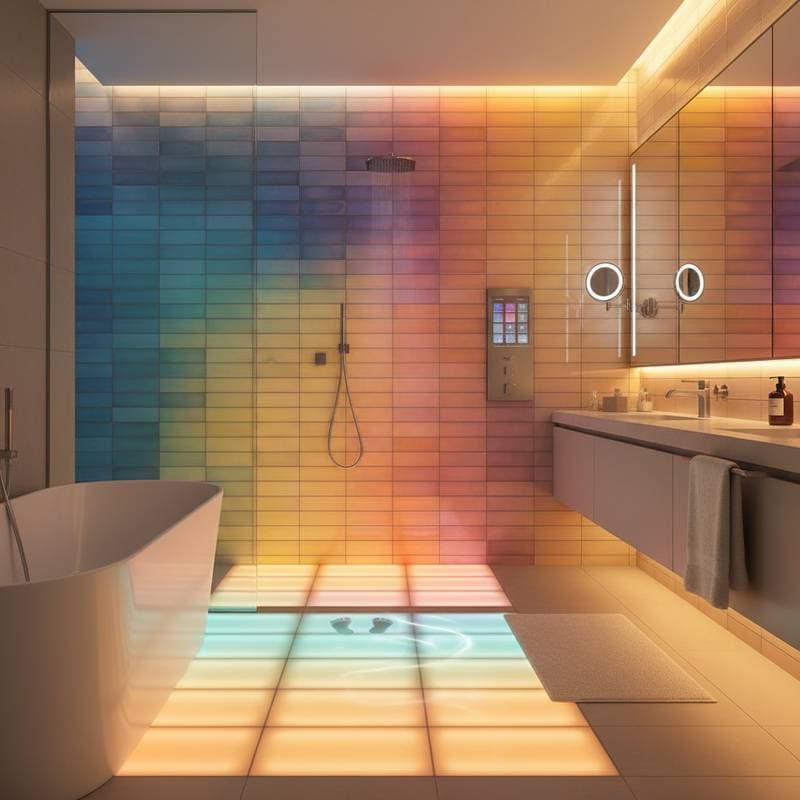
Integration with a smart home system permits programmed patterns. A blue tone might transition to pink once water reaches a set warmth level. Humidity sensors can trigger faint glows in designated areas. The effects remain understated while adding responsive character to the room.
Safety and Maintenance Functions
Color shifts provide visual cues for water temperature. Households with children benefit from immediate recognition of hot surfaces. The same indicators help confirm when steam levels have decreased enough for tasks such as styling hair.
Certain systems include moisture detection. Prolonged dampness triggers a color signal that prompts ventilation use. This supports mold prevention without requiring constant manual checks.
Creative Applications in Layouts
Tiles can cover an accent wall, shower enclosure, or entire room. A mosaic pattern might move from pale gray to teal as heat rises. Pairing with wood or stone elements heightens the contrast between changing tones and stable materials.
Coordination with smart lighting produces unified results. An amber tile response combined with soft illumination creates a consistent environment. Designers select these combinations to match specific room functions.
Setup and Care Procedures
Thermochromic tiles need only standard adhesives and sealing. LED versions require low-voltage wiring yet allow individual tile replacement. Surfaces resist soap buildup when cleaned with non-abrasive products.
Avoid chemical cleaners that degrade pigment response. Regular care matches that of other premium tile finishes and supports long-term performance.
Emotional and Psychological Effects
Responsive spaces influence relaxation or focus during routines. Gradual color changes reduce the abruptness of morning lighting. Evening use benefits from tones that align with lower light levels.
Blue and green shades promote steadiness. Warmer pinks and golds suggest comfort. Shifts tied to activity make the room feel more attuned to personal patterns.
Compatible Features for Daily Use
Several additions enhance tile performance:
- Soft-close cabinetry reduces sound and supports visual calm.
- Remote venting clears humidity without added noise.
- Heated floors activate temperature-based color changes from below.
- Adjustable lighting matches tile responses for balanced effects.
- Minimal hardware directs attention to surface transitions.
These elements create an environment that requires fewer manual interventions.
Ongoing Adaptation and Use
Installed tiles often draw comments from visitors. Patterns emerge over time, such as earlier shifts on cooler days. Systems permit palette adjustments or panel swaps if preferences change.
The result integrates technology into regular activities. Morning and evening routines gain a responsive quality that aligns with individual needs.