Sculpting Serenity: Acoustic Ceilings for Open-Plan Homes
Open-plan layouts invite noise to echo across hard surfaces like tile floors and bare walls. Acoustic ceilings address this challenge by capturing sound waves and preventing their reflection. These installations restore calm to living rooms, bedrooms, and kitchens while preserving architectural appeal.
The Role of Acoustic Ceilings in Home Acoustics
Ceilings influence sound more than most surfaces due to their expansive coverage. Untreated drywall or plaster reflects noise, creating a persistent buzz that disrupts concentration and relaxation. Acoustic treatments mitigate this by absorbing up to 80 percent of mid-to-high frequency sounds, fostering environments where dialogue flows naturally and rest comes easily.
Interior designer Laura Chen observes, "The ceiling is often overlooked, but it is one of the largest surfaces in any room. Treating it with the right material transforms both sound and atmosphere."
Selecting Materials for Optimal Performance
A variety of materials suit different home styles and budgets. Fabric-wrapped fiberglass offers superior absorption with customizable colors for subtle integration. Wood slats over acoustic backing provide a natural texture that warms modern or rustic interiors, while perforated metal panels deliver durability in high-traffic areas.
Prioritize materials with a noise reduction coefficient (NRC) of 0.70 or above for noticeable improvements. In a standard 12-by-16-foot living room, apply acoustic panels to 60 to 70 percent of the ceiling surface. Leave remaining areas for vents, beams, or decorative elements to maintain visual balance.
Cork tiles excel in moisture-prone kitchens by combining absorption with eco-friendly properties. Mineral wool boards, lightweight and fire-resistant, suit renovations where minimal structural changes are desired.
Seamless Integration into Interior Design
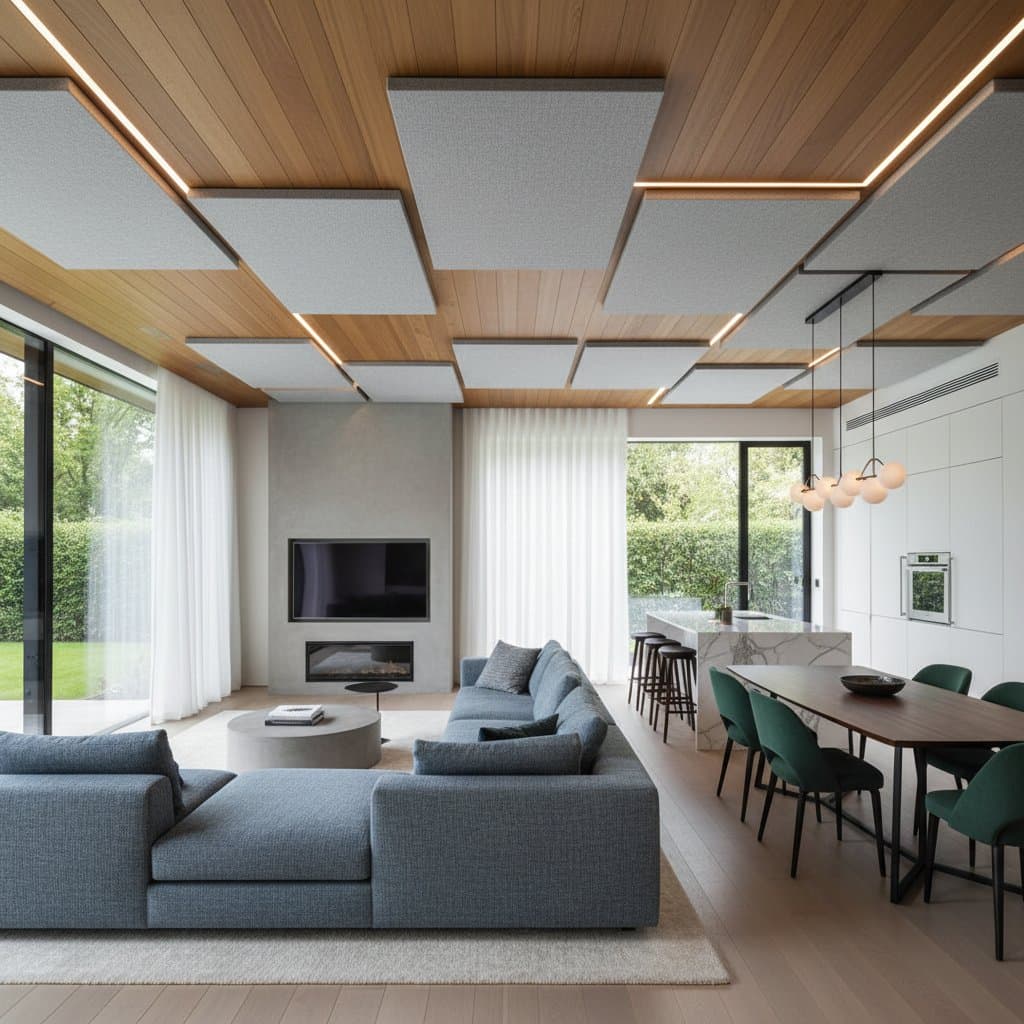
Acoustic panels adapt to any aesthetic, from understated to bold. Match panel colors to existing ceilings in contemporary spaces for an invisible effect that prioritizes function. In eclectic designs, arrange slats or tiles in patterns to guide sightlines and add depth.
Incorporate lighting to enhance both form and function. Embed LED strips within slatted systems for even illumination without glare. Use modular grids that accommodate recessed cans, ensuring sound diffusion complements light distribution.
Architect Daniel Ruiz notes, "We think of the ceiling as the fifth wall. When we coordinate acoustics and lighting, the room feels cohesive and calm. Proper planning elevates the entire space."
Ideal Applications Across Home Zones
Open-plan kitchens amplify clangs from cookware and overlapping chatter. Acoustic ceilings dampen these sounds, allowing family meals to proceed without strain. Home offices gain productivity as panels muffle keyboard clicks and external distractions, supporting longer work sessions.
Bedrooms near urban streets or play areas benefit from reduced ambient noise, promoting deeper sleep. Install targeted panels above reading nooks or desks to create personal havens of quiet. Multifunctional rooms, like combined living and dining areas, achieve harmony through strategic coverage that balances openness with intimacy.
Essential Design Specifications
- Panel Materials: Felt composites, fabric coverings, perforated wood, gypsum boards, or fiber blends
- Finish Options: Custom paints, wood veneers, or textile upholstery for tailored looks
- Installation Depth: Systems typically suspend 1 to 3 inches below the main structure for accessibility
- Lighting Compatibility: Supports recessed lights, track systems, or integrated cove lighting
- Maintenance Practices: Dust with a soft cloth or vacuum gently to preserve absorption qualities
Concealing Utilities with Acoustic Solutions
Beyond sound control, ceilings serve practical needs. Design panels with hinged or clip-in sections to hide HVAC ducts, electrical conduits, and security wiring. This approach maintains a clean sightline while allowing straightforward maintenance.
In entertainment setups, embed audio components directly into the ceiling grid. Projectors and surround speakers vanish behind absorptive layers, delivering immersive experiences without visual disruption. Such integrations streamline modern homes where technology meets tranquility.
Weighing Practical Considerations
Acoustic upgrades demand upfront investment, with custom options costing more than standard finishes. Professional installation ensures precise alignment for maximum efficacy, often requiring assessment of room dimensions and existing infrastructure. Account for a slight reduction in perceived height, especially in low-ceilinged spaces.
Consult acousticians early to model sound patterns and recommend coverage. Budget for ongoing care, though most systems prove durable with minimal upkeep. These steps yield long-term value in comfort and property appeal.
Experiencing the Transformative Impact
Installed acoustic ceilings shift daily life subtly yet profoundly. Echoes diminish, allowing voices to carry with clarity and music to resonate purely. Rooms evolve into supportive backdrops that enhance well-being and connection.
This evolution underscores design's sensory depth. Acoustic ceilings craft environments where silence supports activity, proving that thoughtful overhead solutions make homes truly resonant.