Grounding Floors: Earthing Wellness Indoors
When Laura and Ethan moved into their coastal bungalow, they anticipated relaxation from the sound of nearby waves. That soothing element arrived, yet the persistent static hum of everyday routines remained. Their cold, synthetic floors contributed to a sense of disconnection from the serene landscape visible through the windows. This prompted their exploration of grounding floors, materials designed to link the body directly to the earth's natural electrical charge, even within enclosed spaces.
What started as a modest flooring project evolved into a profound transformation of their living experience. Mornings brought greater tranquility. Sleep patterns improved noticeably. Above all, their home integrated seamlessly with the natural surroundings, such as the sand and soil adjacent to their porch.
Grounding, also known as earthing, involves direct contact between bare skin and conductive surfaces that access the earth's electrical energy. Achieving this outdoors proves straightforward through grass, soil, or sand. Indoors, however, requires thoughtful selection of flooring materials and intentional design elements to replicate that restorative connection.
The Home Before Renovation
Prior to the update, the floors consisted of laminate, a thin, glossy material that highlighted every particle of dust. Laura and Ethan likened it to traversing a plastic barrier. In the mornings, the inherent chill prompted immediate reaches for slippers. Evenings amplified the issue, as static electricity adhered to their socks. Although the appearance remained acceptable, the overall sensation lacked stability.
This physical separation extended to emotional impacts. Visual elements play a key role in ambiance, and the floors reflected light in a stark manner that contrasted with their preferred soft linen curtains and clay-hued walls. They sought a surface that conveyed natural vitality and harmony.
Understanding Grounding Flooring
Grounding flooring encompasses materials that facilitate the release of accumulated static electricity from the body while establishing a connection to the earth's inherent electrical field. This concept blends scientific principles with practical benefits. Conductive or semi-conductive surfaces neutralize the mild electrical buildup from sources like electronic devices, insulated shoes, and synthetic fabrics.
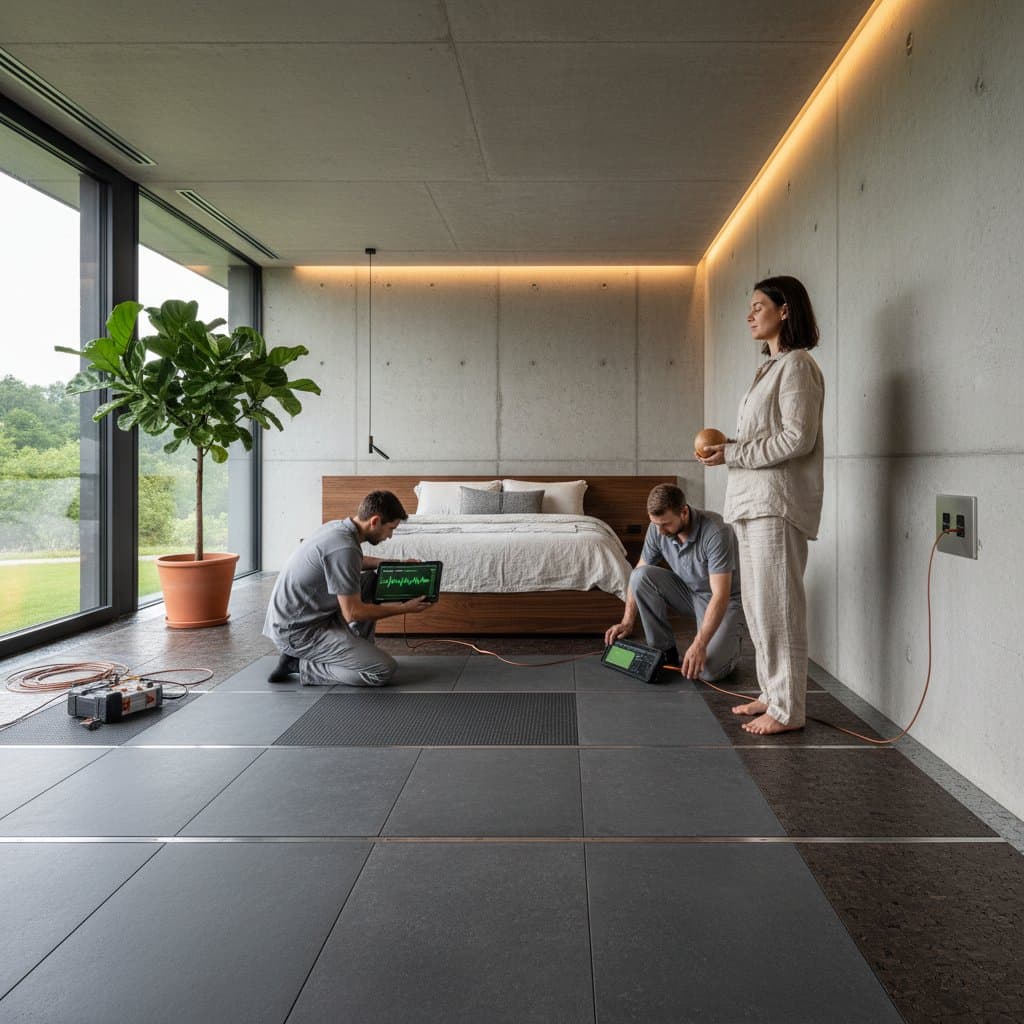
While outdoor grounding occurs naturally, innovative flooring solutions now incorporate conductive elements into indoor options, such as earthing tiles, carbon-infused underlays, and dedicated grounding mats. These systems link via a grounding wire to a standard grounded outlet or an external grounding rod. The outcome produces an indoor environment that emulates the energetic balance of barefoot contact with soil.
Beyond electrical conductivity, materials like clay, cork, wood, or stone offer a tactile form of grounding. Their inherent textures, moderate temperatures, and organic patterns evoke the earth's natural cadence. The ultimate aim extends to fostering emotional equilibrium, where the living space promotes serenity, mindfulness, and renewal.
Design Elements to Enhance Grounding
Color and Tone Selection
Grounding extends beyond conductivity to include visual harmony. Opt for warm neutrals, earthy reds, or subdued greens to draw the gaze gently toward the floor, cultivating tranquility. Cooler shades, such as gray slate or light limestone, succeed when paired with textured elements and warm accents in surrounding decor.
Texture and Surface Finish
Avoid overly glossy surfaces, which can appear slick and disrupt emotional ease. Choose matte or honed finishes to encourage a deliberate pace. Incorporate subtle variations, like the gentle undulations in artisanal tiles or the nuanced grain in oiled wood, to heighten sensory awareness and anchor attention in the moment.
Room Transitions and Spatial Flow
Seamless transitions between areas often receive insufficient attention in flooring projects. In Laura and Ethan's home, the designer installed smooth clay tiles in the kitchen alongside cork in the bedrooms. A narrow brass divider bridged these without creating visual breaks. This approach generated a fluid progression, reminiscent of shifting from beach sand to woodland earth.
Lighting Integration
Grounding floors reveal their character most effectively under diffused, multi-layered illumination. Utilize wall-mounted sconces, suspended low pendants, or ambient table lamps instead of harsh overhead fixtures. Allow light to skim the surface, accentuating textures while preserving depth and composure through soft shadows.
Practical Considerations: Cost and Upkeep
Grounding flooring options accommodate diverse financial plans.
- Natural clay tiles or terracotta: Involve moderate expenses with exceptional durability; require periodic sealing for protection.
- Stone or slate: Entail higher costs from material heft and labor-intensive installation, yet offer remarkable resilience.
- Cork: Provide economical entry points, necessitate resealing every several years, and support straightforward setup.
- Carbon-infused systems: Demand specialized integration, typically layered beneath primary flooring, with pricing influenced by wiring needs.
Maintain cleanliness through gentle methods. Steer clear of aggressive chemical agents that might form insulating layers and impair conductivity. Mild soap combined with warm water suffices for most surfaces. For oiled wood variants, employ plant-derived cleaners to preserve the finish without residue accumulation.
Experiencing the Transformation
Several months post-renovation, Laura and Ethan report that the most significant shift lies in sensation rather than sight. The residence now conveys a vital, rhythmic presence. Daily routines adopt a more measured tempo, enhancing overall well-being.
Grounding floors serve as a subtle yet effective tool for reconnection, linking inhabitants to their environment, physiology, and the subtle forces at play. Selections ranging from clay tiles and resilient cork to advanced carbon systems all pursue a unified purpose: revitalizing the foundational element of daily navigation.
To embark on your own flooring enhancement, initiate with modest interventions. Introduce a natural fiber rug, install a cork pathway in a corridor, or place stone tiles at the entrance. Observe the influence of these elements on your disposition. An apt floor possesses the capacity to steady external distractions, converting routine steps into opportunities for composure.