Grounding Floors: Earth Link for Bedroom Wellness Boost
A calm bedroom begins from the ground up. Designers and homeowners are rediscovering the power of natural materials underfoot to restore balance, improve sleep, and soften the mood of private spaces. Known as grounding or earthing flooring, this approach connects interior life with the stabilizing qualities of the earth. The result is a sensory environment that supports rest and recovery.
At a Glance
Who lives here: A couple seeking a slower, more restorative home routine
Location: Coastal hillside home
Size: 320 square feet (29.7 square meters) primary bedroom
Design team: Studio Oro with photography by Maya Chen
After
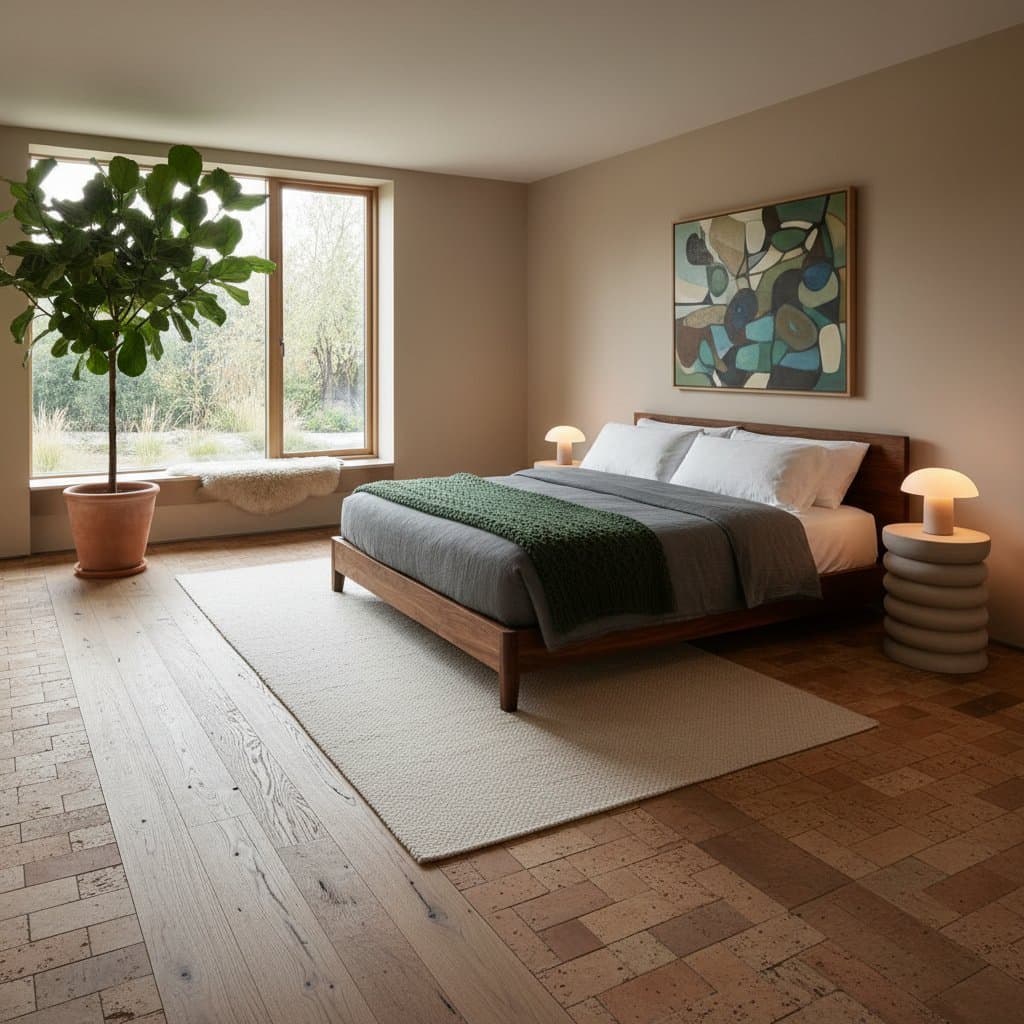
The designers replaced the carpet with wide-plank oak finished in a matte, low-VOC oil that reveals subtle grain variation. Beneath it, a conductive grounding mat was laid directly over a thin cork underlayment, helping discharge built-up static and create a natural electrical connection. The oak’s surface temperature remains close to the ambient air, which keeps the space comfortable through seasonal changes.
Walls were repainted in soft clay beige to echo the tone of the wood. Linen curtains filter light and move gently with the breeze from a nearby window. The effect is quietly immersive. “We wanted the floor to feel like part of the landscape,” said lead designer Ana Ruiz. “When you step out of bed, you sense the material, not the coating.”
Storage was integrated into the wall opposite the window using flush oak panels that match the floor. This reduced visual breaks and made the room feel larger. A wool area rug under the bed adds softness while still allowing plenty of direct contact with the grounded surface around it.
Lighting now comes from three layers: a warm cove light behind the headboard, small reading sconces, and a single linen pendant that centers the room. Each fixture uses low-blue bulbs to protect evening relaxation. The transformation is both physical and emotional. The homeowners describe their mornings as calmer and their sleep deeper.
Why Grounding Matters
Grounding or earthing flooring is based on maintaining a conductive connection between the human body and the earth’s electrical field. While the science varies in interpretation, many designers find that the practice influences how a space feels. Natural materials like wood, stone, and clay regulate humidity and temperature, which supports comfort and rest.
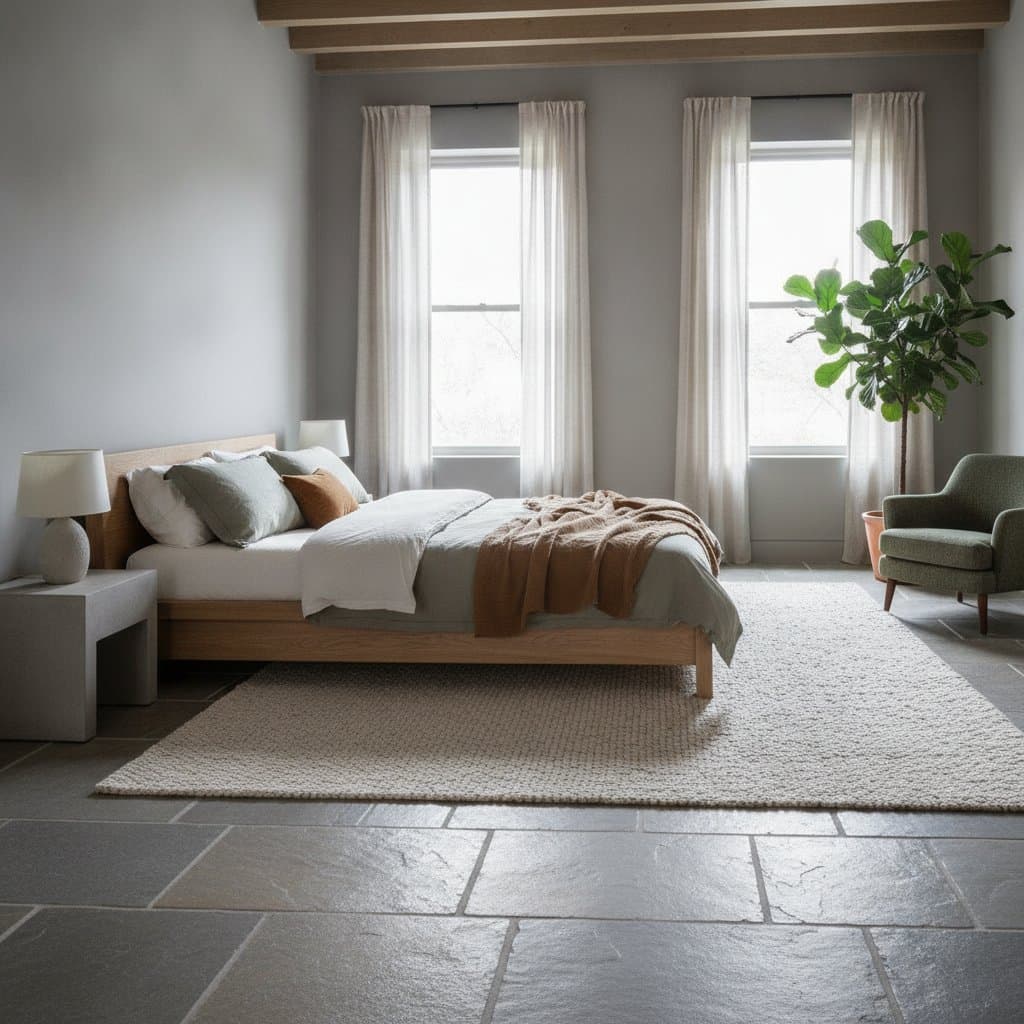
The visual link is equally important. Floors with subtle grain, mineral tone, or texture echo outdoor environments. They absorb light softly, avoiding glare and supporting the body’s circadian rhythm. “When the floor feels real, your whole body relaxes,” said Ruiz.
Smart Installation Moves
- Prioritize breathable materials. Avoid heavy sealants that block the natural exchange of moisture between flooring and subfloor.
- Use natural underlayment. Cork, natural rubber, or felt pads cushion impact without trapping condensation.
- Integrate grounding elements early. For those adding conductive mats, coordinate with an electrician before flooring installation.
- Maintain continuity. Extending the same grounded surface into adjoining spaces can enhance flow and reduce visual noise.
- Finish with texture. A matte or brushed surface encourages gentle light reflection, ideal for a restful bedroom atmosphere.
Living with Your Design
Grounding floors bring daily awareness to small rituals like waking or winding down. The softness of real wood, the muted color palette, and the gentle balance of light create a rhythm that supports well-being.
This approach does not require a full remodel. Even small steps, such as switching to earthen paint or adding a wool rug over natural flooring, can restore a sense of calm.
When the floor beneath you feels steady and alive, the entire room follows. Grounded design begins with what you touch first each day, and its quiet influence can shape how you rest, move, and think inside your home.