Grounding Mats: Elevate Bedroom Wellness Naturally
Modern bedrooms often prioritize comfort and aesthetics, yet many overlook the potential of connecting to the Earth's natural electrical field. Grounding mats, sometimes called earthing mats, provide this connection through conductive materials that mimic barefoot contact with the ground. Users frequently report improved relaxation, better sleep quality, and a subtle sense of balance from this practice.
This article details the mechanics of grounding mats, their rising popularity in wellness design, and practical steps for incorporating them into your bedroom. Emphasis falls on achieving seamless integration that prioritizes comfort, safety, and visual harmony.
Why Bedrooms Benefit Most from Grounding
Bedrooms serve as primary spaces for restoration, where the body undergoes repair during sleep. Grounding in this environment may help stabilize circadian rhythms and alleviate accumulated daily tension. Extended contact over several hours each night amplifies these effects, making the bedroom an ideal location for grounding mats.
Position these mats under fitted sheets or at the bed's foot to ensure skin contact without altering bedding layers. Options include compact mats for feet or calves, or larger covers that span the entire mattress for uniform grounding.
Interior designer Mark Jensen notes, “The goal is to integrate the mat so seamlessly that it becomes part of the bedroom foundation, not an add-on. When done right, it feels natural, not clinical.”
Integrating Grounding Mats into Bedroom Design
1. Select Placement Aligned with Sleep Habits
Side sleepers benefit from mats positioned under the torso or shoulders to maintain contact throughout the night. Back sleepers find central placement under the sheet most effective for consistent exposure. For those who read before bed, a compact mat at the foot provides grounding during this pre-sleep activity.
2. Coordinate Materials with Bedding Choices
Available in neutral tones such as gray, sand, or off-white, grounding mats complement linen and cotton ensembles. Certain models feature a matte finish akin to leather, while others offer a soft, woven texture. Layer with breathable top sheets to preserve both comfort and conductivity.
3. Ensure Safety and Optimal Conductivity
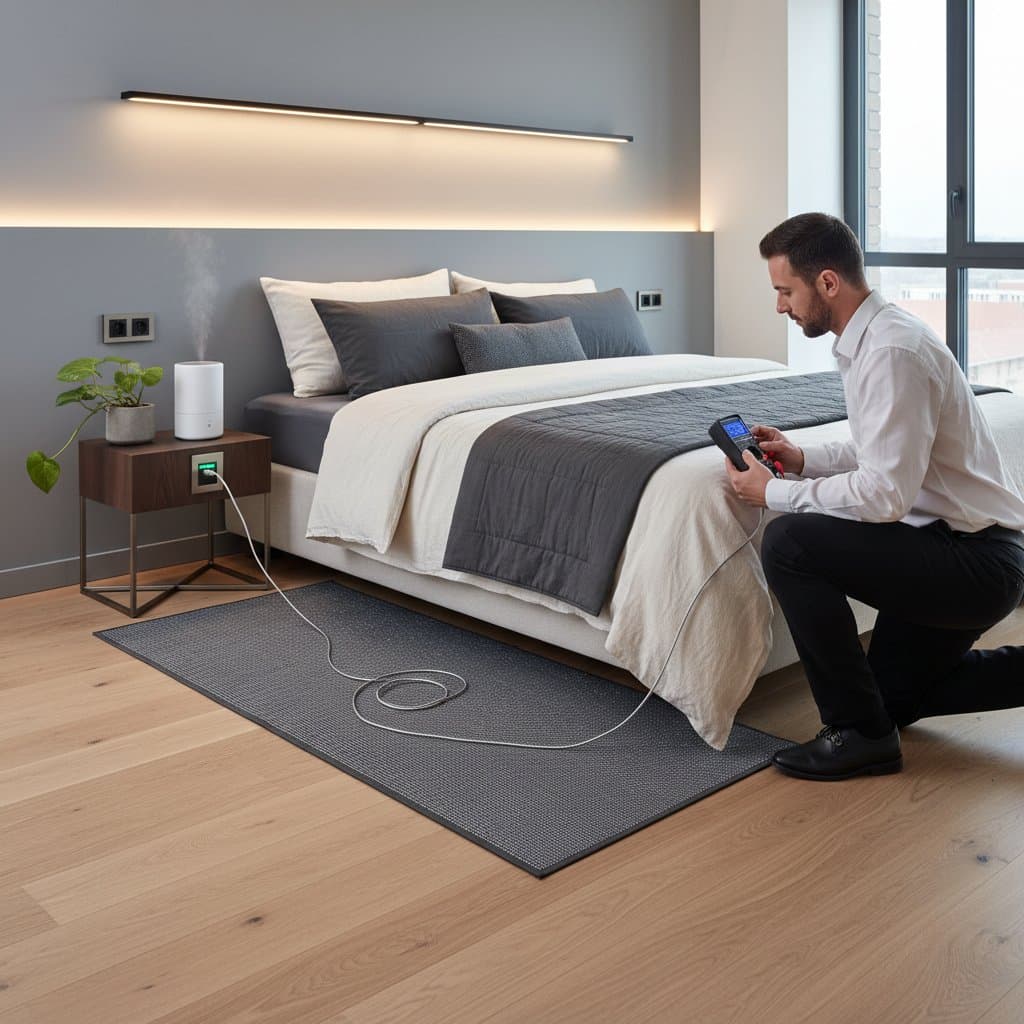
Attach the grounding cord solely to a verified grounded outlet; employ an outlet tester from hardware suppliers if needed. Steer clear of adapters or extension cords to avoid risks. In properties lacking indoor grounding, install a dedicated outdoor rod accessible via window or wall for dependable performance.
4. Maintain Subtle Integration
To preserve design flow, tuck mat edges neatly under the mattress or position smaller versions as bedside footpads. Designers sometimes layer them beneath seagrass rugs, blending natural visuals with functional conductivity.
Enhancing with Complementary Wellness Elements
Grounding mats yield optimal results within a supportive bedroom ecosystem. Select elements that echo natural principles to amplify calm and renewal.
- Flooring Options: Opt for natural wood, cork, or bamboo to introduce warmth and a grounded visual base.
- Lighting Strategies: Employ dimmable bedside lamps and soft wall fixtures to ease the transition to sleep.
- Air Quality Measures: Incorporate a low-noise air purifier or ventilate with an open window on mild evenings to foster outdoor sensory ties.
- Color Selections: Choose earth-inspired hues like clay, sand, and stone gray to visually reinforce equilibrium.
Wellness designer Amira Lee observes, “We design bedrooms as ecosystems. The grounding mat is one layer, but the rest of the materials, light, and air should all support the same sense of balance.”
Tracking Progress and Realistic Expectations
Many individuals notice enhanced sleep depth and less restlessness within a few nights of consistent use. Others experience milder shifts, such as increased calm during evening preparations. Outcomes vary based on personal physiology, health status, and adherence.
Adopt grounding mats within a broader routine that includes fixed sleep times, minimized screen time, and a quality mattress. This approach positions the mat as an enhancer of established habits rather than a standalone solution.
Practical Care and Storage Tips
Before laundering or changing bedding, always detach the grounding cord. Roll the mat gently and store it flat or vertically to avoid creases that could impair conductivity.
In pet-friendly homes, select mats with smooth, cleanable surfaces and manage pet nails to safeguard the material. When using under fitted sheets, favor natural fiber options to sustain airflow and electrical transfer.
Building a Restorative Bedroom Routine
Incorporating grounding mats shifts the focus from mere functionality to environmental harmony with natural cycles. Combine conductive elements with gentle illumination and permeable textiles to craft a rejuvenating space.
Effective setups remain understated, preserving the bed's familiar appearance and feel while embedding the grounding benefit into daily practice. This method transforms the bedroom into a true haven, echoing the earth's inherent stability.