Fifth Wall Design: The Ceiling Becomes the Room's Next Statement
You have chosen the sofa, hung the art, and found a paint color that makes the walls feel just right. Then you look up and notice the blank ceiling, a broad, quiet surface that could be doing far more for the room. Fifth wall design turns that overlooked plane into a defining part of your home, adding color, depth, and personality without claiming a single inch of floor space.
A thoughtful ceiling can make a room feel taller, softer, more intimate, or wonderfully distinctive. It can also expose flaws or make a space feel crowded if the color and finish are poorly chosen. The opportunity lies in treating the ceiling as part of the full design, rather than an afterthought, and choosing an approach that suits your home, light, and budget.
What Fifth Wall Design Means
The familiar four walls frame a room at eye level. The ceiling, often called the fifth wall, completes that visual envelope. For years, many homes defaulted to flat white overhead. That remains a practical choice, especially in rooms with low ceilings or limited daylight, but it is only one option.
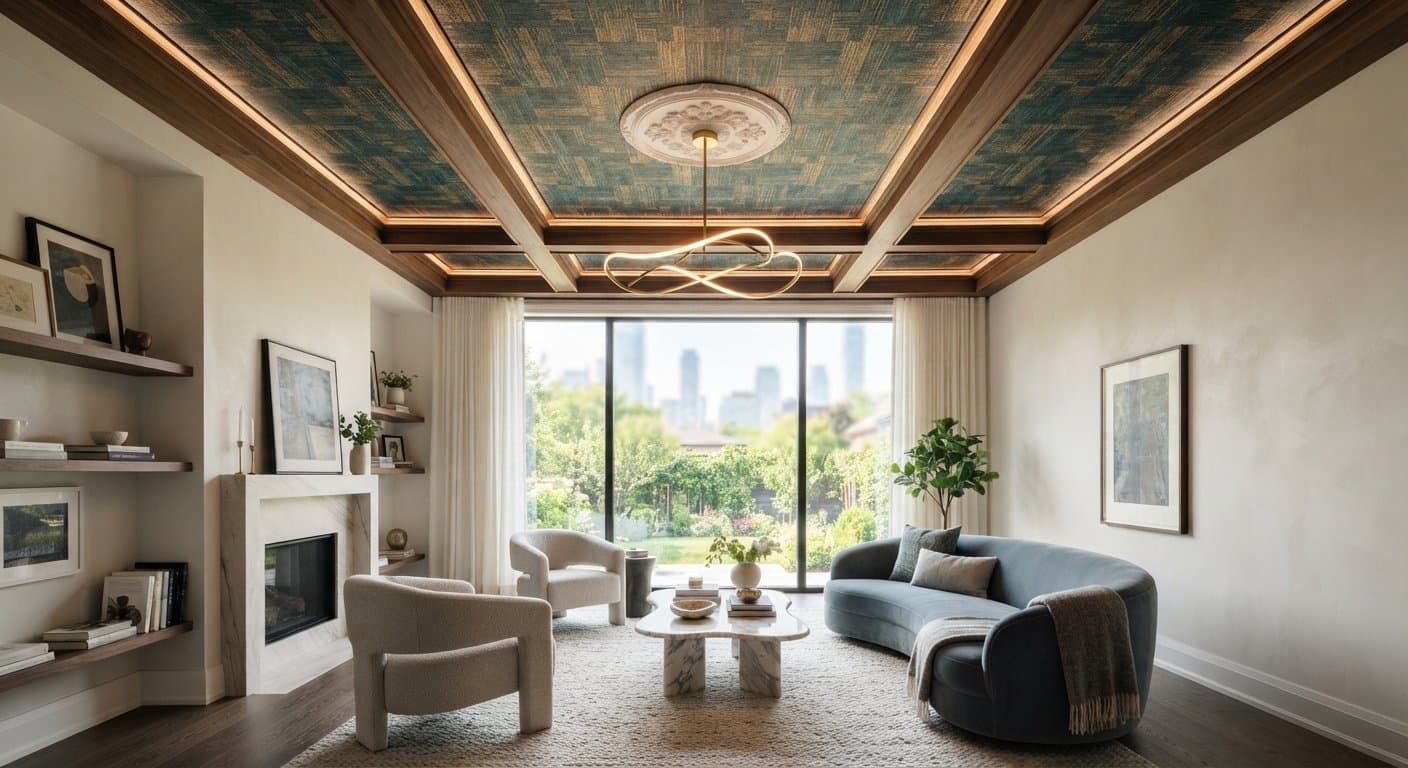
Fifth wall design includes painted ceilings, subtle color shifts, patterns, wallpaper, decorative beams, and carefully planned lighting. The appeal lies in how a relatively small design decision can change the room's mood. A pale blue ceiling may make a bedroom feel airy, while a deep green ceiling can bring a dining room the richness of a tucked-away garden pavilion.
It is not just about adding color. It is about shaping how the room feels when you enter, gather, relax, or look up. The best choices connect naturally with the walls, furnishings, and architecture.
Choose a Ceiling Treatment That Fits Your Room
Before opening a paint can, take a moment to notice what the room already offers. Look at ceiling height, natural light, existing trim, and where your eye travels. A ceiling statement can be bold, but it should feel intentional.
Painted ceilings
Paint is usually the most approachable way to transform your ceiling into a finished design feature. For a gentle effect, choose a color that is a few shades lighter than the walls. This creates continuity while giving the room a softly layered feel.
For more contrast, carry a wall color overhead or choose a complementary shade. A warm clay ceiling can make a neutral living room feel sun-drenched, while muted sage overhead may bring calm to a bedroom. If you are considering a dark shade, test it on a large sample and check it in morning and evening light. A deep color can feel enveloping in a room with good lighting, yet heavy in a small, dim space.
Wallpaper and painted patterns
Wallpaper can add intricate detail, especially in a powder room, entry, or small bedroom. A pattern overhead draws the eye upward and creates a jewel-box effect. Choose a paper suited to the room's moisture level, and make sure the ceiling is smooth, clean, and sound before installation.
Painted stripes, simple borders, and geometric designs offer another route. A subtle tone-on-tone pattern can bring texture without competing with artwork. More elaborate designs call for careful measuring and steady application, so factor in labor if you want crisp, consistent lines.
Beams, trim, and texture
Decorative beams and ceiling trim can highlight the home's character or create a stronger sense of structure. They work best when proportions suit the room. Oversized beams may overwhelm a low ceiling, while slim trim can add definition without making the space feel busy.
Textured finishes also deserve a close look before you commit. Some older ceiling coatings may contain hazardous materials, so do not scrape, sand, or drill into an unknown surface. If you suspect a material could be unsafe, arrange professional testing before renovation begins.
A Practical Plan for Painted Ceilings
Whether you are dreaming of a soft blue nursery or a dramatic dining room, the preparation matters as much as the color. Overhead painting takes patience, and small surface issues can become more visible once the light catches them.
- Inspect the surface. Look for stains, cracks, peeling paint, or signs of a leak. Fix the source of moisture before covering a mark, or it may return through the new finish.
- Test your color. Apply samples in more than one area. Observe them in natural and artificial light, and compare them with the walls, floor, and larger furnishings.
- Prepare the room. Move furniture when possible, cover what stays, and protect the floor. Use a stable ladder or properly set work platform, and ask another adult to help with setup if needed.
- Choose the right finish. Flat paint can help disguise minor imperfections. A washable finish may be easier to maintain in a kitchen or bathroom, where steam and cooking residue collect.
- Work methodically. Use a quality angled brush along edges, then roll the main area in manageable sections. Follow the product directions for drying and recoating.
A ceiling is not an ideal surface for rushing. If your room has a vaulted shape, skylights, intricate trim, or extensive repairs, a professional painter can save time and help create a clean finish.
Color, Light, and Room Proportion
Ceiling color responds to light differently from wall color. Daylight may shift as it enters from windows, while recessed fixtures and pendants create pools of illumination after dark. A sample that looks gentle in the store can read surprisingly strong overhead.
For a small room, a pale ceiling can keep the space open, though white is not the only airy choice. Cream, misty blue, and very light green can add warmth without closing in the room. In a tall room, a deeper ceiling color can make the space feel more intimate and balanced.
Consider how the ceiling meets the walls. Painting the upper portion of the wall in the same color can soften a sharp boundary and make a room feel enveloping. A narrow strip of wall color left at the ceiling can preserve definition. There is no universal rule, so compare samples and consider the architectural lines you want to emphasize.
Room-Specific Ceiling Ideas
Get ready to think of your ceiling as part of the room's palette, not a separate surface. A few grounded choices can help you find the right level of drama.
For a calm bedroom, try a muted blue or warm blush with understated bedding and soft bedside lighting. For a welcoming dining room, consider a rich, low-sheen green or terracotta, balanced with lighter walls and warm wood. For a compact powder room, explore a small-scale wallpaper or a saturated color that makes the room feel intentionally intimate.
For an open-plan home, repeat one ceiling color in a limited area, such as above a dining zone, to define the space without building a divider. For a rental or cautious first step, use removable wallpaper only if the surface and product instructions support it, or test a small painted section with permission from the property owner.
These are starting points, not fixed recipes. A ceiling should support the way you live, whether you are creating a restful sanctuary or an energetic place for conversation.
Budget, Safety, and Project Timing
The cost depends on the room's size, ceiling condition, access, and finish. A straightforward painted ceiling is generally the most affordable option, especially if the surface is in good shape and you handle basic preparation. Repairs, high ceilings, elaborate trim, wallpaper, and complex patterns increase labor and material costs. Local prices vary, so request itemized estimates that separate preparation, repairs, materials, and application.
A do-it-yourself project may take a weekend for a modest, uncomplicated room, but drying time and surface repairs can extend the schedule. Professional work may require time for an on-site assessment, preparation, painting, and ventilation. Ask how the crew will protect floors and furniture, manage dust, and keep the work area safe.
Most interior ceiling painting does not require a building permit, but structural changes, electrical work, or major renovations may be subject to local rules. If a new ceiling treatment involves wiring or fixture relocation, hire a licensed electrician where required. For historic homes, shared buildings, or rental properties, check relevant approval requirements before work begins.
Ceiling work also calls for practical safety habits. Keep children and pets away from ladders, maintain clear access, and do not overreach while painting. If you feel unsteady, the ceiling is unusually high, or the surface needs extensive repair, bringing in a qualified professional is a sensible investment.
Make the Fifth Wall Feel Like Yours
A ceiling statement does not have to be loud to transform a room. A barely-there tint can make white walls feel warmer, and a patterned surface can turn a small room into an oasis with its own character. Start with the mood you want, then test colors and finishes in the actual space before committing.
If you are unsure how to balance preparation, cost, and finish quality, compare several local contractors and ask about similar ceiling projects. A free contractor-matching service can connect you with thoroughly vetted professionals and provide support as you consider your options. Post your project for free, review the available matches, and discuss your goals before work begins.
A well-planned ceiling brings the room together from the top down. Whether you choose a quiet wash of color or a confident pattern, the result can elevate the everyday spaces you already love and give you a fresh reason to look up.