Transform Your Living Room with Artistic Acoustic Panels
Consider the frustration of increasing the television volume only to hear sound rebounding from every surface. Dialogue becomes indistinct, bass lacks clarity, and the space amplifies noise unexpectedly. Later, during a simple conversation, words reverberate as if in an empty hallway. This persistent issue accumulates like an unrelenting minor irritation. Fortunately, solutions exist that address both functionality and aesthetics. Artistic acoustic panels serve as essential elements for enhancing comfort, tranquility, and visual appeal in contemporary living rooms.
These panels transcend the outdated image of cumbersome, neutral tiles from commercial settings. Modern versions function as decorative accents that reshape auditory and visual experiences. They feature diverse textures, striking patterns, and vibrant hues that contribute to a thoughtfully designed environment. The outcome is a living room that invites relaxation through both appearance and acoustics, supporting clear dialogue, enjoyable music, and serene daily activities.
Explore how these innovative panels can enhance your living room in terms of style and acoustic balance.
Essential Techniques for Acoustic Harmony
The following approaches introduce targeted improvements that foster both calm and distinctive character. Each method integrates practical sound control with refined visual elements.
1. Fabric-Wrapped Panels Resembling Artwork
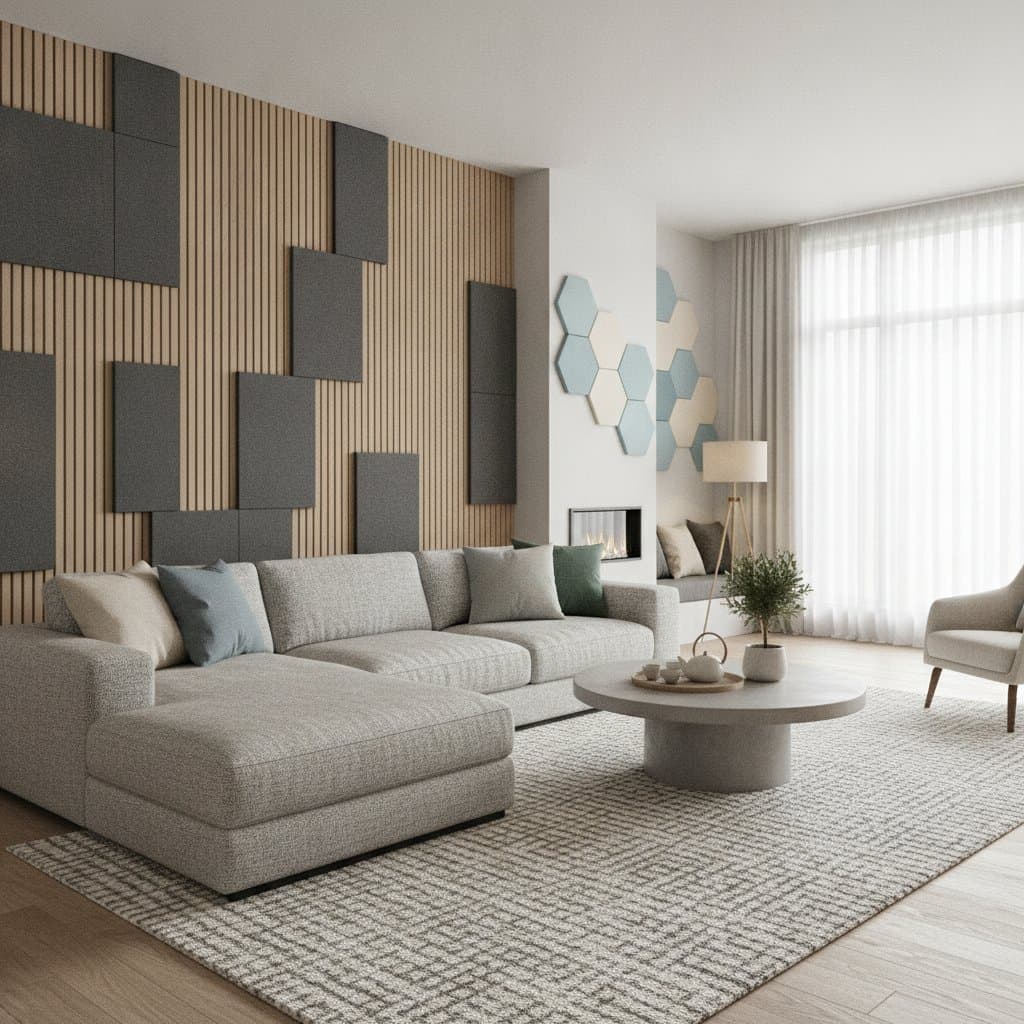
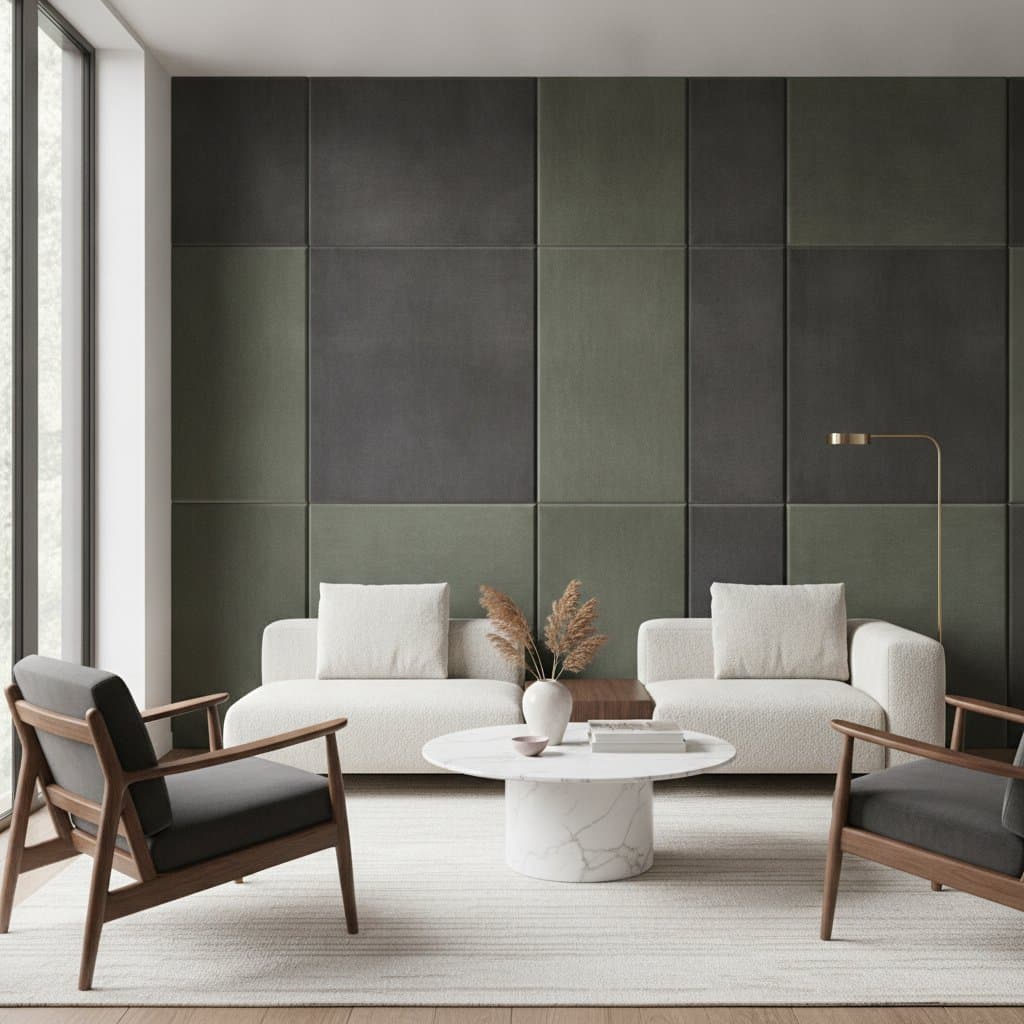
Opt for panels that resemble framed canvases rather than utilitarian absorbers. High-quality options feature coverings in materials such as linen or wool blends. Select shades that harmonize with existing furnishings like sofas or area rugs, or introduce a vivid hue for emphasis. Arrange them in formations such as grids or asymmetrical layouts to evoke a gallery installation, simultaneously mitigating room reverberation.
Soft textiles effectively capture mid- and high-frequency noises responsible for harsh or piercing tones. The inherent texture provides visual depth and auditory softness. Envision settling in for a film and noting how spoken lines emerge with precision, free from emptiness. Such panels deliver understated elegance through their dual contributions.
2. Wood Slat Designs for Natural Warmth
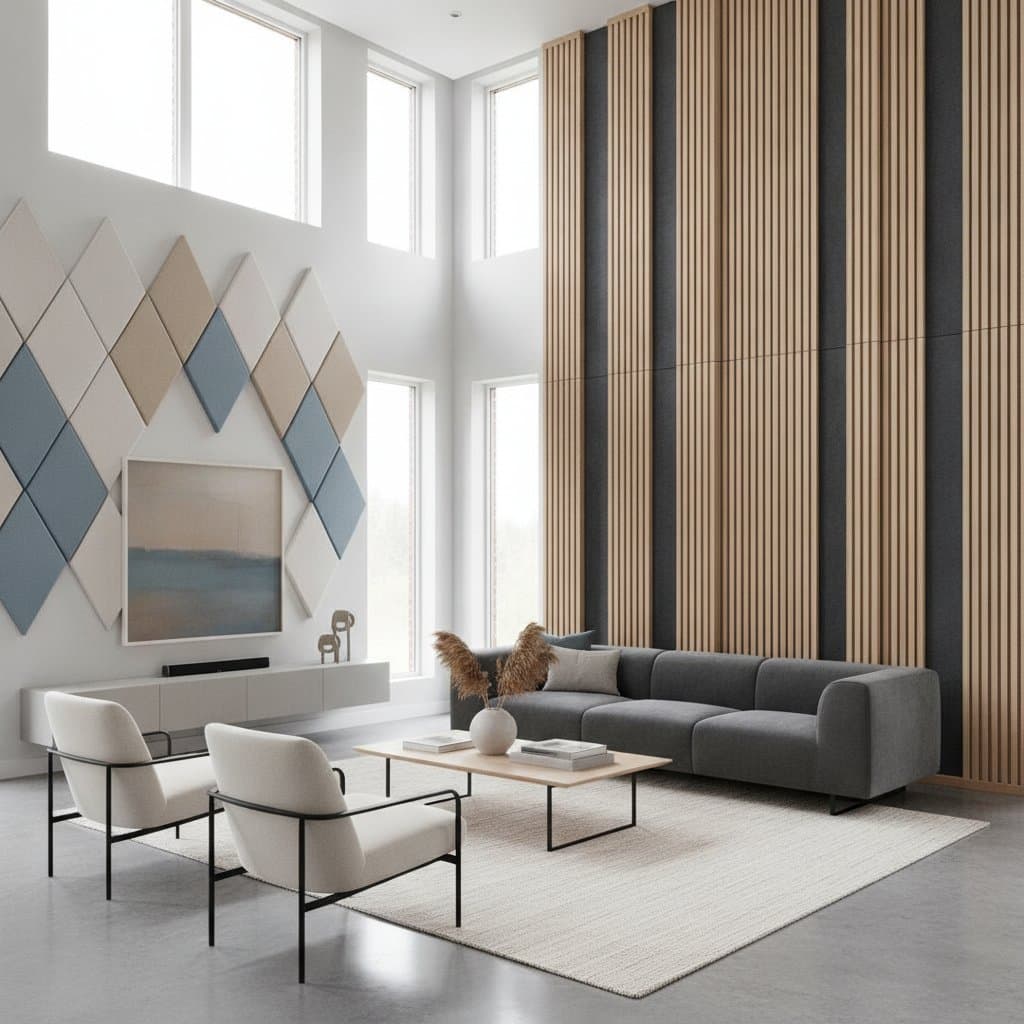
Incorporate slatted wooden panels that blend rustic charm with modern precision. These constructions use sustainably sourced woods in finishes from matte oak to polished walnut, often arranged in vertical or horizontal arrays. Position them behind media consoles or along feature walls to create subtle depth and shadow play, while absorbing unwanted reflections.
Wooden elements excel at diffusing lower frequencies that contribute to boomy or muddled audio. Their natural grain patterns add organic texture, complementing minimalist or eclectic interiors. This choice ensures the room retains a grounded, inviting atmosphere, where music flows smoothly without distortion.
3. Printed or Custom-Designed Panels
Individuals seeking prominent expressions will appreciate panels customized with printed motifs. Options include scenic vistas, abstract interpretations, or personalized images transferred onto absorptive substrates. Ensure selections align seamlessly with surrounding elements to avoid visual discord.
This customization transforms necessity into individualized expression. It sparks discussions among visitors, who may admire the visuals before appreciating the improved sonic clarity. The panels operate discreetly, fostering a peaceful ambiance that enhances social interactions.
4. Illuminated Panels for Ambient Glow
For added versatility, consider panels embedded with LED lighting. These can display soft, adjustable illumination in colors matching daily moods or events. Mount them as backlit wall features or freestanding dividers, where the glow highlights artwork or architectural details without overwhelming the space.
Integrated lighting not only controls echoes but also elevates evening usability. The diffusion of sound pairs with diffused light to create layered depth, reducing glare and promoting relaxation. Such panels prove ideal for multifunctional rooms, balancing utility with atmospheric enhancement.
5. Ceiling Panels for Subtle Integration
In spaces constrained by wall availability, direct attention upward. Acoustic ceiling treatments manifest as sculpted forms resembling clouds or fluid waves, or as seamless integrations. They prove particularly beneficial in high-ceilinged areas prone to prolonged sound travel.
Overhead reflections disrupt clarity as much as lateral ones. Addressing the ceiling refines vocal exchanges and eliminates cavernous echoes. This intervention registers intuitively with occupants, contributing to an overall sense of equilibrium without drawing overt attention.
Implementation Strategies: From Incremental to Comprehensive
Initial efforts require no extensive commitment. A modest placement of panels yields perceptible gains. Target prominent echo sources, such as zones adjacent to seating or entertainment systems. Upon observing enhancements, extend coverage progressively. Most panels facilitate straightforward mounting and repositioning, accommodating evolving preferences.
Comprehensive overhauls might embed panels within custom cabinetry or storage units. A inset alcove clad in absorptive material functions dually as an aesthetic highlight and noise reducer. Align hues with textiles like window treatments or seating to achieve unified cohesion, projecting deliberate sophistication.
Realizing Acoustic and Aesthetic Benefits
Auditory conditions shape emotional responses within environments, often beyond immediate perception. Excessive reverberation induces disorder or fatigue, while over-dampening results in stagnation. Optimal balance yields natural vocal tones and subdued ambient sounds. Artistic acoustic panels facilitate this harmony, while honoring unique stylistic choices.
Daily routines benefit indirectly as well. Television adjustments become less contentious, gatherings proceed with effortless communication, and quiet periods gain restorative quality. These elements weave into the fabric of home life, subtly enriching interactions and well-being.
Practical Steps for Integration
Assess Your Space Audibly
Prior to selecting materials, evaluate the room's sonic profile. Produce claps, speak ordinarily, and test audio playback. Identify areas of prolongation or deflection. Acoustic dynamics vary by layout, including furnishings, openings, and vertical dimensions; rely on direct sensory input for accuracy.
Layer Diverse Elements
Similar to composing layered fabrics in design, combine treatments for efficacy. Pair panels with floor coverings, soft window dressings, and cushioned pieces. This ensemble forms a unified sonic barrier, distributing responsibilities evenly. Aim for equilibrium in appearance and performance, steering clear of overemphasis on any single component.
Select Designs Aligned with Personal Taste
Emphasize motifs that resonate personally when pursuing decorative options. Functionality underpins the choice, yet daily visibility demands appeal. Geometric restraint or bold abstractions alike should reflect individual essence, ensuring enduring satisfaction.
Simplify Upkeep
Maintenance remains straightforward with these panels. Dust lightly using a soft brush or microfiber cloth weekly. For fabric surfaces, vacuum gently on low suction to preserve texture. Avoid harsh chemicals; spot-clean with mild soap solutions if needed. Wooden or printed variants require only periodic wiping with damp cloths. This minimal routine sustains both performance and appearance over time, integrating seamlessly into household care.