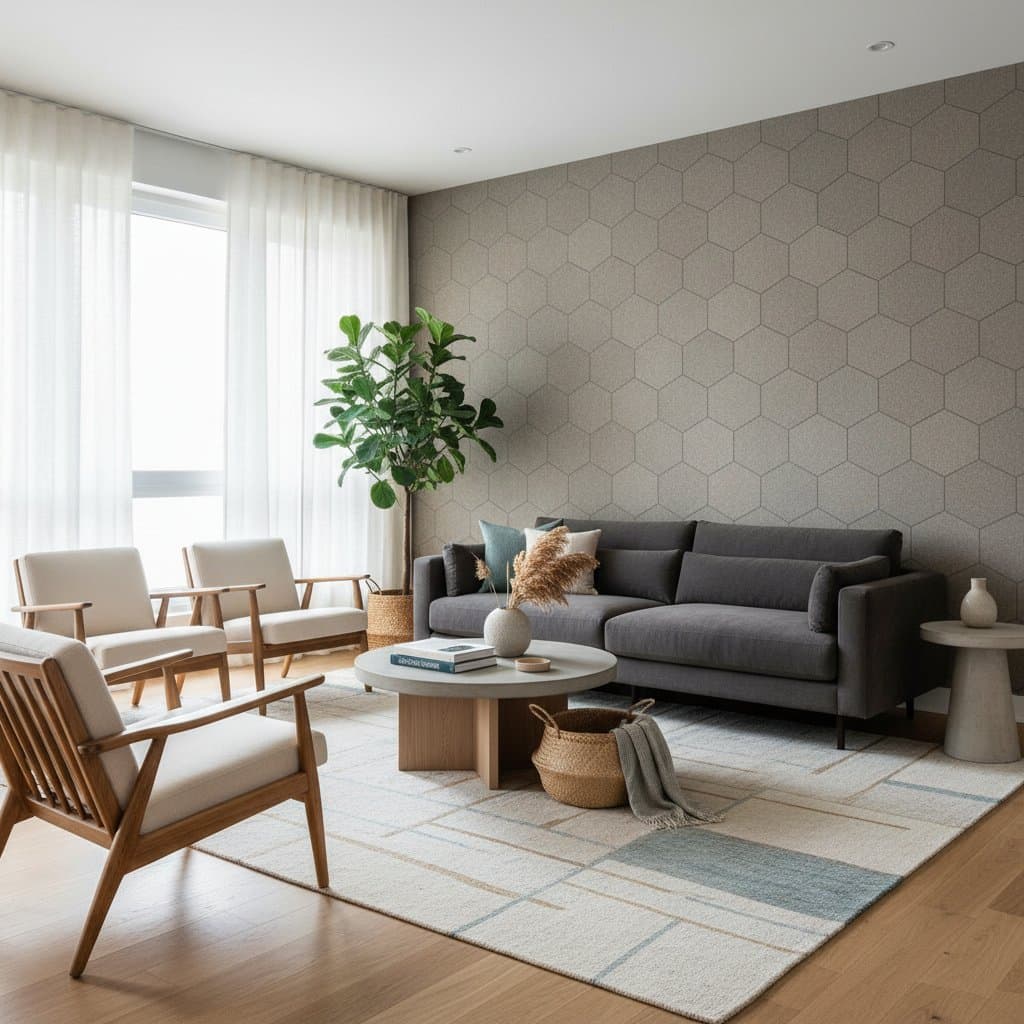
Why Acoustic Panels Redefine Living Room Design and Acoustics
Consider the end of a demanding day, when settling into the living room reveals persistent echoes from conversations, television audio reflecting off walls, and sounds from adjacent spaces intruding. Intended as a sanctuary, the living room often amplifies noise due to hard surfaces and open layouts. Acoustic panels address this issue effectively, evolving from utilitarian tools in professional settings to elegant elements that enhance both sound quality and visual appeal.
These panels now function as decorative features, such as textured wall hangings or geometric arrangements that spark interest. They absorb unwanted reverberations while integrating seamlessly into interior schemes. This combination allows homeowners to achieve tranquility without sacrificing style.
Identifying Noise Challenges in Living Rooms
Living rooms frequently suffer from excessive reverberation because of materials like hardwood floors, expansive glass surfaces, and minimal furnishings. Sound waves reflect repeatedly, distorting speech and muddying media playback. The issue extends beyond loudness to include reduced intelligibility, where dialogue overlaps and ambient sounds persist.
Traditional remedies, such as area rugs or heavy drapes, mitigate some reflections but fail to target all frequencies comprehensively. Acoustic panels excel at absorbing mid-range and high-frequency sounds, which minimizes echoes and clarifies audio. The outcome resembles decluttering a space visually, yet it applies to auditory perception.
Integrating Acoustics with Aesthetic Appeal
Contemporary acoustic panels serve as intentional design components, crafted from inviting materials and arranged in captivating configurations. For instance, clusters of hexagonal felt pieces evoke organic patterns, while linen-covered sections provide subtle texture adjacent to seating areas. Certain options incorporate into framed displays or three-dimensional structures, blending utility with artistic expression.
Homeowners gain the freedom to align panels with existing palettes, architectural details, or prominent furnishings. Interior experts suggest curating panels akin to gallery installations, experimenting with groupings, intervals, and material contrasts. This approach ensures they contribute to the room's overall harmony rather than appearing as add-ons.
Practical Acoustic Solutions for Enhanced Style
Explore these targeted options to improve both acoustics and aesthetics in living rooms.
-
Fabric-Wrapped Panels
Available in diverse textiles like wool composites or sustainable felts, these panels offer customization through dyeing or patterning to complement surroundings. Position them as expansive wall treatments that soften acoustics and introduce warmth. One homeowner noted that her space "finally stopped shouting at her," highlighting their transformative impact. -
Wood Slat Configurations
Featuring aligned wooden strips over absorptive cores, these systems impart a structured rhythm to walls while controlling reflections. Light-toned oak fosters a serene, minimalist vibe, whereas deeper finishes introduce depth. They ground the room in natural elegance, evoking refined retreats. -
Framed Acoustic Artwork
Designed to mimic conventional prints, these panels accept custom images or stock selections, absorbing sound discreetly within gallery arrangements. They maintain visual cohesion while enhancing auditory comfort. -
Modular Felt Configurations
Ideal for temporary setups, these adhesive-backed tiles allow reconfiguration into abstract designs or vertical accents. They suit dynamic spaces with high ceilings or open plans, providing versatile echo reduction. -
Suspended Ceiling Elements
Addressing overhead reflections, these floating absorbers suit lofty interiors or multi-level areas. They foster a cozier atmosphere without structural alterations, enveloping the space in subtle quietude. -
Integrated Furniture Treatments
Embed absorptive linings within cabinetry, doors, or media consoles to streamline appearances and boost performance. Such integrations deliver perceptible serenity without overt visibility.
Combining these elements creates a multifaceted strategy, rendering the living room not only attractive but also acoustically balanced.
The Impact of Improved Acoustics
Effective sound management streamlines daily interactions. Discussions proceed without effort, media requires less volume for clarity, and music resonates distinctly. Panels refine the auditory environment, elevating the home's sensory profile.
True relaxation encompasses more than tactile or luminous comforts; it includes sonic harmony. Eliminating persistent echoes or distortions promotes ease, distinguishing clear sounds like laughter from scattered reverberations.
Broader Advantages of Acoustic Enhancements
Balanced acoustics influence mood positively, prompting extended stays and deeper engagement. In multifunctional homes, they separate zones, diminishing distractions from overlapping activities and supporting concentration.
Physiologically, reduced ambient noise alleviates subtle stress, allowing mental and physical reprieve. This understated adjustment yields significant well-being gains.
Customizing Acoustic Installations
Acoustic strategies adapt to individual preferences, from sleek uniformity to eclectic assemblies. Partial wall coverage offers restraint, while comprehensive treatments deliver bold statements. Seasonal updates via interchangeable covers maintain freshness.
Incorporate illumination, such as directional fixtures, to accentuate surfaces and reveal textures. Pair with greenery, upholstered pieces, and organic elements to amplify holistic serenity.
Achieving Subtle Refinement Through Acoustics
Design often prioritizes visible and tangible aspects, yet auditory quality defines sophistication. While details like silent mechanisms receive notice, acoustic panels provide essential, unobtrusive elevation.
A resident likened her updated living room to "a whispering gallery, but in reverse," where sounds integrate softly rather than amplify. This equilibrium of calm and intent underscores the appeal of thoughtful acoustic integration.
Implementation Strategies
- Target Key Zones. Focus on areas prone to reflections, such as those facing windows or adjacent to rigid floors.
- Evaluate Temporarily. Install trial pieces to assess acoustic and visual effects prior to permanent placement.
- Layer Materials. Pair fabric absorbers with wooden elements or floor coverings for comprehensive control.
- Optimize Positioning. Align wall panels at seated ear height, reserving overhead options for elevated bounces.
- Select Enduring Options. Prioritize timeless hues and durable substances over transient styles.
Experiencing the Transformation
Upon installation, the shift becomes evident swiftly. A handclap yields a muted response rather than a resounding echo, enhancing media immersion and conversational flow. Silence acquires depth, free from hollowness.
This evolution fosters prolonged enjoyment of the space, often subconsciously. The room's receptive quality mirrors ideal design principles, nurturing comfort intuitively.
Preserving Acoustic Features
Maintenance remains straightforward. Dust fabric surfaces lightly or use a gentle vacuum attachment. Clean wooden components with a soft, dry cloth, steering clear of abrasives that could impair absorption properties.