Acoustic Panels: Stylish Solutions for Quieter Homes
Many homeowners recognize the frustration of settling in only to notice persistent echoes throughout the room. Hard surfaces reflect sound waves and turn ordinary conversations into indistinct noise. Acoustic panels address this issue by absorbing excess sound while contributing to the visual character of a space.
Modern acoustic treatments function as both practical tools and design elements. They appear in forms that range from fabric covered surfaces to integrated architectural features. Selection and placement determine how effectively they reduce reverberation and support a balanced environment.
Why Balanced Acoustics Matter
Excessive echo creates an unsettled atmosphere that affects daily comfort. A controlled sound environment supports clearer speech, reduced volume levels, and greater relaxation. These qualities contribute to the sense that a room feels complete and intentionally designed.
Acoustic improvements complement other finishing details such as lighting and hardware. They operate quietly yet produce noticeable changes in how occupants experience the space.
Six Practical Approaches to Quieter Interiors
1. Fabric Wrapped Wall Panels
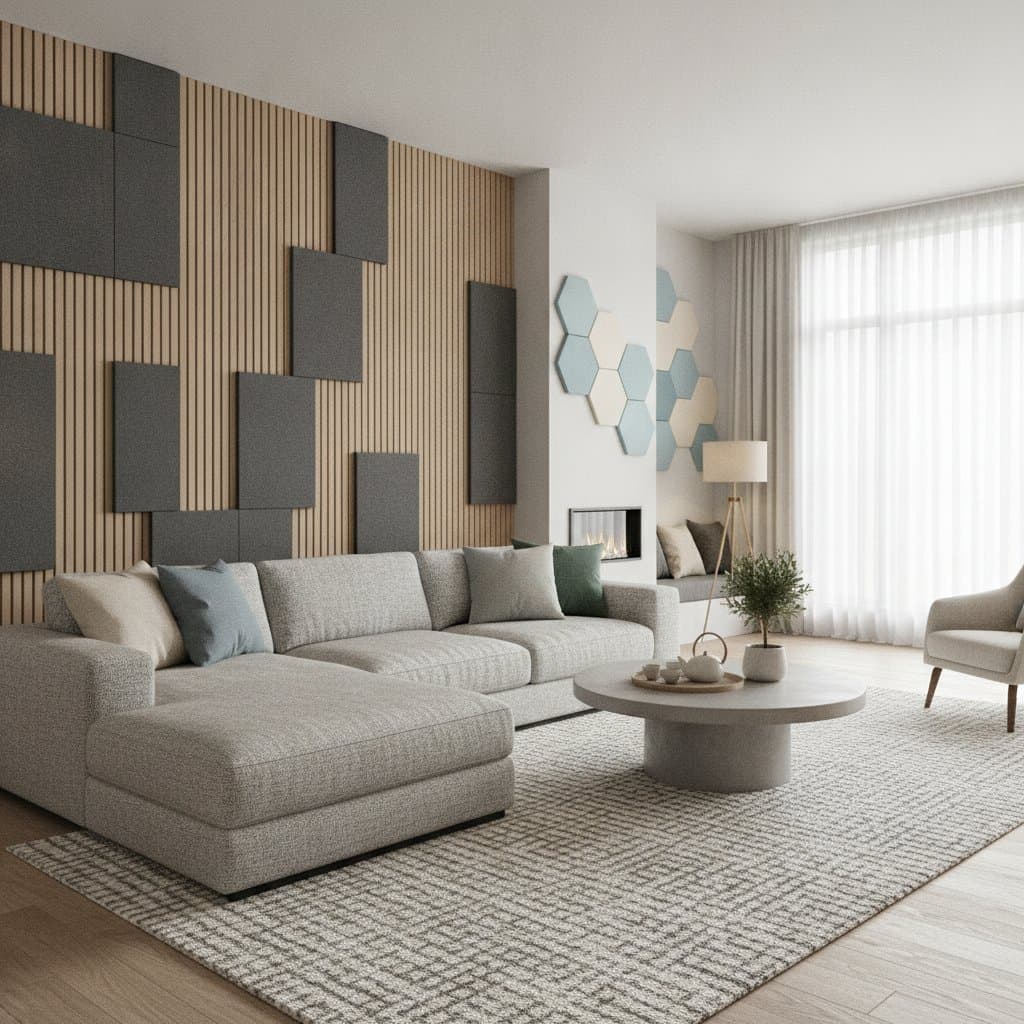
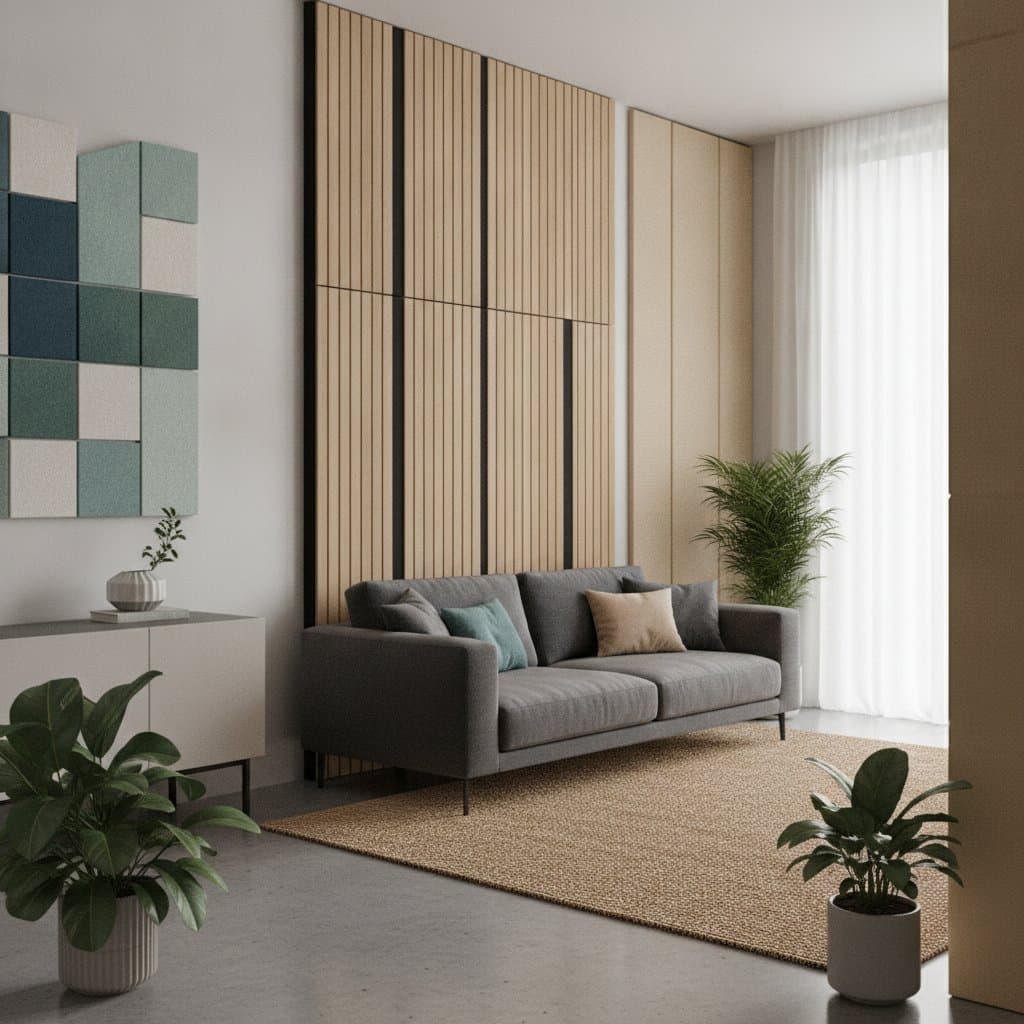
These panels accept a wide range of textiles including linen, felt, and suede. They mount directly to walls and absorb mid to high frequency sounds that distort voices and music. Position them behind seating areas or along corridors to frame key zones.
2. Wood Slat Acoustic Panels
Vertical wood elements installed over an absorptive backing diffuse reflections while adding linear texture. They suit large wall planes or ceiling applications. Placement behind media units or within dining areas creates a refined transition between hard and soft surfaces.
3. Acoustic Ceiling Clouds
Suspended panels intercept sound that reflects from flat overhead planes. They prove especially useful in kitchens and rooms with high ceilings. Circular or rectangular forms coordinate with existing fixtures and help contain ambient noise.
4. Printed Acoustic Art
Custom images applied to sound absorbing fabric allow panels to function as artwork. Upload personal photographs or select abstract designs. Hang them opposite reflective surfaces to distribute absorption evenly across the room.
5. Acoustic Room Dividers
Freestanding or suspended units interrupt sound paths in open floor plans. Many designs incorporate sculptural shapes and saturated colors. They define work zones or reading areas while preserving visual continuity.
6. Felt Wall Tiles
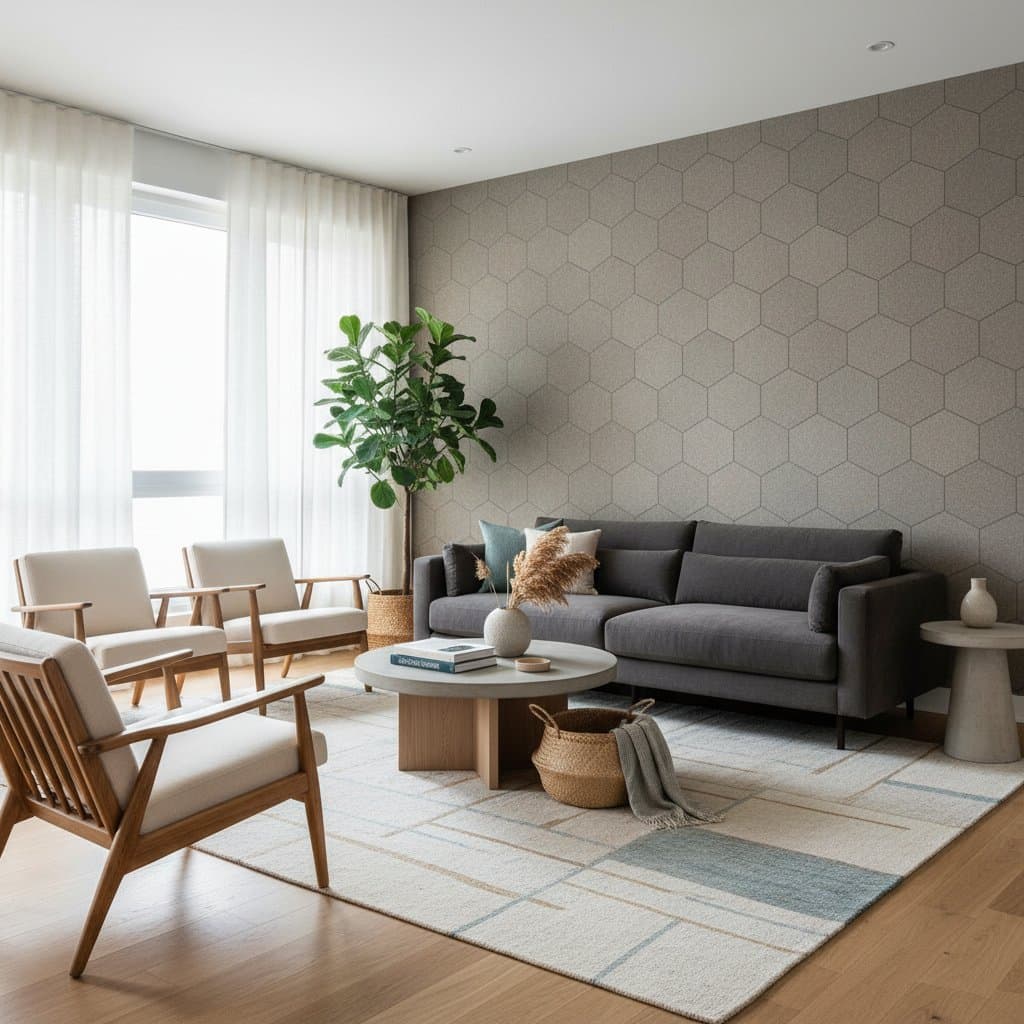
Modular tiles adhere or clip together to form patterns of varying scale. They accommodate incremental installation and suit rental properties. Geometric arrangements add tactile interest and permit targeted treatment of echo prone surfaces.
Budget Considerations and Layering Strategies
Products range from affordable modular tiles to custom architectural systems. Match the scale of the solution to the size of the acoustic challenge. Combine panels with rugs, curtains, and upholstered furnishings to achieve cumulative absorption without structural changes.
Simple clip or adhesive mounting methods allow testing before permanent commitment. Begin with the room that presents the greatest distraction, then expand based on observed results.
Integration with Existing Design Elements
Select finishes that align with current materials and color palettes. Natural wood tones complement Scandinavian interiors, while muted felt integrates with minimalist settings. Printed panels introduce personality in hallways or media rooms.
A single treated wall often shifts overall perception. Further installations follow naturally once the initial improvement becomes evident.
Observable Outcomes After Installation
Residents report improved concentration during remote work and study periods. Bedrooms maintain lower ambient sound levels that support rest. Speech remains intelligible at normal volumes, and overall stress decreases in controlled environments.
Implementation Steps
Stand in the center of the room and clap sharply to detect lingering reflections. Identify primary reflective surfaces and sources of external noise. Apply wall or ceiling treatments for internal echoes and supplement with sealing or heavy textiles for outside sound transmission.
Treat acoustic planning with the same layering approach used for illumination. Once panels are in place, occupants typically lower their speaking volume without conscious effort.