Acoustic Panels: Art That Silences Your Living Room
Imagine settling into your cozy living room after a long day, prepared to unwind. Yet the echo from walls disrupts your peace, making conversations hollow and music harsh. Even the air conditioner hum amplifies in the space. Modern homes with open layouts and hard surfaces often create these echo chambers, but acoustic panels offer a solution as functional art that turns noise into calm.
The Hidden Problem Behind Your Living Room Noise
Open-concept designs, tall ceilings, and minimalist elements create visual appeal but challenge sound control. Hard materials such as wood floors, glass windows, and tile walls reflect sound waves instead of absorbing them. This reflection muddles voices, music, and television audio, leading to a fatiguing environment.
Homeowners often overlook acoustics when planning spaces. Guests may strain to hear during gatherings, or movie dialogue becomes indistinct. Effective acoustic design rivals lighting and furniture in importance; without it, the room lacks true comfort.
The Opportunity to Transform Sound into Style
Acoustic panels absorb excess noise and minimize echo, fostering a restful atmosphere. These elements integrate with decor, evolving from industrial tools to stylish features. Contemporary options include fabrics, colors, and designs that enhance aesthetics while managing sound.
Select panels for a sleek modern vibe or a textured haven. Some serve as wall art with printed patterns or custom images. Others appear as sculptural pieces or fabric coverings resembling premium artwork. Thoughtful selection elevates both sound and visual harmony.
How Acoustic Panels Actually Work
Sound waves reflect off hard surfaces, prolonging echoes in a room. Acoustic panels, with their soft porous materials, capture these waves and convert them to minimal heat. This absorption prevents further reflection, clarifying speech and reducing reverb.
Panels manage internal sound rather than blocking transmission between rooms. For privacy from adjacent spaces, consider wall-integrated soundproofing. In the living room, panels balance audio for serene listening.
Choosing Panels That Match Your Style
Integrate acoustic panels seamlessly to preserve design integrity. Explore these options:
-
Fabric-Wrapped Panels
These feature decorative fabric over frames filled with absorbing cores. Choose colors and textures to align with upholstery and wall shades for cohesion. -
Printed or Artistic Panels
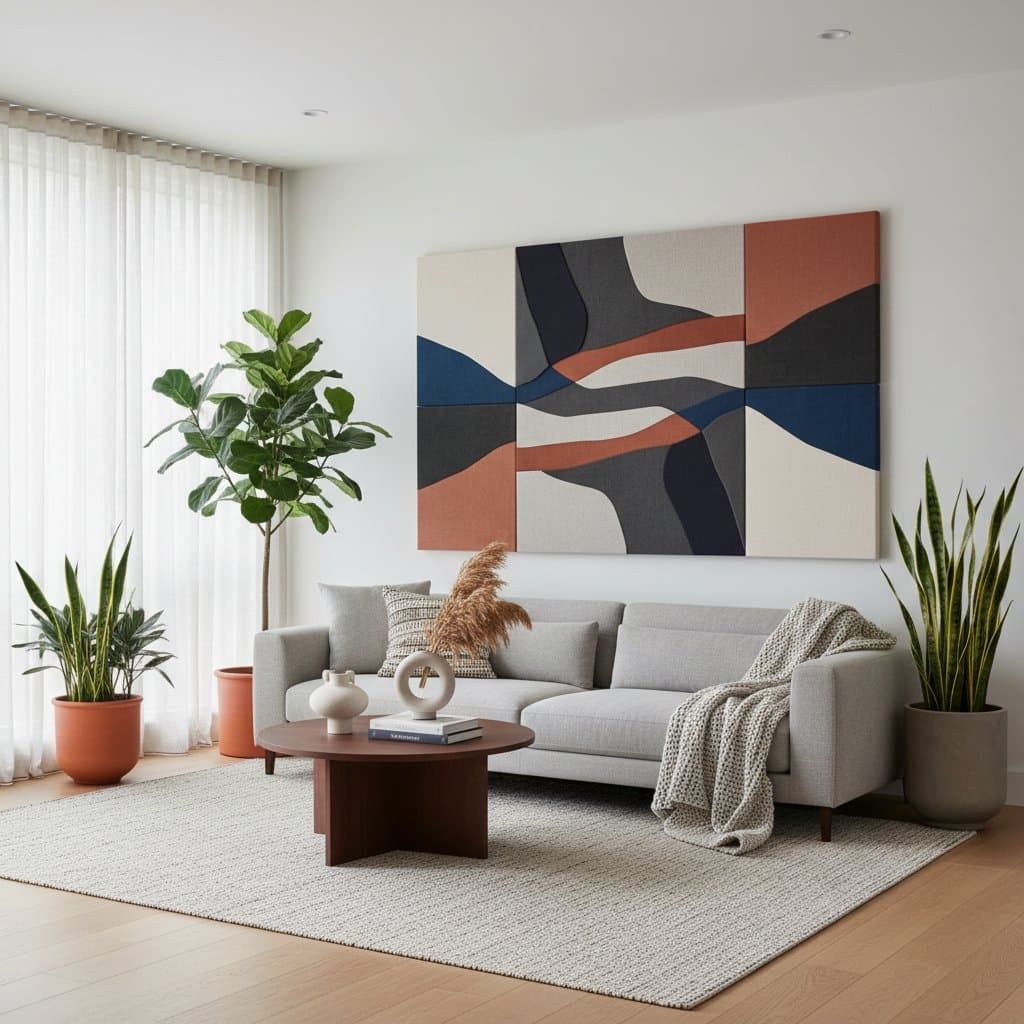
Display artwork or personal photos on panels that mimic canvas. They improve acoustics while showcasing preferred motifs. -
Sculptural or 3D Panels
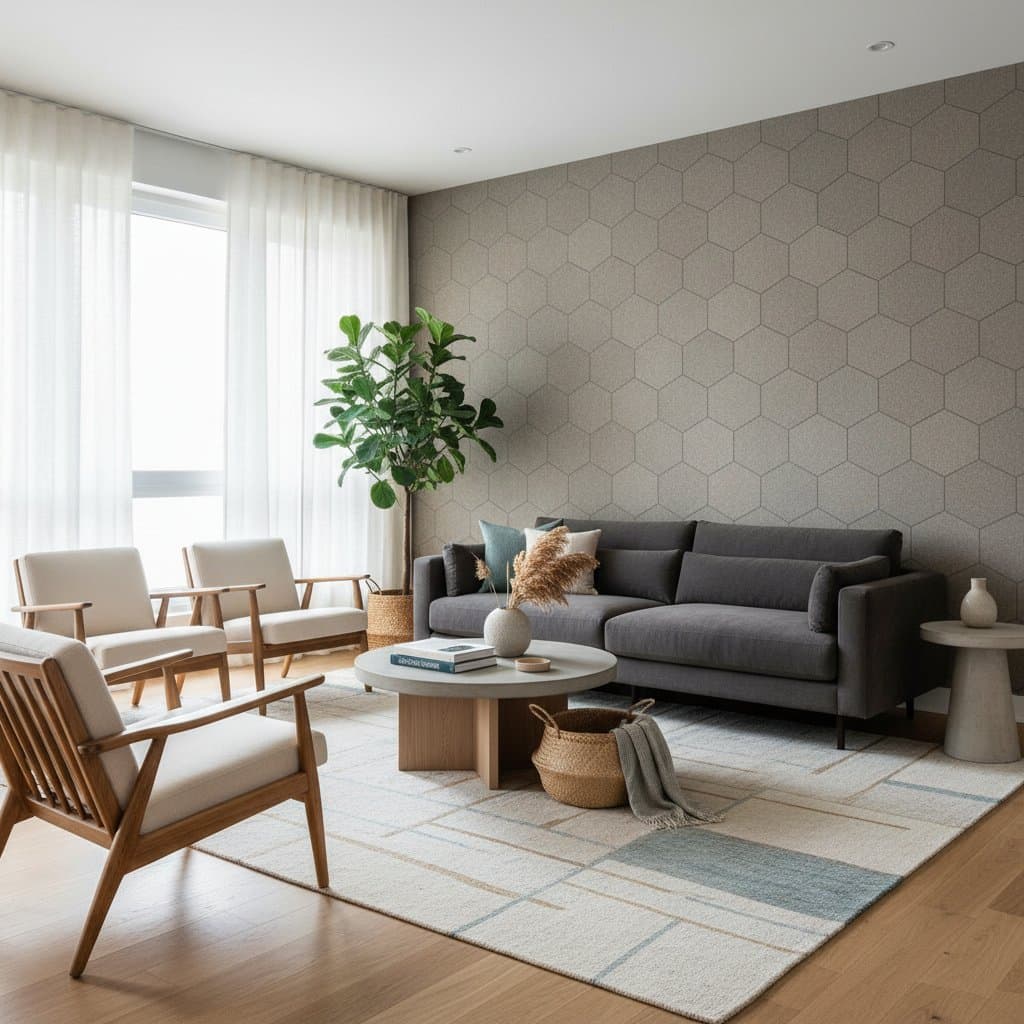
Three-dimensional forms in wood, felt, or foam add depth. Position them as focal points behind seating or media setups. -
Natural and Eco-Friendly Panels
Materials like recycled fabrics, cork, or wool provide warmth and sustainability. They suit environmentally conscious designs. -
Modular Acoustic Tiles
Arrange these in patterns for versatility. Reconfigure as tastes evolve.
Placement Makes the Difference
Effective placement targets primary reflection points. Focus on walls facing speakers or seating to optimize results.
- Position panels behind sofas to diffuse sound from listening areas.
- Install on side walls to even stereo imaging and eliminate flutter.
- Place behind speakers to avoid direct reflections toward occupants.
- Add ceiling panels in high-ceiling rooms for comprehensive control.
Begin with four to six panels in a medium room, then evaluate audio changes. Adjust quantities to achieve equilibrium between appearance and function.
Budget, Installation, and Practical Considerations
Prices range based on materials and customization. Simple fabric panels cost under $50 each, while artistic or wooden variants exceed $200. A standard living room setup might total $300 to $2,000, depending on scale and expertise.
DIY installation uses brackets, adhesives, or Velcro for ease. Professionals ensure precision for larger projects. Verify hardware supports panel weight, and inspect walls in older structures before mounting.
Most installations avoid permits as non-structural changes. Consult experts for integrations with electrical or cabinetry elements.
Bringing Acoustics Into the Broader Design Conversation
Acoustic treatment shapes emotional response in a space. Clear conversations and balanced music enhance usability. Pair panels with dimmable lights, soft rugs, and wood accents for multisensory appeal.
The outcome is a curated environment that engages fully. Sound contributes to relaxation, making the room more than a visual display.
Finding the Right Help
Professional guidance simplifies selection and setup. Use matching services to connect with acoustic specialists. They evaluate your space, suggest tailored panels, and oversee installation for optimal results.
A Living Room That Sounds as Beautiful as It Looks
Installed panels deliver instant clarity in dialogue and softened ambiance. The space invites extended stays, from solo listening to social events. Embrace acoustic panels to refine your haven, blending form and function seamlessly.