Acoustic Panels: Blending Function and Style to Control Living Room Sound
Picture a living room where movie lines bounce endlessly off walls or everyday talks grow louder than necessary. Open floor plans, high ceilings, and smooth surfaces often create these acoustic challenges, turning a stylish space into a noisy one. Modern acoustic panels address this by absorbing excess sound while serving as attractive design features, replacing outdated solutions like heavy drapes.
The Role of Acoustic Treatment in Creating Balanced Living Areas
Sound shapes how a room feels, and too much echo disrupts focus even in well-designed spaces. Absorptive panels reduce reverberation to foster a calmer environment where voices carry clearly without distortion. This treatment sharpens audio from speakers or conversations, making entertainment more enjoyable and interactions more natural. Beyond sound, these panels integrate visually to support overall room harmony.
Versatile Acoustic Panel Choices for Home Interiors
Today's panels go beyond basic soundproofing to offer options that match various decor styles. Select from materials and shapes designed for living rooms, ensuring both noise reduction and visual interest. Below are key types with practical integration ideas.
Fabric-Wrapped Panels
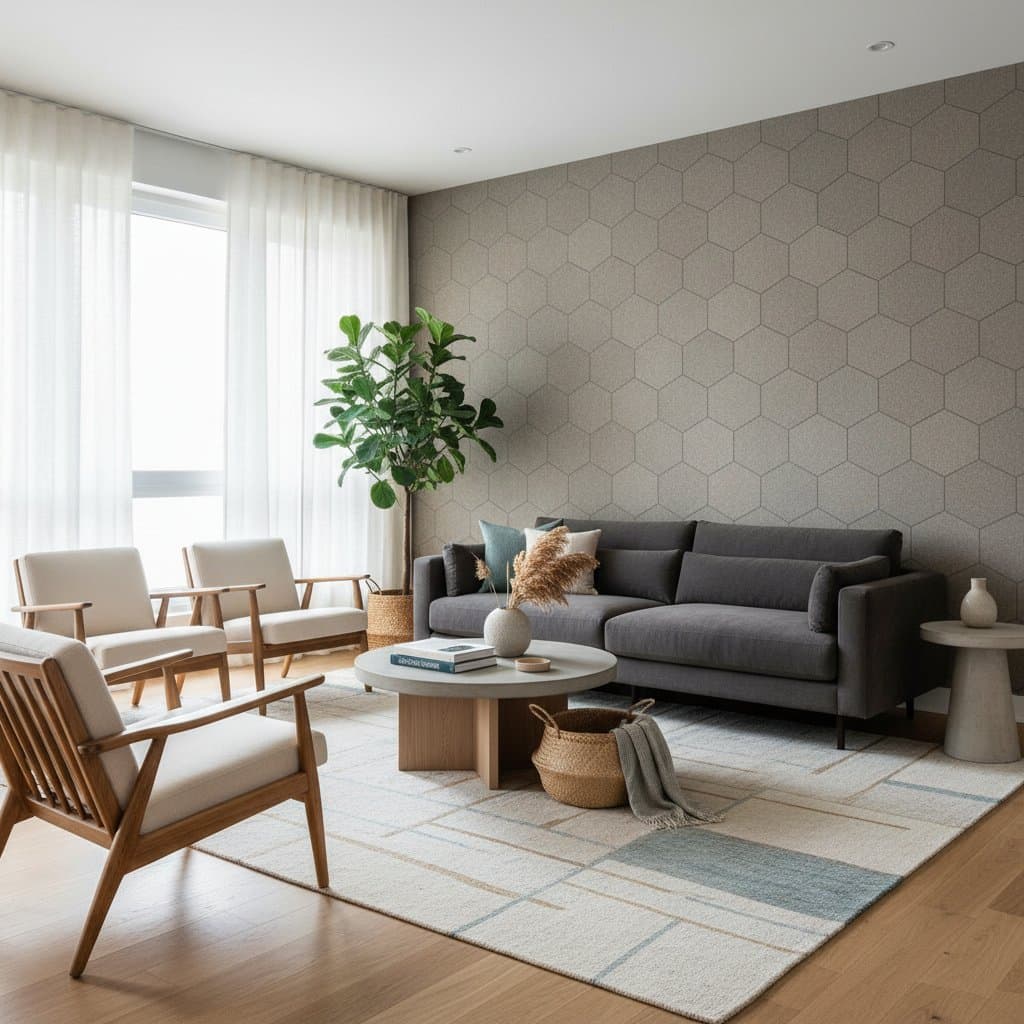
Fabric-wrapped panels provide flexible design options through high-quality textiles that match or contrast with sofa fabrics and rugs. Choose neutral tones for subtle blending or bold colors for focal points. These panels diffuse light and sound evenly, creating a softer room ambiance. Mount them vertically on walls near conversation areas to target mid-level reflections effectively.
Art-Printed Acoustic Panels
Art-printed panels hide sound-absorbing cores under images like calming nature scenes or modern patterns. Select prints that reflect personal tastes, such as family photos or abstract designs, applied to rigid backing. Hang them at eye level like gallery pieces to disguise their purpose while cutting noise from nearby sources. A nature-themed panel, for example, not only decorates but also promotes a relaxed mood through improved acoustics.
Wood Slat Acoustic Panels
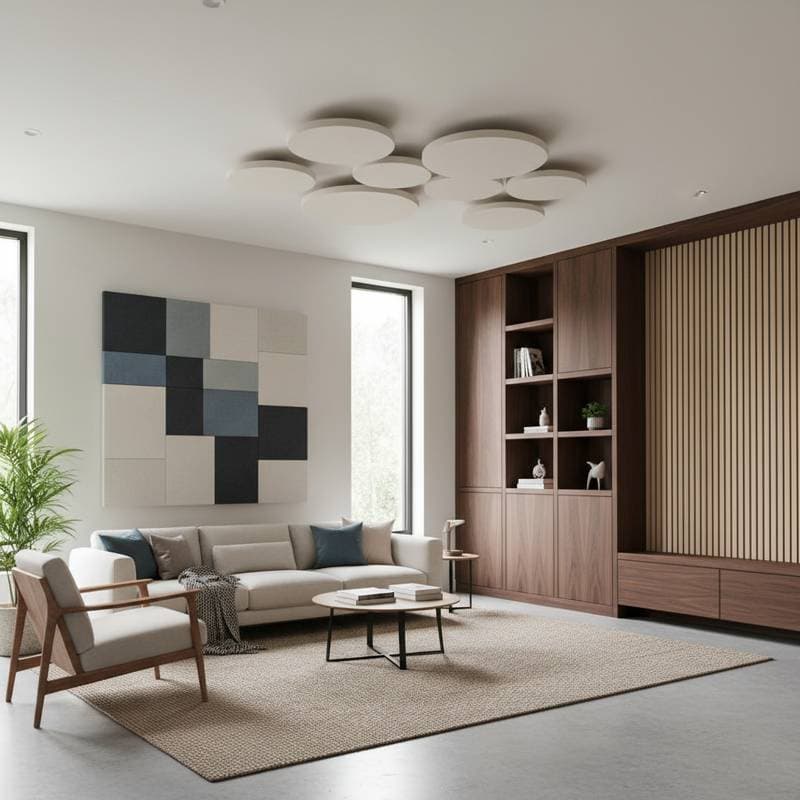
Wood slat panels deliver natural texture with acoustic backing that traps sound waves. Arrange slats in horizontal or vertical lines to add architectural detail, perfect for walls behind televisions. The wood scatters higher frequencies, while the felt layer absorbs lower ones, balancing the room's sound profile. Opt for light oak in modern settings or darker walnut for warmth in traditional homes.
Modular Felt Tiles
Modular felt tiles offer easy, customizable coverage for renters or those who change layouts often. Peel-and-stick versions allow patterns like checkerboards or waves, using colors from soft grays to vibrant hues. Each tile handles specific sound ranges, so group them densely for broader absorption. Apply them to a single wall section first to test visual impact before full installation.
Suspended Ceiling Clouds
Ceiling clouds tackle sound bouncing from above, especially in rooms with lofty heights. Suspend these in shapes like circles or panels using wires from the ceiling grid, positioning them over sofas or media zones. They capture vertical echoes without altering floor space, adding a floating art element. Cluster two or three units for even distribution and a sense of layered depth.
Panels with Built-In Lighting
Panels with integrated LEDs combine sound control and mood lighting for versatile use. Embed lights behind diffusers to cast soft glows that reduce glare from harsh overhead fixtures. Place them in corners or above shelves to manage echoes in open areas while enhancing evening relaxation. Choose dimmable options to adjust brightness alongside acoustic needs.
Placement Strategies for Maximum Acoustic and Design Impact
Effective placement starts with spotting problem areas, such as walls facing speakers or large windows. Install panels there first to see quick improvements in clarity. For aesthetics, group three fabric panels in a row above a fireplace or run wood slats across an entire feature wall.
Mix types for better results: combine fabric and wood to cover different sound frequencies without clashing styles. Stick to a color palette of earth tones or pastels for seamless flow. Measure room dimensions beforehand to calculate coverage, aiming for 20 to 30 percent of wall and ceiling surfaces.
Care and Longevity of Acoustic Panels
Once installed, panels deliver clearer conversations, lower volume needs for media, and smoother background noise. Clean fabric types with a microfiber cloth dampened in mild soap solution, avoiding excess water. Vacuum wood slats gently to remove dust, and reposition as needed when moving furniture. High-quality materials resist fading and wear, ensuring lasting performance and appearance.
Achieving Everyday Serenity Through Sound Design
Incorporating acoustic panels refines living rooms into spaces where sound supports comfort, not distraction. Select and position them thoughtfully to enjoy richer audio experiences and a more inviting atmosphere. This approach transforms daily routines into more pleasant moments, blending practical acoustics with personal style.