Acoustic Panels: Artful Soundproofing for Modern Homes
Consider the frustration of retreating to a private room only to find intrusive sounds persisting. The drone of household appliances, reverberating conversations, or footsteps from above can disrupt even the most thoughtfully designed interior. Sound naturally propagates, reflects, and intensifies in untreated spaces. Acoustic panels address this challenge discreetly, converting chaotic areas into peaceful, aesthetically pleasing refuges.
Historically confined to professional environments like recording studios and performance venues, acoustic panels now integrate seamlessly into residential settings. Far from the uninspiring foam blocks of the past, contemporary versions function as decorative elements, providing texture and structural enhancement. Beyond their visual appeal, these panels improve auditory quality, which in turn elevates the overall sensory experience of a home.
Why Noise Control Deserves More Attention
Auditory environments profoundly influence daily activities within living spaces. An echoing kitchen transforms routine meal preparation into a disorienting ordeal. A home office susceptible to external dialogues hinders sustained focus. Even expansive living areas with reflective surfaces like glass and stone can amplify speech, creating an abrasive atmosphere. Acoustic panels mitigate these issues by absorbing excess reverberation and damping reflections, resulting in more harmonious and inviting rooms.
View these panels as subtle enhancers, akin to coordinating accents in a composition. They integrate without overpowering, yet their presence fosters cohesion. The transformation proves understated yet impactful; occupants often sense reduced stress, heightened productivity, and diminished auditory fatigue before recognizing the source.
Smart Detail Roundup: Small Choices with Big Calm
Implementing acoustic solutions requires no structural overhauls or invasive renovations. Effective enhancements arise from deliberate, decor-compatible additions. The following seven selections unite tranquility with refined aesthetics.
1. Fabric-Wrapped Wall Panels
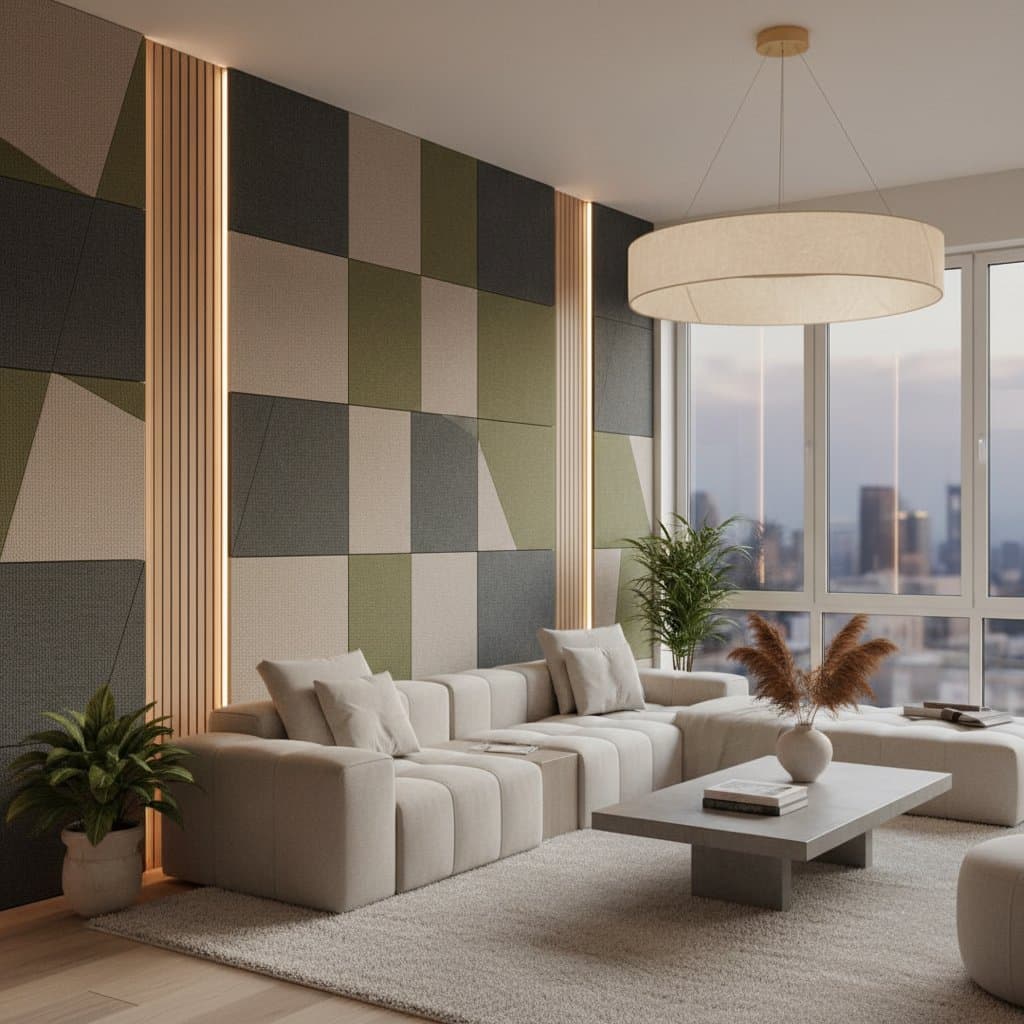
Traditional acoustic panels have evolved into versatile home accents. Encased in materials such as linen, felt, or wool, they effectively capture mid- to high-frequency sounds responsible for persistent echoes. Opt for subdued shades that blend with existing walls or vibrant colors that emulate expansive artwork. Designers frequently arrange them in patterned configurations to achieve a three-dimensional, bespoke appearance. This approach yields walls that appear tailored and deliver perceptible quietude.
2. Wood Slat Acoustic Panels
For those seeking organic warmth, wood slat designs provide an ideal alternative to textiles. These feature slim timber strips overlaying absorptive substrates, concealed for a clean finish. The aesthetic suits contemporary living rooms, entertainment zones, or transitional corridors needing added depth. Slats scatter sound waves efficiently, reducing echoes while preserving auditory clarity. The effect evokes the refined ambiance of a high-end hospitality venue, right within personal quarters.
3. Acoustic Ceiling Clouds
Overhead surfaces frequently escape scrutiny, yet they significantly dictate acoustic dynamics. In rooms with elevated ceilings or rigid floors, sounds rebound unchecked. Suspended ceiling clouds intercept these reflections at their origin, preventing widespread dispersion. Professionals deploy them in communal areas like dining rooms or expansive kitchens where noise ascends readily. Available as minimalist rounds or statement forms incorporating illumination, they elevate functionality to opulence, ensuring conversations remain audible amid gatherings.
4. Art Panels with Hidden Absorption
Discretion appeals in certain applications, where functionality remains unobtrusive. Acoustic art panels employ image-printed fabrics over sound-dampening bases, mimicking conventional gallery pieces. Selections range from abstract motifs and scenic vistas to personalized imagery. These installations appear as standard framed works but substantially temper ambient sounds, such as merriment or utensil impacts. Homeowners frequently receive praise for their "artwork," unaware of its acoustic contributions.
5. Acoustic Room Dividers
Open-concept layouts facilitate sound migration, complicating zone definition. Portable acoustic partitions or hinged screens establish boundaries while attenuating noise. Employ them to delineate relaxation corners, shield workstations, or isolate activity areas. Crafted from felt, fabric, or timber, these pieces convey purpose rather than expediency. They suit transient dwellers or those prioritizing adaptability over fixed alterations.
6. Acoustic Lighting Fixtures
Illumination extends to acoustic roles in innovative designs. Overhead fixtures like pendants or chandeliers clad in absorptive fabrics fulfill dual purposes: providing light and capturing elevated noise. This synergy excels in surface-heavy environments such as kitchens or professional nooks. The result prompts inquiries about sourcing, with owners highlighting not merely the form but the resultant serene atmosphere.
7. DIY Peel-and-Stick Panels
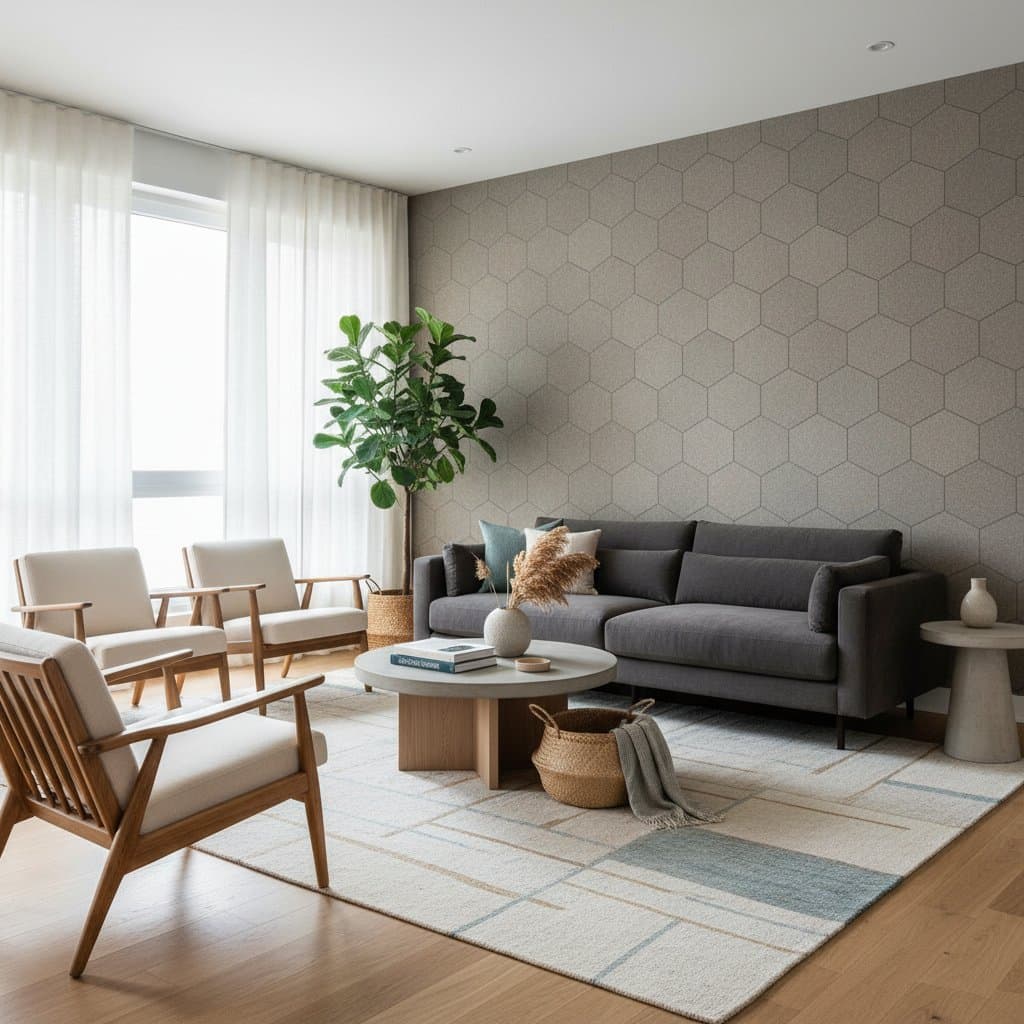
For expedient interventions, adhesive acoustic tiles offer accessible entry points. Shaped as hexagons, discs, or squares, they permit creative patterning akin to mural assembly. Application involves merely removing backing, positioning, and securing. Although their efficacy trails custom installations, they excel in targeted corrections. Place them near workstations, media setups, or resonant passages for swift, evident improvements.
The Beauty of Blending Function and Style
Acoustic interventions have advanced past mere practicality into realms of expression. Layer diverse materials, harmonize surfaces, or experiment with motifs that align with broader schemes. Exemplary implementations appear inherent to the design, not remedial additions. They embed as integral components, embodying inherent ease.
Incorporating panels during initial planning maximizes efficacy. Position them adjacent to seating, overhead in sleeping areas, or flanking circulation paths. In culinary spaces, align subtle ceiling elements with fixture layouts. For professional setups, rear desk placements enhance both audio fidelity and virtual presentation backdrops. Virtually every area gains from acoustic consideration, with benefits emerging post-implementation.
Real Benefits Beyond the Silence
Primary advantages center on diminished clamor, yet panels yield broader gains. Reduced auditory input promotes unhurried dialogue and intensified attention. Households observe lowered media volumes due to enhanced clarity. Workspaces yield greater output as intrusions wane. Animals exhibit relaxed behaviors in treated environs.
Additional merits include thermal regulation; plush materials hold heat more effectively than barren ones, aiding equilibrium. Selecting eco-friendly options like wool or felt introduces permeable, healthful elements that bolster air purity.
Installation Tips for Best Results
While user-friendly, acoustic panels demand strategic positioning for optimal performance. Target primary reflective planes: parallel walls, overhead expanses above interactive zones, and angular recesses harboring echoes. Selective applications often surpass comprehensive coverage. Approach placement akin to culinary precision: achieve equilibrium without excess.
Prioritize dominant irritants in multi-source scenarios. For resonant parlors, address expansive vertical or horizontal planes. In studies, focus on posterior screens. Bedrooms benefit from headboard-proximate or window-opposite treatments to mute nocturnal disturbances. Aim for balanced quietude rather than absolute muting.
Combining Panels with Other Sound-Control Elements
Panels amplify effectiveness within multifaceted strategies. Floor coverings, drapery, cushioned seating, and shelving units all aid absorption. Existing soft elements paired with panels refine tuning. Integrate with understated measures like perimeter seals, muted hardware, or subdued ventilation for comprehensive serenity.
In multifunctional open areas, blend upright and planar treatments to curb multidirectional propagation. Vertical and horizontal combinations in tiered residences tame stairwell resonances. Incremental refinements cultivate the composed essence of superior interiors.
Maintaining Your Investment
Premium panels necessitate little upkeep. Dust fabric surfaces routinely or employ light suction for renewal. Preserve wood finishes through periodic conditioning. During aesthetic shifts like recoloring or refurnishing, relocate or recover panels to extend utility. Their adaptability positions them as enduring enhancements.
Monitor evolving auditory profiles as household dynamics shift. Additions like cabinetry, surfaces, or displays alter propagation. Repositioning restores harmony efficiently. This mutability ensures alignment with changing needs and configurations.
Embracing the Serenity of Acoustic Design
Integrating acoustic panels redefines spatial harmony, blending utility with artistry for lasting tranquility.