Acoustic Panels: Luxe Soundproofing Meets Living Room Style
You know that moment when you settle in with a good book or your favorite show, and a nearby conversation suddenly feels louder than your own thoughts. Or when your living room echoes just enough to make every sound feel sharper than it should. That is where acoustic panels quietly save the day. Once reserved for recording studios and boardrooms, these clever sound-absorbing surfaces have found their way into stylish homes.
The best part is they no longer look like bulky gray pads. Today versions can double as wall art, sculptural accents, or even functional furniture pieces that make your space calmer and more refined. Let us walk through how acoustic panels can transform both the look and feel of your living room.
Why Sound Matters More Than You Think
Living rooms are often the social heart of a home, but they are also echo chambers waiting to happen. Hard surfaces like wood floors, glass windows, and drywall bounce sound around. This creates that hollow effect that makes conversations feel tinny or chaotic. Add a television, a few streaming speakers, or an open floor plan, and the noise multiplies.
Acoustic panels absorb rather than reflect those sound waves. They help reduce echo, soften ambient noise, and make speech clearer. The result feels surprisingly luxurious, like slipping into a quiet lounge after a busy day. It is not just about muting sound but shaping it into something pleasant.
The Design Evolution of Acoustic Panels
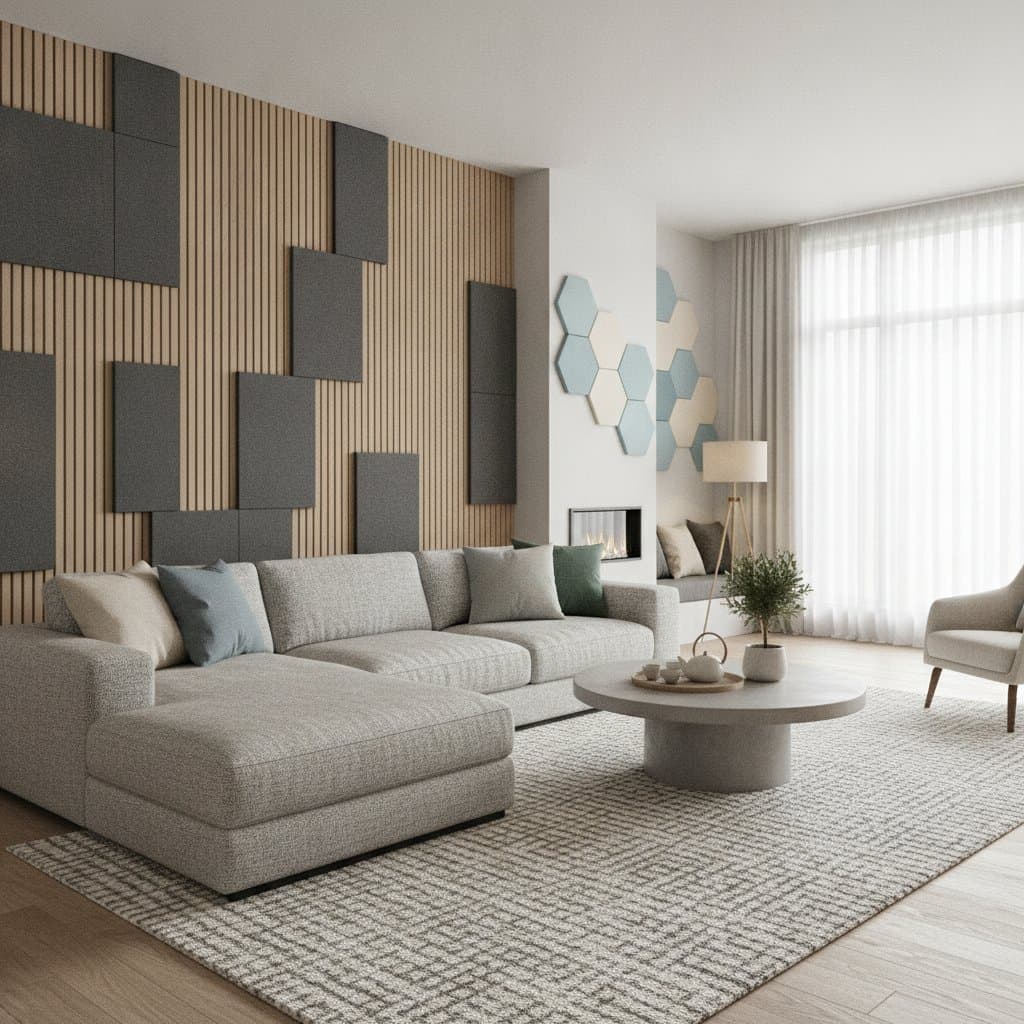
Old soundproofing panels looked like practical afterthoughts. They were functional but rarely decorative. The modern versions are a different story. Manufacturers now treat them as design elements that deserve to be seen. Imagine felt-covered hexagons in muted tones, linen-wrapped rectangles that mimic canvas art, or wood-slatted panels that resemble mid-century wall features.
This shift means you no longer have to choose between sound comfort and visual appeal. Acoustic panels can complement your decor the same way an area rug or piece of art would. They can act as a backdrop for your sofa, frame your media console, or even highlight an architectural niche.
Small Choices, Big Comfort
Let us look at a few thoughtful details that bring both function and polish to your living room soundscape.
1. Fabric-Wrapped Wall Panels
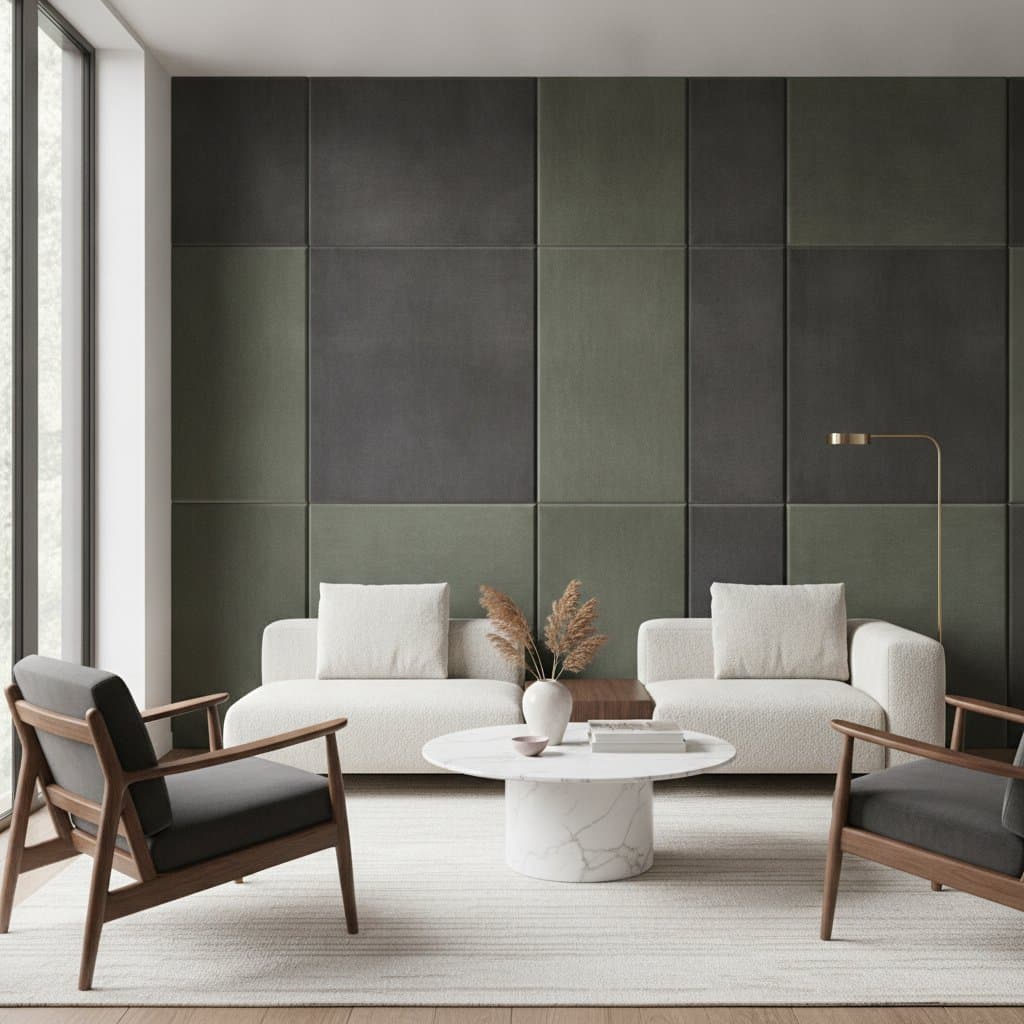
These are the classics reinvented. Choose a rich textile like wool felt, linen blend, or recycled polyester for a soft, tactile finish. The panels absorb mid- and high-frequency sounds, which are often the culprits behind chatter and echo. A set arranged in a geometric pattern can look intentional, almost like a gallery wall.
2. Slatted Wood Panels
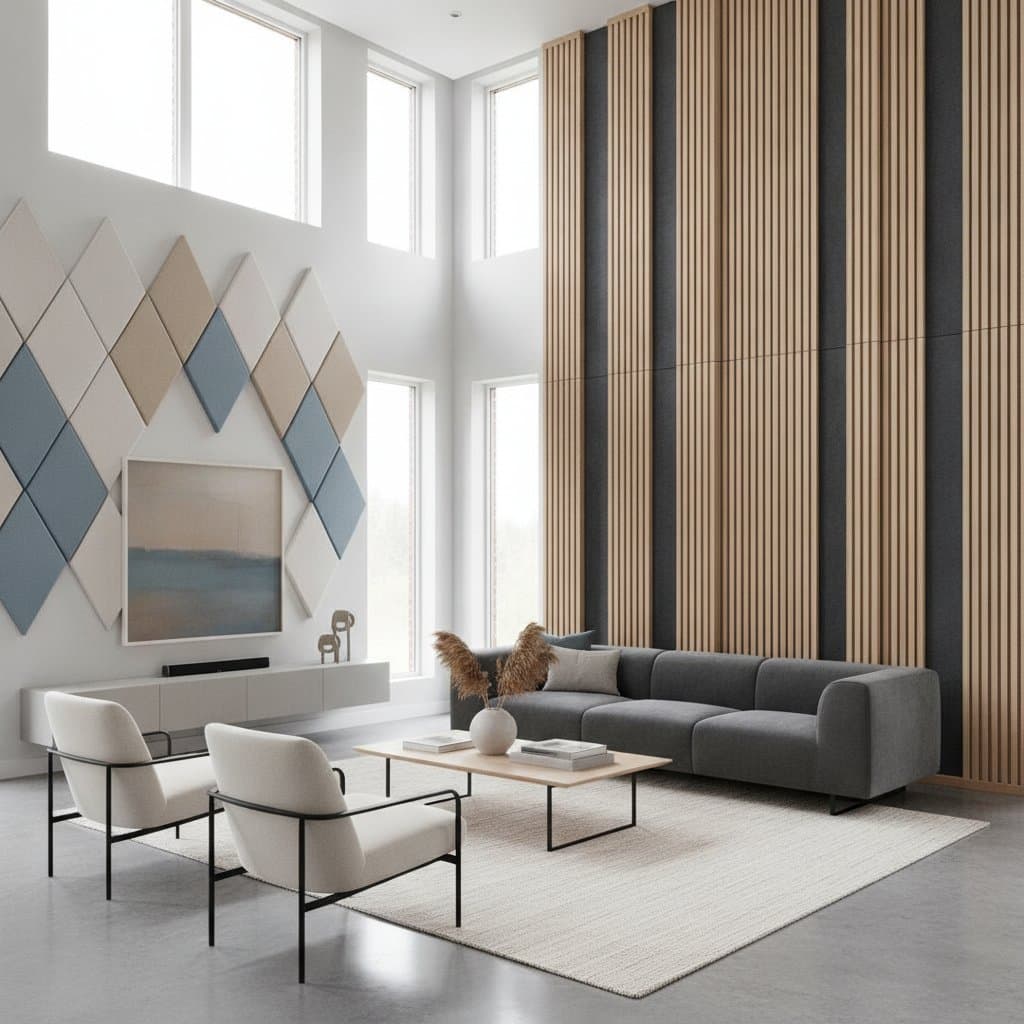
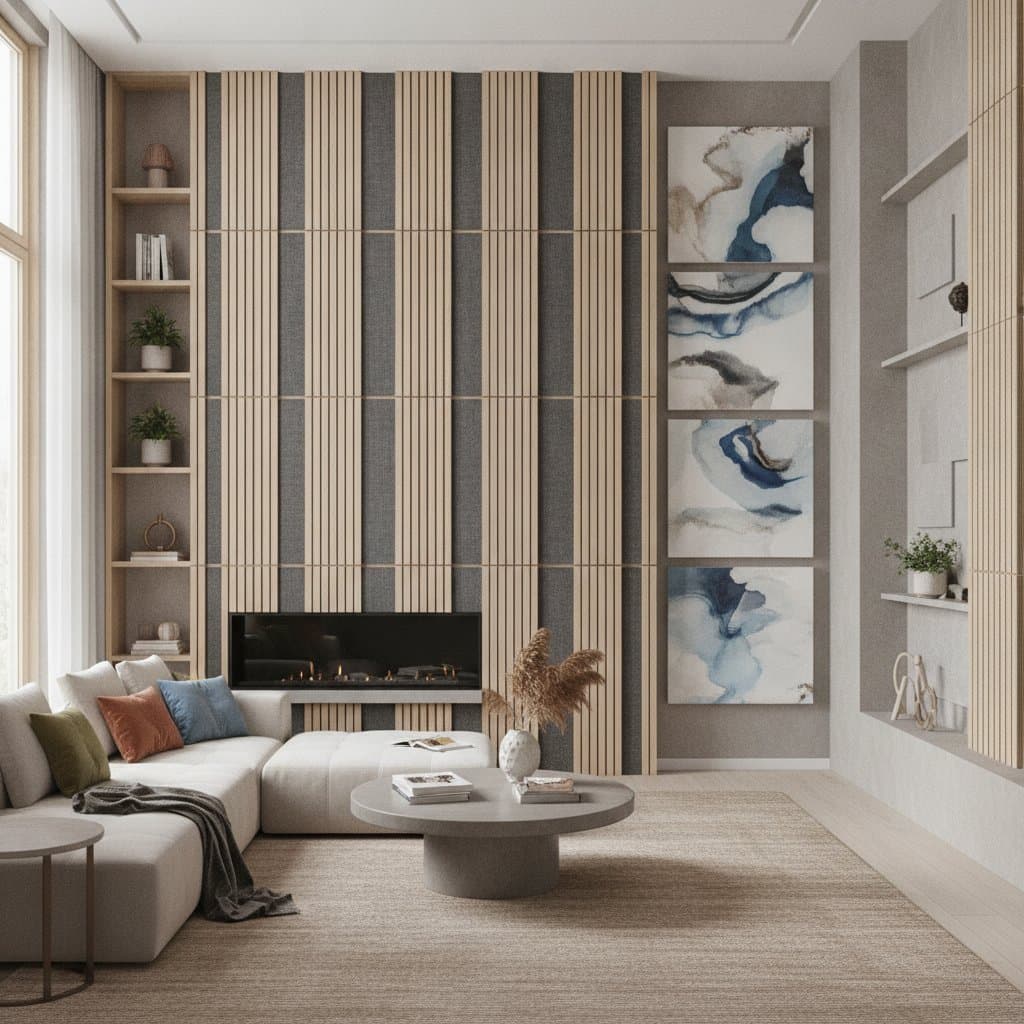
Think of these as the acoustic version of a statement wall. Vertical or horizontal slats mounted over felt not only absorb sound but also diffuse it. The natural grain adds warmth that pairs beautifully with modern or Scandinavian interiors. You get the acoustic benefit of a studio panel with the look of custom millwork.
3. Ceiling Clouds
Sound does not just bounce from wall to wall. It travels upward too. Ceiling-mounted acoustic panels, sometimes called clouds, catch that floating noise before it circles back down. They are especially useful in rooms with high ceilings or open layouts. Choose a shape that echoes your lighting or architecture.
4. Acoustic Art Prints
For those who prefer minimal disruption to their decor, acoustic art panels are clever hybrids. They feature printed designs on sound-absorbing fabric stretched over a frame. You can hang them just like regular artwork. From a distance, no one would guess their hidden skill is quieting the room.
5. Modular Felt Tiles
If commitment scares you, modular tiles are your friend. They stick to the wall with removable adhesive and can be rearranged or expanded later. Choose a few neutrals for subtle texture or mix jewel tones for a bold feature. They are perfect for renters or anyone experimenting with sound control before investing in permanent panels.
6. Multi-Functional Furniture Panels
Some ottomans, benches, or shelving units now come with integrated acoustic fabric. They soften sound at ear level while serving a purpose. Imagine a storage bench wrapped in felt that doubles as a sound buffer near a window or hallway.
Where to Place Them for the Best Effect
Placement matters almost as much as the product itself. The goal is to intercept sound reflections from major surfaces. Start with the wall opposite your main seating area or television. This surface typically reflects the most noise. If your space is large, add panels to adjacent walls to balance absorption.
High ceilings benefit from overhead panels. Shared walls in apartments can use thicker versions that block more sound from neighboring units. Corners can also be sound traps. Consider corner bass absorbers if you notice a low hum or vibration when music plays.
How to Keep It Cohesive with Your Style
Soundproofing does not have to shout its purpose. The best acoustic panels blend so well that guests might not notice them at all. Here are a few styling strategies that make them feel intentional.
- Match materials. If your furniture leans toward natural fibers, choose panels in similar textures. Linen or felt pairs easily with cotton or wool upholstery.
- Play with scale. Oversized panels can anchor a large wall. Smaller ones can repeat as accents in a rhythm that feels artful.
- Color coordination. Soft neutrals make panels disappear. Contrasting tones can turn them into focal points.
- Layer lighting. Spotlights or sconces aimed at panels create subtle shadows and depth.
The key is to treat acoustic panels like any other design element. They should work in harmony with your existing palette and furniture rather than feeling like an afterthought.
The Hidden Luxury of Quiet
Silence, or at least a softer soundscape, is a form of luxury that often goes unnoticed until it is gone. A well-treated room feels restful even when a movie is playing or guests are chatting. The sound settles instead of bouncing. You can hear the difference in your own voice, which sounds warmer and more natural.
Caring for Your Panels
Maintenance is simple, which is part of their appeal. Most fabric-covered panels only need gentle dusting with a microfiber cloth or a quick vacuum using a soft brush attachment. For wood-slatted designs, a damp cloth keeps surfaces clean without dulling the finish. Avoid harsh cleaners or excess moisture, especially if your panels use natural materials.
Living with Your Design
Once you experience a quieter living room, you might start noticing the comfort it adds to daily routines. Watching a movie feels more cinematic. Reading by the window feels private even when the street outside hums. Family conversations sound clearer and less chaotic.
The beauty of acoustic design is that it rewards attention to small details. Whether you start with a single art panel or go all in with slatted wood walls, each addition contributes to a more peaceful home. Think of it as layering comfort in both sight and sound.