Acoustic Panels That Double as Stylish Living Room Decor
Imagine your living room on a quiet evening. The soft hum of conversation and the gentle rustle of fabric against a sofa fill the space. No echo bounces off the walls. The sound feels warm and contained. This is the result of acoustic panels installed with care. These elements have moved beyond plain industrial fixtures once limited to recording studios. They now serve as design pieces that calm a room while improving its appearance.
The Unseen Problem in Beautiful Spaces
Many homeowners invest in plush furniture, layered textures, and balanced lighting yet still find their living room noisy. Sound reflects off hard surfaces such as walls, floors, and windows. Echoes can make even a well decorated room feel chaotic. This issue appears often in open concept homes where high ceilings and few partitions increase reverberation.
Acoustic panels absorb sound and reduce reverberation. They create a sense of intimacy. Modern options avoid thick foam blocks or plain tiles that clash with decor. Instead they combine function with visual appeal.
Where Style Meets Functionality
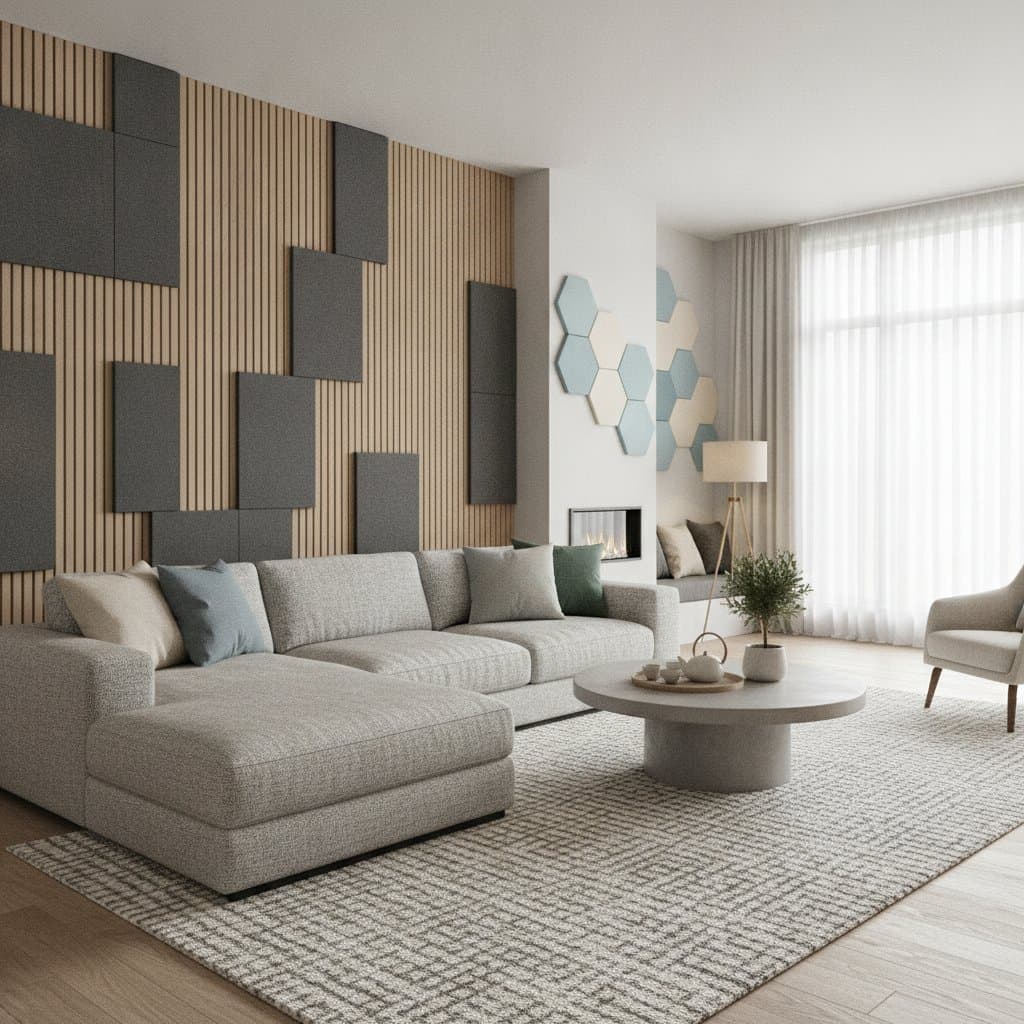
Manufacturers now produce panels in fabrics, wood veneers, and printed artwork. Some resemble sculptural wall art. Others mimic woven textiles or architectural details. Options exist for minimalist retreats and cozy eclectic rooms alike.
When selected with attention to layout, these panels add depth, color, and character. Understanding material types and their acoustic properties helps match them to specific rooms.
Types of Acoustic Panels for Living Rooms
-
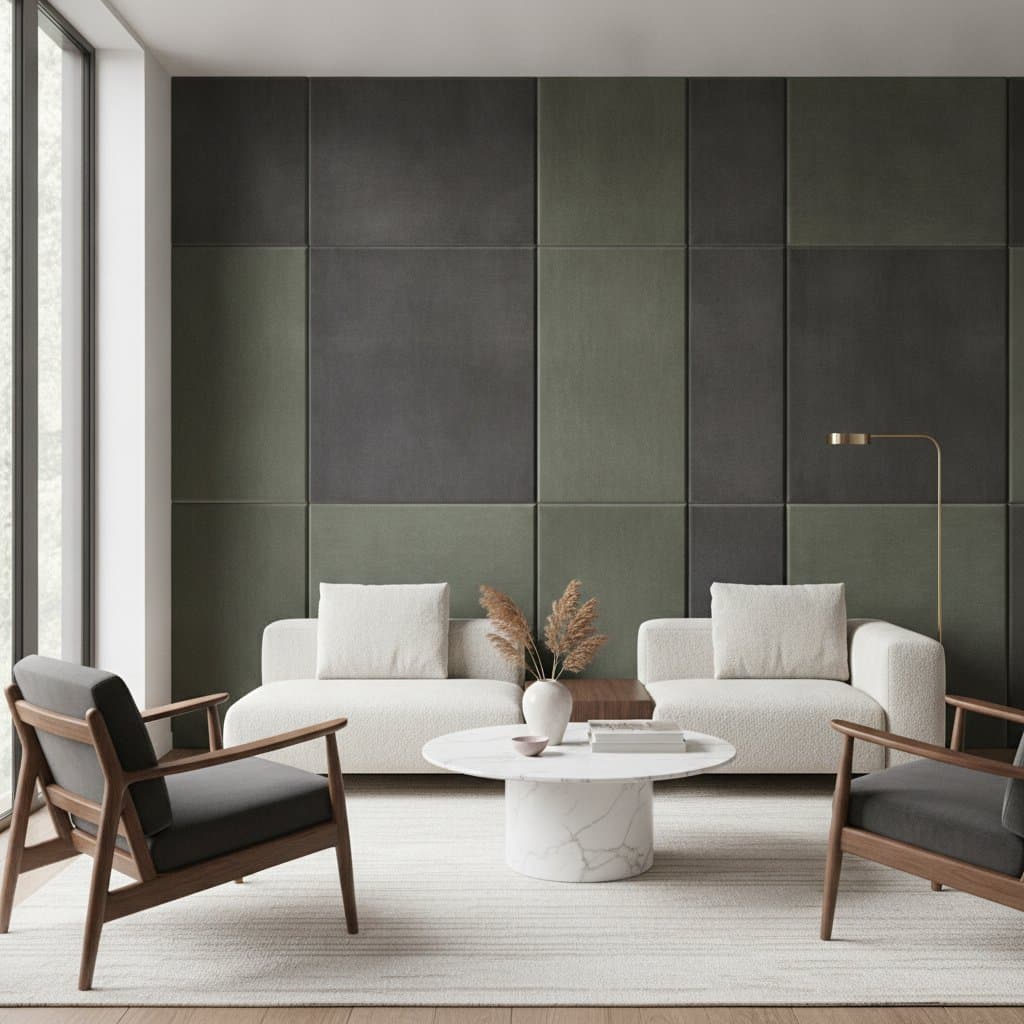
Fabric Wrapped Panels
These offer versatility through many colors and textures. Linen, felt, and wool blends provide tactile interest. Neutral fabrics blend into walls while custom prints turn panels into large scale art. -
Wood Slat Panels
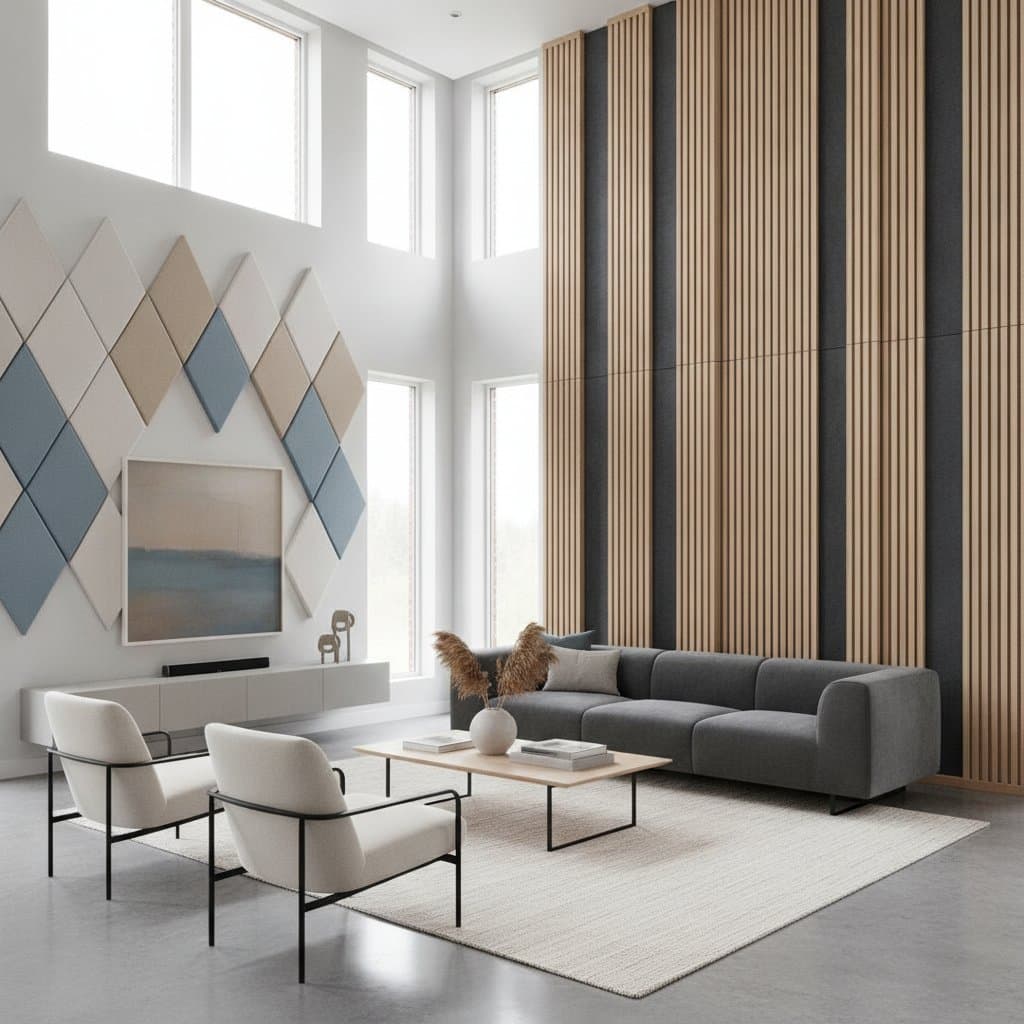
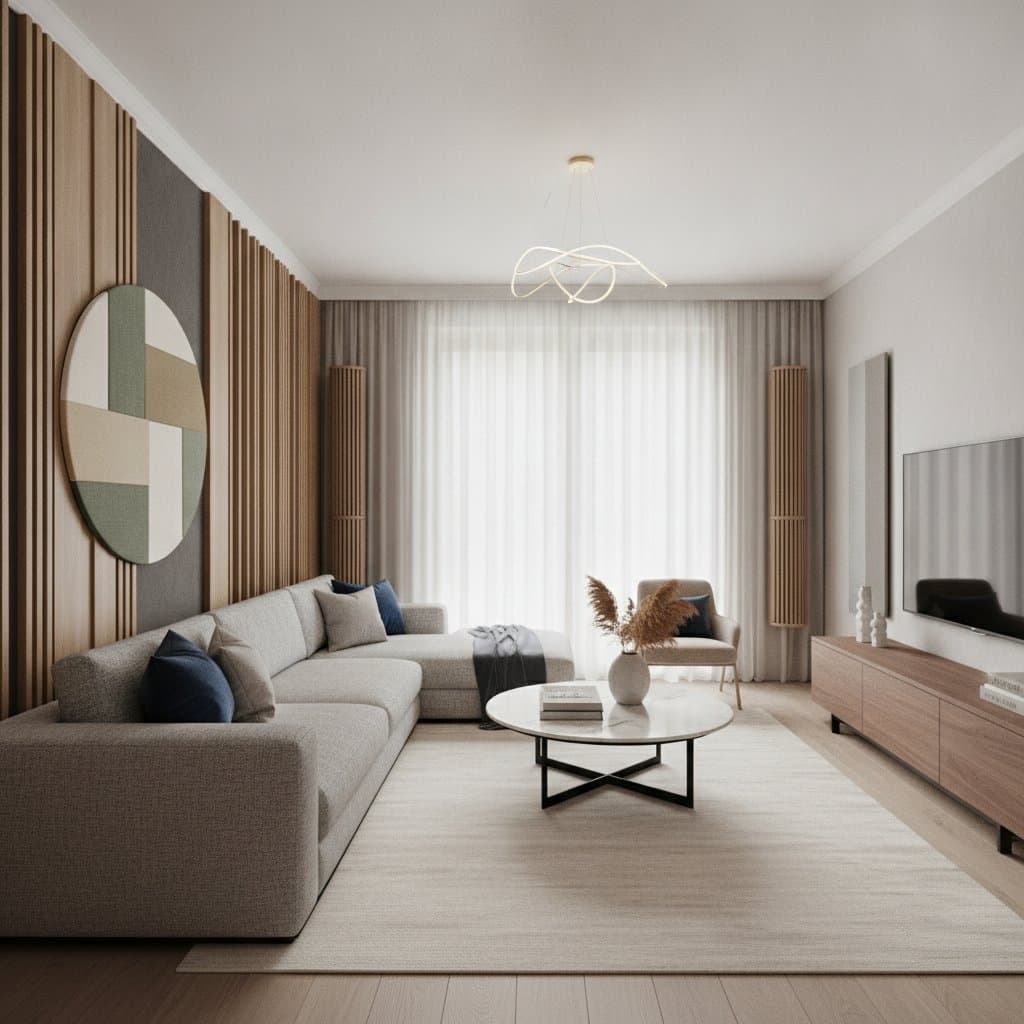
Thin wooden slats mounted over acoustic felt deliver warmth and a linear pattern. They suit mid century furniture and pair well with stone or leather surfaces. -
Art Acoustic Panels
These feature abstract prints, photography, or commissioned artwork. They turn sound control into a personal statement suitable for spaces where appearance matters as much as performance. -
Modular 3D Panels
Sculptural patterns create visual rhythm. Varied surfaces scatter and absorb sound across frequencies. They work well in creative modern rooms. -
Eco Friendly Panels
Panels made from recycled materials or natural fibers such as cork and hemp provide an organic appearance and a sustainable profile.
How to Choose the Right Panels
Selection depends on room size, existing materials, and design goals. Assess sound needs first. Wall panels address most echo issues while ceiling mounted options or acoustic clouds help when noise reflects from above.
Decide whether panels should blend in or stand out. Match texture and tone to the room. Fabric panels soften sleek surfaces. Wood slats or cork suit rustic or natural settings. Place panels at first reflection points, typically opposite speakers, televisions, or large windows.
Integrating Acoustic Panels into Decor
Treat panels as part of the overall design. Combine art panels with framed photos or mirrors to form a gallery wall that hides sound control. Use a single bold color or pattern for an accent wall behind a sofa. Suspend geometric or curved panels from high ceilings to add architectural interest. Coordinate fabric choices with upholstery or drapery for a unified look in open plan spaces.
Local Climate and Material Considerations
Select moisture resistant panels in humid regions to avoid warping or mold. Breathable fabric backed options perform well in such conditions. Wood slat panels maintain their finish in drier climates. Follow manufacturer guidance for installation to extend panel life.
Budget and Installation Insights
Basic fabric panels cost 15 to 30 per square foot installed. Custom art panels range from 40 to 60 per square foot. Wood slat systems run 50 to 80 per square foot for quality finishes. Eco panels fall between 25 and 45 per square foot. Installation for a standard living room usually requires one day. Many panels mount with clips or adhesive strips. Professional installation confirms secure placement and optimal performance.
Safety and Maintenance Considerations
Vacuum fabric surfaces gently and use mild cleaners on wood. Verify secure mounting above seating areas. Choose panels with non toxic adhesives and durable coverings when children or pets are present. Many modern fabrics meet air quality and safety standards.
The Emotional Side of Quiet
Acoustic comfort affects mood. A quiet living room encourages slower conversations and deeper relaxation. Music and voices become clearer. The right panels shape the atmosphere so sound feels balanced and intentional.
Planning Your Acoustic Upgrade
Assess echo locations and note where calm matters most. Gather design ideas and consult professionals who combine acoustics with interior expertise. Compare options to find panels that match both performance needs and style goals. The result is a living room that feels as good as it looks.