Acoustic Panels: Artful Solutions for Sound in Living Rooms
A serene living room promotes composure and shields inhabitants from external distractions. Open layouts often feature hard surfaces like floors and high ceilings that amplify echoes, disrupting conversations and media playback. Designers now employ acoustic panels to address these issues without compromising aesthetics. These modern panels resemble art installations, incorporating vibrant colors, diverse textures, and dynamic patterns to walls while optimizing room acoustics.
The Role of Sound in Communal Areas
Sound impacts living room comfort as profoundly as illumination or climate control. Reflections from unpainted walls and expansive windows generate fatigue and unrest. Acoustic specialist Laura Chen notes that the objective involves achieving equilibrium rather than total quiet. "Absorb sufficient sound to foster tranquility, yet preserve vitality," she states. This equilibrium hinges on material choices, vertical dimensions, and spatial interconnections.
Acoustic panels target mid-range and high-frequency sounds responsible for reverberation. Construction typically involves dense cores of compressed felt, recycled polyester fibers, or wood with mineral wool backing. Such elements ground the environment, sharpening speech clarity and enriching audio output from sound systems or live performances.
Project Overview
Residents: A couple hosting regular gatherings
Setting: Portland, Oregon
Area: 480 square feet (approximately 45 square meters)
Design Firm: Studio Reverberate, images by Tim Archer
Pre-Redesign Conditions
The original setup included a polished concrete floor, extensive glass expanse, and sparse furniture. Audio traveled abruptly from the kitchen into the lounge. Homeowner Alex Rivera recalled, "Dinner gatherings always seemed chaotic and amplified." The aesthetic appealed, yet solutions beyond bulky drapery were essential to temper the intensity.
Post-Redesign Transformation
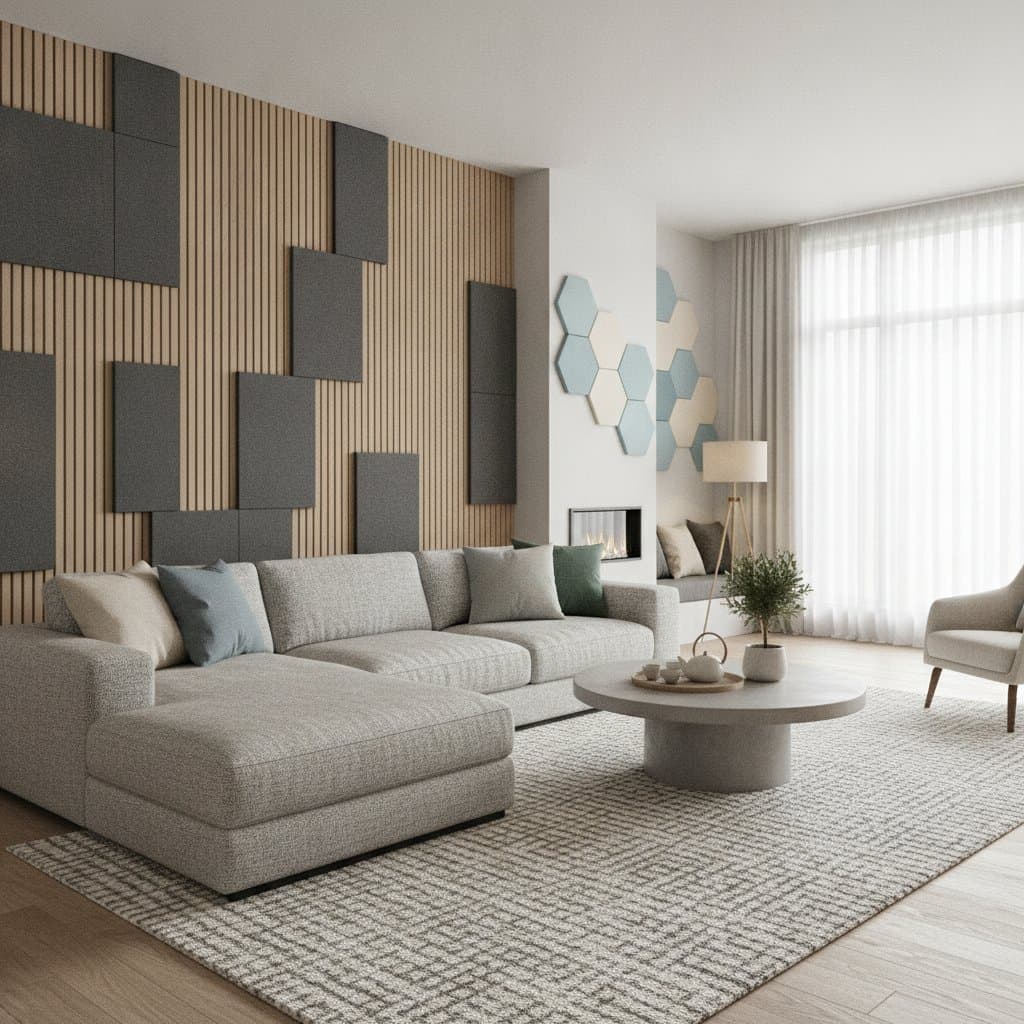
The team treated acoustics as an intertwined functional and aesthetic puzzle. They installed a twelve-panel array spanning the primary wall, with each unit sized at 24 by 48 inches (61 by 122 centimeters). Natural wool encasements in subdued shades of sand, charcoal, and clay provided coverage. Positioned with half-inch (1.27 centimeter) gaps, the arrangement evoked contemporary artwork by daylight and performed subtly after dark.
Complementing the panels with a substantial wool area rug and linen window treatments halved the reverberation duration. Improvements shine in dialogue and music streaming scenarios. Participants converse effortlessly across distances, and television audio achieves fullness at moderate levels.
Key Design Elements
- Material Combination: Wool-encased panels, oak slat overhead treatment, and dense-pile flooring collectively capture and scatter sound waves multidirectionally.
- Installation Offset: Panels positioned one inch (2.5 centimeters) from the surface to maximize absorption efficiency.
- Palette Approach: Earthy tones harmonize with surrounding plaster, ensuring seamless integration.
- Illumination Integration: Concealed LED accents atop the panels accentuate their dimensional quality, elevating acoustic functionality to evening decor.
- Upkeep Features: Detachable fabric layers facilitate straightforward cleaning or updates.
Studio Reverberate illustrates how acoustic interventions enhance overall design coherence. The panels serve as a cohesive canvas, linking lounge and dining without introducing disorder.
Elevating Panels to Artistic Statements
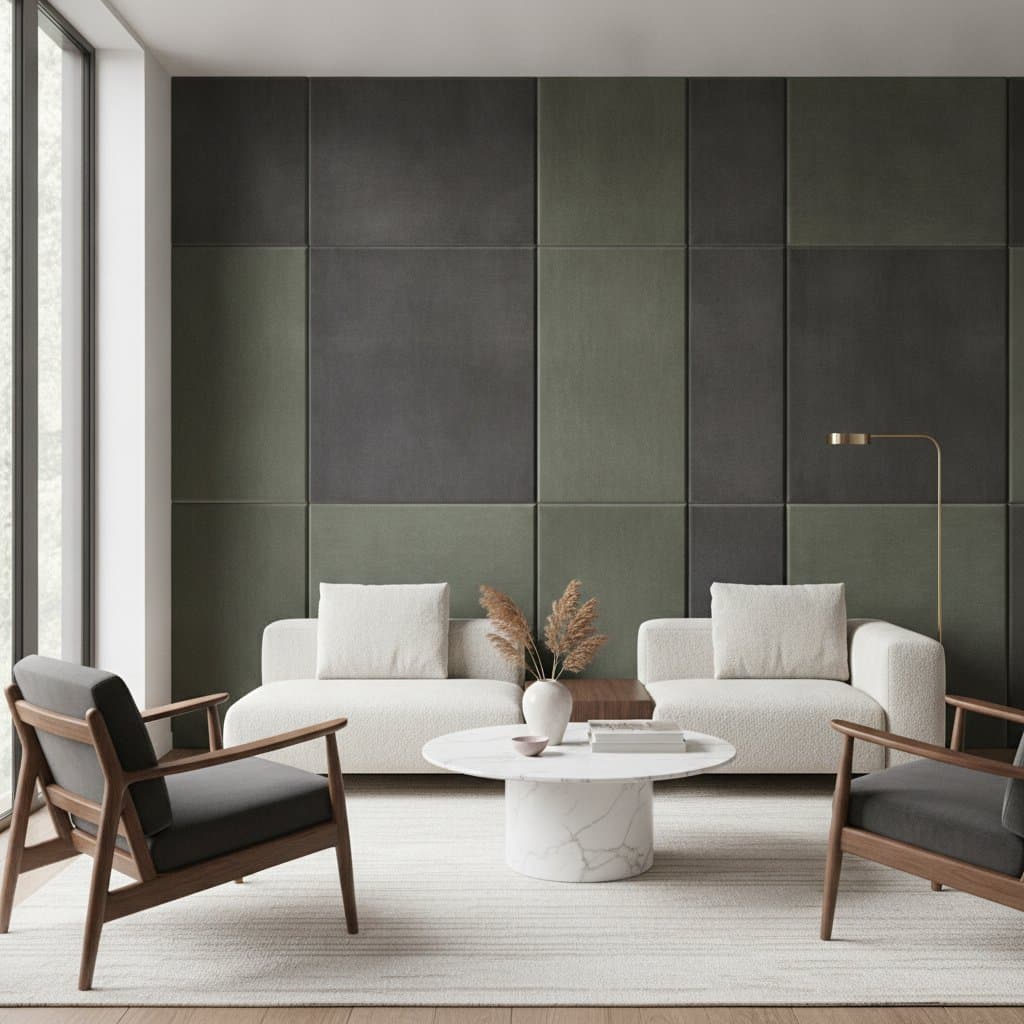
Contemporary panels feature molded contours, adaptable configurations, and custom-printed surfaces that function as decor. Variations include tapestry-like weaves, stone-carved illusions, or origami-inspired folds. Arrangements often form groupings or elongated sequences, leveraging voids and illumination for depth.
Architect Mia Torres advocates panels as "purposeful art pieces." Her work incorporates geometric felt modules in subtle color progressions. "Sound becomes an additional design dimension," she explains. "These elements captivate subtly, aligning with client preferences for understated impact."
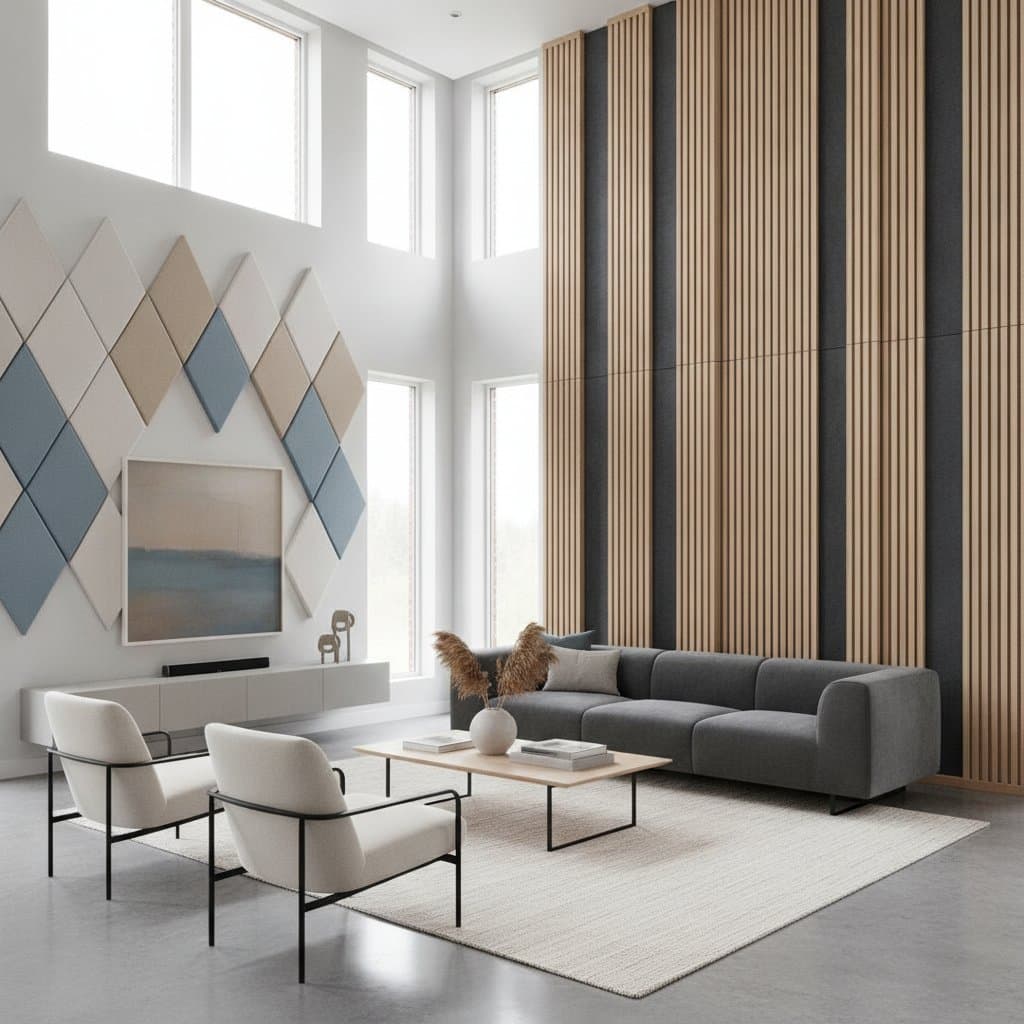
Panels delineate zones in expansive layouts. A upright cluster behind seating stabilizes the relaxation area, while overhead diffusers over meal spaces induce closeness. Select configurations that align with architectural scales and finishes for optimal harmony.
Implementation Essentials
Assessment and Positioning
Target 20 to 30 percent wall coverage with absorptive materials in living areas. Prioritize zones facing broad openings or reflective elements, as these amplify noise most. Corner placements or positions adjacent to audio sources yield strong results. For elevated ceilings, incorporate overhead absorbers to further mitigate reflections.
Aesthetic Choices
Integrate panels into the existing scheme for subtlety, favoring velvety, non-reflective textiles in organic hues that dampen both light and sound. For emphasis, select motifs or forms that echo nearby art or textiles, ensuring cohesion.
Setup and Budgeting
Wall-mounted units typically secure via clips or adhesives, accommodating leased properties. Bespoke setups with hidden supports demand higher investment but blend with cabinetry or fixtures. Costs fluctuate with composition and dimensions; allocate funds comparable to quality flooring or significant artwork.
Potential Drawbacks
- Finances: Textile coverings offer affordability, whereas veneered or formed variants raise costs.
- Care: Cloth exteriors accumulate particles, necessitating interchangeable facings.
- Adaptability: Fixed placements require foresight to prevent future dissatisfaction.
Integrating Storage in Acoustic Environments
Acoustic enhancements benefit from thoughtful storage. Exposed shelves stocked with volumes, containers, or linens disrupt echoes organically. Enclosed units with padded closures minimize abrupt sounds. Cushioned seating contributes absorption alongside ease. Supplementary textile displays reinforce panel effects for unified styling.
Applying Acoustic Principles at Home
Significant quiet requires no extensive overhaul. Pinpoint rigid elements and introduce softening agents. Layer fabric panels, substantial window treatments, and plush mats for substantial gains. Temporary options like adhesive felt squares or ornamental cork panels suit transient dwellers.
For comprehensive updates, consult an acoustics expert from the outset. Professionals assess reverberation profiles and specify coverage needs precisely.
Experiencing the Enhanced Space
Installed panels recede into routine yet deliver ongoing benefits. Exchanges flow naturally, tunes resonate purely, and ambiance softens overall. Alex Rivera summarized the evolution: "Our residence now radiates tranquility."
This subtlety elevates living rooms to sanctuaries. Intentional acoustic management underpins activities from cinematic evenings to casual mornings, nurturing well-being through refined sensory balance.