Acoustic Ceiling Panels Make Soundproofing Stylish
Sound travels in ways that disrupt comfort. Echoes from the television, conversations from above, and constant reverberation turn a living area into an unsettled environment. Acoustic ceiling panels address these issues by absorbing excess noise while introducing texture and visual interest overhead.
Why Sound Control Matters
Effective acoustics shape how a space functions. Clearer conversations, richer audio playback, and reduced mental fatigue follow when reverberation drops. Panels achieve this by trapping sound waves in dense cores, and modern options do so without sacrificing appearance.
Choose finishes that align with existing architecture. Clean lines suit minimalist rooms, while textured surfaces complement natural materials. The result is a ceiling that contributes actively to both comfort and style.
1. Fabric Wrapped Panels
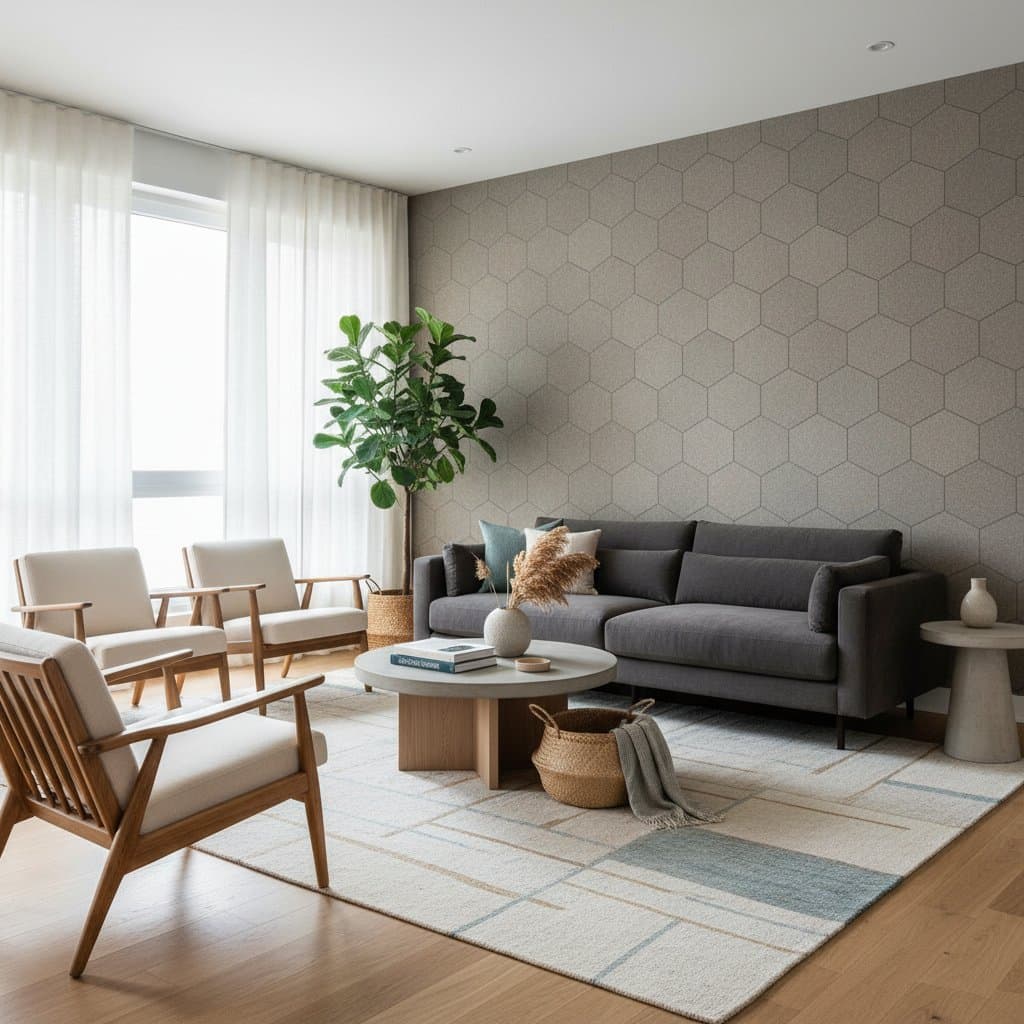
These panels feature a sound absorbing core wrapped in woven fabric. Install them in grids or direct mount configurations to cover large areas quickly. Fabrics range from neutral weaves that recede visually to saturated hues that define zones.
Homeowners report that speech becomes easier to follow once fabric panels are in place. Footfall noise from upper floors also decreases noticeably.
2. Sculptural Baffles and Forms
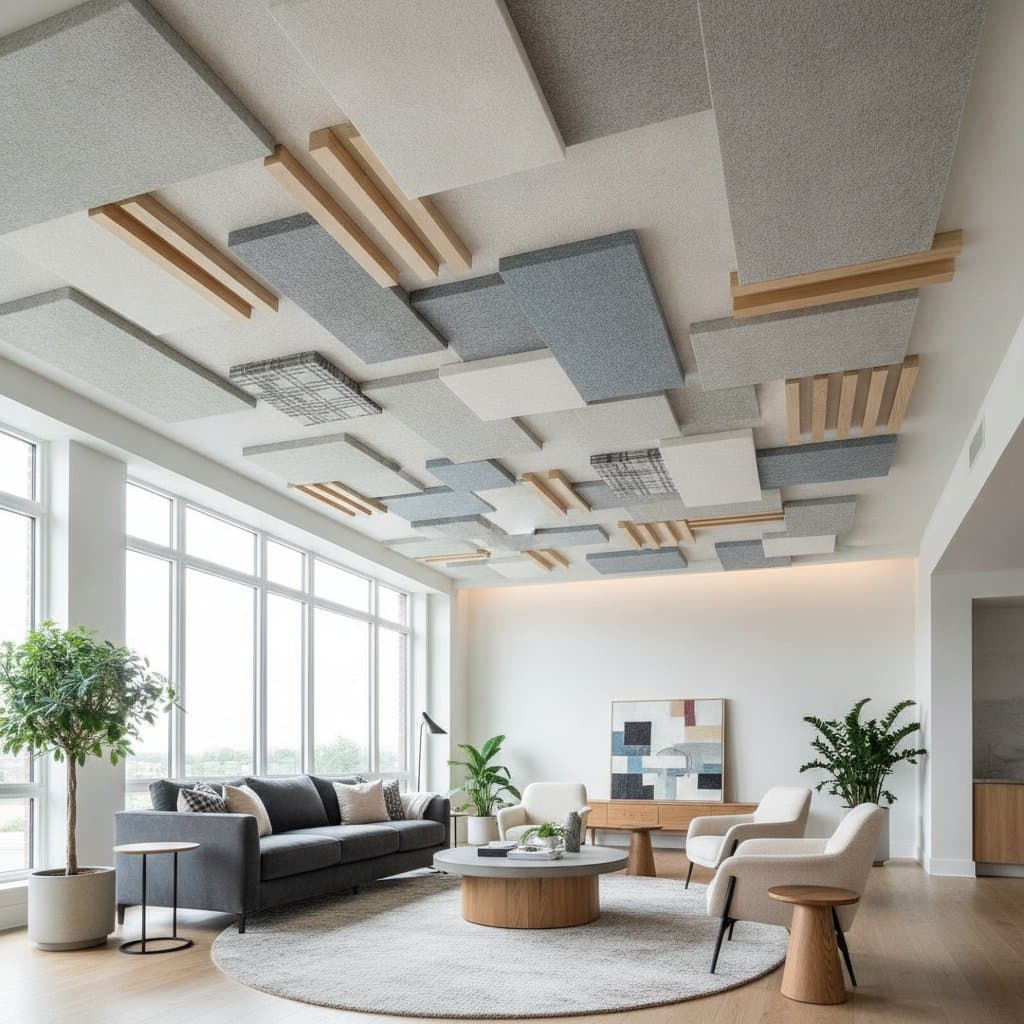
Three dimensional baffles hang at varying heights to interrupt sound paths. Arrange clusters above seating areas or dining tables to create focal points. The shapes break up flat planes while scattering reflections.
Designers specify these elements in open layouts where hard surfaces dominate. The suspended forms add rhythm without obstructing sight lines.
3. Wood Veneer Options
Perforated wood veneer panels conceal acoustic backings that absorb mid and high frequencies. Select ash for brighter rooms or walnut for deeper tones. The grain pattern diffuses light and adds warmth.
These panels suit libraries, studies, and living rooms where a natural material palette is desired. They maintain visual continuity with cabinetry and flooring.
4. Seamless Acoustic Plaster
Spray applied systems embed mineral wool or fiberglass layers beneath a thin plaster finish. The surface appears continuous, matching adjacent walls or traditional ceilings. Sound absorption occurs invisibly behind the plane.
This approach works well in historic renovations or contemporary spaces that avoid visible joints. Professional installation ensures uniform thickness and performance.
5. Color Blocked Arrangements
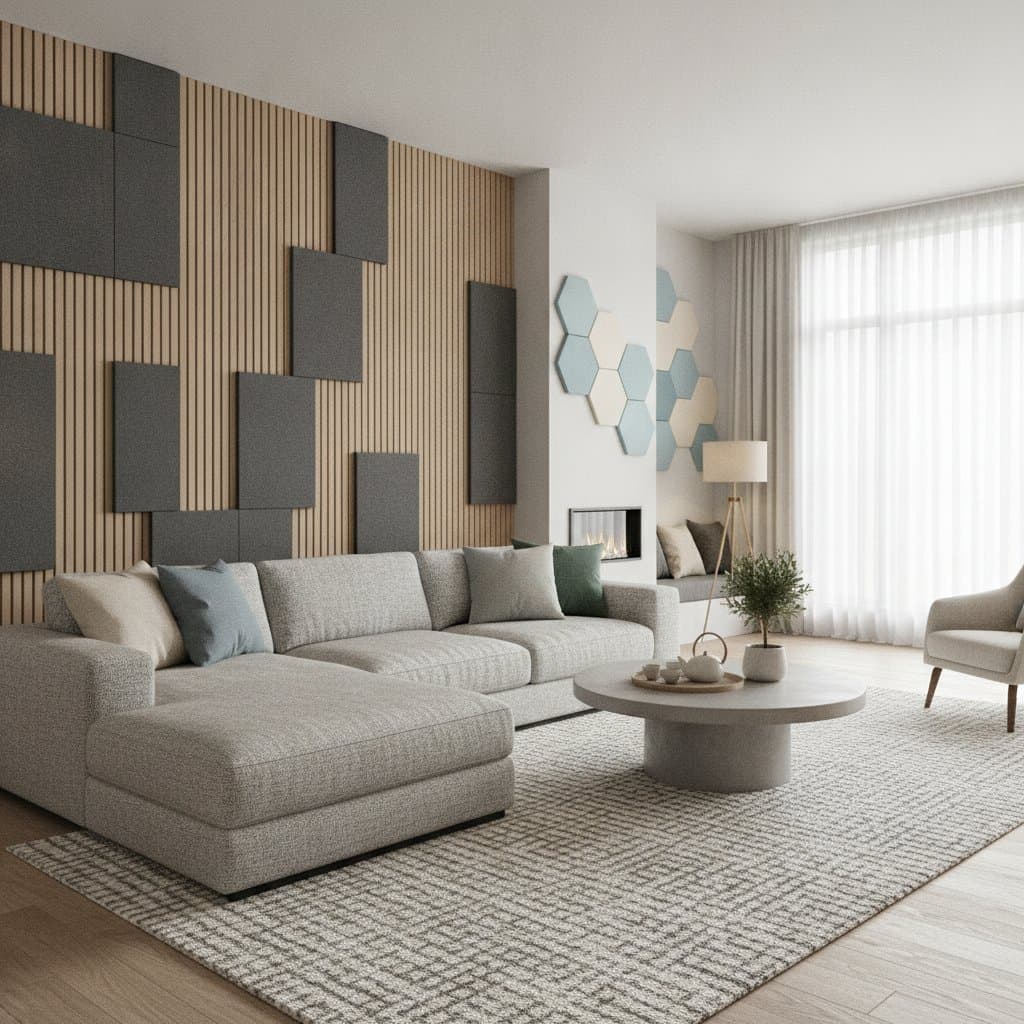
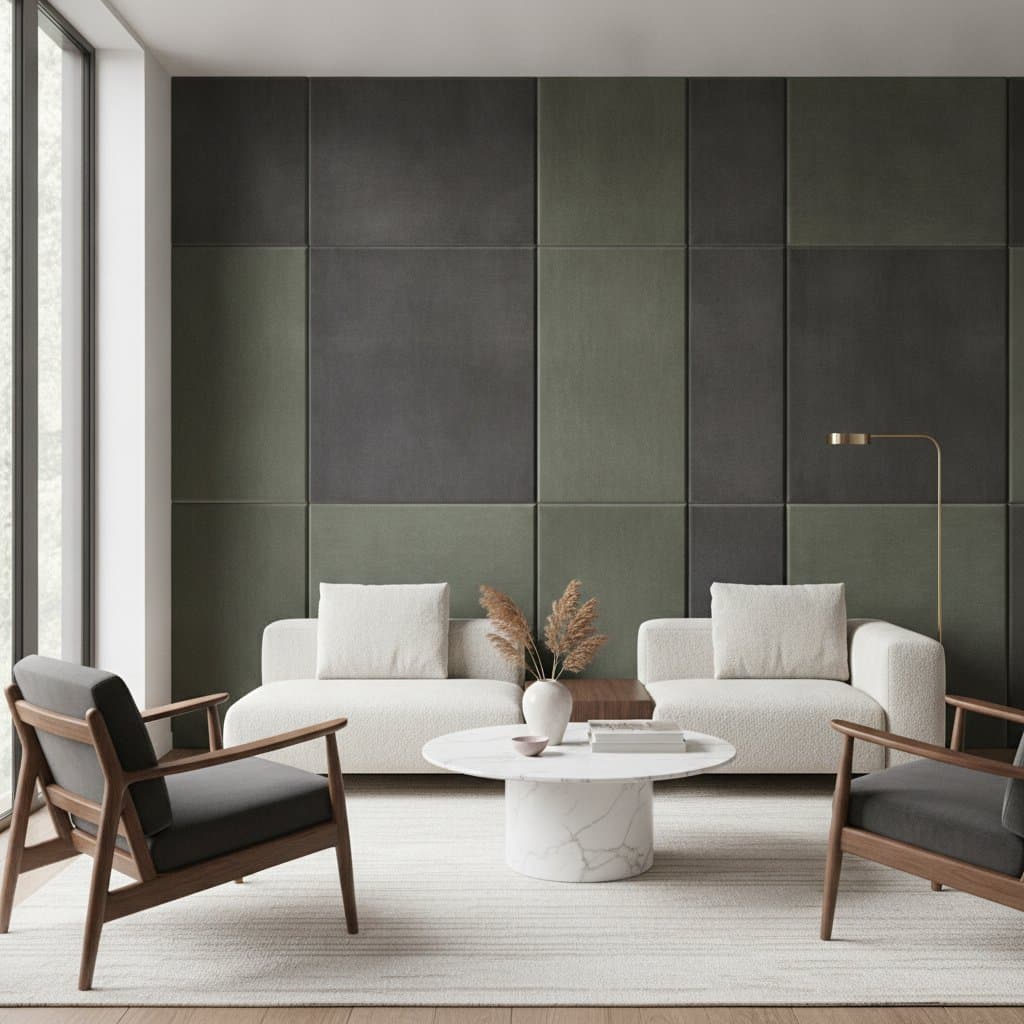
Group panels in coordinated tones to form geometric patterns across the ceiling. Align colors with upholstery or artwork to unify the room. The blocks reduce visual monotony while directing attention upward.
Test layouts on paper before ordering to confirm proportions. This method turns a technical solution into a deliberate design feature.
6. Sustainable Material Choices
Panels made from recycled cellulose, wool felt, or reclaimed textiles meet low VOC standards. Verify third party certifications for indoor air quality before purchase. These options deliver comparable absorption coefficients to synthetic alternatives.
Natural fiber panels also introduce subtle texture that softens the overall aesthetic. They support both acoustic goals and environmental priorities.
Planning Your Installation
Identify rooms where echo interferes most, such as kitchens with hard flooring or double height living areas. Measure ceiling height and note fixture locations to determine panel depth and mounting method. Consult an installer who can calculate required coverage based on room volume and surface reflectivity.
After placement, test the space by listening to familiar audio sources. Adjust placement or add supplementary wall panels if residual reflections remain. The ceiling then functions as an integrated element that supports daily comfort and design intent.